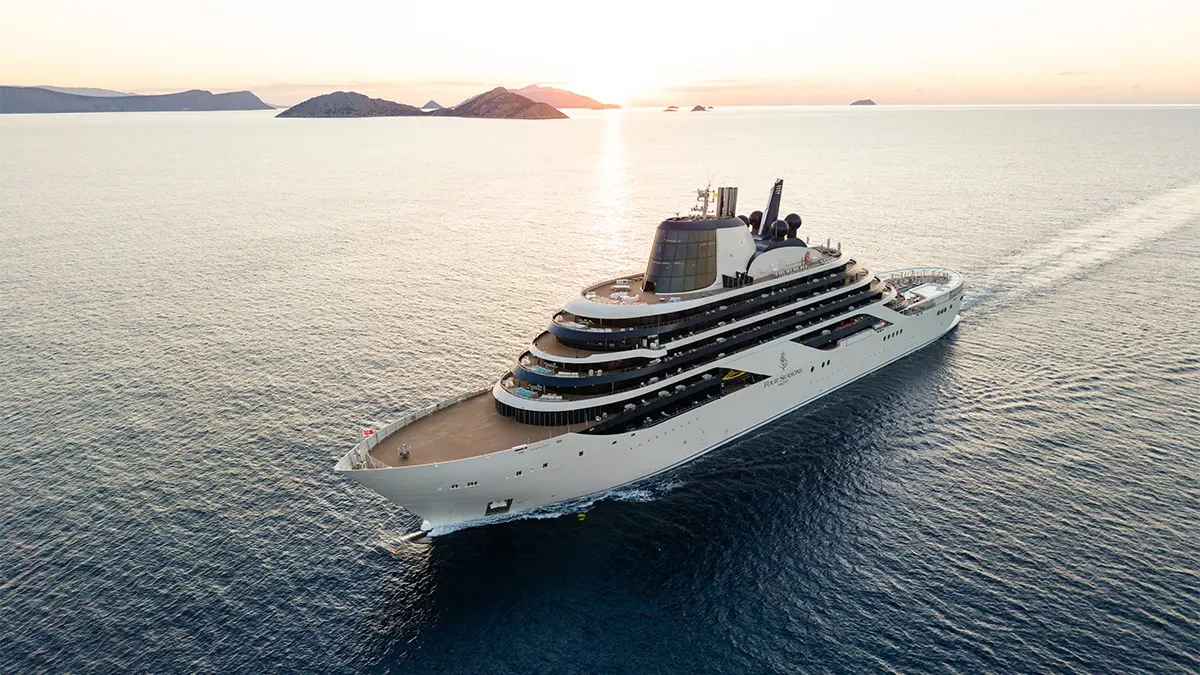





The heavy, ten-deck car ferry Ala’suinu—whose name translates to "Traveler" in Mi’kmaw—cuts a distinct silhouette against the churning waters of the Atlantic. Operating on a daily schedule, the vessel makes its arduous transit between the Marine Atlantic terminal in North Sydney, Cape Breton, and Port-aux-Basques, situated on the rugged southwestern shore of Newfoundland. This 110-mile channel, spanning the mouth of the Saint Lawrence River, is rarely gentle. Sailings typically unfold beneath heavy rain, stiff coastal winds, and dark skies, transferring passengers from one bleak, weathered port to another.
For travelers yearning to explore the vast expanse of Newfoundland by car, this maritime passage serves as the primary gateway. The ultimate destination for many motorists is the thousand-year-old Viking settlement of L’Anse aux Meadows, perched at the island’s northernmost tip. On a map, Newfoundland appears as a sprawling, asymmetrical landmass, deeply cloven by a labyrinth of bays and inlets. Its geography bears the stark scars of ancient glaciers that once scraped across its granite face, leaving behind deep glacial striations, grooves, and gouges.
Historically, this misshapen island has been romanticized for its lingering ghosts, rich folktales, distinct local eccentricities, abundant fisheries, and the renowned friendliness of its people. Yet, when mentioning plans to visit Newfoundland to residents in neighboring New Brunswick and Nova Scotia, the reaction is often one of polite surprise.
"Never," is the usual response from locals when asked if they have ever visited the neighboring province.
When the conversation pivots south—"What about Florida?"—the answer changes dramatically. "Many times," is the frequent reply from the exact same individuals.
Negotiating the clammy back streets of the port at North Sydney reveals a landscape of scruffy bars and battered storefronts. The administrative process of securing a ticket for both passenger and vehicle, coupled with inevitable travel delays, evokes a familiar sense of tedium. For much of the journey through Canada, however, such bureaucratic hassles are remarkably rare—a stark contrast to the complications frequently encountered in international travel. Throughout most of the Canadian journey, travelers are spared the friction of armed youths, risky detours, demands for official bribes, or infuriating obstructions, finding instead a steady and genuine welcome.
Because the Ala’suinu does not depart until late in the evening—typically around quarter past eleven—and early check-in is unavailable, travelers arriving in daylight must find ways to pass six hours in North Sydney. Many follow local custom, securing a corner table at the nearest Tim Hortons to sip coffee among other yawning idlers. By nine o’clock, motorists drive to the ferry port, where efficient staff direct vehicles into designated lanes. Passengers wait in the terminal until an announcement summons them to drive their cars up the steep ramp and into the cavernous bowels of the ship.
On this specific crossing, overnight berths and private cabins are not available. Passengers purchase reclining seats for a nominal fee, and as the departure time arrives, the ferry lets out a low hoot before sliding silently into the darkness. Dense clouds completely blacken the sky, creating the illusion of gliding through deep outer space where nothing is visible beyond the glare of the ship’s own running lights. Inside the sealed-off saloon section, passengers dozed in their seats amid an eclectic mix of children, dogs, snoring adults, and the unmistakable scent of shoes removed for comfort.
This environment clarifies why many locals in Nova Scotia rarely make the trip to Newfoundland: it remains a journey undertaken in the old, laborious way. Below decks, the vehicle hold is crowded not just with tourist cars, but with heavy semi-trailer trucks and workmen’s vans. A navigational chart posted on an upper deck illustrates the straight line of the route across the gaping estuary of the Saint Lawrence, depicting Newfoundland as if it were detached and drifting slowly out into the open sea.
Despite the austere conditions, passengers remain remarkably patient. The room is filled with a rumpled crowd: fat, shaggy men, women in woolly hats, handsome boys, and winsome girls. They resemble a massive contingent of commuters setting off for the workday—an accurate impression, given that many on board are manual workers, students, truckers, and returning residents such as farmers, fishermen, and nurses. Eight hours later, as gray daylight breaks, a bilingual announcement instructs travelers to return to their vehicles. The ferry docks smoothly, and motorists drive down the ramp into Port-aux-Basques to seek breakfast.
The physical reality of Port-aux-Basques is immediately apparent upon arrival. At the Hotel Port aux Basques, general manager Cathy Lomond points out the lingering scars of a historic natural disaster. "We lost a hundred and thirty houses to Fiona," she explains, describing the ruinous condition of several neighborhoods. Hurricane Fiona battered the town in September 2022, earning a place in the record books as the most severe tropical storm ever to strike Canada.
Even months later, the town retains a windswept and scoured appearance. Simple saltbox houses and white-framed bungalows stand exposed to the elements, interspersed with a few shredded trees. The entire community is anchored firmly to a headland composed of striated granite.
"But we’re used to storms," Cathy says, her demeanor reflecting quiet resilience. "That was a bad one, but we got through it. Port aux Basques has community spirit, we know how to rebuild."
Cathy herself is a spirited, civic-minded innkeeper standing roughly the height of her upright .270 caliber Remington rifle. Beyond managing the hotel, she is an avid hunter who annually applies for a Newfoundland and Labrador big game license through a competitive lottery system. Successful applicants are granted permits to harvest black bears, caribou, and moose.
"Moose is delicious," Cathy notes, offering a sample of slow-cooked moose meat in gravy. Tasting the animal for the first time, one is immediately reminded of Henry David Thoreau’s assessment in The Maine Woods, where he wrote that moose meat "tasted like tender beef, with perhaps more flavor—sometimes like veal."
Newfoundland possesses a profoundly distinct culture that sets it apart even within Canada. While residents of Prince Edward Island often make similar claims about their own regional identity, Newfoundlanders have endured a history marked by deep isolation and physical hardship. The resulting landscape and local character bear little resemblance to the rest of the country.
Language here retains unique local dialects, with peculiar accents shifting noticeably from one district to the next. As a province, Newfoundland is relatively young within the Canadian confederation, having remained a British colony until it officially joined Canada in 1949. Consequently, many older residents remember direct British rule, with some maintaining a lingering resentment of its imperiousness while others openly lament its absence.
The island’s wildlife is equally distinct. Native species such as raccoons, skunks, and porcupines are entirely unknown here. While the rest of Canada is home to various vipers and rattlesnakes, Newfoundland hosts no snakes at all, save for the harmless garter snake. Squirrels—specifically red squirrels, locally dismissed as "tree rats"—did not inhabit the island until they were introduced in the 1960s, and there are no native deer populations whatsoever.
"Newfies are special people," Cathy reflects. "The land is special too."