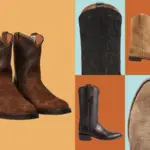





There was a time when cowboy boots were considered the exclusive domain of ranch hands, rodeo riders, and country singers. But over decades of fashion evolution, western footwear has proven that with the right confidence, a classic boot is just as naturally suited to a city subway platform as it is to a dusty riding arena.
That trajectory is far from unique in the landscape of modern menswear. Many of today’s most ubiquitous wardrobe staples began as strictly functional work uniforms. Cargo pants were designed for military utility, chore jackets were built for manual laborers, and even tailored suit jackets were constructed to withstand outdoor riding conditions. Over time, civilians adopted these pieces, stripping away their purely practical restrictions and adapting them into canvas prints for personal style, self-expression, and subcultural flair. Cowboy boots have undergone the exact same transformation.
Whether worn with traditional bootcut denim or subverted alongside modern tailoring, western boots have earned their place as a foundational footwear choice for any well-rounded closet. Navigating the market requires understanding the nuances of silhouettes, construction methods, and leather selection—from approachable entry-level pairs to heirloom-quality artisanal investments.
What to Look for in a Great Pair of Cowboy Boots
To understand what elevates a standard boot into a standout piece of footwear, it helps to consult experts deeply rooted in western wear. Peter Middleton, who spent years refining his aesthetic at Ralph Lauren before founding the western-inspired brand Wythe, notes that the appeal of a cowboy boot comes down to its distinct architectural silhouette.
“To me, the beauty and shape of the cowboy boot—and a lot of the original design intent—lies in its curves, and that’s what makes a great boot sexy,” Middleton explains. “There isn’t a lot of men’s footwear that has these dramatic curves, leather, and a high heel, but the right cowboy boot has them all.”
When shopping for a pair designed to stand the test of time, look for full-leather construction throughout the boot—including the insole, outsole, lining, uppers, and heel stack. Natural leathers not only age gracefully, developing a rich patina with wear, but they also mold precisely to the shape of the wearer’s foot over time.
Construction quality is equally vital. Superior boots utilize a resoleable Goodyear welt, allowing cobblers to replace worn soles repeatedly rather than forcing you to throw the boots away after heavy use. High-end traditional boots often feature lemonwood pegging along the arch, a historic bootmaking technique where wooden pegs expand and contract alongside the leather to maintain structural integrity.
Additionally, pay attention to the “toe bug”—the decorative stitching across the top of the vamp. On a thoughtfully designed boot, this stitching aligns with the foot’s natural flex point, helping to disguise the inevitable creasing that occurs with every step.
While price points vary dramatically, quality handcrafted boots generally start around $300, with top-tier handcrafted pairs climbing past $600. For those building a wardrobe with longevity in mind, saving up for a well-made pair—or hunting for vintage gems—is often preferable to settling for boots made with synthetic shortcuts.
Best Overall Cowboy Boots: Tecovas The Cartwright
Direct-to-consumer brands often face skepticism for over-promising on quality, but Austin-based Tecovas has earned a reputation for delivering genuine craftsmanship at an accessible price point. The Cartwright serves as the brand’s flagship classic western boot, striking a balance between traditional styling and everyday wearability.
Crafted in León, Mexico—a historic global hub for footwear manufacturing with over a century of cobbling expertise—The Cartwright features hand-laid cording along the shaft, a traditional pitched heel, and a sturdy, resoleable Goodyear-welt construction. Offered in both full-grain cowhide and supple goat leather across multiple colorways, it delivers high-level finishing that rivals far more expensive boots. At $375, it sits just above entry-level budget footwear while offering a substantial leap forward in overall materials and traditional bench-built construction.
- Price: $375
- Pros: Handcrafted construction; classic silhouette; versatile selection of leathers and finishes.
- Cons: Upper leather is slightly thinner than heavy-duty work options.
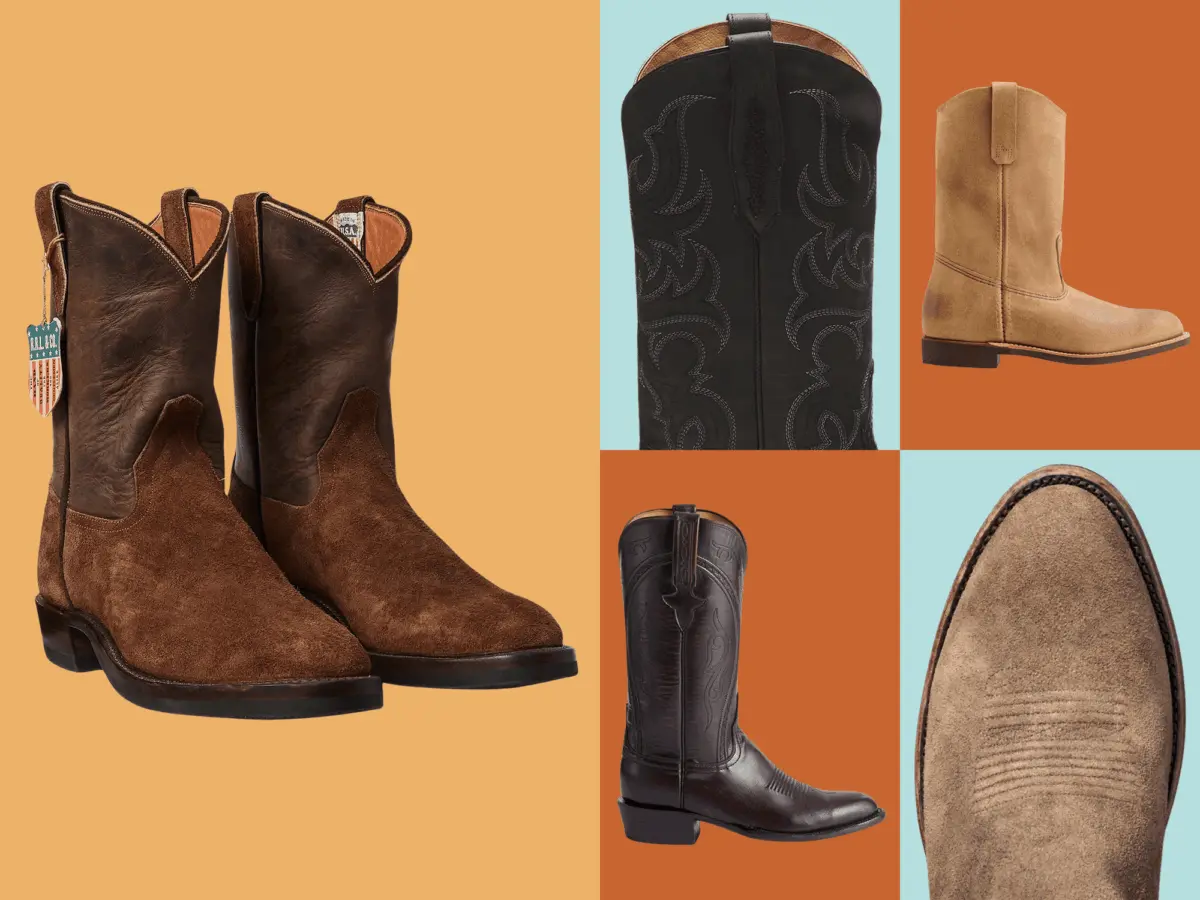
Best Roper Boots: Red Wing Shoes Pecos in Hawthorne Muleskinner Leather
For those who find the exaggerated heel and tall shaft of a classic western boot intimidating, the roper boot offers a more relaxed, understated alternative. Originally developed for calf-roping cowboys who needed to dismount horses quickly and sprint on foot, roper boots feature a shorter shaft, a rounded or squared-off toe, and a lower, flat heel. These performance modifications happen to make roper boots exceptionally comfortable for urban walking.
Red Wing Shoes—a brand legendary for its durable, trend-proof American work boots—delivers the premier roper with its Heritage-line Pecos boot. Built using thick, roughout Hawthorne Muleskinner leather from the S.B. Foot Tanning Company, the Pecos features a Goodyear welt and a cushioned insole designed to handle years of daily wear. By stripping away intricate shaft embroidery in favor of clean, unadorned leather uppers, Red Wing makes an ultra-versatile boot that pairs effortlessly with everyday casual menswear.
- Price: $370
- Pros: Minimalist design simplifies styling; durable Goodyear welt construction; comfortable cushioned footbed.
- Cons: Limited color choices (currently lacking a standard black leather option).
Best Budget Cowboy Boots: Ariat Groundbreaker Boots
When looking for an authentic western aesthetic under $200 that doesn’t compromise on durability, Ariat is a go-to standard. The brand excels at infusing classic cowboy silhouettes with modern work-boot technology, offering rugged performance suited for actual job sites.
The Groundbreaker boot features a full-grain leather upper paired with Ariat’s supportive, pressure-relieving insoles and heavy-duty, slip-resistant outsoles that meet ASTM standards for electrical hazard safety. Available in multiple toe shapes, color combinations, and steel-toe configurations, it provides an unbeatable combination of comfort, safety, and western heritage. While purists may note that these boots rely on cemented sole construction rather than resoleable leather welts, they offer exceptional durability and comfort for the price.
- Price: $155 – $163
- Pros: Exceptional affordability; certified ASTM safety features; high daily comfort.
- Cons: Cannot be resoled once outsoles wear down.
Best Dressy Cowboy Boots: Tony Lama Nacogdoches Teju Lizard Cowboy Boot
Cowboy boots are not restricted to casual wear or hard labor; the right pair can easily anchor formal attire, evening wear, or tailored clothing. Achieving a dressier look requires a darker palette, a refined silhouette, and high-shine, exotic leathers.
Tony Lama’s Nacogdoches boot captures this sleek aesthetic using genuine Teju lizard leather across the foot, complemented by understated shaft stitching and a polished finish. The fine texture of exotic lizard skin elevates the shoe, allowing it to transition seamlessly from formal dinners to evening events. Whether worn under a tailored suit or used to add a rock-and-roll edge to dark denim and a crisp white tee, this boot proves how elevated western footwear can be.
- Price: $360
- Pros: Sleek profile; premium exotic leather texture; exceptional value for exotic boots.
- Cons: Exotic skin regulations prevent sales in California.
Best Upgrade Cowboy Boots: Lucchese Gavin Cowboy Boot
In the world of high-end western footwear, few names carry the prestige of Lucchese. Outfitting U.S. presidents, cultural icons, and the Dallas Cowboy Cheerleaders for generations, the historic brand remains the gold standard for American bootmaking.
While Lucchese produces a variety of footwear, its Texas-workshop line represents the pinnacle of the craft. The Gavin boot—shown in the brand’s signature Black Cherry finish—is built using smooth Santini goat leather, intricate hand-stitched embroidery, a Goodyear welt, and traditional hand-driven lemonwood pegs. Handcrafted by master artisans using time-tested methods, these boots represent a serious financial investment, but they offer legendary longevity, immaculate proportions, and unparalleled craftsmanship.
- Price: $995
- Pros: Top-tier craftsmanship and materials; iconic heritage brand prestige; built to last a lifetime.
- Cons: Premium price point requires a substantial budget.
More Standout Cowboy Boots We Love
- RRL Roughout Suede & Leather Boot ($990): Designed under Ralph Lauren’s dedicated western sub-label, these boots combine American-tanned roughout suede uppers with Goodyear-welt construction and vintage-inspired rubber outsoles, hand-built in a historic Texas factory.
- Frye Nash Roper Boot ($358): Produced by one of America’s oldest continuously operating boot makers, the Nash Roper provides a sleek, low-profile alternative finished in smooth, rich leather.
- Tecovas The Johnny ($375): A softer, more casual alternative to the classic Cartwright, built with rich gravel suede for a relaxed aesthetic.
- Rhodes Footwear Roper Boot ($275): Available via Huckberry, this accessible boot blends a lower-profile roper silhouette with a resoleable Goodyear welt and rugged Vibram outsoles.
- Wythe Five Card Stud Boots ($1,298): Designed by Peter Middleton, these playing-card-inspired boots feature premium leather linings, intricate hand-applied details, and lemonwood pegging, custom-crafted by master cobblers in León, Mexico.
- Yuketen Brown Suede Ranchero Boots ($1,135): Stocked by high-end haberdashers like Drake’s, Yuketen’s take on the western boot pairs artisanal bench-built construction with luxurious brown suede.
How to Style Cowboy Boots in Modern Menswear
The traditional approach to styling western boots is straightforward: pair them with well-fitted denim—ideally vintage bootcut jeans that drape cleanly over the shaft—and a classic snap-button western shirt. While this classic silhouette remains timeless, contemporary menswear encourages mixing western boots into entirely different style codes.
To dress up a pair of exotic or polished leather boots, substitute dress shoes for western footwear under a tailored 1970s-inspired suit, echoing aesthetics popularized by fashion houses like Gucci. For a more casual, preppy look, try pairing suede roper boots with relaxed chinos, an unbuttoned oxford, or a vintage graphic T-shirt. The key is treating western boots like any other versatile boot in your rotation rather than wearing them as a costume.
How We Test and Select Products
Selecting the finest footwear involves balancing technical craftsmanship, material quality, and real-world style versatility. The recommendations featured here are curated through extensive wear-testing, brand analysis, and evaluations of construction standards across three core benchmarks: quality, fit, and price.
Our editorial team leverages decades of combined experience across fashion journalism, retail, and manufacturing to evaluate footwear integrity. We inspect leather sourcing, welt construction, sole longevity, and brand transparency to distinguish genuinely crafted boots from mass-market imprints. From budget-friendly workhorses to artisanal bench-built investments, every boot selected represents a leading choice in its category.