





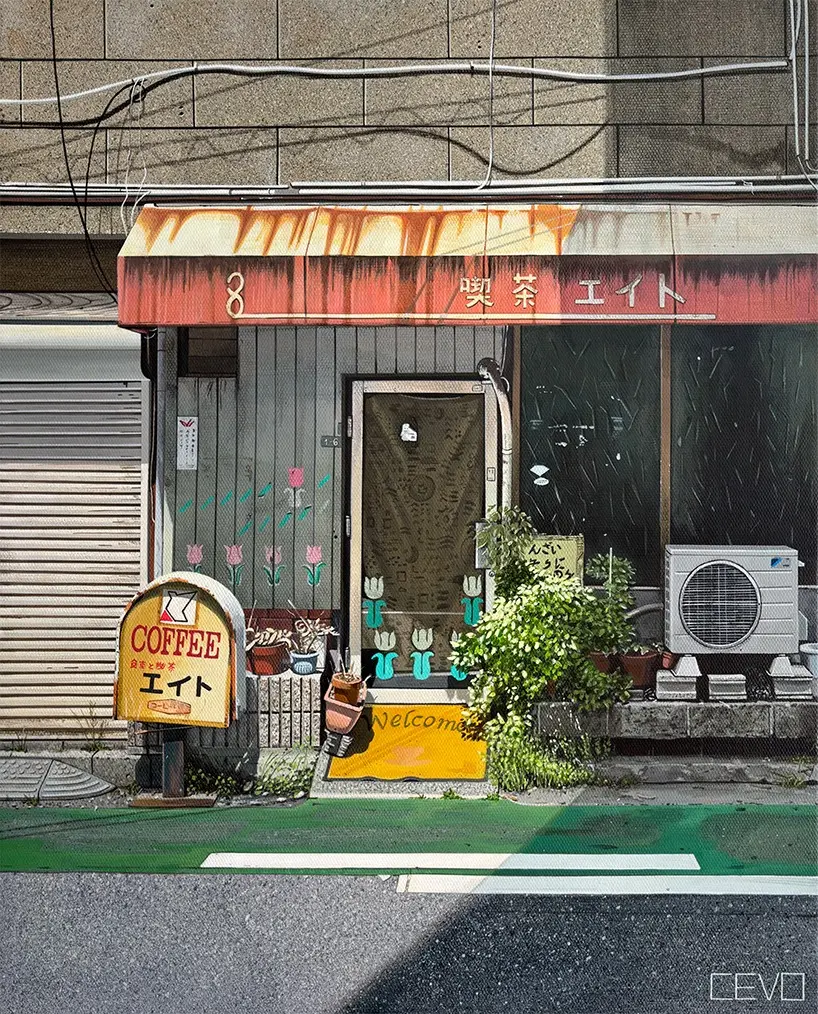
Argentine artist Cevo, widely recognized in contemporary visual arts under his given name Sebastian Scaglione, is set to present his latest solo exhibition, Slow Drip. Hosted at the prestigious Goyo Gallery in Tokyo, the upcoming exhibition will showcase a striking collection of acrylic paintings on linen that offer a deeply contemplative look at the built environment of Japan. Running from October 31st to November 22nd, 2026, the exhibition invites viewers to reconsider the everyday topography of Japanese cities through a meticulous artistic lens that isolates mundane municipal infrastructure from the usual hustle and bustle of metropolitan life.
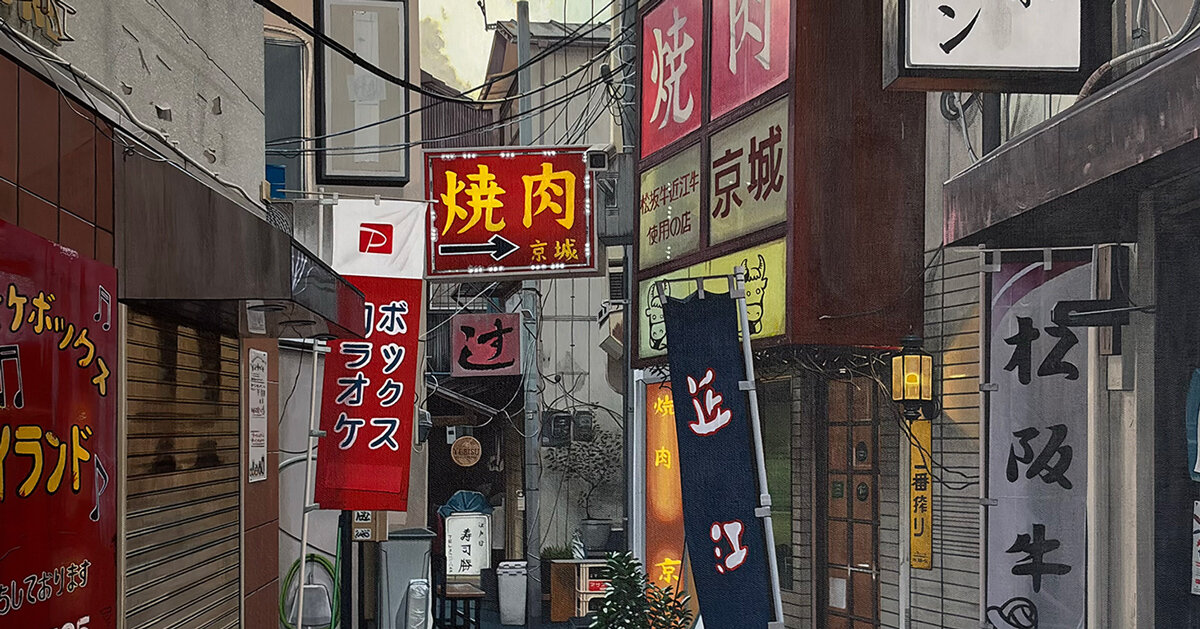
The foundation of the Slow Drip series lies in extensive photographic research conducted by the artist across various regions of Japan. Cevo has spent considerable time capturing the nuanced, layered realities of Japanese urban spaces—documenting narrow residential alleys, dense webs of utility cables, glowing commercial vending machines, weathered signboards, and compact storefronts. Rather than painting these scenes directly en plein air or copying a single photograph, the artist builds his compositions through a careful digital montage process. By merging multiple on-site reference photographs, he constructs a cohesive yet entirely reimagined architectural landscape before ever touching a paintbrush to linen.
A defining characteristic of this new body of work is the deliberate and systematic removal of all human figures. By stripping away the crowds, pedestrians, and everyday traffic that typically animate dense urban environments in Japan, Cevo shifts the viewer’s focus entirely toward the tectonic layers and structural infrastructure of the city itself. What remains is a quiet, almost meditative portrait of modern municipal design, where inanimate objects and utilitarian structures take center stage. This absence of human presence does not render the paintings desolate; instead, it creates a unique psychological space that encourages an appreciation for the graphic density and rhythmic patterns inherent in everyday urban fabric.
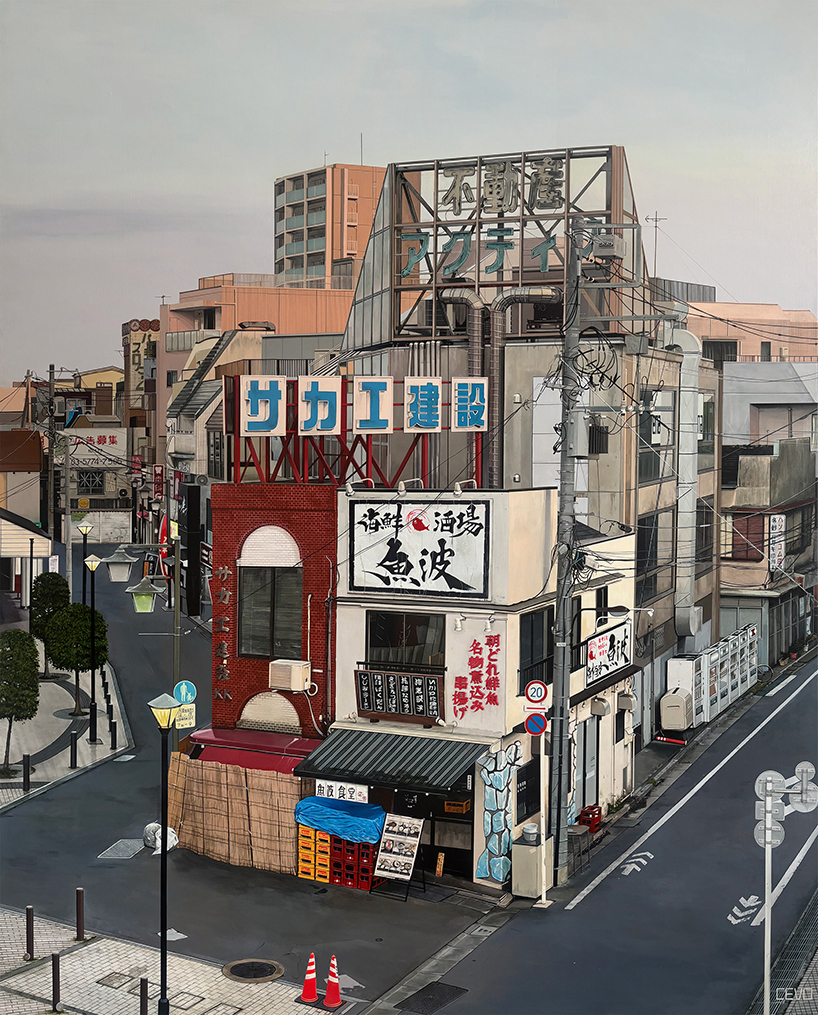
Overhead Cables and Vending Machines Define Tokyo Paintings
Once the digital composition is finalized, Cevo translates the carefully calibrated layout onto high-quality linen canvases, executing the entire painting process using acrylic mediums. The creation of each piece unfolds in a methodical, multi-stage progression. Initially, the artist blocks out the primary tonal values and foundational geometric masses, establishing the underlying perspective and spatial depth of the composition. Following this initial phase, he applies successive, incremental layers of detail. This painstaking process involves rendering micro-architectural joinery, precise typography on commercial signs, and the subtle, realistic weathering effects that give the urban elements their authentic patina.
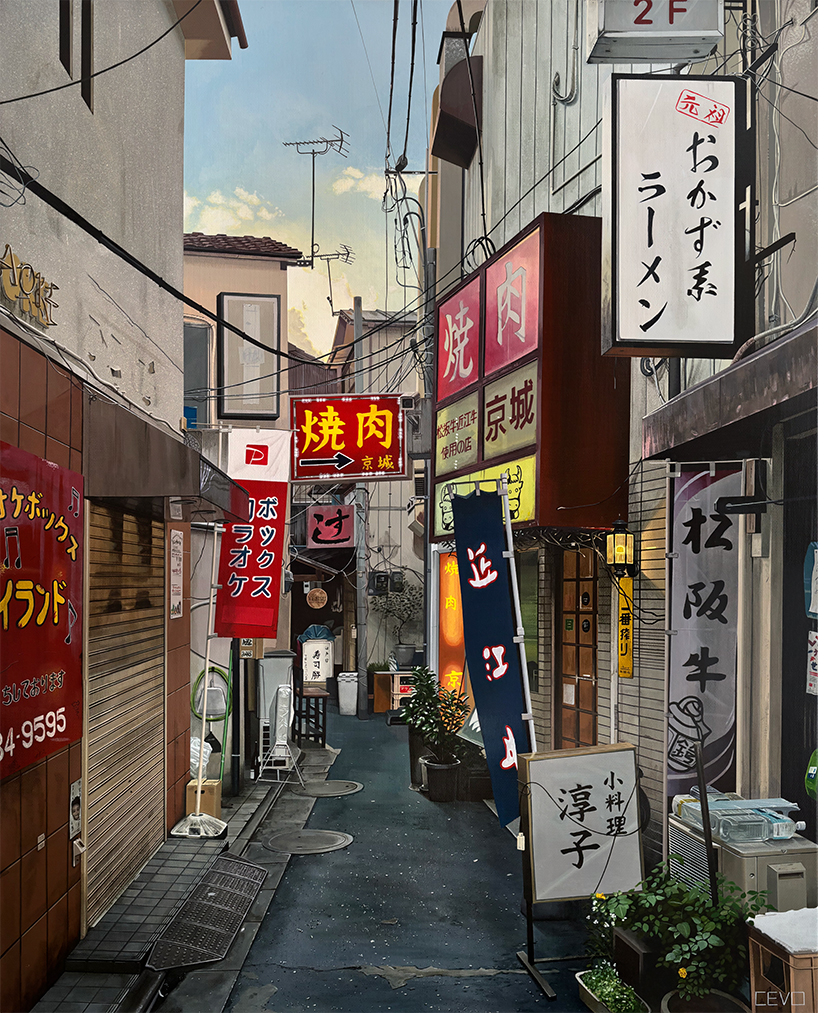
Comprising 13 distinct works, the Slow Drip series frames empty municipal infrastructure as an independent and compelling subject matter. Among the featured pieces are works such as Otoky N23 (2026), measuring 120 by 150 centimeters, and smaller canvases such as Otoky N22 and Otoky N18 (both 2026, measuring 80 by 100 centimeters). Across these canvases, suspended overhead cables, weathered storefront facades, and brightly illuminated vending machines stand out with striking clarity. Through these meticulous representations, Cevo highlights the intricate visual relationships and spatial rhythms that quietly define the contemporary Japanese cityscape, offering both local residents and international art enthusiasts a fresh perspective on familiar surroundings.