





When launching a luxury fashion brand, the typical path involves high-gloss mood boards, market trend analysis, and consultations with established industry veterans. For Brianna Tell, founder of the newly debuted accessories label Les Tells, the journey began on a sidewalk in Paris, inspired by an acute observation of human movement, and continued in a workshop with a handful of humble paper models that nearly cost her the early respect of her peers.
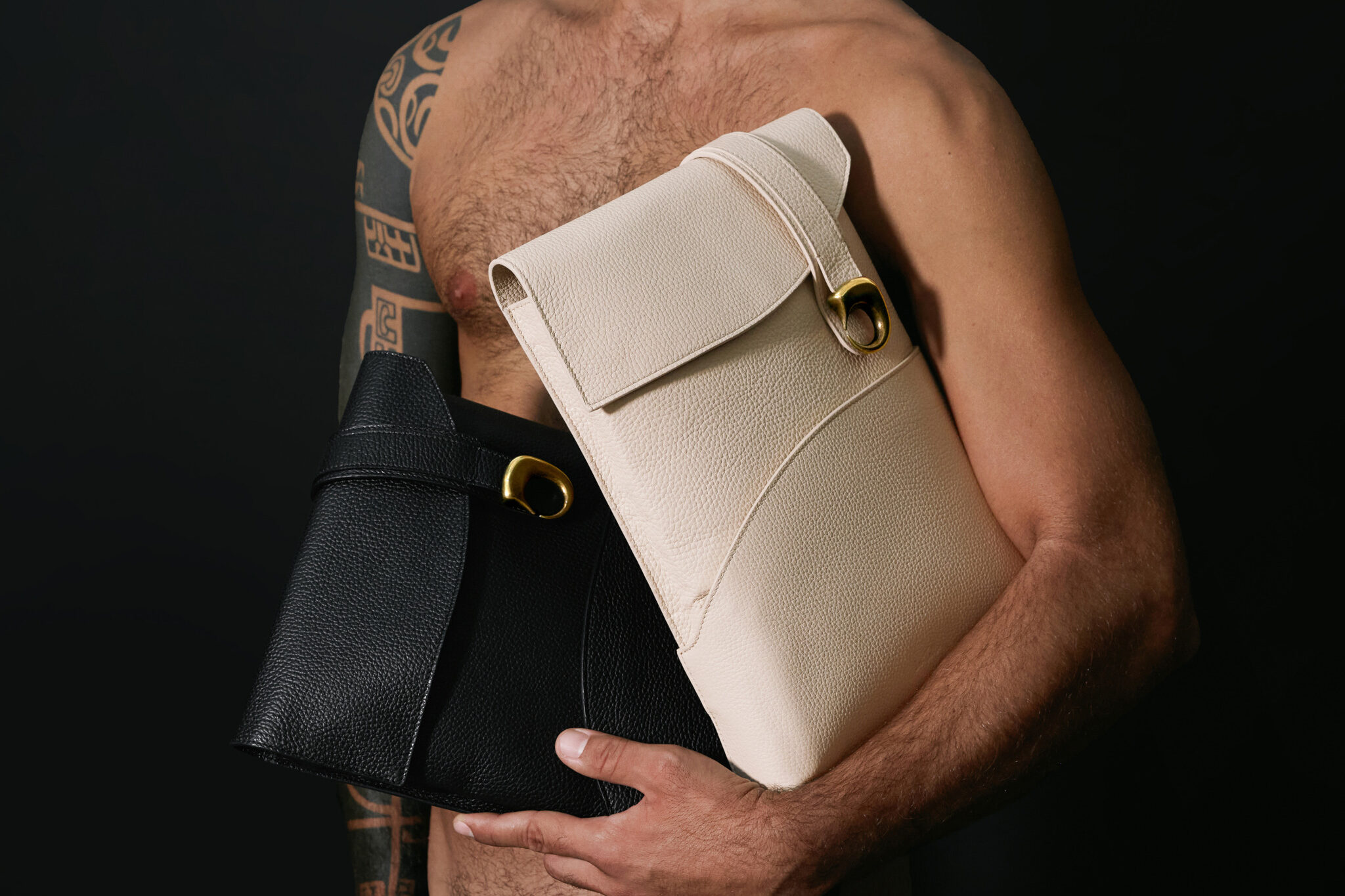
Tell’s work is ultimately defined by the intersections that inform it. There is the distinct influence of her hometown of Lancaster, Pennsylvania, where her upbringing near local horse farms forged an early, tactile familiarity with leather as a durable and organic material. There is her professional and academic experience in Milan and Florence, Italy, where she immersed herself in generations-old craftsmanship. Yet, perhaps the most critical intersection in her design philosophy is the physical space where bag meets body. Where traditional luxury accessories often rely on rigid corners, stiff structures, and bulky silhouettes that can cause physical discomfort or disrupt a wearer’s natural gait, Tell wanted to explore a different paradigm. She envisioned a physical cohesion between bag and body—pieces that function not simply as external accessories, but as fluid extensions of the wearer’s silhouette.
That vision materialized on November 3 with the official launch of the inaugural Les Tells collection: a curated line of six luxury, Italian-made bags and accessories engineered to fit, flatter, and move with the human form. Comprising four distinctive bags, a sleek wallet, and a functional wristlet, the collection is designed to follow the body’s natural curves. The underlying premise challenges a long-standing convention in high-fashion accessories: that a piece must sacrifice comfort, ergonomics, and ease of motion to remain striking and distinctive.

The epiphany for the brand struck Tell while she was traveling through the French capital. Observing stylish pedestrians navigating the urban landscape in carefully assembled outfits, she noticed a persistent dissonance. While the clothing draped naturally, the bags they carried frequently seemed to jut out awkwardly, disrupting the line of the body. That visual friction sparked a fundamental question: Why shouldn’t bags be engineered to move better with the human form?
Translating that inquiry into physical reality required a rigorous and unconventional design process. Tell began sketching silhouettes for crossbody bags and handbags, focusing heavily on how three-dimensional forms would interact with a living, moving person. Recognizing that traditional hard-sided prototypes would not adequately capture fluidity, she turned to an unconventional testing medium: paper. She constructed intricate paper models to evaluate mobility, test range of motion, and pinpoint potential points of friction against the body.

In the hyper-competitive world of high fashion, starting with paper cutouts raised eyebrows among her contemporaries. When she presented her initial concepts to an acquaintance, the reaction was blunt. She was told that nobody would take her seriously and that paper models lacked the professional rigor expected of an emerging designer. Rather than abandoning her vision, Tell leaned into her intuition. Believing firmly in the ergonomic logic of her shapes, she packed up her sketches and paper models and traveled directly to Italy to seek out master artisans.
Her persistence paid off when she connected with a family-run atelier located in Scandicci, just outside Florence. Rather than dismissing her unorthodox approach, the experienced artisans recognized the unique geometry of her proposals. They examined her prototypes and acknowledged that she had built something genuinely different and distinct, validating her foundational belief that her ergonomic approach was on the right track.

Over the course of two rigorous years, Tell collaborated closely with the atelier to refine the collection through meticulous development. The resulting pieces reflect an obsessive attention to ergonomic form and structural integrity. Among them is the Alexandras, a sophisticated cylindrical bag featuring a detachable strap and a carefully engineered inward curve designed to nestle comfortably and securely against the wearer’s hip. Another standout, the Logans, utilizes an asymmetrical, oblong silhouette configured as a crossbody bag that sits smoothly under the arm or follows the natural contour of the back. The Kathleens, a versatile shoulder bag, introduces a gentle curve that optimizes ergonomics without sacrificing valuable interior capacity. Across the entire lineup, every design adheres to a singular principle: achieving sculptural structure without ever sacrificing human comfort.
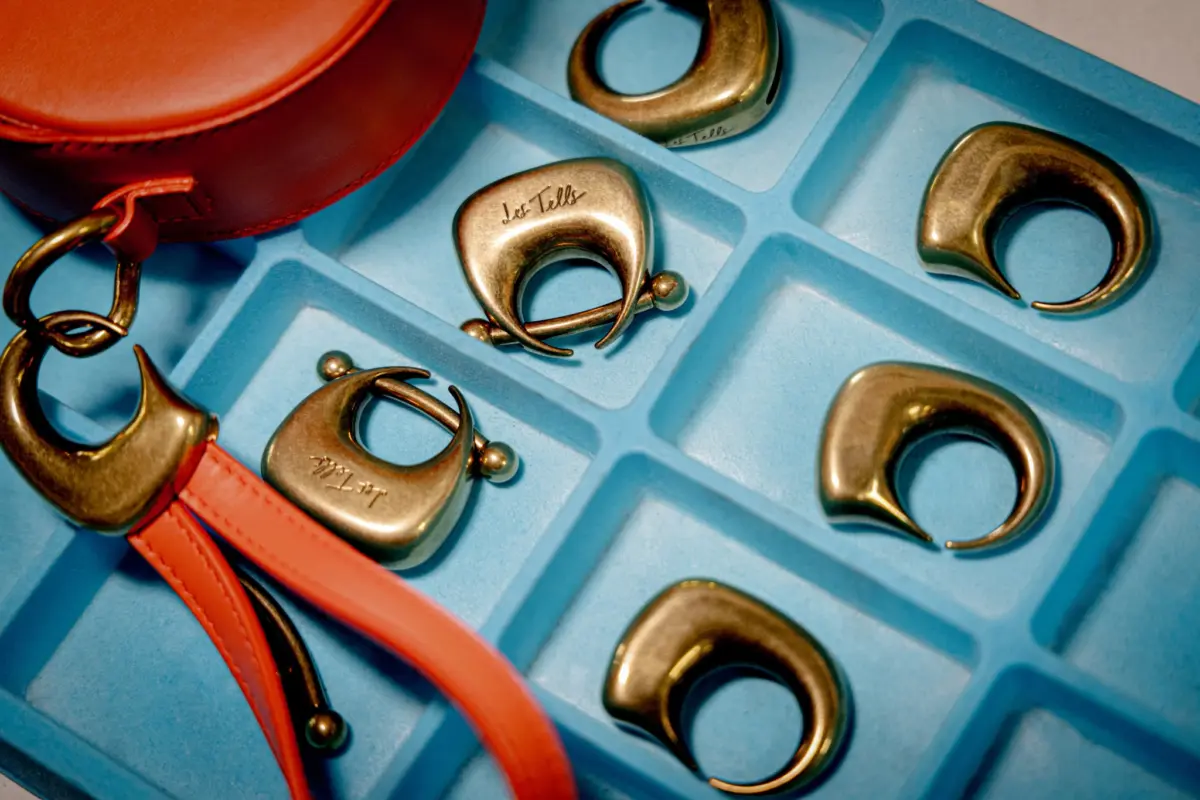
The choice of materials was equally deliberate. The reliance on premium Italian leather nods directly to Tell’s childhood in Pennsylvania’s agricultural and equestrian landscape, harmonizing with her subsequent artistic immersion in Florence. To ensure a completely unified aesthetic, the brand’s custom hardware and jewelry pieces were designed in tandem with the bags, echoing their soft, crescent-like forms and providing a polished, cohesive finish. Offered initially in four distinct colorways, the collection was conceived to feel both intimate and universal, designed purposefully to transcend traditional gender boundaries and flatter a wide range of body types.

This inclusive philosophy extends directly into the brand’s visual campaigns, which feature individuals of varying ages, backgrounds, and physical builds. Tell emphasizes that the agency belongs entirely to the wearer. The intention was never to dictate who should wear a specific piece, but rather to create versatile objects that adapt to the individual.
Beneath the striking exterior lines, Tell’s focus remained resolutely fixed on functional details that enhance the user experience. The collection is replete with thoughtful touches designed to streamline daily life. On the Alexandras, the embossed "Les Telles" interior tab serves a dual purpose, functioning discreetly as a latch to secure the magnetic clasp of the flap. The Kathleens incorporates a hidden strap extender tucked securely inside the body of the bag, alongside a dedicated microfiber case designed to protect eyewear. After two years of painstaking development, Tell feels confident that this exhaustive attention to detail has yielded a debut collection capable of making a lasting impression, noting that a brand only gets one chance to introduce itself to the world.

Looking ahead, Tell has already commenced work on the next iteration of the brand, which will include a fresh set of the very paper models that initially raised eyebrows when she first began developing her concepts. This time, however, she moves forward with complete confidence in the unorthodox methodology that successfully translated her early visions into tangible luxury goods. With her long-held gut feeling now validated by the market response and the craftsmanship of her Italian partners, she is ready to share her vision with a broader audience.
The inaugural Les Tells collection is currently available for purchase through the brand’s official website, with retail prices starting at $350.