




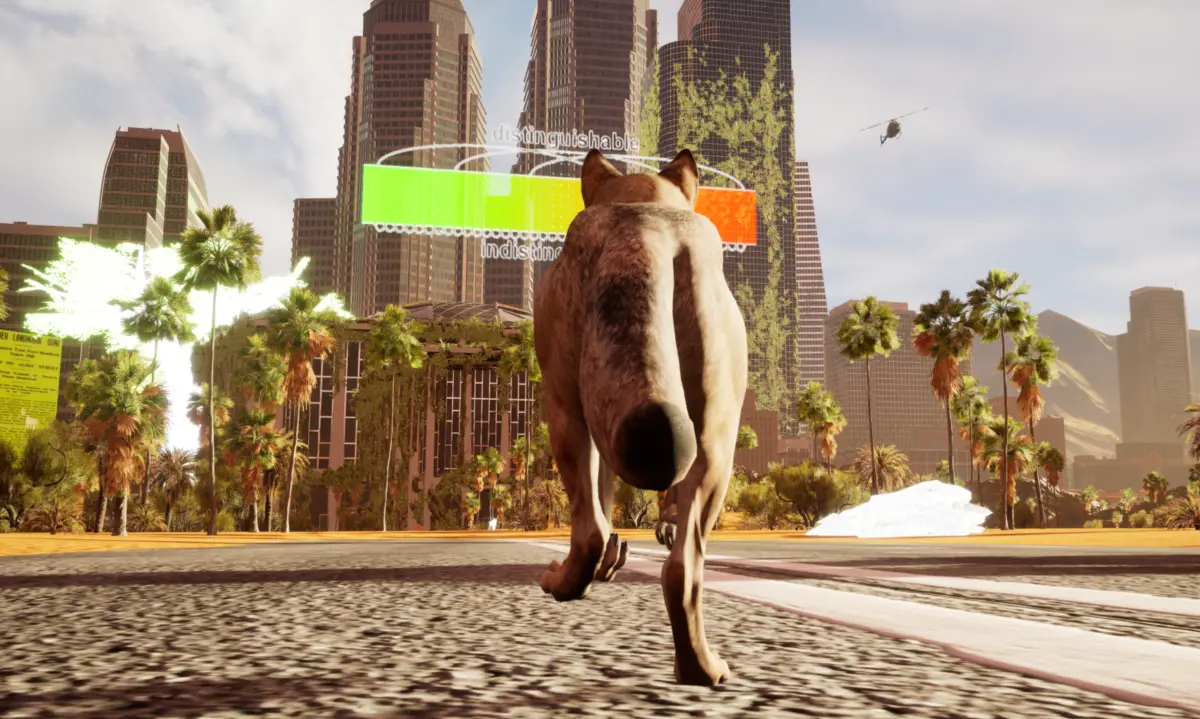
As global conversations surrounding ecological collapse and environmental degradation increasingly dominate the daily news cycle, artists and creators are searching for new vocabularies to express the near-incomprehensible scale of the climate crisis. Among the most innovative responses is The Alluvials, a multi-platform speculative project by artist Alice Bucknell. Spanning a 2023 video work and a subsequent 2024 multilevel video game, the project plunges players and viewers into a radical, alternate-reality version of Los Angeles. In this near-future vision, the familiar urban sprawl of concrete highways, glittering skyscrapers, and sun-drenched beaches has been radically upended by nature and time. Sand, silt, and sediment—the physical hallmarks of an alluvial landscape—have swallowed downtown Los Angeles, transforming a sprawling metropolis into a stark, shifting desert of dunes and dust.
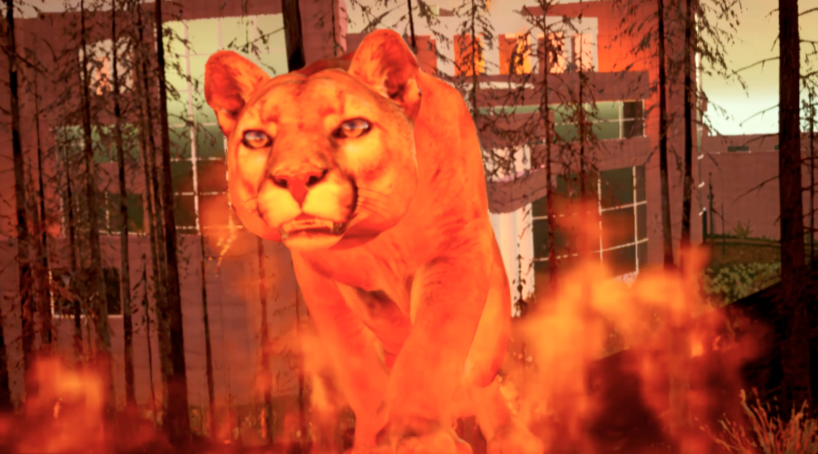
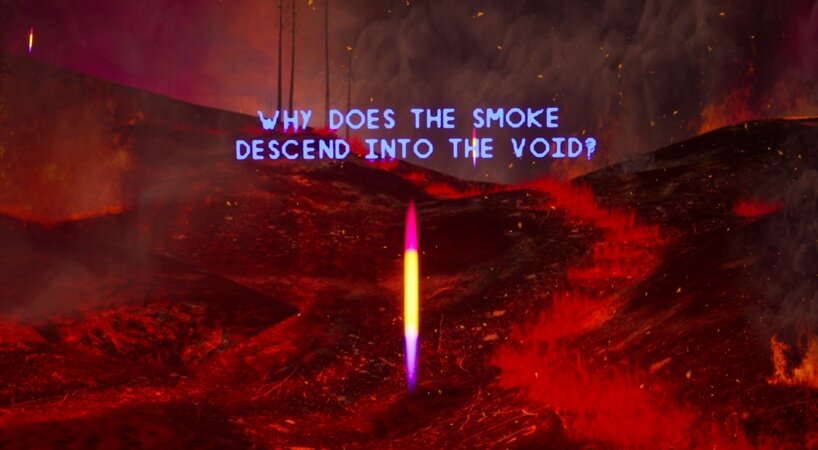
Rather than offering a straightforward dystopian warning, Bucknell’s work weaves together a complex tapestry of ecological speculation, indigenous history, and posthuman philosophy. The project examines the deep historical roots of the Greater Los Angeles Basin, honoring the legacy and history of the indigenous Tongva people while simultaneously projecting these narratives into a heavily corporatized and hyper-warmed future. Within this framework, players encounter fictional corporate entities like Qwench, a sprawling water desalination conglomerate, navigate a landscape consumed by a perpetually burning forest fire, and bear witness to an eternal golden hour where the sky remains trapped in a permanent, haunting twilight.
Following its initial release as a gallery-ready video piece, The Alluvials evolved into an interactive video game in 2024. This transition allowed Bucknell to push the boundaries of traditional digital media, inviting audiences to physically step inside the speculative ecosystem of a dried-up California. By offering an embodied exploration of a fragile, changing world, the project confronts its audience with a challenging fundamental question: Is this the world we are sleepwalking toward, and if the answer is a resounding no, what agency do we actually possess to alter our trajectory before these speculative futures become our permanent reality?
Alice Bucknell’s The Alluvials
To understand the conceptual foundation of the project, one must look closely at its namesake. The word alluvial refers directly to alluvium—defined by lexicographers as clay, silt, sand, gravel, or similar detrital materials that have been deposited by running water over long periods. In The Alluvials, Bucknell constructs a world defined by this geological accumulation, manifesting in places where dynamic river systems and natural water flows have been choked, redirected, or completely erased by centuries of human intervention and climate volatility.
Within the digital architecture of the 2024 video game, Bucknell subverts conventional gaming tropes by refusing to place the human player at the center of the narrative agency. Instead, the project is divided into distinct levels that force players to adopt the perspectives of non-playable characters (NPCs)—specifically, creatures and natural elements that are typically relegated to the background of traditional media. Bucknell describes these design choices as "queer and ecological game mechanics," deliberately disrupting the standard power dynamics of video games where human-controlled avatars dominate, conquer, and consume every digital environment they traverse.
By shifting the locus of control away from human protagonists, the project opens up space for radical empathy across species boundaries. Players are no longer heroic figures saving a digital world; instead, they are invited to inhabit the sensory worlds of entities that bear the silent witness of ecological transformation.
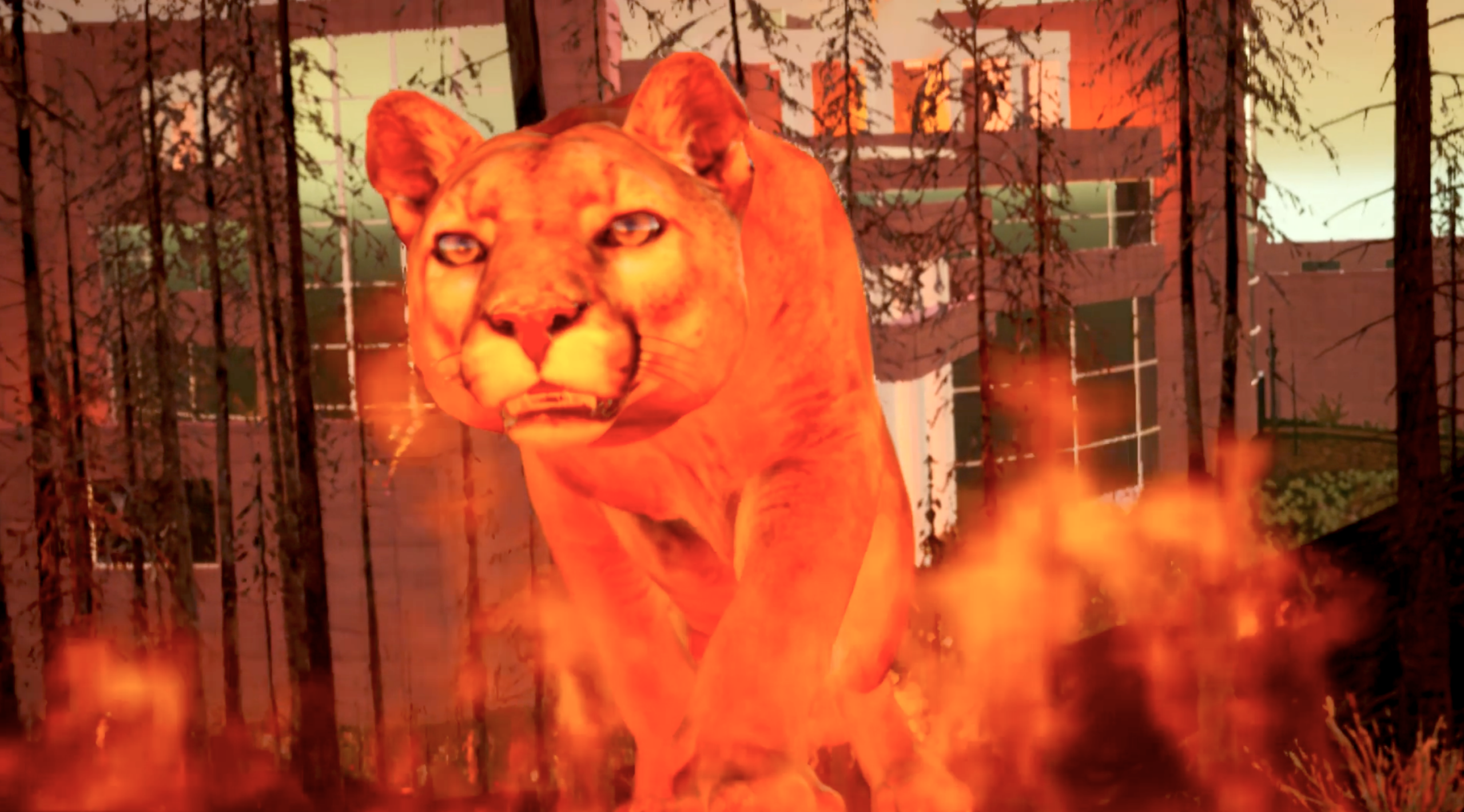
Exploring Each Level of The Alluvials
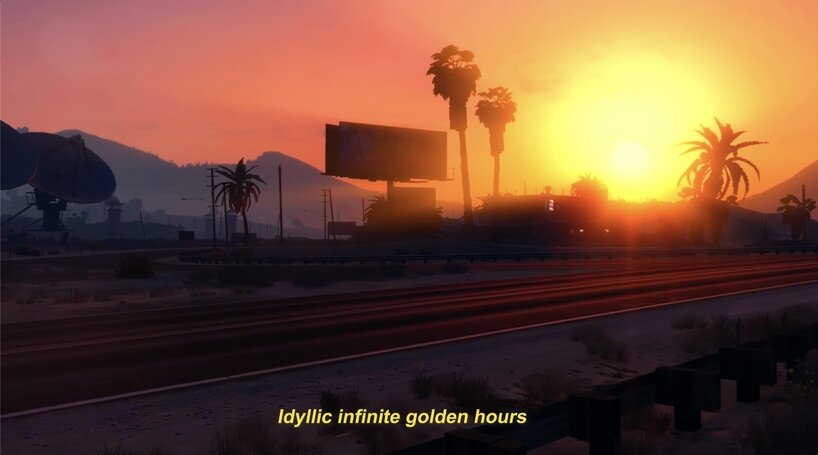
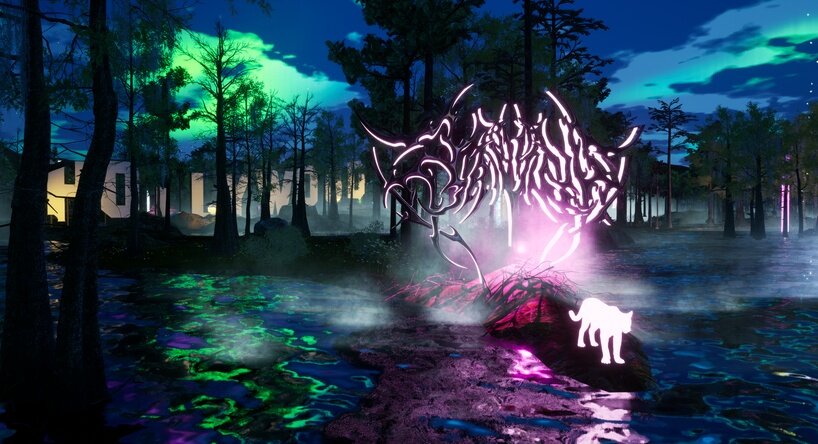
The journey through The Alluvials is marked by striking visual poetry and disorienting narrative shifts. In one prominent level titled Extinction Burst, the experience opens in a surreal, saturated environment: a brilliant, burning red forest where a solitary mountain lion prowls slowly down a vibrant fuchsia pathway. As the player moves through the scene, the dense foliage gives way to an expansive, dried-out basin blanketed in stark white particles drifting softly through the air.
Upon closer inspection, these drifting flakes reveal themselves not as ash, but as a swarm of delicate desert moths. As the player approaches a solitary desert tree struggling to survive near the center of the desolate basin, a disorienting question materializes across the hazy blue sky in glowing letters: “ARE YOU MOTH OR ARE YOU TREE?”
This pivotal moment forces a binary choice upon the player, with each path offering radically different phenomenological encounters with the desert landscape. Depending on whether one chooses the migratory, fleeting consciousness of the moth or the rooted, slow-time existence of the desert tree, the surrounding environment transforms, reflecting the distinct ecological pressures and temporalities of each organism.
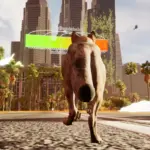
In other levels throughout the game, the scope broadens further. Players find themselves navigating the suffocating heat of a raging forest fire, adopting the consciousness of a lone wolf roaming across a barren, sand-choked Los Angeles, or piloting a high-speed airboat tearing through the murky, industrialized channel of the Los Angeles River as evening falls. Through these diverse embodied viewpoints, Bucknell challenges the player’s baseline assumptions about agency, survival, and perception. The work grants an intimate, somatic understanding of things humans routinely take for granted—the navigational intelligence of a moth, the resilient endurance of a yucca plant, or the heavy, burdened flow of an engineered waterway.
Exhibition History and Global Reach
Since its inception, The Alluvials has transcended traditional digital boundaries, manifesting across a diverse array of physical formats in contemporary art spaces, galleries, and public venues throughout the United States, Europe, and Asia. In each new geographic context, the work adapts to its architectural surroundings, taking on physical forms that amplify its uncanny themes.
When the original film was featured as part of the LUMINEX public art initiative in downtown Los Angeles, it was projected as a large-scale, four-channel work across urban facades. Towering scenes of forest fires illuminated the side of a concrete building, creating a startling, layered reflection that blurred the boundaries between the real metropolis and its fictional, climate-ravaged counterpart.
Later, when the video game iteration was showcased at the HEK (House of Electronic Arts) Other Intelligences exhibition in Basel, Switzerland, the presentation strategy shifted to embrace domestic comfort and immersive play. Visitors were invited to sink into soft, pink camouflage beanbag chairs arranged across a gallery space completely washed in fuchsia lighting, transforming the act of engaging with speculative climate futures into a communal, tactile experience.
How to Live in the World of The Alluvials
At its core, The Alluvials functions as a sophisticated work of speculative fiction that looks forward into an uncertain future while carrying the heavy, familiar weight of a parable that humanity has enacted repeatedly throughout history. True to the responsive environments built within modern game engines, Bucknell translates the abstract warnings, corporate promises, and alarming statistical projections found in daily news cycles into tangible, navigable spaces.
The project offers audiences an opportunity to move level by level through the logical, compounding consequences of contemporary human actions if current trajectories remain unchecked. Yet, rather than wallowing in pure nihilism, the posthuman utopia sketched by Bucknell proposes a radical departure from anthropocentric thinking. It suggests that a viable future cannot be built on the same exploitative logics—such as artificial water manipulation and endless urban expansion—that led to ecological collapse in the first place.
Instead, The Alluvials suggests that humanity must learn to look forward by aligning its perspectives with the logic, resilience, and complex processes of the natural world, urging a fundamental paradigm shift before these speculative scenarios become our inescapable reality.
Project Information:
- Name: The Alluvials
- Date: Video work (2023) and video game (2024)
- Artist: Alice Bucknell (@alicebucknell)
This project is part of designboom’s POSTHUMAN UTOPIAS chapter, which explores what happens when humans are no longer considered the measure of all things. The editorial series examines interspecies architecture, living materials, regenerative landscapes, and emerging technologies in partnership with INDX|GLOBAL.