






Even the most diligent and visionary architecture and design firms frequently find their valuable creative time compromised by stubborn bottleneck processes, fragmented workflows, and inefficient digital systems. In the fast-paced world of modern design, every single week can see hours lost as professionals are forced to dig through endless email threads, manually search for technical specification sheets, organize chaotic file structures, or track down pricing and product options scattered across multiple disconnected platforms. These administrative hurdles not only drain productivity but also disrupt the deep focus required for high-level creative work. That is precisely where Bitreel’s innovative suite of AI Knowledge Agents steps in to offer a transformative solution.
As part of Bitreel’s broader, comprehensive ecosystem of visualization tools and digital infrastructure tailored specifically for the architecture and design industries, this newest offering gives designers instant, frictionless access to the critical information that might otherwise take hours of frustrating manual labor to track down. Developed in close collaboration with Amazon Web Services, Bitreel’s AI Knowledge Agents are capable of surfacing complex specification sheets and other essential design details within a matter of seconds. By bridging the gap between vast repositories of product data and the everyday needs of the studio, the technology allows designers to stay entirely immersed in their creative flow without breaking their vital concentration.

This development marks a genuine turning point for the profession, but industry leaders note that it also represents a much larger, necessary shift toward integrated, invisible infrastructure for the behind-the-scenes work that powers creative firms. The overarching philosophy of the platform is rooted in the idea that the best technology is fundamentally unobtrusive. As Cosmo Kramer, the Chief Executive Officer of Bitreel, points out, the goal of modern enterprise design infrastructure is to fade entirely into the background so that creators can focus exclusively on their craft. If a professional is forced to pay attention to the system itself rather than the actual design work, the technology has not yet fulfilled its true purpose.
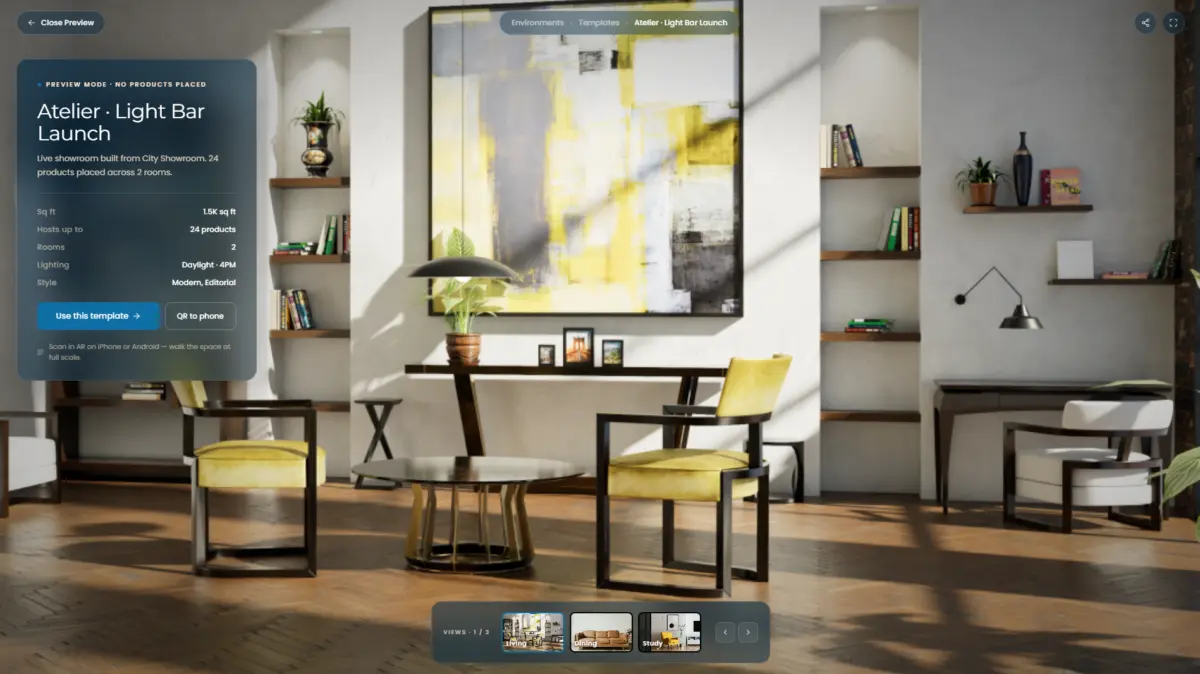
At the very core of Bitreel’s corporate ethos lives an unwavering dedication to supporting and elevating the human creative process rather than replacing it. Recognizing that intelligence agents are most powerful when paired with intuitive creation tools, the system that surrounds Bitreel’s AI Knowledge Agents also incorporates two cornerstone creative utilities: Virtual Environments and the 3D Configurator. The Visual Environments tool is designed to meticulously map out photoreal spaces that instantly bring interior concepts to life, while the 3D Configurator creates spec-ready product offerings that are both temporally punctual and structurally exact.
Elaborating on how these digital components interact during a typical project workflow, Kramer explains that the intelligent agents do far more than simply answer dry factual questions. Instead, they actively pair with Bitreel’s suite of visual tools to generate organic inspiration. Under this collaborative model, a designer can verbally describe a project or a specific aesthetic direction, and the AI Knowledge Agent, working in tandem with the 3D Configurator and advanced image generation algorithms, can rapidly produce a comprehensive set of visual options illustrating what a finished space could realistically look like. To ensure that creativity remains grounded in practical reality, a proprietary coordination layer known as Bitreel Connect sits underneath the entire process as a reliable guardrail. This ensures that every single design option presented to the professional is something that could actually be manufactured and built in the physical world, rather than merely existing as an appealing image on a computer screen.

Rather than imposing a standardized, one-size-fits-all software rollout that forces creative teams to alter their habits, Bitreel’s systems are custom-tailored to mesh directly with existing firm workflows. This approach is aimed at creating operational processes that integrate seamlessly into daily studio life and stand the test of time. Kramer emphasizes that the company does not show up at a firm’s doorstep with a rigid, preconceived idea of how a creative team should operate. Instead, Bitreel invests significant time up front learning the unique rhythms of how each client already works, and then builds the technical architecture around those established patterns. While Kramer acknowledges that this customized approach is inherently slower at the very beginning of an implementation, he maintains that it is ultimately the only way for digital infrastructure to hold up successfully over the long term.
Professionals across the design and manufacturing sectors are already taking serious notice of this methodology. From prominent industry names such as HBF, 3form, and Hellman-Chang to public sector entities like the U.S. General Services Administration, Bitreel’s rapidly growing roster of enterprise clients is actively utilizing the platform to dramatically speed up operational processes and unify fragmented workflows in ways that are precisely tailored to their own unique organizational needs.
This enterprise adoption is no accident, as the underlying architecture was engineered from the ground up to solve deep corporate data challenges. Built in partnership with Amazon Web Services, Bitreel’s agents are specifically designed to connect previously unstructured and isolated sources of data while maintaining the rigorous security standards required to hold up in demanding enterprise environments. As Kramer notes, the true value of the technology extends far beyond delivering quick answers to an individual designer working on a tight deadline; rather, it provides consistent, secure, and reliable access to institutional knowledge across an entire organization.