





Moisturizing has evolved from an optional grooming step into the absolute cornerstone of modern men’s daily skincare. Dermatologists emphasize that applying a daily moisturizer is essential for maintaining a resilient skin barrier and preventing transepidermal water loss, a key factor in keeping the skin properly hydrated, balanced, and functioning effectively.
Dr. Nicole Ruth, a board-certified dermatologist practicing at Weiser Skin in SoHo, notes that beyond simple hydration, high-performance moisturizers perform complex multitasking functions, ranging from replenishing essential lipids to restoring structural hydration. However, finding the ideal product requires navigating a vast landscape of formulations. A formula engineered to control oil on a grease-prone complexion will rarely satisfy the demands of dry or flaking skin. Furthermore, daytime requirements—which often call for lightweight absorption or built-in sun protection—differ significantly from the rich, cocooning textures needed for overnight barrier repair.
To identify the top performers in an increasingly crowded market, extensive testing was conducted over the past year across a wide variety of textures, price points, and skin conditions. Supported by professional insights from Dr. Ruth and Dr. Kunal Malik, a dermatologist at Spring Street Dermatology in New York City, this comprehensive evaluation highlights the best men’s moisturizers available, breaking down the essential science, formulas, and individual skin needs that dictate proper hydration.
Key Factors to Consider When Selecting a Moisturizer
Selecting an effective face moisturizer involves understanding how ingredients, textures, and environmental conditions interact with individual skin chemistry. While price points vary dramatically, dermatologist testing confirms that an accessible $15 formula can perform just as effectively as a luxury option if its active ingredients align with the user’s specific skin requirements.
Brand Reputation and Formulation Standards
The market features established dermatological brands such as CeraVe, La Roche-Posay, and Kiehl’s, alongside contemporary skincare innovators like Malin+Goetz, Youth to the People, Caldera + Lab, Beau Domaine, and Augustinus Bader. While established brand reputations offer a reliable benchmark for safety and quality, dermatologists emphasize that formulation integrity and ingredient compatibility matter far more than a luxury label or price tag.
Essential Ingredients
Dermatologists recommend prioritizing products that combine three distinct classes of moisturizing agents:
- Humectants: Ingredients such as hyaluronic acid and glycerin draw moisture from the environment and deeper dermal layers into the surface skin.
- Barrier-Supporting Lipids: Ceramides reinforce the skin’s natural lipid barrier, sealing in moisture and blocking external irritants.
- Emollients and Occlusives: Ingredients like squalane and natural plant oils soften the skin and physically prevent water loss.
- Multitasking Actives: Niacinamide offers significant barrier-supporting and anti-inflammatory benefits, while squalane helps mimic natural skin oils to prevent dehydration.
Ingredients to Exercise Caution With
According to Dr. Ruth, no single ingredient must be universally avoided by every individual, but specific skin conditions require tailored caution. Men with sensitive skin or eczema should generally choose fragrance-free formulations, as added fragrances are a common trigger for allergic contact dermatitis. Those with acne-prone complexions should seek oil-free or non-comedogenic labels designed not to clog pores. While drying alcohols can strip skin of essential moisture, fatty alcohols such as cetyl and cetearyl alcohol are beneficial emollients that soften the skin structure.
Texture and Consistency
Moisturizer textures range from dense balms and rich creams to fluid lotions and fast-absorbing gels. Texture directly reflects the ratio of water, oils, humectants, and occlusives within the formula. Creams and balms provide intensive barrier protection for dry or compromised complexions, whereas gels and lightweight lotions suit oilier or acne-prone skin types. Modern formulation techniques have also yielded advanced gel matrices that deliver high-potency hydration without adding weight or shine.
Environmental and Climate Adaptations
Skincare routines should adapt to changing seasons and environmental conditions. Cold, dry winter weather often requires a thicker, more occlusive cream to guard against harsh winds and low ambient humidity. Conversely, warm and humid climates favor lightweight gels or fluid lotions that hydrate without leaving a heavy, suffocating residue.
Tailoring Hydration to Specific Skin Types
Understanding individual skin dynamics is crucial for selecting a formula that resolves specific concerns without introducing secondary issues like breakouts or irritation. Dr. Kunal Malik breaks down the baseline criteria across primary skin categories:
- Oily Skin: Complexions with active oil production require lightweight, oil-free, water-based formulations labeled as non-comedogenic. Dense, heavy creams containing occlusive oils should be avoided to prevent pore congestion.
- Dry Skin: Dehydrated skin benefits from humectant-rich formulas combining hyaluronic acid and glycerin with lipid-replenishing ceramides and emollients like squalane or shea butter. Richer cream textures provide the necessary occlusion to repair flaky or compromised skin barriers.
- Sensitive Skin: Sensitive complexions respond best to minimalist, fragrance-free products featuring soothing agents like colloidal oatmeal alongside barrier-repairing ceramides.
- Acne-Prone Skin: Balancing moisture without triggering breakouts requires non-comedogenic formulas. Ingredients like salicylic acid or benzoyl peroxide target active acne, while niacinamide calms background inflammation and reinforces barrier strength.
- Combination Skin: Complexions that exhibit oiliness in the T-zone alongside dryness on the cheeks require balanced formulations capable of delivering targeted hydration while managing excess shine.
- Normal Skin: Complexions with balanced oil and water levels thrive on mid-weight or fluid lotions packed with fundamental hydrators like hyaluronic acid, glycerin, and squalane.
- Mature Skin: Aging skin experiencing a loss of elasticity, density, and natural lipid production benefits from rich hydrating creams supplemented with restorative actives, including peptides and niacinamide, alongside consistent daily broad-spectrum sun protection.
Top-Rated Moisturizers for Men: Evaluated and Tested
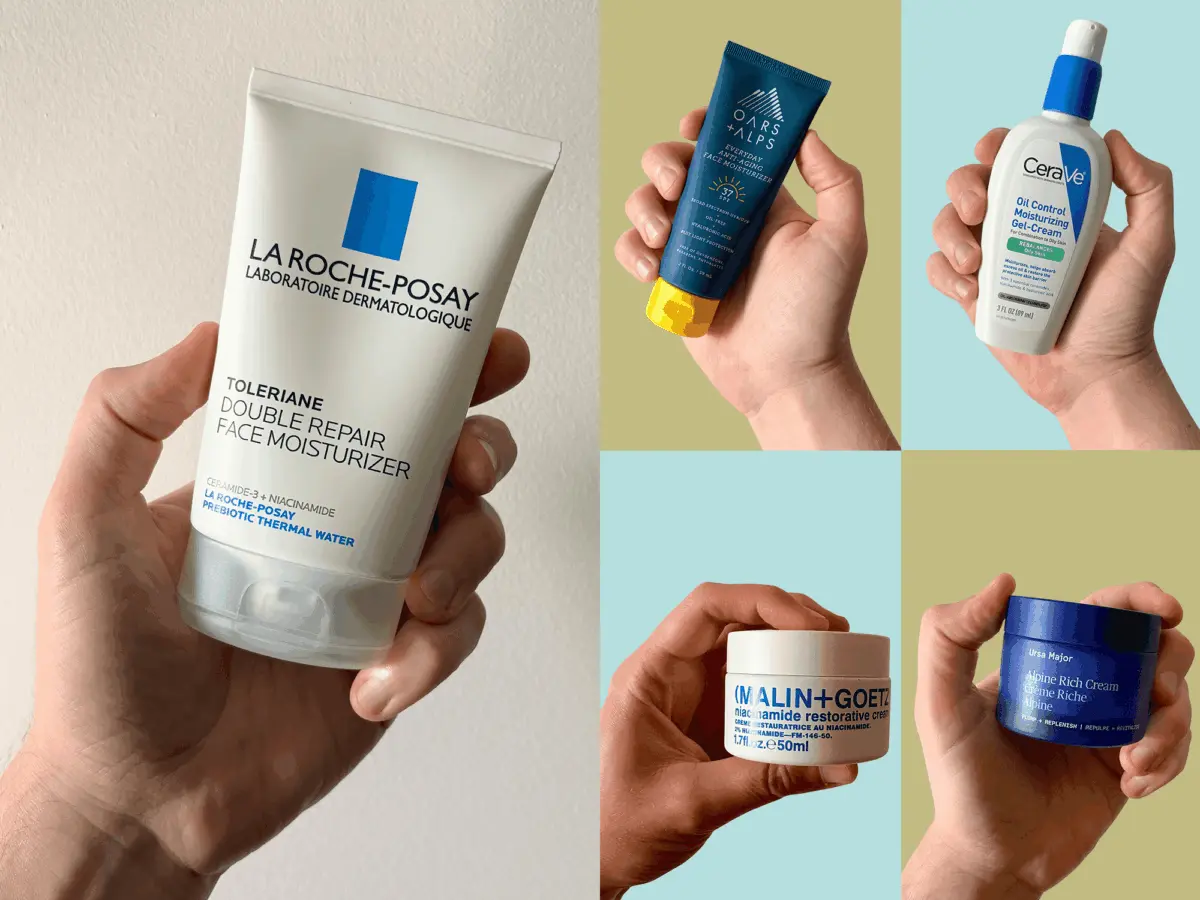
Best Overall Moisturizer: La Roche-Posay Toleriane Double Repair Face Moisturizer
Retail Price: $20–$25
La Roche-Posay Toleriane Double Repair Face Moisturizer stands out as a universally versatile performer suitable for normal, dry, and sensitive skin types. Formulated with dermatological rigor, it features a fluid cream-lotion texture that absorbs rapidly into the skin without leaving a greasy sheen.
The formula combines barrier-repairing ceramides, soothing niacinamide, and water-binding glycerin with La Roche-Posay’s proprietary prebiotic thermal water. This combination soothes irritated skin while actively rebuilding the physical skin barrier. It is fragrance-free, accessible, and balanced enough for both morning and evening application across various climates.
Best Moisturizer for Oily Skin: CeraVe Oil Control Moisturizing Gel Cream
Retail Price: $14–$20
CeraVe Oil Control Moisturizing Gel Cream provides targeted hydration for shiny or grease-prone complexions. Designed specifically to regulate surface sebum, the formula utilizes oil-absorbing silica to produce an immediate matte finish without stripping the skin’s moisture.
Despite its lightweight texture, the gel cream delivers sustained hydration through CeraVe’s signature blend of three essential ceramides, hyaluronic acid, and niacinamide, propelled by MVE technology for controlled release throughout the day. It effectively controls midday shine while leaving the skin balanced and comfortable.
Best Moisturizer for Dry Skin: Ursa Major Alpine Rich Cream
Retail Price: $68
Formulated for severe dryness and harsh winter climates, Ursa Major Alpine Rich Cream delivers deep moisture to depleted skin barriers. Combining clean botanical extracts with proven clinical hydrators, this whipped cream melts into the skin to form a protective layer.
Squalane, glycerin, and ceramides work in tandem to replenish lost lipids, soothe environmental irritation, and restore suppleness to dry, weathered complexions. It functions exceptionally well as a restorative night treatment or as a heavy-duty daily shield against cold, dry weather.
Best Anti-Aging Moisturizer: Malin+Goetz Niacinamide Restorative Cream
Retail Price: $90
Engineered to combat loss of firmness, fine lines, and uneven tone, Malin+Goetz Niacinamide Restorative Cream utilizes a concentrated 2% niacinamide complex within a fragrance-free, medium-weight cream.
Niacinamide acts as a multi-functional active, working to improve elasticity, refine uneven surface texture, and reinforce barrier health. Continued testing demonstrated visible improvements in skin plumping, particularly around stress-prone area like the mouth and jawline, delivering refreshed skin texture without feeling overly heavy.
Best Value Moisturizer: Vanicream Daily Facial Moisturizer
Retail Price: $13–$15
Vanicream Daily Facial Moisturizer offers an exceptional ingredient profile at an accessible price point, earning widespread praise from dermatologists and grooming editors alike. Designed specifically for reactive and sensitive skin, the minimalist formulation omits common irritants, dyes, fragrances, and parabens.
The lightweight lotion contains hyaluronic acid combined with five essential ceramides. This combination supplies essential humectant moisture alongside barrier-supporting lipids, offering top-tier hydration and defense at an economical cost.
Best Overnight Moisturizer: Kiehl’s Midnight Recovery Omega-Rich Botanical Night Cream
Retail Price: $53–$62
Designed to align with the skin’s natural nocturnal repair cycle, Kiehl’s Midnight Recovery Omega-Rich Botanical Night Cream features a dense, whipped consistency rich in plant-based fatty acids and botanical oils.
This night treatment wraps the skin in a protective layer that locks in moisture while you sleep. Users consistently wake up to plumper, noticeably smoother, and visibly rested skin, making it a reliable option for restoring dry or fatigued skin overnight.
Best Moisturizer with SPF: Oars+Alps Everyday Face Moisturizer SPF 37
Retail Price: $17–$22
Combining everyday hydration with broad-spectrum sun protection, Oars+Alps Everyday Face Moisturizer SPF 37 exceeds the dermatologist-recommended minimum threshold of SPF 30.
The lotion blends hyaluronic acid and glycerin for continuous hydration with Alpine Caribou Moss extract to shield against environmental aggressors. Formulated without a chalky white cast or heavy sunscreen residue, it absorbs cleanly into the skin, making daily morning application and desktop reapplication effortless year-round.
Notable Hydrators Worth Mentioning
- Caldera + Lab The Hydro Layer ($65): A high-tech gel-cream hybrid featuring hyaluronic acid, niacinamide, squalane, and plant-derived exosome technology designed to support cellular skin repair.
- Nivea Men Sensitive Liquid Moisturizer ($10): A fluid, splash-on liquid hydrator that absorbs instantly into the skin, offering fast relief for sensitive skin prone to post-shave irritation.
- Prettyboy Revival Recovery Gel Moisturizer ($38): A multi-purpose, lightweight gel-cream engineered for post-shave soothing and barrier recovery. It holds the distinction of being the first men’s skincare product to earn the National Eczema Association Seal of Acceptance.
- Beau Domaine The Rich Cream ($70–$99): A dense, luxurious cream powered by French vineyard antioxidants, ideal for evening restoration and dry skin relief.
- The Ordinary Rice Lipids + Ectoin Microemulsion ($13): A milky, serum-light emulsion that delivers deep, barrier-restoring hydration at an accessible price point.
- Octo Restorative Moisturizer ($135): A minimalist formula containing just eight raw ingredients—including sustainably harvested Amazonian bioactives—designed to nourish the skin without fillers.
Frequently Asked Questions
Do men require specific moisturizers formulated exclusively for male skin?
Dermatologists agree that men do not strictly require products explicitly marketed to male consumers. While male skin is statistically thicker and often produces more surface sebum due to hormonal differences, individual skin type, sensitivity, and lifestyle factors matter far more than gender-based branding. Men can safely and effectively use any well-formulated skincare product that matches their specific skin needs.
Is a moisturizer with built-in SPF sufficient for daily sun protection?
A moisturizer with broad-spectrum SPF 30 or higher offers adequate defense for everyday indoor activities and incidental sun exposure, provided it is applied generously. However, for extended outdoor activities, swimming, or active sports, dermatologists advise pairing a dedicated moisturizer with a separate, water-resistant sunscreen re-applied every two hours.
How often should face moisturizer be applied?
For optimal barrier support and sustained hydration, dermatologists recommend applying moisturizer twice daily: once in the morning following cleansing (and prior to sun exposure) and once at night after evening cleansing to support overnight skin repair.