





It has been a remarkably active week in the wider world, spanning curious scientific anomalies and strange real-world phenomena. From migrating phantom islands and avocados that reportedly reverse their sex multiple times a day, to the revelation that raindrops carry an electric charge capable of eroding car coatings—and physicists potentially edging closer to detecting dark matter—the world continues to prove wonderfully eccentric. But for collectors and enthusiasts keeping score in the global marketplace, the real action lies in the latest installment of Hodinkee’s weekly "What’s Selling Where" column, tracking the most compelling vintage and neo-vintage watches heading to the auction block.

Looking back at last week’s tracked lots, the market proved responsive and varied. The Hamilton Cross Country changed hands for $1,200, while the Heuer Titanium Quartz achieved $340 AUD. The robust Movado Super Sub Sea chronograph commanded $4,250, and a Breitling 810 realized $2,750, setting the stage for subsequent sales.
As auction houses around the globe prepare their autumn catalogs, a fresh crop of remarkable timepieces has emerged, offering everything from historic RAF sector clocks and co-signed masterpieces to unconventional independent complications and misunderstood space-age chronographs. Among the standout offerings are a transitional Zenith chronograph, an exceptionally rare Patek Philippe world timer bearing a historic retailer signature, an intriguing independent regulator, and a titanium marvel that accompanied astronauts into the cosmos.

A Zenith De Luca, Neo-Vintage Chronograph
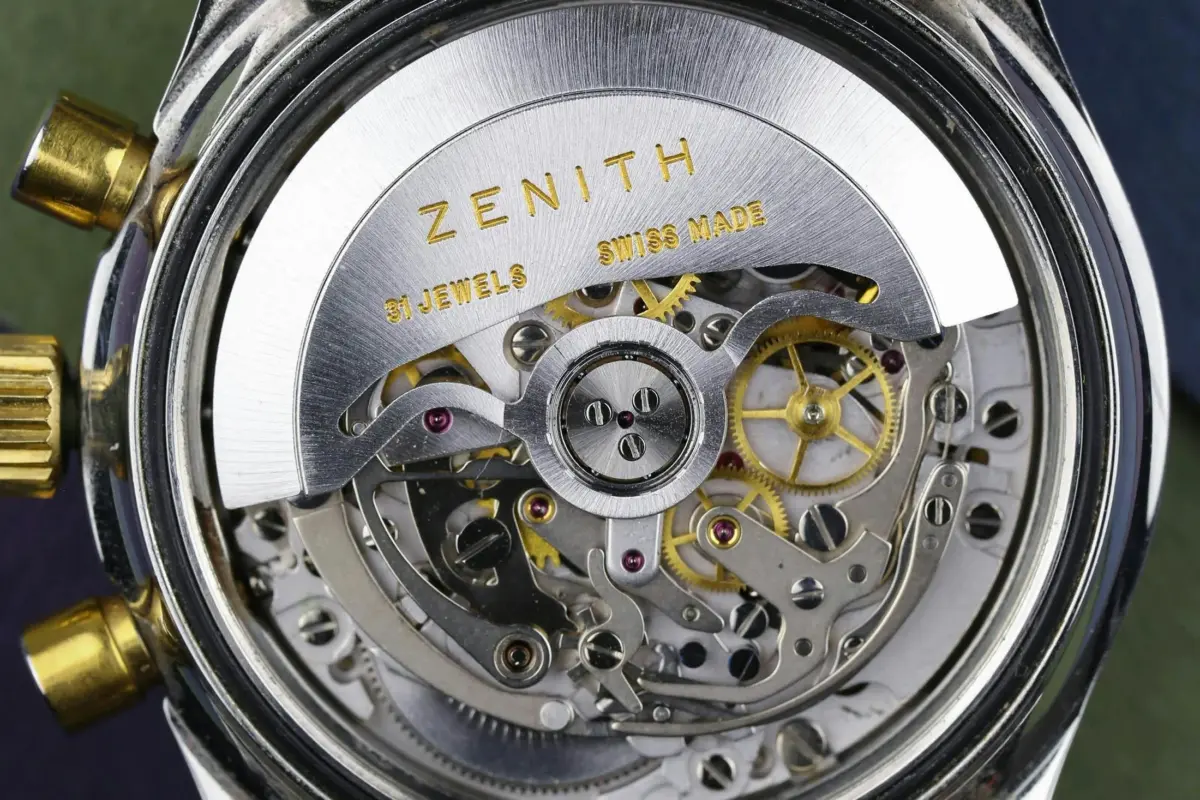
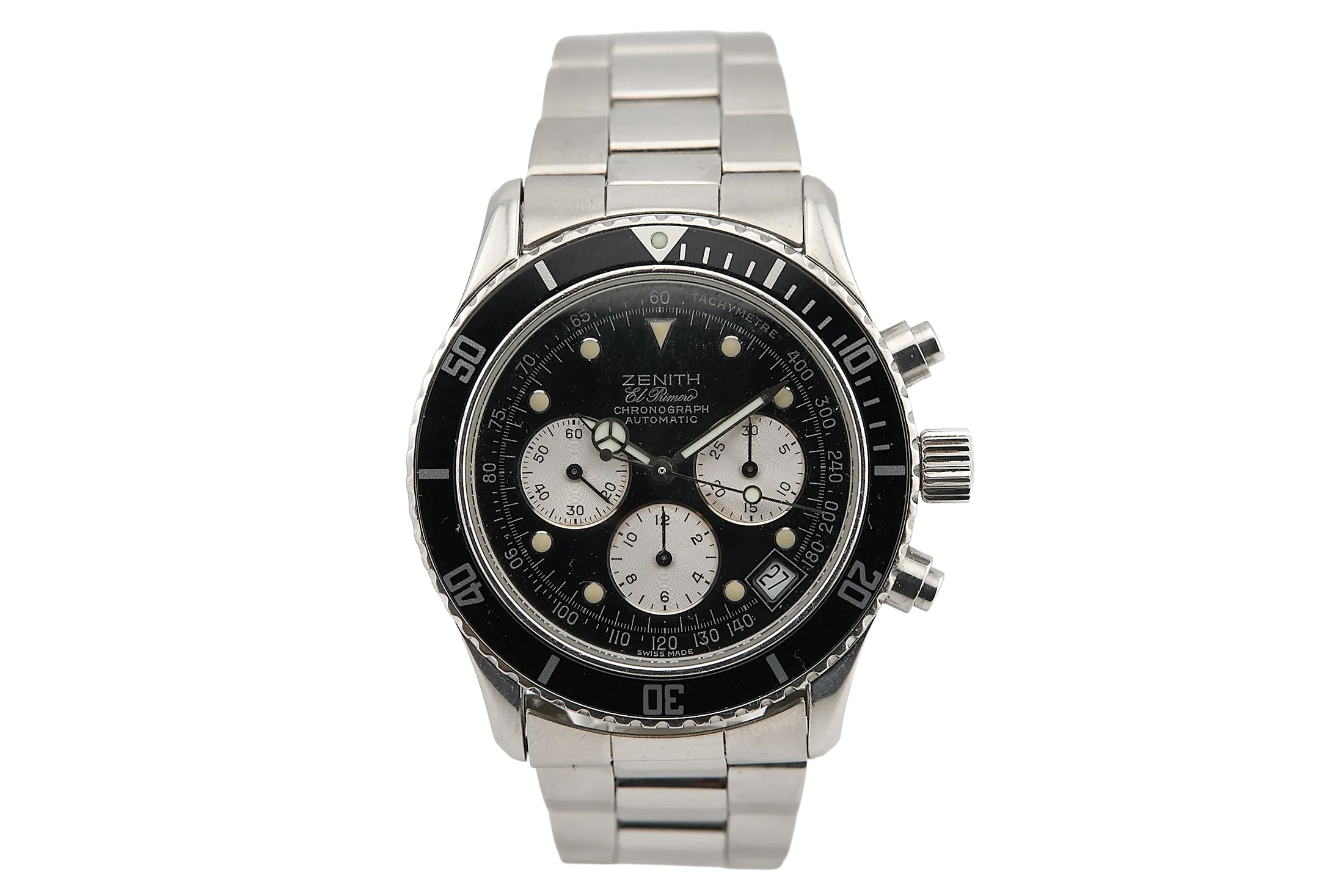
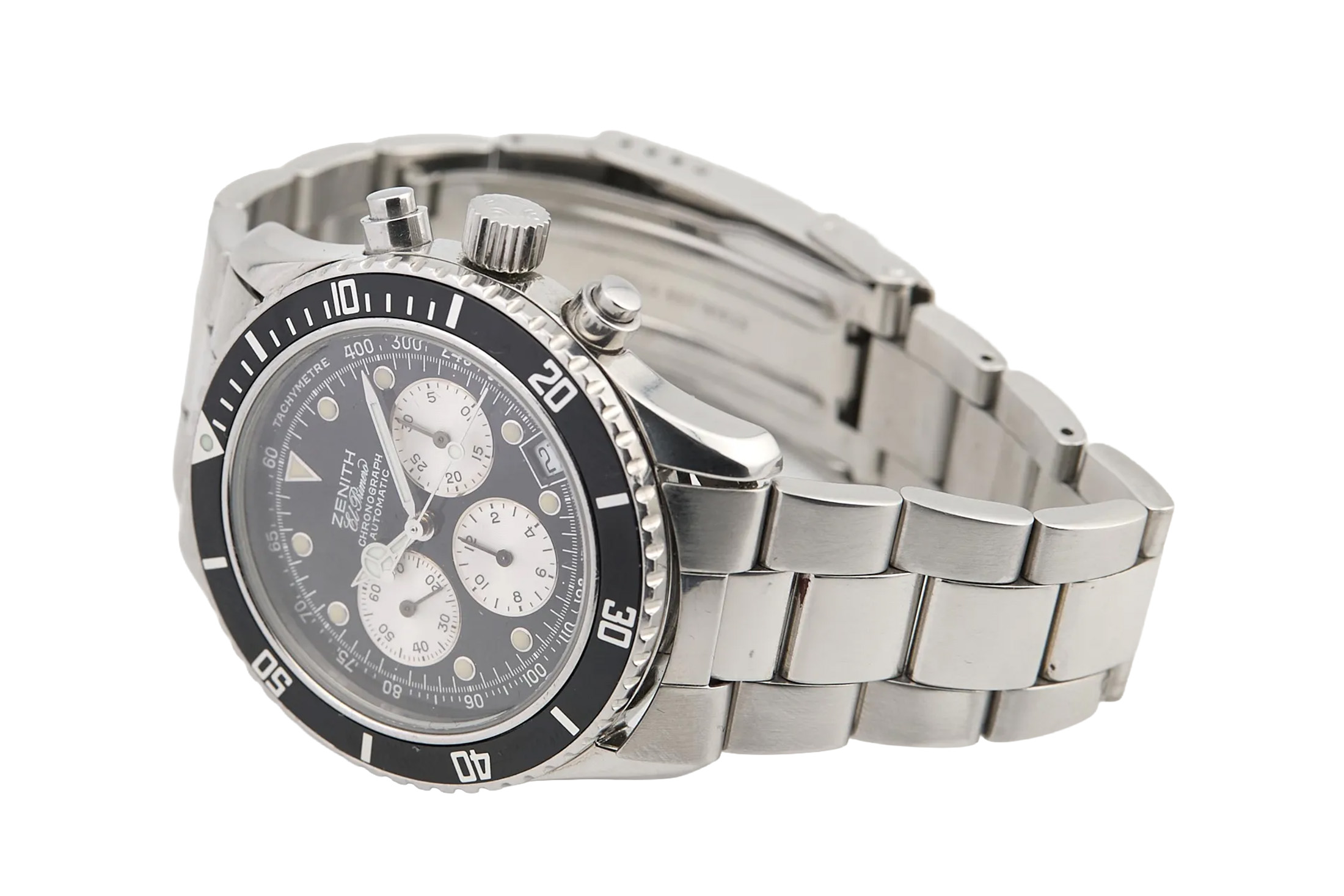
Apologies are in order if you have not yet been drawn down the fascinating wormhole that is the Zenith De Luca. Produced between 1988 and 1996 and named in honor of the Italian importers who commissioned Zenith to design and manufacture the watch, the De Luca stands as a quintessential transitional piece. It marked a critical turning point for the brand, which had spent the early 1980s supplying its legendary movements to external houses like Rolex and Ebel without producing standalone chronographs under its own banner.
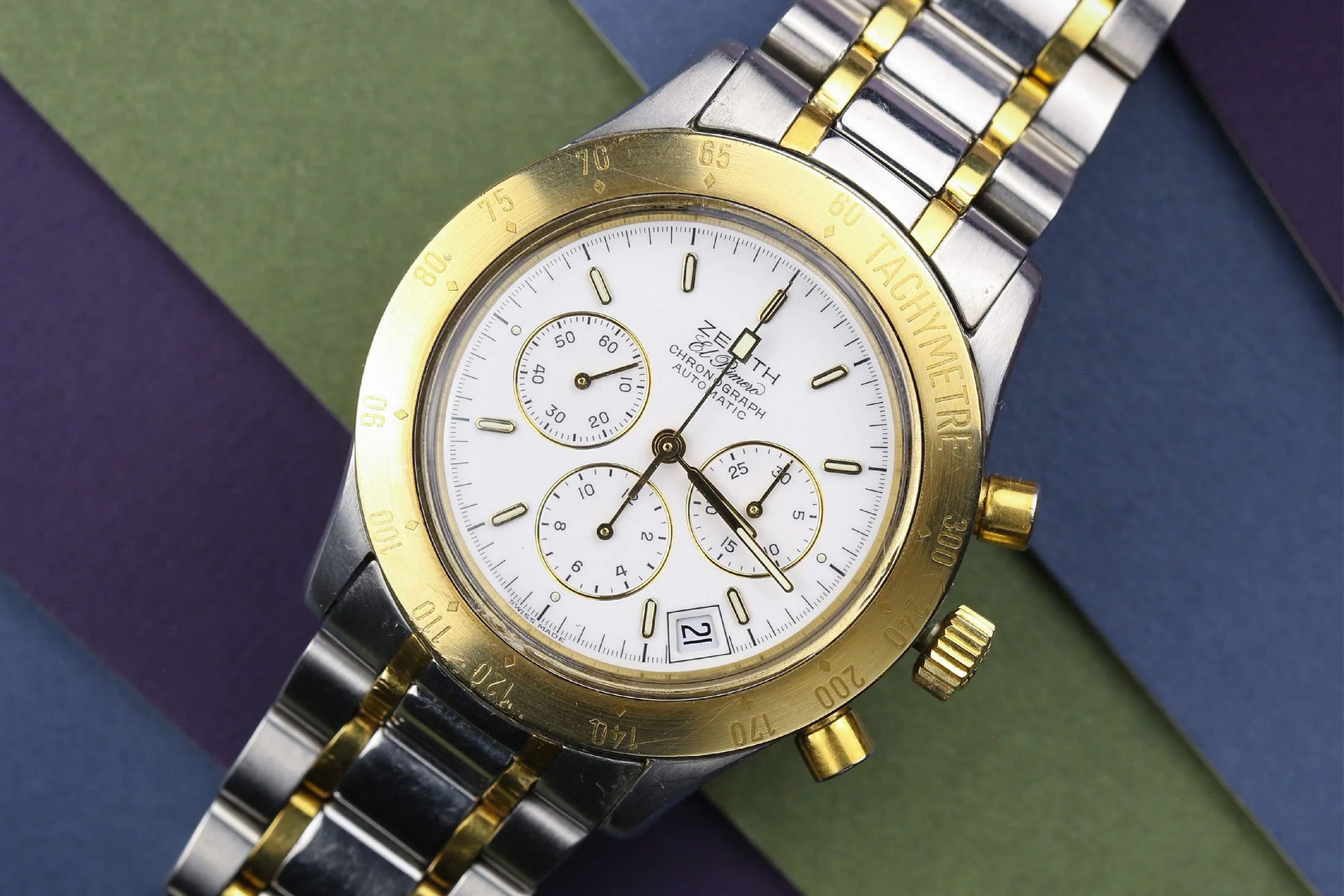
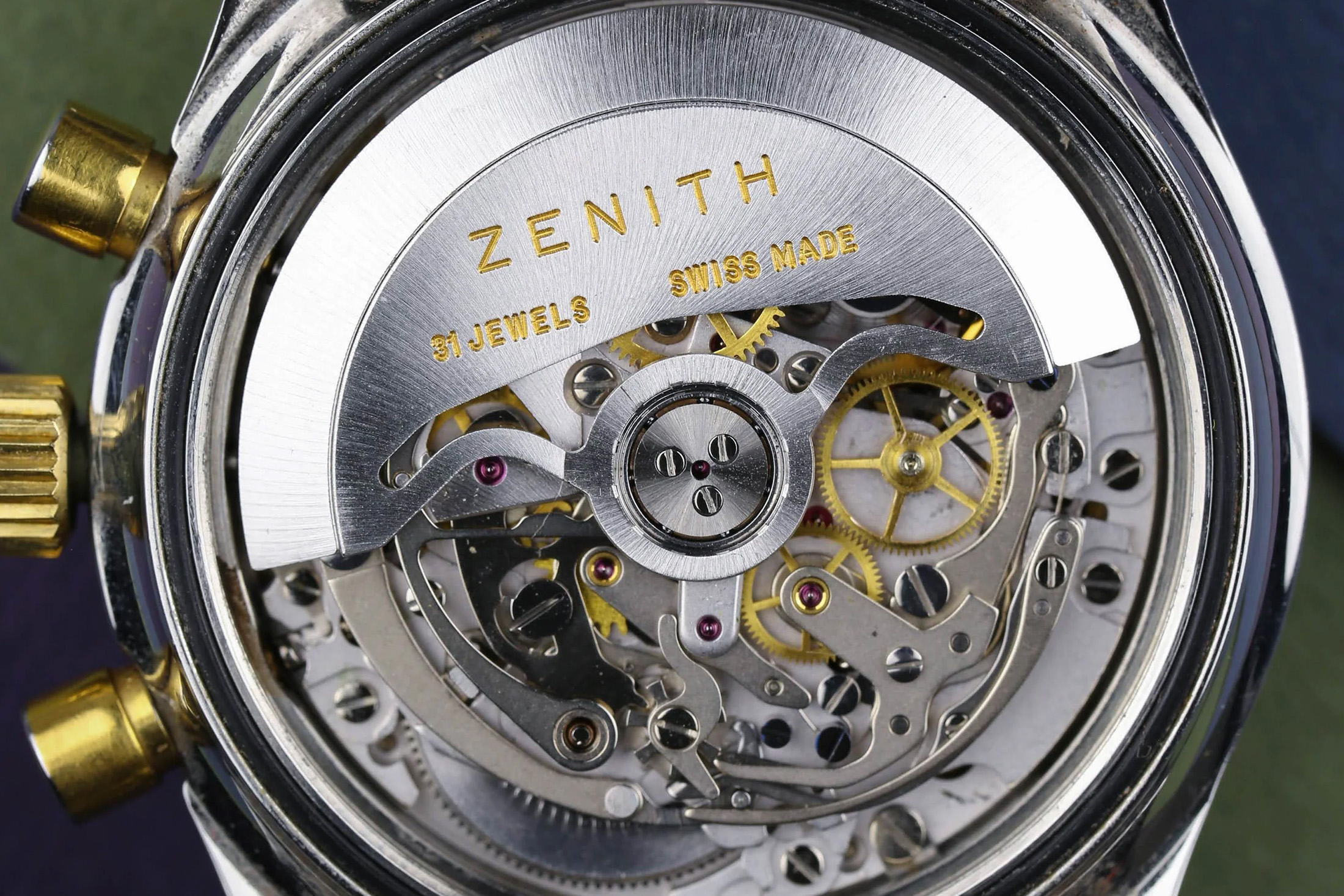
That dynamic shifted with the arrival of the De Luca, an aesthetic spiritual successor to the Zenith A277. While early examples housed the legendary 3019 movement—which subsequently evolved into the Zenith 40.0 and later the caliber 400—the watch retained a consistent 40mm stainless steel case and rotating bezel across its run. Despite spanning only four primary variants, the De Luca family is surprisingly complex, featuring at least three distinct handset styles (paddle, dauphine, and Mercedes), three different pusher configurations, varied crown executions, and subtle shifts in dial markings and luminous plots.
Only about 6,500 examples of the De Luca were produced over its eight-year lifespan, positioning it as a clear market contemporary to the Rolex Daytona—a rivalry that sharpened further with the introduction of the De Luca II, which swapped the rotating bezel for a fixed tachymeter scale. Though Zenith has yet to officially revive the line, anticipation remains high as 2028 approaches, marking the 40th anniversary of its debut.
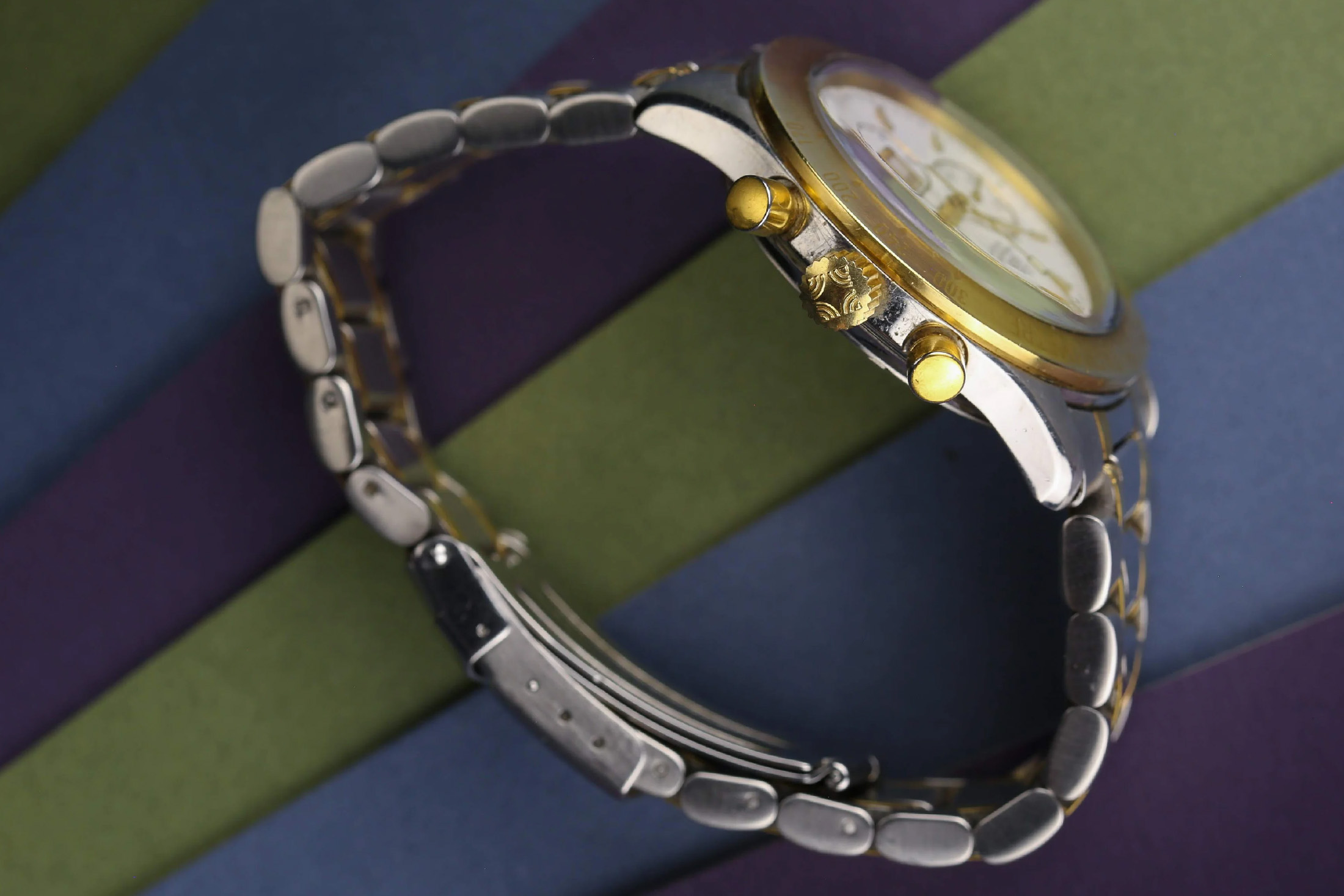
An upcoming example heading to auction in Paris on September 5th offers collectors a compelling opportunity. Estimated between 3,500 and 4,500 euros, this particular watch appears to be a Mark 3 De Luca in exceptional condition, accompanied by its original bracelet featuring polished center links, along with its original box and papers. While purists might debate the 22mm lug spacing or note that the case finishing could be sharper, these are minor critiques for a pure sport chronograph that has quietly commanded upwards of $5,000 over the past decade while remaining delightfully uncommon.
Patek Philippe World Timer (Ref. 1415), Retailed by Beyer
In March, the watch world watched closely as Patek Philippe announced its acquisition of Beyer, the venerable 266-year-old Zurich-based retailer that had been selling Patek timepieces since 1846. In a fitting stroke of historical symmetry, the Zurich auction house Schuler Auktionen is now offering a co-signed Patek Philippe Reference 1415 World Timer during its September auction series running from the 8th to the 11th.
It is difficult to overstate the significance of the Reference 1415. The Wenger-produced case, complete with its characteristic teardrop lugs, has aged gracefully over eight decades, while the dial and hands remain in remarkable condition. Underneath the caseback beats the caliber 12-120, a movement celebrated for its reliability and precision, having served as the mechanical foundation for the iconic Patek Reference 96 starting in 1934. Rarity is built into the DNA of the model; just over 100 examples of the Reference 1415 were manufactured between 1939 and 1954. Adding to its historical cachet is the fact that the hands on many examples were crafted by Lewis Cottier himself, the pioneering horologist who invented the world time complication.
The watch is accompanied by an extract from the Patek Philippe archives as well as a letter from Beyer confirming its sale in 1945. Intriguingly, historical Beyer ledgers recorded the watch as schwerverkäuflich—a wonderfully candid German term reflecting how difficult high complications were to sell during that era. Backed by an estimate ranging from CHF 150,000 to 300,000, this historic world timer stands as a premier highlight of the upcoming Zurich sales.
Carlo Ferrara CF1997 Regulator
For collectors seeking something decidedly unconventional, Bonhams is set to offer a fascinating piece of late-20th-century independent watchmaking: the Carlo Ferrara CF1997 Regulator. While major houses dominated the headlines with heritage revivals, independent watchmakers during the late 1990s were experimenting boldly with mechanical displays.
At first glance, the watch appears to be a relatively straightforward dress piece, but a closer look reveals a striking mechanical innovation. The prominent vertical tracks positioned on the left and right sides of the dial serve as linear pathways along which the hour and minute hands travel. Often colloquially referred to as "dancing hands," this proprietary module forces the hands to slide dynamically across the dial rather than sweeping in a traditional circle.
While reading the time requires a brief adjustment for the uninitiated, the watch offers strong everyday wearability. Housed in a 39mm stainless steel case measuring just over 10mm in thickness, it is powered by a reliable, modified ETA 2892 movement. Seldom seen in the wild, the Carlo Ferrara regulator offers a distinct splash of personality for those looking to stand out. Bonhams will present the watch with an estimate of 800 to 1,200 euros during its sale on September 8th.
Omega Speedmaster First-Gen X-33
Rounding out the week’s notable selections is a timepiece that often provokes debate among purists: the first-generation Omega Speedmaster Professional X-33. Despite occupying a vastly different design universe than the traditional manual-wind Speedmaster Moonwatch, early X-33s are arguably among the most significant yet overlooked chronographs of the late 20th century. Issued to astronauts starting in 1996 and famously utilized on missions well into the modern era, the quartz-driven analog-digital hybrid represents a genuine evolution of space-flown instrumentation.
This specific first-generation example is identified by its rotating bezel—which lacks a luminous pip—and its ridged crown. Despite stepping away from the traditional tonneau silhouette, the watch retains subtle nods to its heritage, utilizing handset designs echoing early Speedmaster references alongside a classic black chapter ring with traditional minute hashes.
Constructed entirely from titanium for both the case and the integrated bracelet, the X-33 wears with exceptional lightness and comfort. While the specialized caliber 1666 movement requires specialized servicing—often necessitating a return to Omega—the trade-off is access to a comprehensive suite of mission-focused complications, including an alarm known for its distinct intensity.
Sourced for auction in Singapore with an estimate ranging from 1,600 to 2,400 SGD, this first-generation X-33 arrives without its original box and papers, but exhibits a well-preserved titanium finish and fully functional mechanics, heading to the block on September 6th.