







For a legacy luxury eyewear house boasting nearly a century of history, past achievements serve as a working vocabulary—a set of foundational principles from which to construct entirely new design sentences. This philosophy underpins the Fall/Winter 2026 collection, the highly anticipated debut from celebrated design duo John Juniper and Jeff Solorio for Morgenthal Frederics. Spanning both optical frames and sunwear, the collection successfully translates the brand’s historic buffalo-horn sensibility into sculptural acetate and finely worked titanium. In doing so, the designers have imbued these alternative materials with the exact same authority, tactile richness, and commanding presence traditionally reserved for horn.
The inception of this new chapter was rooted strictly in restraint. Rather than rushing to overturn the house’s established identity, the designers initiated the process with a careful assessment of its core assets. "Before we changed anything, we wanted to understand what shouldn’t change," Juniper and Solorio explain. Ultimately, the fundamental relationship connecting material integrity, precise fit, everyday comfort, and individual self-expression remained entirely fixed. What shifted instead was the overarching perspective surrounding these elements, challenging acetate and titanium to feel every bit as deliberate, considered, and luxurious as the natural horn upon which the house built its stellar reputation.

Listening to the Material
Buffalo horn is the foundational cornerstone where Morgenthal Frederics began, and its demanding physical properties set the strict terms for everything that followed in the brand’s evolution. "Horn teaches you to listen to the material," the designers note, emphasizing the symbiotic relationship between the artisan and the medium. "Its grain, color, and layering are active parts of the design, so you cannot simply impose a shape on it and expect the best result." This deep-seated deference and respect for raw materials carried over directly into their handling of contemporary acetate and titanium, pushing each medium to articulate its own distinct expressive register.
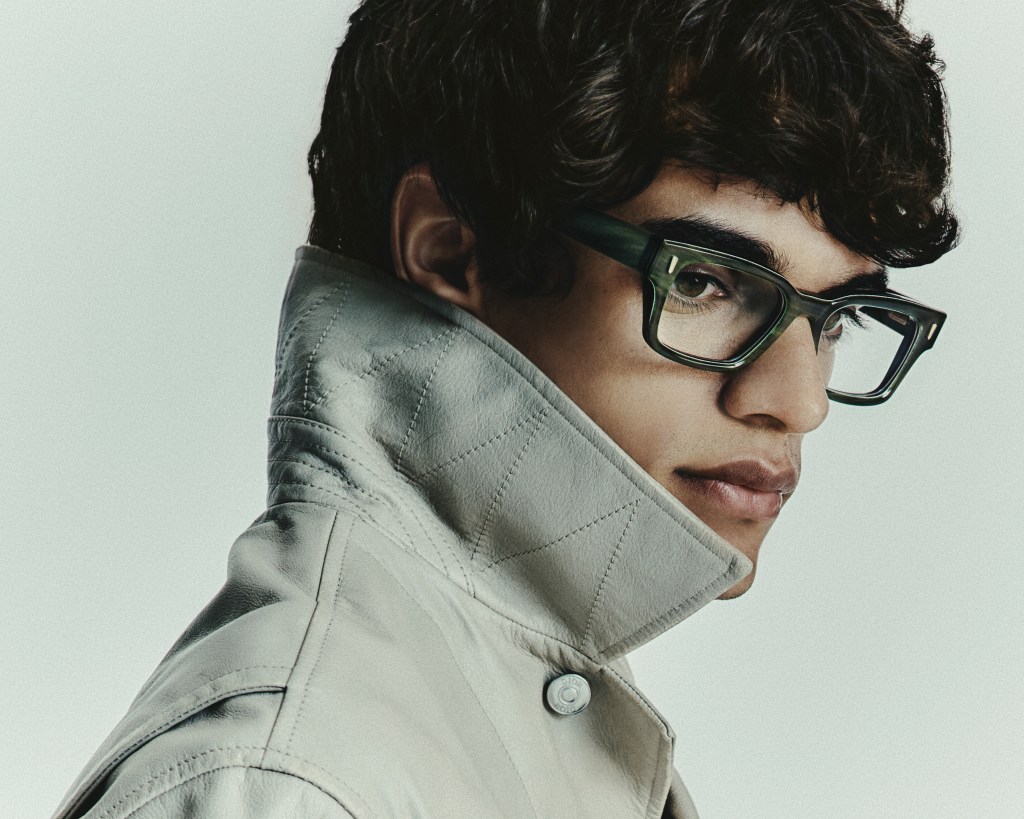
When working with acetate, listening to the material meant confronting the concepts of volume and mass. Juniper and Solorio boldly pushed the material into heavier, more substantial, and highly sculptural forms. However, they simultaneously invested significant engineering efforts into ensuring that this visual weight entirely vanishes once the frame is placed on the face. "Visual weight and physical comfort are not the same thing," they elaborate. "The sculptural quality should be immediately visible; the engineering behind its comfort should almost disappear." The striking presence of the frames registers instantly upon sight, while the ergonomic comfort remains an effortless experience that the wearer never has to actively consider.

Titanium, by contrast, operates through a vastly different mechanism, turning the intricacies of construction and assembly into the primary mode of expression. "A junction, an edge, or a finely worked surface can carry as much character as the overall silhouette," the designers state. Here, extreme precision becomes the overarching artistic gesture, translating into restrained, deliberate moves designed to resonate across the entire architecture of the frame.
A Signature for Those Who Look
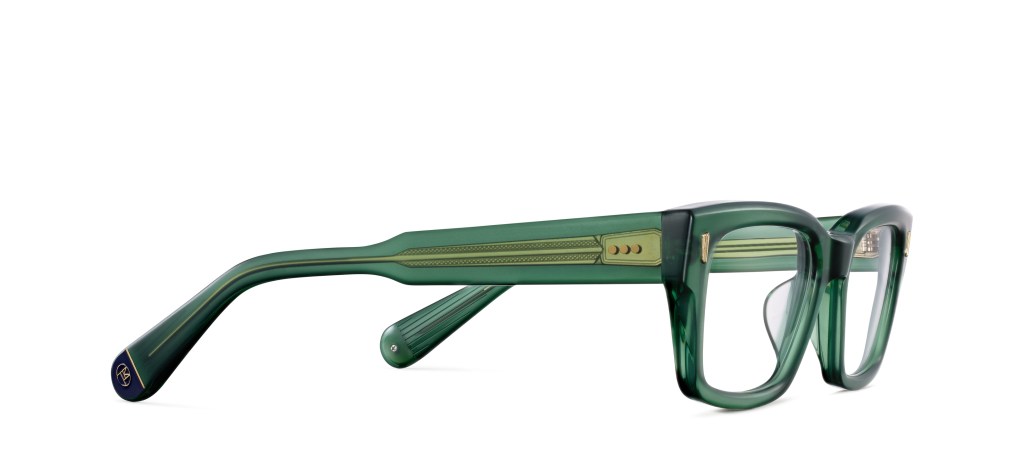
True to the understated luxury that defines Morgenthal Frederics, the recognition points throughout the Fall/Winter 2026 collection are deliberately low-key, shunning overt branding in favor of intimate details. Signature purple temple tips quietly mark the new acetate and titanium styles—a subtle hallmark that most casual observers would easily miss from a distance. "It came from our interest in creating a signature that feels personal rather than promotional," the creators note. These vibrant purple surfaces only reveal themselves as the frame is actively handled, keeping a private point of recognition intimately close to the wearer.
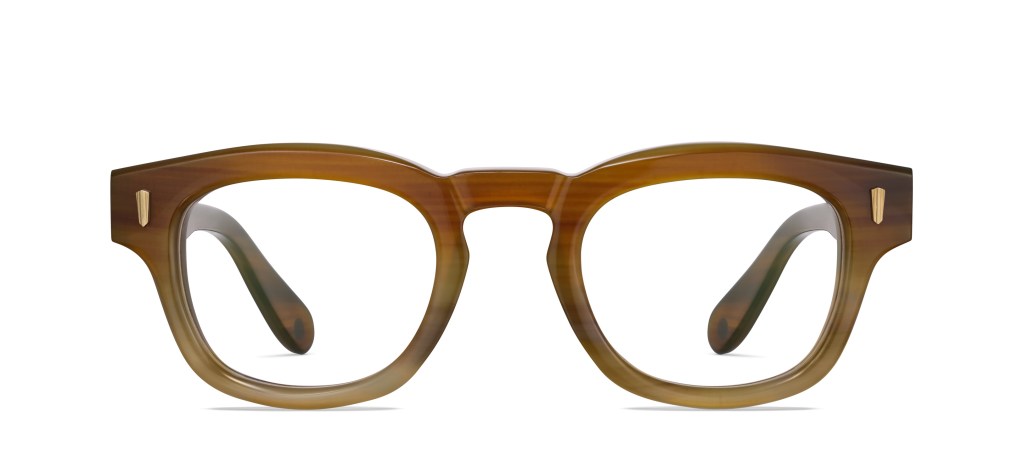
This exact same design logic permeates the hand-etched surfaces and the discreet Morgenthal Frederics symbols embedded into the lenses and nose pads. "Eyewear is experienced at very close range," they observe. "You handle it every day, see it from the inside, and notice things that may never be visible to someone passing on the street." These intricate details generously reward physical proximity, imbuing the object with an understated depth that grows and deepens with daily use.
The Hand of the Maker
The meticulous acetate and titanium styles are expertly handcrafted in Japan, a manufacturing process where the physical act of making invariably transforms the original drawing. "A drawing establishes the intention, but it is not the finished object," Juniper and Solorio reflect. Their ultimate goal is to hold the initial conceptual idea steady while the rigors of construction, painstaking finishing, and the undeniable touch of the artisan elevate it to a higher resolution.
Historically inspired metalwork throughout the collection follows this exact same disciplined approach. Rather than looking to older historical artifacts merely for superficial stylistic reproduction, Juniper and Solorio turned to the past to understand the underlying logic of previous eras. "We were less interested in reproducing a historic object than in understanding the discipline behind it," they state, highlighting "how structure, ornament, and surface can work together without becoming excessive." Once absorbed, filtered, and translated through contemporary proportions, these historic references read as thoroughly modern rather than overly preserved.
Where the Work Settles
A debut collection of this breadth requires strict self-imposing limits, and the designers anchor their vision to four unwavering principles: material integrity, uncompromising precision, ergonomic comfort, and individuality. Within these established boundaries, however, they grant themselves the creative freedom to explore stronger silhouettes, unexpected colorways, and innovative finishes. The ultimate test they continually return to is remarkably simple. "Does the idea feel purposeful, and does it serve the person wearing the frame?" they ask. "Heritage should guide the work, not require us to repeat it." A design successfully passes inspection when it reads as resolutely current while keeping historical rigor and human comfort entirely intact.

Operating as a unified creative force, the duo works collaboratively without carving the collection into separate, isolated territories. "We challenge each decision together, particularly around proportion, restraint, and when a detail has been pushed far enough," they explain. By the time a design fully resolves itself, it belongs indisputably to the house as a whole rather than to either individual author.
The collection is prominently showcased through Heritage in Motion, a dynamic advertising campaign captured by London-based photographer Darren Gwynn that frames the brand’s storied history as an active, living practice. Through this launch, John Juniper and Jeff Solorio have thoroughly absorbed the linguistic traditions of Morgenthal Frederics and begun to expand its vocabulary, one carefully worked surface at a time.
The Fall/Winter 2026 collection is available now at MorgenthalFrederics.com and across the brand’s 13 standalone boutiques, with retail pricing ranging from $795 to $2,995.