





Renowned Austrian graphic designer Stefan Sagmeister is taking his signature data visualizations out of the traditional gallery space and onto the streets. In a unique collaboration with Frankfurt-based sustainable footwear brand ekn, Sagmeister has developed a data-driven sneaker and a leather boot that translate complex global statistics regarding renewable electricity generation and street homelessness into tangible, wearable objects of design.
The two distinct footwear designs are set to accompany his upcoming exhibition, Finally, Something Good., which opens at La Gaîté Lyrique in Paris on October 15, 2026. Rather than simply reproducing existing canvas artworks or prints onto footwear, the cross-disciplinary project merges contemporary graphic design with traditional European shoemaking craftsmanship. According to ekn founder Noel Klein-Reesink, the initiative was born out of a desire to explore the dynamic intersection between Sagmeister’s analytical design philosophy and the brand’s hands-on manufacturing expertise.
Bringing Complex Data Out of the Museum and Onto the Street
For Sagmeister, the primary appeal of the collaboration lies in the unprecedented opportunity to engage a broader, more diverse audience outside the confines of an exhibition hall. Traditional fine art installations rely heavily on the intentional decision of a visitor to walk through museum doors. Footwear, by contrast, operates in the public realm, functioning as mobile communication.
The designer notes that a shoe is regularly observed on the public street by individuals who never planned to visit an art gallery. This project serves as an extension of Sagmeister’s ongoing exploration into long-term societal progress through visualized data. Over the years, his work has examined similar global trends across historic paintings, large-scale public installations, and everyday consumer objects.
Klein-Reesink found a natural alignment between ekn’s ethos and Sagmeister’s methodology. He notes that the brand has always been drawn to the designer’s distinctive ability to distill vast amounts of complex information into immediate, striking visual forms. Through this footwear collection, the underlying data no longer waits passively for gallery visitors; instead, it catches the attention of pedestrians on an ordinary commute.
Renewable Energy and Homelessness Shape Two Distinct Shoe Designs
The collaboration manifests in two separate footwear models, each addressing a critical global theme through a distinct visual and material approach.
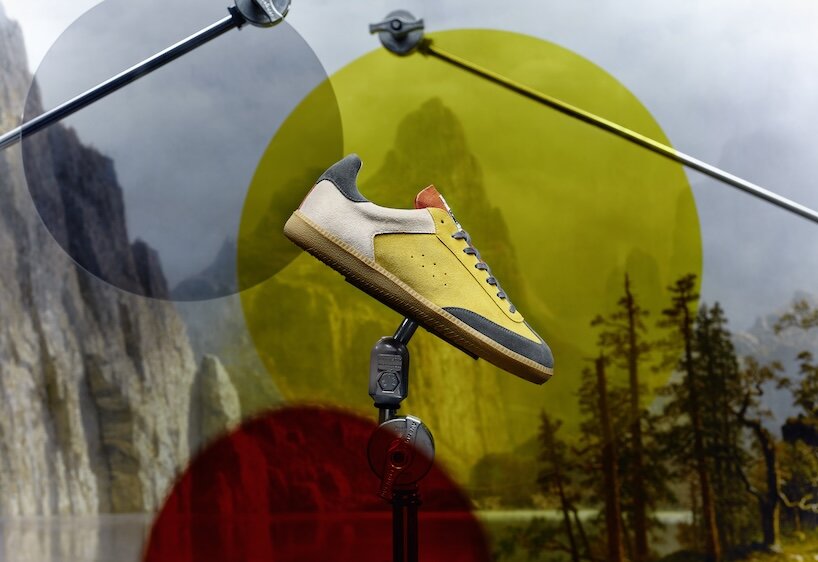
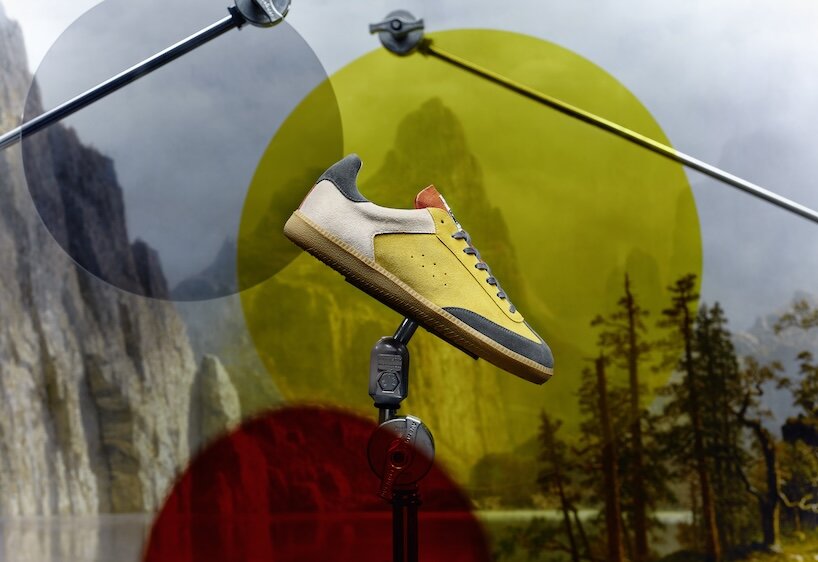
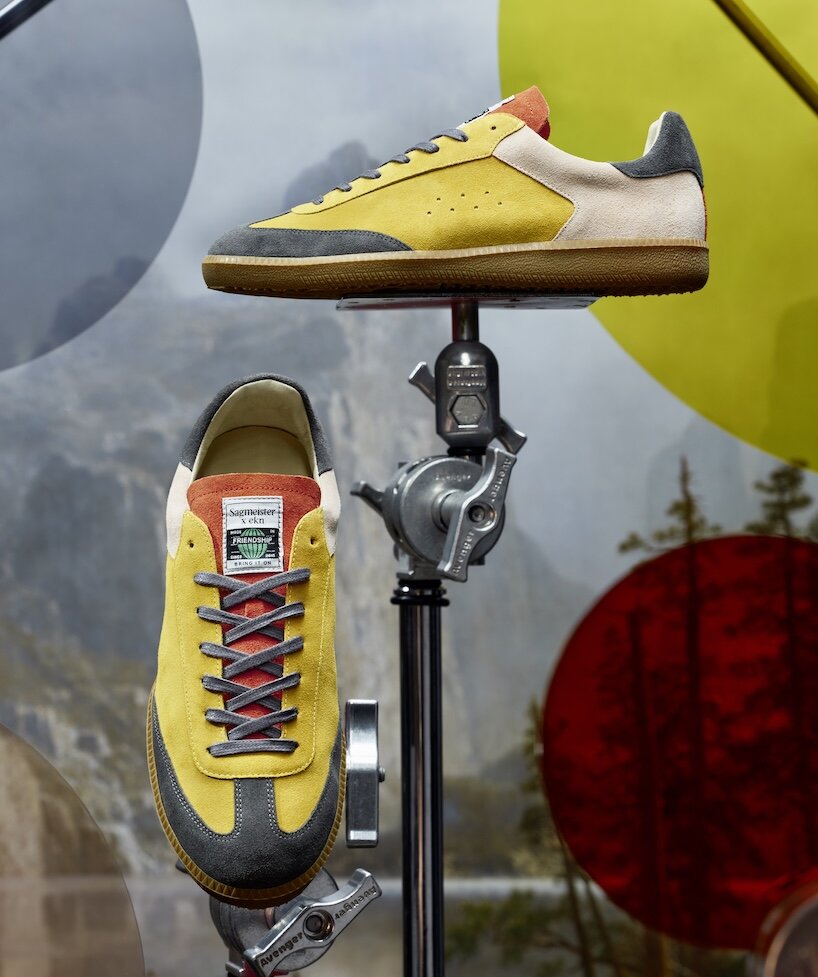
The first model, titled Bring It On, is a colorful suede sneaker designed to visualize worldwide renewable electricity generation from 1965 to 2022. The dataset encompasses hydro, wind, solar, and other rapidly expanding renewable power sources. The upward trajectory of these figures is seamlessly integrated as a graphic composition across the upper panels of the sneaker, while the complete, underlying dataset is printed directly onto the footbed.
Sagmeister emphasizes the profound importance of this specific subject matter in contemporary discourse. While public attention is heavily concentrated on artificial intelligence and digital technologies, the exponential improvement in renewable electricity generation is, in his view, far more consequential. He points to the sweeping possibilities unlocked by cheaper, more accessible clean energy, ranging from large-scale vertical farming and water desalination to direct carbon capture initiatives.
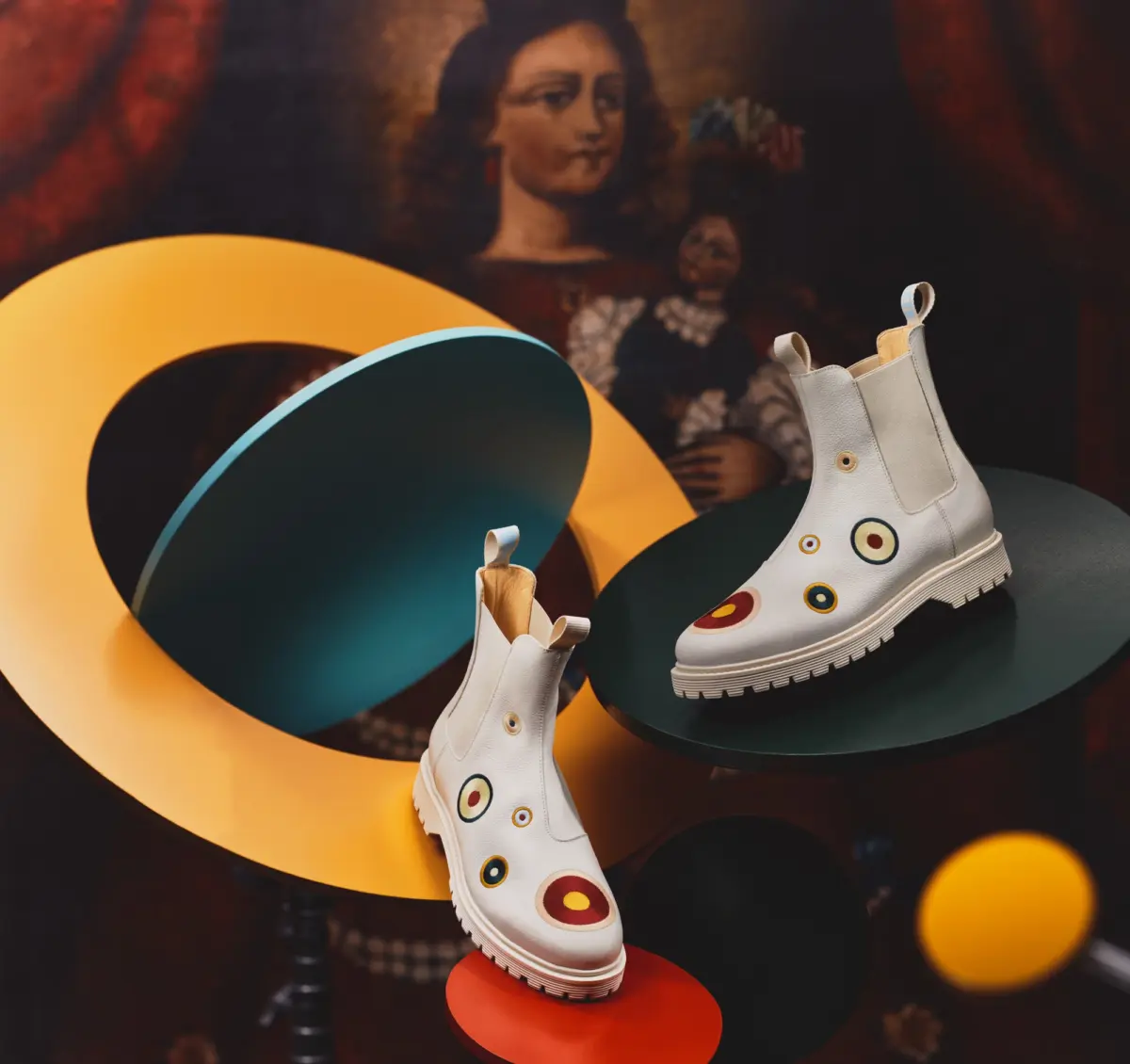
The second design, titled Like a Complete Unknown, addresses a far more difficult and uncomfortable subject, taking the form of a cream-colored leather boot. The footwear features intricate embroidered graphics that visualize reported street homelessness across six different countries, drawing data from the OECD Affordable Housing Database. The statistics mapped onto the boot illustrate a stark disparity among nations, ranging from 76 individuals living on the street or in public spaces per 100,000 inhabitants in the United States, down to 46 in Germany, 16 in the United Kingdom, eight in France, five in Mexico, and two in Japan.
Sagmeister remains transparent about the inherent limitations of comparing these figures directly, noting that varying national definitions and data collection methodologies prevent the statistics from serving as a precise measurement of relative homelessness. However, he argues that imperfect statistics are still immensely valuable because they provoke critical public discussions that might otherwise remain abstract or ignored.
Craftsmanship Meets Graphic Design in Portuguese Workshops
Translating intricate data visualizations into functional footwear demanded far more than simply selecting placement locations for a colorful motif. Both models are built upon existing ekn silhouettes, requiring careful adaptation to accommodate the natural curves, overlapping panels, and structural requirements of each shoe.
The sneaker is crafted using chrome-free tanned suede, while the boot pairs chrome-free tanned smooth leather with precise embroidery work. Klein-Reesink explains that the development process involved iterative cycles of prototyping, requiring close collaboration with embroidery specialists and manufacturing partners based in Portugal. The teams engaged in continuous sampling, physical evaluation, and minor detailing adjustments to preserve Sagmeister’s distinct visual language while ensuring the finished products functioned comfortably and durably as footwear.
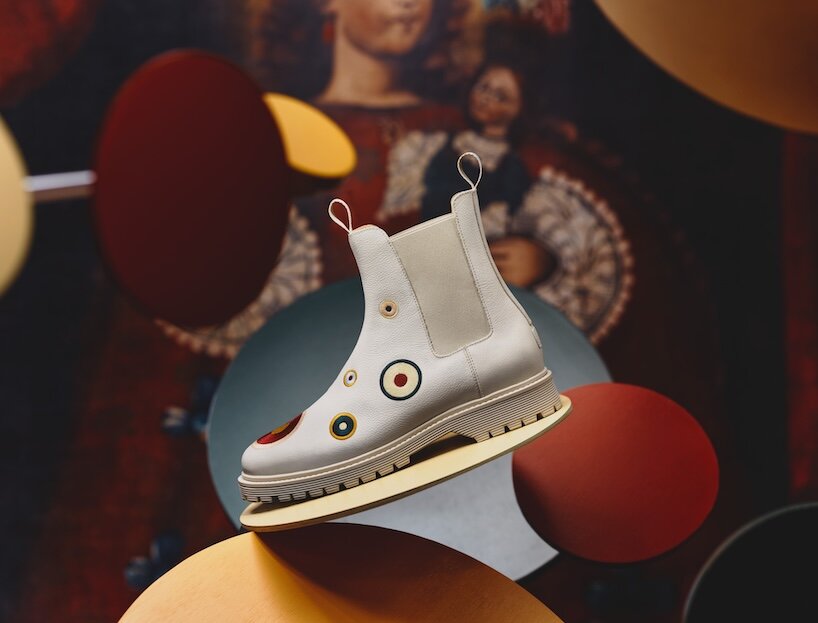
The partnership also confronts an inherent conceptual paradox: the implications of selling a premium-priced luxury boot that addresses the systemic issue of homelessness. Sagmeister openly acknowledges this tension, stating that there is something inherently awkward about a 350-euro boot bearing homelessness data, and expressing his belief that a corporate donation cannot simply erase that discomfort.
To address this ethical friction directly, ten percent of the retail price from every pair sold will be directed to organizations actively working in the respective fields. Specifically, 35 euros from each boot sale will support the Coalition for the Homeless in New York, while 30 euros from each sneaker sale will benefit Future Cleantech Architects in Germany. While these financial contributions do not fully resolve the conceptual tension between a luxury product and its serious social message, both creators view them as a necessary step to connect visualized information with tangible, real-world action.
Sustainable Production Through a Made-to-Order Model
In alignment with ekn’s broader corporate philosophy regarding responsible manufacturing, both footwear models will be produced through a limited pre-order system rather than manufactured in mass advance quantities. All pairs will be handcrafted at a specialized footwear workshop in Portugal.
The pre-order window is scheduled to run from October 14 through November 15, 2026, with global deliveries anticipated in January 2027. Available across European sizes 36 through 46, production runs will be strictly determined by actual consumer demand, a strategy designed to minimize excess inventory and unsold stock. Klein-Reesink emphasizes that true sustainability extends far beyond the mere selection of eco-friendly materials, encompassing production methodologies, product durability, and controlled output quantities.
Ultimately, the project returns to a foundational premise: complex information becomes significantly more accessible when it integrates seamlessly into everyday life. Sagmeister’s exhibition Finally, Something Good. investigates the psychological gap between public perceptions of global affairs and measurable long-term improvements, utilizing visual culture to counter overwhelmingly negative contemporary narratives. By carrying these visualizations onto the public street, the footwear invites initial curiosity through color and composition, only to reveal deeper underlying truths upon closer inspection. As Klein-Reesink notes, good design requires both proper craftsmanship and lasting utility. Whether wearers ultimately choose to discuss renewable energy, housing crises, or simply their new footwear remains entirely open, but for Sagmeister, the resulting public dialogue is the ultimate purpose of the work.