




Behind many of history’s most celebrated tourbillons lay the quiet labor of specialist watchmakers known as carriage makers. These artisans designed and built the intricate rotating cages that house the balance wheel and escapement, directly contributing to the elite reputations of the prestigious brands that ultimately retailed the finished timepieces. Yet, despite their crucial role in advancing high-precision mechanical watchmaking, their names rarely appeared on the dials, plates, or completed movements of the watches they brought to life.
This five-part historical series explores their specialized craft and the fragile paper trail they left behind, tracing the contributions of master craftsmen Ernest Guinand, Auguste Grether, Albert Pellaton-Favre, and his son James C. Pellaton. This opening installment examines how their meticulous work entered the broader watch trade, why identifying individual makers with absolute precision remains a formidable challenge for modern historians and collectors, and how the modern understanding of these legendary components has evolved over the generations.
The Unsigned Escapements
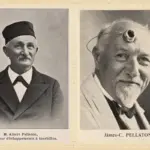
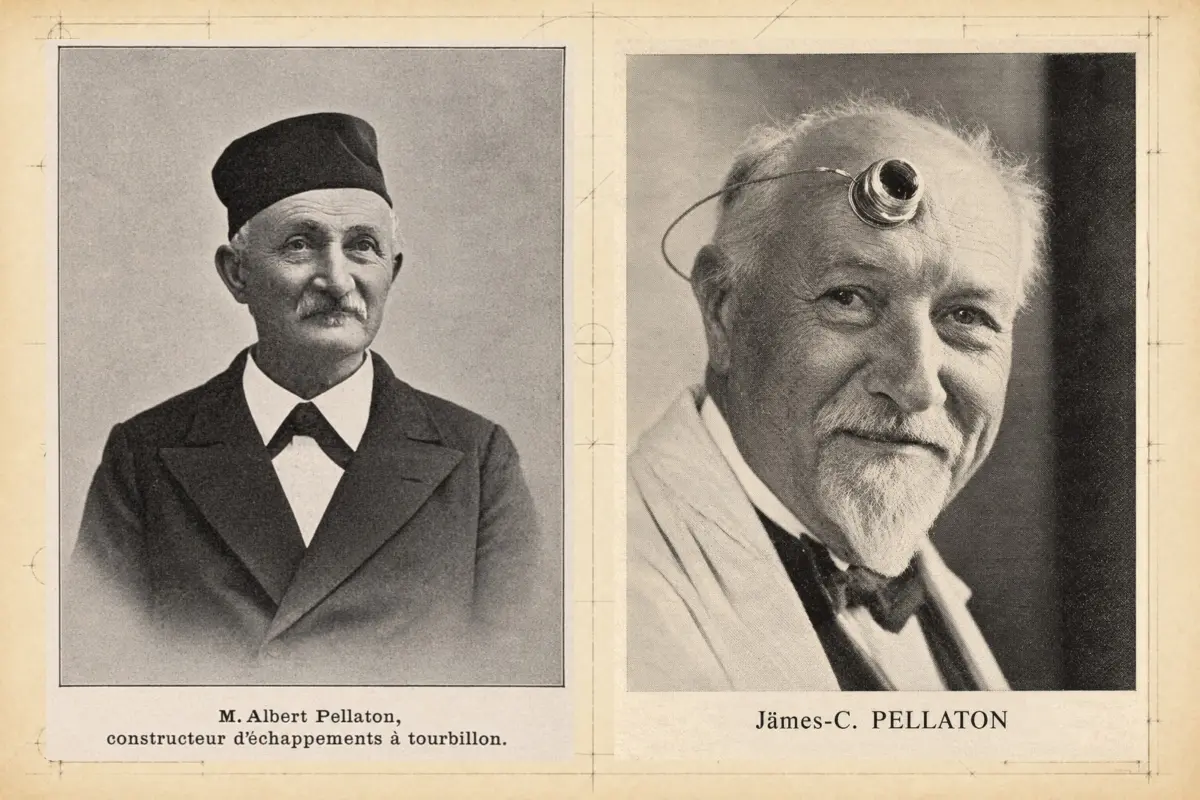
On September 14, 1914, the Bern daily newspaper Der Bund reported the death of Albert Pellaton of Le Locle, a revered master of precision watchmaking. The obituary directed its readers’ attention to the watch section of the Swiss national exhibition, which was then open in the city. On display were eight distinct tourbillons, featured prominently on the stands of celebrated houses such as Paul Ditisheim, Zenith, and Girard-Perregaux.
According to the newspaper report, every single one of those tourbillons came directly from Pellaton’s hands, with the sole exception of an enlarged model on the Zenith stand that had been constructed by one of his nine sons. The press clearly knew who had manufactured the delicate mechanisms, yet the watches resting inside the exhibition cases carried only the names of the commercial firms that exhibited them.
Instances of public attribution were exceedingly rare. When Paul Ditisheim’s chronometer No. 16,639 scored a stellar 94.9 points at the Kew Observatory trials in 1903, the Revue internationale de l’horlogerie specifically credited Albert Pellaton for the escapement. The publication also acknowledged Ulrich Wehrli, the régleur responsible for adjusting the movement, and noted that Ditisheim had made a deliberate point of associating their names with his commercial and technical success.
Such recognition was an extraordinary exception. Virtually every tourbillon featured in this historical series carries the brand name of the firm that retailed it, leaving nothing on the watch to indicate the identity of the artisan whose carriage was turning rhythmically inside.
This anonymity held true even at the absolute pinnacle of the trade. During the Geneva observatory trials of 1929, Patek Philippe captured top prizes for large pocket chronometers equipped with dual tourbillons, both of which were regulated by François Modoux. One of these timepieces, movement No. 197,998, set the year’s high-water mark with an impressive score of 843 points out of a possible 1,000. While the official printed results named the manufacturing firm and the régleur, subsequent generations of collectors and auctioneers were left to independently deduce the identity of the carriage makers—and they have not always agreed.

Reinhard Meis, whose foundational volume Das Tourbillon remains the definitive reference work on the subject, attributed the carriage of the second-prize winner, No. 197,895, to James C. Pellaton. However, when another Patek Philippe tourbillon, No. 198,312, later crossed the auction block in Hong Kong, the auction house Phillips credited Pellaton with its carriage, whereas Meis’s comprehensive register assigned the exact same piece to Hector Golay.
Breguet’s Privilege
The historical narrative begins with the invention of the mechanism itself. On December 25, 1800, Abraham-Louis Breguet lodged a sealed dossier with the secretariat of the Préfecture de la Seine in Paris, formally requesting a ten-year privilege to manufacture, sell, and distribute throughout the French Republic an innovative creation he designated as the Régulateur à Tourbillon.
The brief contained within the dossier laid out the fundamental mechanical problem Breguet sought to solve. Assuming an escapement imparts a relatively constant impulse to the balance, any remaining rate errors are directly tied to the specific physical position in which a portable watch is carried. Breguet’s solution was to rotate the balance through every conceivable vertical position within a brief, predetermined interval—typically one minute—so that positional errors would continuously counteract and cancel one another up to sixty times every hour.
Breguet asserted that his proprietary invention lay in the balance’s continuous rotational movement running parallel to its oscillation. He claimed that any craftsman who endowed an oscillator with “this double motion” would be guilty of infringing upon his legal patent. Jean-Antoine Chaptal, the Minister of the Interior, officially signed the formal certificate on the 7th of Messidor of the year IX, which corresponded to June 26, 1801.
The Tourbillon Reaches the Mountains
Breguet made effective commercial use of his patent protection. By August 1805, when watch No. 1204 was sold to a M. Frackmann for the significant sum of 3,120 francs, his tourbillon timekeepers were already finding their way into the hands of wealthy clients across Europe. Over the subsequent eighteen years, his company registers recorded discerning buyers from the Russian imperial court and the Observatoire de Paris, who acquired tourbillon watches priced anywhere between 1,200 and 4,800 francs apiece.
While Breguet enjoyed absolute legal exclusivity, no independent watchmaker could attempt to construct a tourbillon without directly violating his patent. This legal monopoly likely explains why Reinhard Meis was unable to document any authentic tourbillons produced by alternative hands dated prior to 1811.
The earliest master watchmakers to follow in Breguet’s footsteps were established in the mountain town of Le Locle. Urban Jürgensen of Copenhagen had trained under Jacques-Frédéric Houriet in 1787 and 1788, married his daughter in 1801, and collaborated with him again between 1807 and 1809. Based on stylistic evidence and movement architecture, Meis dated Jürgensen’s tourbillon No. 46 to approximately 1810–1815.

Houriet himself had exhibited a tourbillon pocket chronometer to the Société des Arts in Geneva by 1828 at the latest, and fellow Le Locle watchmaker Frédéric-Louis Favre-Bulle also manufactured a handful of examples. Much like Breguet’s original pieces, these early independent watches prominently displayed their makers’ names. That transparent custom shifted fundamentally once the regional mountain trade industrialized the tourbillon into a commercial product.
The Observatory’s Time
In 1858, the canton of Neuchâtel established an official astronomical observatory, appointing the astronomer Adolphe Hirsch as its first director. The institution’s initial practical service to local watchmakers was providing precise time standards; a skilled régleur required an absolute reference to accurately measure a chronometer’s daily gains or losses.
Every single day, the observatory’s master electric standard clock transmitted a precise telegraph signal to secondary clocks located in La Chaux-de-Fonds and Le Locle. This infrastructure allowed independent workshops throughout both towns to synchronize and regulate their timepieces to exact astronomical time.
The observatory’s secondary function was conducting rigorous performance trials. Watchmakers deposited pocket and marine chronometers for weeks of continuous testing, after which the institution issued official rating certificates, known as bulletins de marche, which commercial firms subsequently shipped alongside their finished watches. During the winter of 1862–63—a period when, according to Hirsch’s contemporary accounts, the horological industry remained gripped by economic stagnation—the observatory received 75 test pieces, 24 of which originated from Le Locle.
Official observatory protocol strictly prevented Hirsch and his staff from opening up the submitted watches to inspect their internal movements. However, working from detailed technical descriptions supplied by the makers themselves, Hirsch sorted that year’s 65 pocket chronometers by their specific escapement types. The six entered tourbillons landed at the bottom of the statistical rankings; their mean daily variation stood at 2.30 seconds, compared to 1.02 seconds for spring-detent escapements and 1.61 seconds for the group as a whole.
The tourbillon did not languish at the bottom for long. In his 1867 annual report, Hirsch recorded that 19 tourbillon chronometers had been observed over a five-year span, noting that the complication had “once again taken first place.” That year, a prominent Le Locle firm, Dubois-Leroy, headed the annual rankings of pocket chronometers with a tourbillon design.
That same year, a dedicated carriage maker entered a competitive timekeeper under his own personal name. Hirsch ranked in third place a chronometer described as coming from “M. Ernest Guinand, du Locle.” This timepiece, numbered 1060, featured a tourbillon mechanism, a pivoted detent escapement, and an independent seconds hand.

When that exact watch resurfaced at a commercial auction in Geneva in 1991, its dial was completely unsigned. Guinand’s name appeared discretely on the main plate and beneath the lower arm of the tourbillon carriage, while the prestigious signature of Girard-Perregaux was engraved onto the interior dust cover beneath the commemorative text reading “Exposition universelle Paris 1867.”
A Costing Sheet
Within the specialized Swiss trade, a tourbillon was budgeted, costed, and paid for just like any other sub-assembly of a complex movement. A surviving printed costing sheet for movement No. 14,166—a 20-ligne ébauche designated for a tourbillon—records a direct payment of 650 francs made to “Aug Grether” on September 19, 1875. The expense covered both the “Assortiment tourbillon” and the subsequent “Plantage.”
Nearly every step of production on the costing sheet is credited to a specific specialist, starting with the firm Piguet frères, which supplied the initial ébauche. The incomplete movement drifted from one independent workshop bench to the next for more than a year before the commissioning mercantile firm finally cased the movement and prepared it for retail sale.
The watch accumulated a total production cost of 1,334.95 francs, which included 368.35 francs for the exterior case alone. Remarkably, nearly half of the entire watch’s manufacturing expense went to an artisan working in Les Ponts-de-Martel whose name was omitted entirely from the finished object. Furthermore, the internal costing sheet does not even name the commercial firm that commissioned the piece.
Two technical terms on the ledger explain why Grether’s name went no further. The assortiment represented the complete set of delicate escapement components that a planteur purchased from a specialist, while plantage referred to the highly skilled process of fitting and setting that escapement securely into the movement frame.
The planteur d’échappements, or escapement setter, operated as one of the independent specialists contracted by an établisseur—the merchant entrepreneur who coordinated watch production and assembled the final products under his own commercial brand name. The accounting clerk logged Grether’s tourbillon carriage precisely as he would have recorded any standard escapement order.
Why the Names Stayed Off
Breguet had originally patented a balance assembly that revolved continually about its own geometric axis. However, the watchmaking community in the Neuchâtel mountains broadly treated the tourbillon as a specialized form of escapement, classifying its creator strictly as an escapement maker. In the conventions of the trade, an escapement maker’s personal name never appeared on the dial or movement of a completed watch. This fundamental commercial reality explains why tracing the identities of the original carriage makers remains so exceptionally difficult today.

The established brands that retailed these sophisticated mechanisms strictly adhered to the établissement system that governed Swiss watchmaking: the company’s own trade name was stamped prominently onto the visible dial and top movement plate, while the individual names of the specialized escapement makers, gilders, and adjusters remained quietly recorded inside private account books.
The tourbillon entered this industrial ecosystem as just another high-precision sub-assembly procured from an outside specialist. Consequently, these master artisans survive primarily through scattered archival footprints, including old trade directories, workshop costing sheets, official observatory records, and published obituaries. Later collectors who approached these historical timekeepers looking for the maker’s signature were searching for a name the trade had never intended to display.
Making Sense of the Shapes
Faced with an absence of documentary evidence, Reinhard Meis turned his analytical focus to the physical architecture of the carriages themselves. He meticulously sketched each surviving design in plan view and categorized the various styles after their presumed creators, defining groupings such as Guinand 1, 2, and 3; Grether 1, 2, and 3; a Pellaton design; and a Henchoz style. The Guinand 1 classification, for instance, rests on a carriage explicitly engraved with Guinand’s personal signature.
Regarding the Guinand 2 classification, Meis noted that the historical attribution held “with high probability” because several verified Girard-Perregaux timepieces utilized matching carriage forms. This physical link to Girard-Perregaux provided a solid anchor for the attribution, which could then be applied analogously to related movements.
The distinct stylistic signatures were undeniably real. Anthony Randall, recalling the specialized horology classes taught by Paul Vuilleumier at the Technicum of La Chaux-de-Fonds in 1963 and 1964, wrote that the primary historical tourbillon makers still remembered locally included the Pellatons (father and son), Georges Sautebin, Ernest Guinand, and Auguste Grether, “each with his own style.”
Proving conclusively that a distinct aesthetic style belonged to a single workshop in isolation is remarkably difficult within a regional trade where identical ébauches frequently passed through multiple hands, including successive generations of apprentices. Apprentices traditionally learned their craft by closely copying the masterwork placed before them on the workbench.
A Legend Is Born
When historical documentation and physical form fail to provide a definitive name, repetition can inadvertently establish a new historical narrative. In his 1950 regional history, James C. Pellaton recalled Guinand of Le Locle alongside Grether and Roulet of Les Ponts-de-Martel as primary tourbillon makers, though he omitted any first name for Roulet.

Meis adopted this name for a specific carriage design he cataloged as Z 68, which frequently appeared in Swiss tourbillon movements dating to around 1870—a mechanical architecture he classified as Werktyp 1. “Possibly it was made by Roulet, Ponts-de-Martel,” Meis wrote cautiously, immediately adding in the next sentence, “unfortunately no tourbillon by him is recorded.”
Over the subsequent decade, this speculative attribution solidified into accepted fact within the antique market. In 1995, the auction house Antiquorum, offering a gold hunter-cased tourbillon whose maker was officially unknown, suggested in its catalog description that the carriage type had “perhaps” been introduced by “Roulet at Pont-de-Martel for Girard Perregaux.” A year later, in 1996, horological writer Jean-Claude Nicolet published an article in Europa Star featuring a photograph of a carriage, which he captioned as the work of “one of the three great cage manufacturers of the end of last century,” explicitly naming Albert Pellaton of Le Locle alongside Roulet and Grether of Les Ponts.
By 2004, Antiquorum asserted in print that during the 1860s and 1870s, very few Swiss workshops possessed the technical skill to build a tourbillon, and that Ernest Guinand, Auguste Grether, and Roulet of Pont-de-Martel were among them. Within the span of eleven years, a speculative hypothesis put forward by Meis—presented alongside the admission that no authenticated Roulet tourbillon was known to exist—had transformed into historical consensus among market participants without any intervening documentary discovery.
Archival records point in a very different direction. The Indicateur Davoine trade directory listed a Vital Roulet among the recorded escapement makers of Les Ponts in 1865, positioned just a few lines below Grether. From 1871–72 through 1880–82, the directory listed him as Vital Roulet-Tissot, identifying him as a maker of spring-detent and pivoted-detent escapements. The same directory eventually recorded Grether’s professional focus on tourbillons, though this notation appeared two years after the historical costing sheet already documented him supplying one. The directory never recorded a single tourbillon under the name of Roulet-Tissot.
A different Roulet from Les Ponts does appear within the official Neuchâtel observatory tables. In 1898, F. Roulet-Perrin entered chronometer No. 1896 under his own name—specifically a lever chronometer regulated by Ulrich Wehrli, who had managed the timing adjustments for Grether’s chronometers since 1887. Yet no individual bearing the surname Roulet appears to have entered a tourbillon in any published observatory table between 1862 and 1901.
This documentary absence proves little on its own. Grether himself appeared in those official tables only five times under his own name, always with a pivoted-detent chronometer and never with a tourbillon, despite surviving costing sheets proving he manufactured them. The historical records merely confirm two distinct Roulets operating in Les Ponts: an escapement maker listed alongside Grether and a chronometer depositor sharing Grether’s preferred régleur, neither of whom can be definitively tied to a tourbillon carriage.
The Curved Carriage
Meis’s attribution of specific carriage designs to Roulet relies on a chain of comparative evidence linking watch to watch. He drafted his technical drawing for Z 68 from a timepiece cataloged in 1921 by Chicago collector Paul Chamberlain as his No. 128: a “Tourbillon with chronometer escapement by Girard-Perregaux, La Chaux-de-Fonds.” Chamberlain’s precise, measured drawing illustrates an upper framework featuring long, graceful arms that curve outward and terminate in distinct hooks winding into mounting lugs.

These exact same curved upper arms reappear on a signed movement reading “Js Calame Robert CHAUX DE FONDS,” bearing movement number 94,575. This particular piece was acquired by noted horological collector Courtenay Adrian Ilbert in 1936 and is preserved today within the permanent collections of the British Museum.
Meis identified this identical mechanical form in a gold hunter-cased watch dated by Antiquorum to approximately 1860. He subsequently traced its evolution to the carriage style he designated as the “Lange 1,” found within early timepieces by A. Lange & Söhne, which incorporates the curved lower arms characteristic of his first two Grether typologies.
A Letter from Paul Ditisheim
Ilbert’s acquired movement originally arrived accompanied by personal correspondence from an individual who had practical experience building tourbillons himself. On August 8, 1936, Paul Ditisheim wrote from Paris to a recipient addressed as “Dear Paul”—identified by the British Museum as Chamberlain—discussing the movement recently “picked up by M. Ilbert.”
“The tourbillon work is [either] by Albert Pellaton Le Locle or by Auguste Grether Ponts de Martel,” Ditisheim wrote, identifying them as “specialists acting during the later part” of the half-century following 1850.
Ditisheim understood the realities of the workshop bench firsthand. Born in La Chaux-de-Fonds in 1868, he attended the local watchmaking school before traveling to Les Ponts-de-Martel to construct tourbillon timepieces, according to a biographical obituary written by a professional colleague in 1945. His career subsequently took him to Berlin, to Rotherham’s in Coventry, and to Paris, prior to establishing his own manufacturing enterprise in 1892.
He had learned the art of the tourbillon directly within Grether’s home region and alongside craftsmen like Roulet-Tissot. More than fifty years later, examining a carriage dating from the 1870s, Ditisheim offered two distinct working names without citing definitive documentary proof, and Roulet was pointedly not one of them.
Between the two viable candidates, Grether aligns more closely with the curved carriage design. The carriage Meis attributed to Pellaton-Favre utilizes a straight upper double arm, whereas the design credited to Grether incorporates an S-curved arm positioned at its base. This deduction relies entirely on morphological analysis of mechanical form—the exact methodological approach Meis utilized for Guinand 2—representing the absolute limit of what physical examination of the watches can reveal.

An Escapement in Name Only
A generation after Ditisheim penned his letter, antique collectors had begun to view the tourbillon through a fundamentally different lens. In October 1962, Charles Kalish, concluding a twelve-part series detailing his personal collection in the bulletin of the National Association of Watch and Clock Collectors, reminded his readers that the tourbillon, “which many collectors refer to as a type of escapement, is not an escapement at all.”
While his mechanical description of the device was accurate, his correction highlighted how far modern collecting practices had drifted from the historical trade traditions that originally produced these watches. In the mountain workshops of Neuchâtel, a tourbillon was treated unequivocally as a specialized escapement—procured from an outside expert, budgeted as a sub-assembly, and planted directly into a movement like any other standard component.
The carriage makers themselves survive only through the fragmented internal records of the trade: a brief directory listing, an old costing sheet preserved within an établisseur’s private ledger, an observatory prize list, and a modest death notice. Together, these surviving historical records establish the documented foundations for the master craftsmen whose individual stories follow in this series.