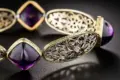






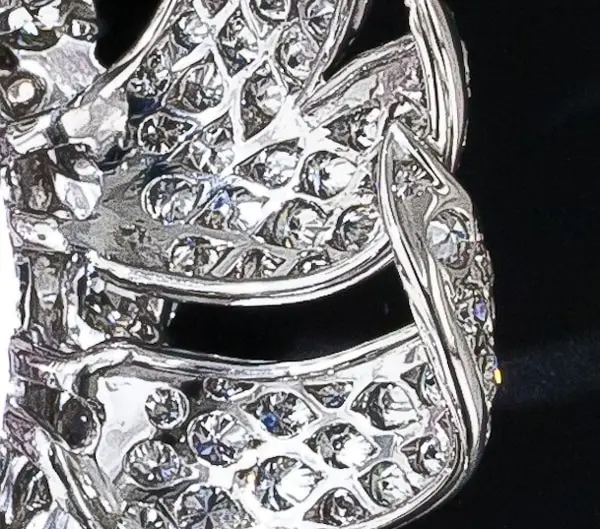
The world of fine jewelry is defined not only by the brilliance of the stones displayed on the surface, but equally by the hidden craftsmanship and structural mastery that supports them from behind. Among the most revered techniques in the historic lexicon of jewelry making is à jour, a specialized method of open-worked gem setting designed to maximize the play of light within a precious stone. Derived from the French phrase meaning "to the day," the term refers to backgrounds that have been carefully pierced, sawed, or carved away so that the reverse of the gemstone is left entirely open to the light. This clever engineering allows illumination to pass freely through the pavilion of the stone, dramatically enhancing its natural scintillation, intensifying its color saturation, and imparting an unmistakable vibrancy that closed-back mountings simply cannot achieve.
While modern consumer expectations routinely demand maximum brilliance from diamonds and colored gemstones alike, the historical standard for mounting fine jewelry was vastly different. For centuries, most gems were meticulously secured in closed-back settings, often backed with reflective foils or colored paints to artificially boost their visual impact or alter their apparent hue under candlelight. However, the landscape of jewelry design underwent a profound transformation around the year 1800, coinciding with shifting aesthetic preferences and advancements in metallurgy and bench techniques. It was during this period that à jour settings began to gain widespread popularity among master jewelers who sought to showcase the true, unadulterated beauty of natural stones by letting daylight flood through them from every possible angle.
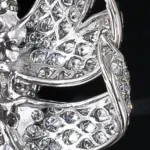
Achieving a high-quality à jour setting requires exceptional skill, patience, and a steady hand. The intricate open-worked patterns on the reverse of the jewelry piece are traditionally executed using a graver—a sharp, handheld steel cutting tool used by master artisans to carve, trim, and refine the metal. By meticulously paring away excess gold, platinum, or silver directly behind the gemstone, the artisan creates clean, well-formed openings that are both structurally sound and aesthetically pleasing. This level of detail ensures that the structural framework remains delicate and unobtrusive while providing robust support for the precious cargo it cradles.
The dedication to hidden craftsmanship reached unprecedented heights during the subsequent Art Deco era of the early 20th century. Art Deco jewelry, celebrated for its geometric precision, architectural influence, and uncompromising elegance, customarily features exquisite à jour work that elevates the back of a piece to a standard nearly as beautiful and refined as the front. Master artisans of this era viewed the entire canvas of the jewel as an opportunity for artistic expression, ensuring that even the hidden undersides and galleries of rings, brooches, and pendants showcased intricate piercing and symmetrical open-work patterns that delighted the wearer upon closer inspection.
Beyond the realm of traditional gemstone setting, the underlying philosophy of the à jour technique found a stunning parallel in the specialized art of fine enameling. When applied to enamel work, the concept evolves into what is known as plique-à-jour, a sophisticated French term used to describe an item featuring an open metal framework whose background is completely filled with transparent enamel rather than a solid gemstone. Lacking a backing metal sheet, the translucent enamel catches the light in a manner reminiscent of a miniature stained-glass window. When held up to natural light, a well-crafted plique-à-jour piece reveals a breathtaking myriad of shifting colors and tones, bridging the gap between metallurgy and glass art in a way that continues to captivate collectors and connoisseurs of fine craftsmanship today.