



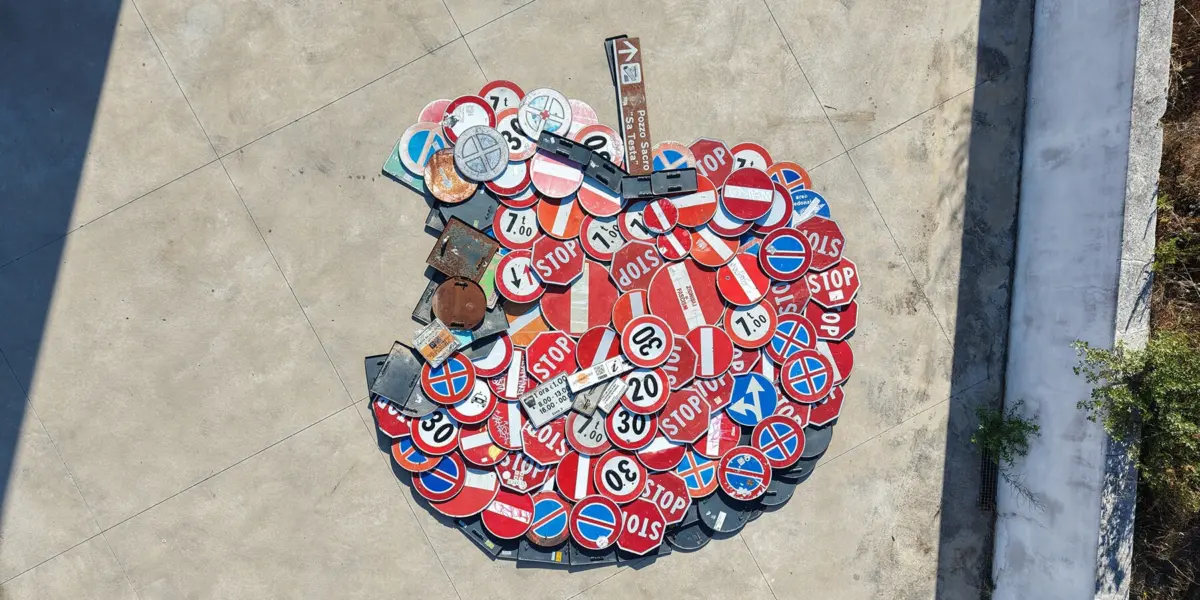
The intersection of industrial waste, environmental consciousness, and contemporary land art has yielded a striking new visual project set against the rugged landscapes of Sardinia. Conceptualized and executed through a full-scale test of the "Urban Pixel" project—specifically its opening chapter, titled "Last Wave"—the installation transforms authentic, recovered road signs into a monumental outdoor visual statement. Photographed vertically from above, the composition reveals an intricate geometric dialogue between discarded civic infrastructure and the surrounding natural terrain, offering a profound commentary on the lifecycle of materials in the modern world.
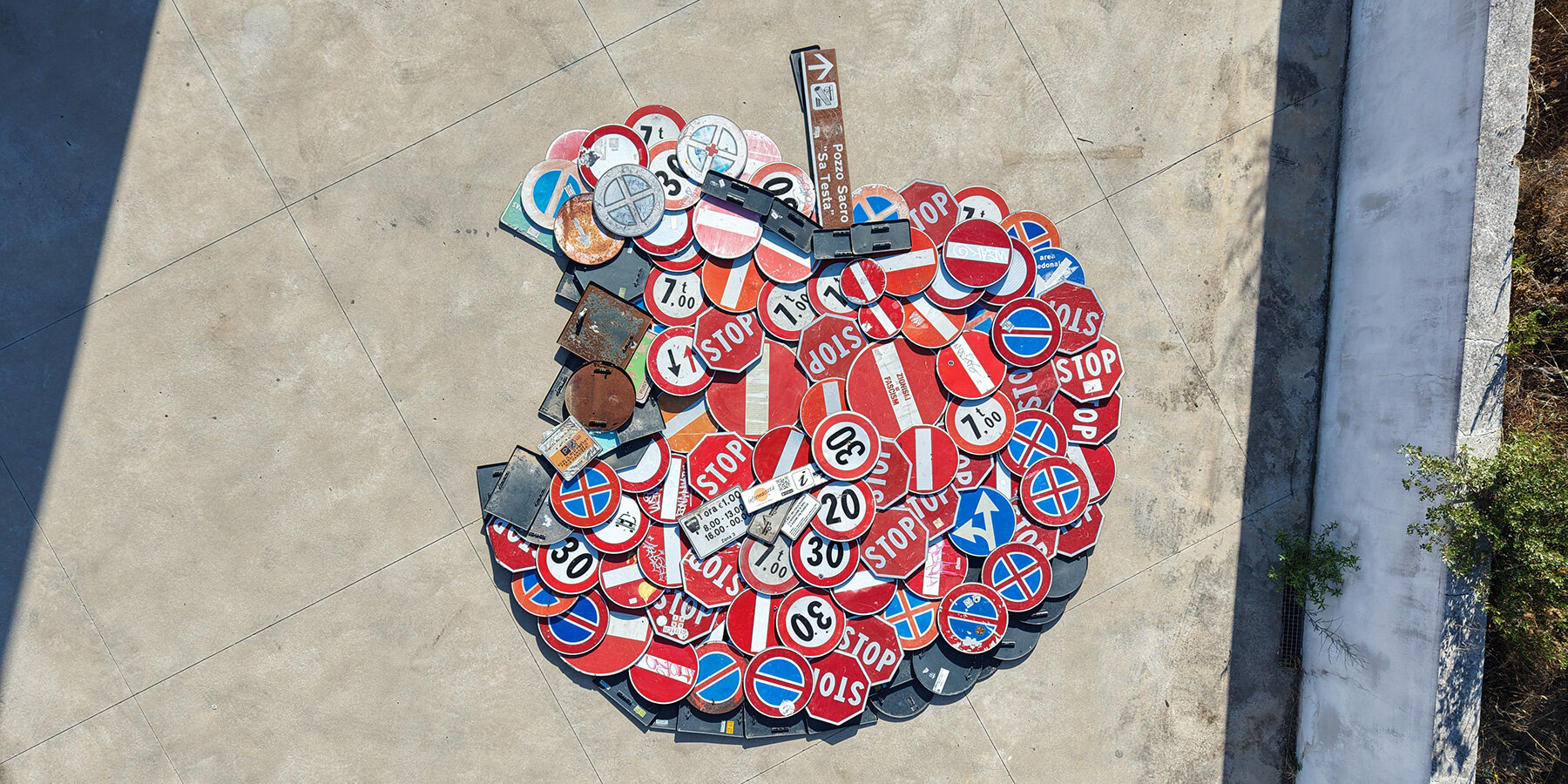
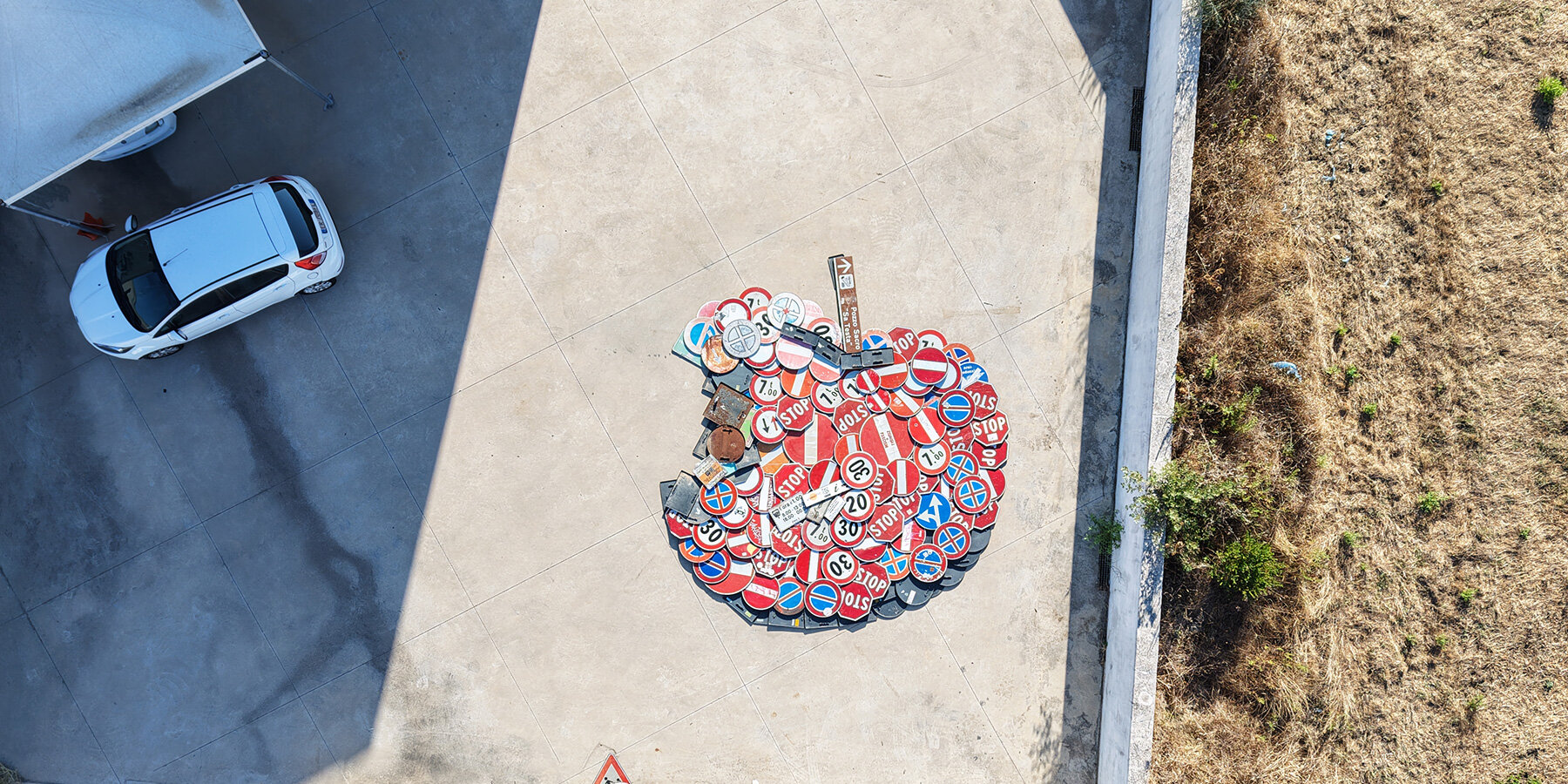
The project relies heavily on scale and perspective to achieve its impact. In documentation images capturing the full-size installation from a bird’s-eye view, the layout of weathered, discarded metal panels takes on the appearance of digital pixels rendered in the physical realm. The inclusion of everyday elements, such as a car parked near the installation site, serves to ground the immense proportions of the piece, accentuating the sheer physical scale of the land art test. Rather than existing in a sterile gallery space, the project integrates directly into the raw topography of Sardinia, utilizing the island’s distinctive terrain as both a canvas and a contextual framework.
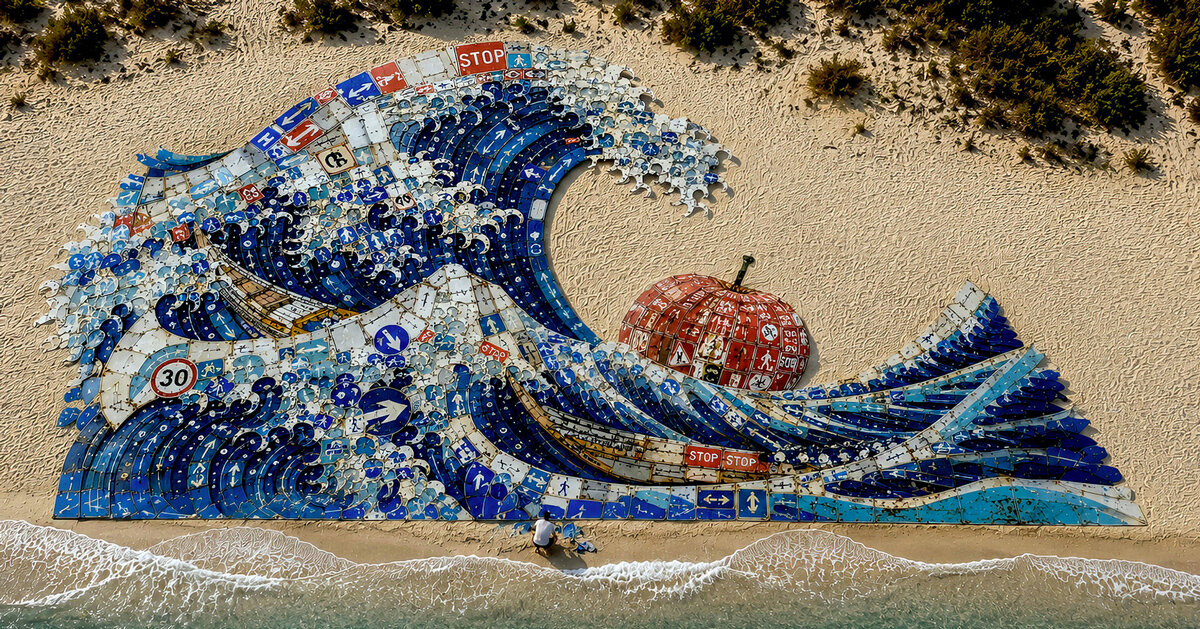
At the core of "Last Wave" is the physical material itself: genuine, decommissioned road signs that once regulated traffic, directed movement, and imposed civic order. Stripped of their original regulatory functions, these metal sheets—bearing the scars of weathering, fading, and human interaction—are repurposed into artistic building blocks. By gathering these authentic artifacts and rearranging them into a cohesive, pixel-like formation, the creators bridge the gap between industrial obsolescence and creative expression. This methodological approach reflects a broader cultural shift within contemporary art and design, where sustainability and material recovery are no longer peripheral considerations, but central tenets of the creative process.
The unveiling of the Sardinia installation arrives amid a vibrant period of international contemporary art and design exhibitions, where institutions and creators worldwide are reevaluating public spaces, material culture, and historical narratives. Across Europe, major cultural hubs are currently showcasing projects that challenge traditional boundaries between architecture, fashion, public intervention, and historical preservation.
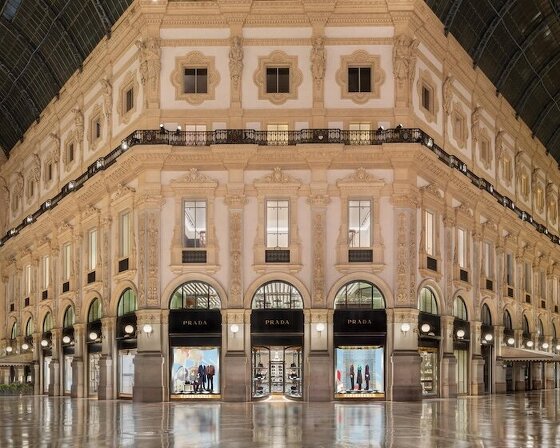
In Milan, the cultural landscape continues to evolve with ambitious multi-disciplinary spaces. Notably, recent developments such as the Prada Galleria have unfolded across eight floors within the historic Galleria Vittorio Emanuele II, successfully bringing together retail experiences, the Pradashpere archive, the historic pastry expertise of Marchesi 1824, and the contemporary cultural programming of Fondazione Prada. This urban integration of fashion, history, gastronomy, and art mirrors the same impulse found in large-scale interventions like "Urban Pixel," where commercial and civic environments are re-examined through a creative lens.
Similarly, the exploration of folk memory and visual history has taken center stage in various international publications and exhibitions. Projects such as Naïve My Love, a collaborative effort between GUNIA and Assouline, have assembled comprehensive visual histories of 20th-century Ukrainian folk art through years of rigorous research. Gathering rare paintings, delicate textiles, and decorative objects, these initiatives rescue overlooked cultural artifacts from obscurity, paralleling how the creators of "Last Wave" rescue discarded aluminum and steel from scrap yards to construct a new visual lexicon.
Public interventions in historical and sacred spaces have also sparked widespread dialogue regarding scale and monumental imagery. In Rome, artist JR made headlines by stretching a colossal 70-meter-wide photographic wave across the neoclassical facade of the Vatican Apostolic Library for a project titled Diluvium. By visualizing a deluge across the very institution dedicated to preserving humanity’s most treasured historical documents, the installation transformed an archival institution’s deepest conservation anxieties into a breathtaking, temporary public monument. This grand scale of intervention shares a conceptual lineage with the Sardinia land art test, where vast outdoor surfaces are utilized to communicate urgent environmental and material narratives to viewers from above.
Concurrently, the art and design market continues to investigate how physical objects evolve through time and utility. Exhibitions such as 50 Chairs at Christie’s, curated by basic.space in Beverly Hills, trace the relentless ingenuity of designers who continually reinvent the fundamental act of sitting. Spanning historic design icons and radical contemporary experiments, such showcases highlight the perpetual reinvention of everyday utilitarian objects—a theme that resonates deeply with the transformation of ordinary street signs into pixelated land art in the Italian countryside.
As "Urban Pixel Chapter I: Last Wave" continues to draw attention within architectural and artistic circles, it stands as a testament to the power of context and material transformation. By looking at discarded infrastructure through a macro lens, the installation challenges observers to reconsider the debris left in the wake of modern urbanization, proving that even the most mundane elements of our daily commute can be reimagined as components of a larger, thought-provoking artistic vision.