





Our in-depth series on mechanical escapements concludes with a comprehensive look at contemporary escapement designs, spanning major industrial powerhouses like Rolex to celebrated independent watchmakers like the late George Daniels. While Part I of this exploration focused primarily on incremental improvements applied to established, traditional systems, this concluding installment examines truly original designs. Each mechanism features intricate subtleties and engineering choices that reward a much closer, more technical look.
Double Independent Wheel Escapement
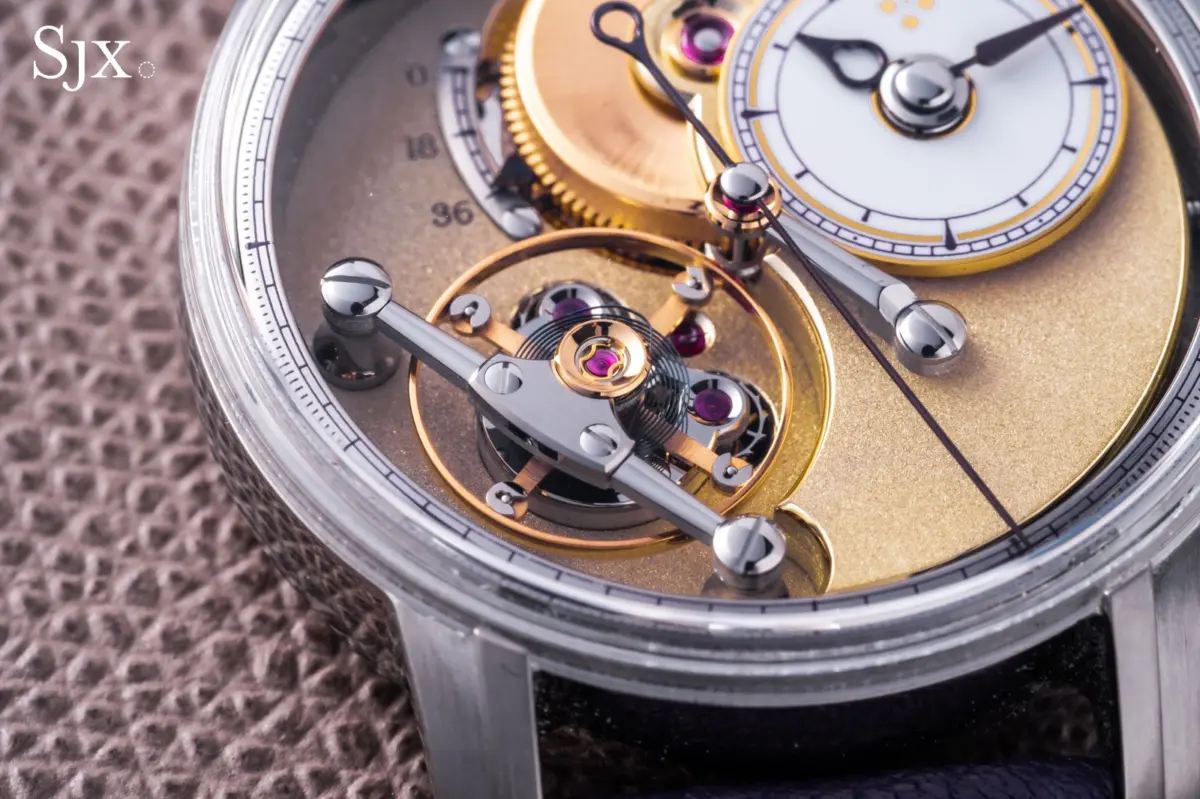
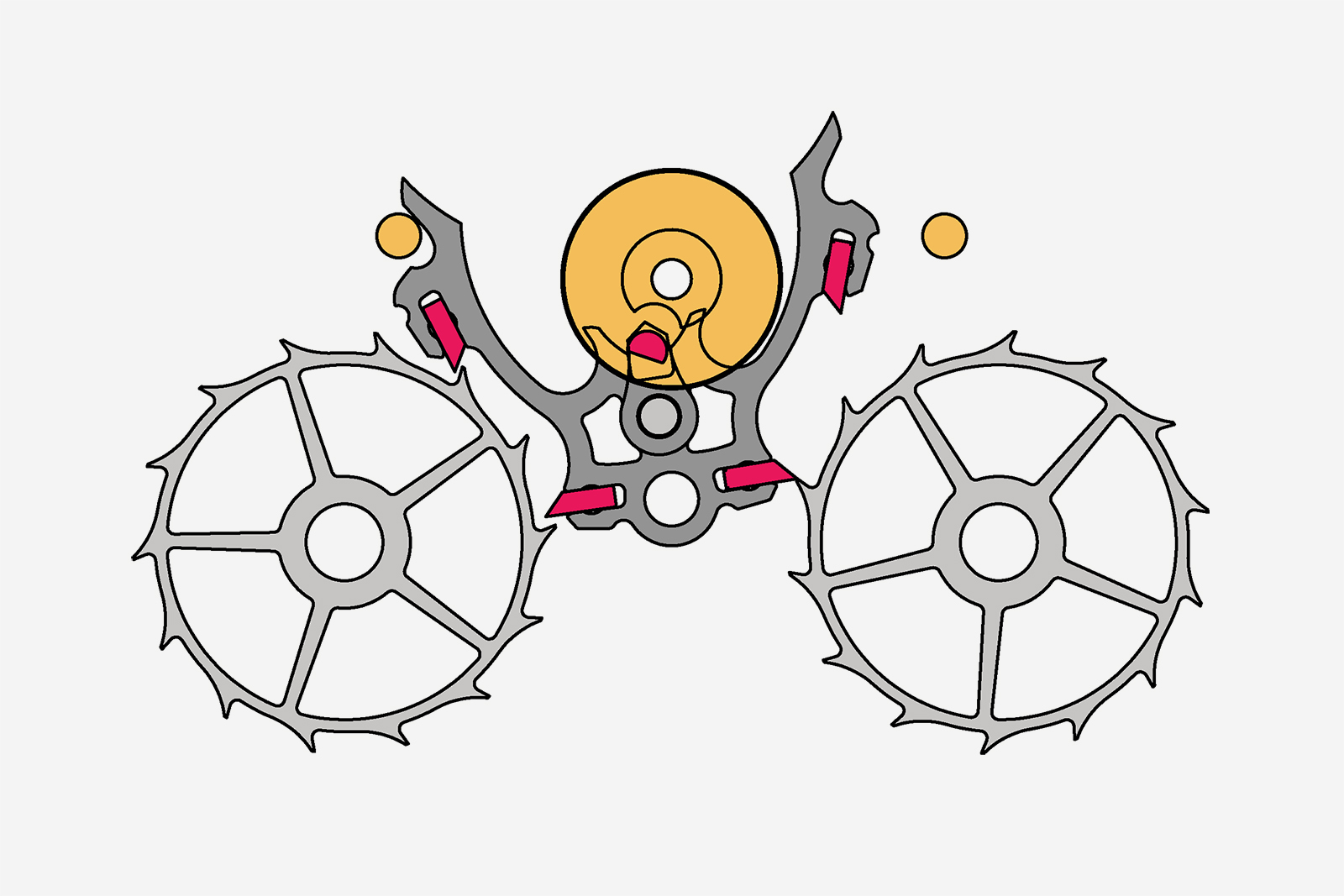
The double independent wheel escapement, originally conceived and designed by master watchmaker George Daniels, can best be understood as a mirrored variant of the Robin escapement detailed in Part I. It features a double-faced lever that delicately synchronizes two separate escape wheels. The exact angle traveled by this lever between the unlocking and locking phases allows for the integration of a traditional safety dart and roller, thereby ensuring secure and reliable functioning across normal wear.
The double independent wheel is frequently compared to Abraham-Louis Breguet’s legendary natural escapement because both mechanisms deliver direct impulses to the balance wheel in both directions of oscillation. The key mechanical difference lies entirely in how the respective escape wheels are driven. In Breguet’s natural escapement, the twin wheels are physically coupled together, whereas Daniels’ double independent wheel configuration assigns each escape wheel its own dedicated going train. This engineering choice keeps both wheels under continuous tension, successfully avoiding the damaging backlash and slippage that ultimately led Breguet to abandon his pioneering design.
Less often discussed in horological circles is a subtler, yet highly significant advantage of the double independent wheel: a substantial gain in geometric efficiency. In a traditional natural escapement, both wheels must turn simultaneously, even though strictly only one provides active impulse to the balance at any given moment. Consequently, a portion of the mainspring’s valuable energy is wastefully spent moving the inactive wheel.
With the double independent wheel and its Robin-inspired lever action, the moment the active wheel is unlocked, the lever rapidly blocks the opposing, inactive wheel, allowing it to move forward by only a few fractions of a degree. This ingenious behavior ensures that when a wheel is sitting idle, it does not become an unnecessary energy sink—an efficiency hurdle that cannot be cleared by a standard natural escapement setup.
Given the inherent requirement for two mainspring barrels and two entirely independent going trains, George Daniels famously postulated that the double independent wheel configuration would likely never be successfully miniaturized down to wristwatch scale. This very opinion served as the primary motivation behind his subsequent, highly influential development of the Co-Axial escapement.

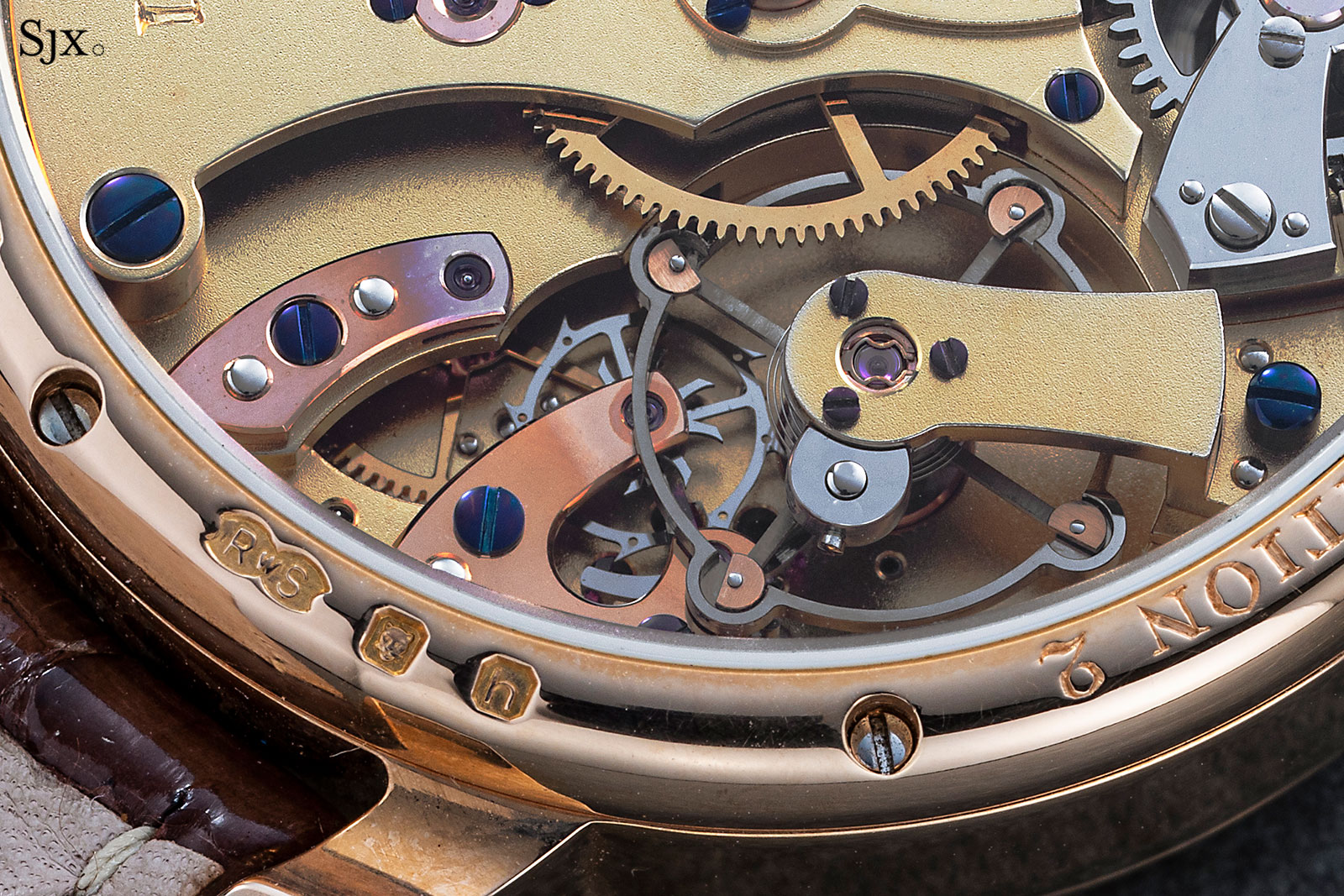
However, with invaluable technical assistance from Daniels’ close friend and fellow master colleague Derek Pratt, the historic firm Charles Frodsham finally managed to pull off this monumental feat of micro-engineering. They successfully produced the world’s first-ever commercial wristwatch powered by a double independent wheel escapement.
Interestingly, after approximately 36 hours of the movement’s power reserve are depleted, an integrated hacking lever stops the balance wheel automatically, intentionally leaving plenty of reserve energy stored in the mainsprings. This sophisticated stop-work mechanism ensures that once the movement is fully assembled and operational, the independent going trains will always remain under some degree of healthy tension.
While this stop-work mechanism guarantees that only the flattest, most linear portion of the mainsprings’ torque curve is utilized to drive the watch, it also serves at least two structural purposes specific to the escapement itself. First, this ongoing approach keeps the twin escape wheels under a consistent degree of tension at all times, which fundamentally aids with the self-starting function of the balance.
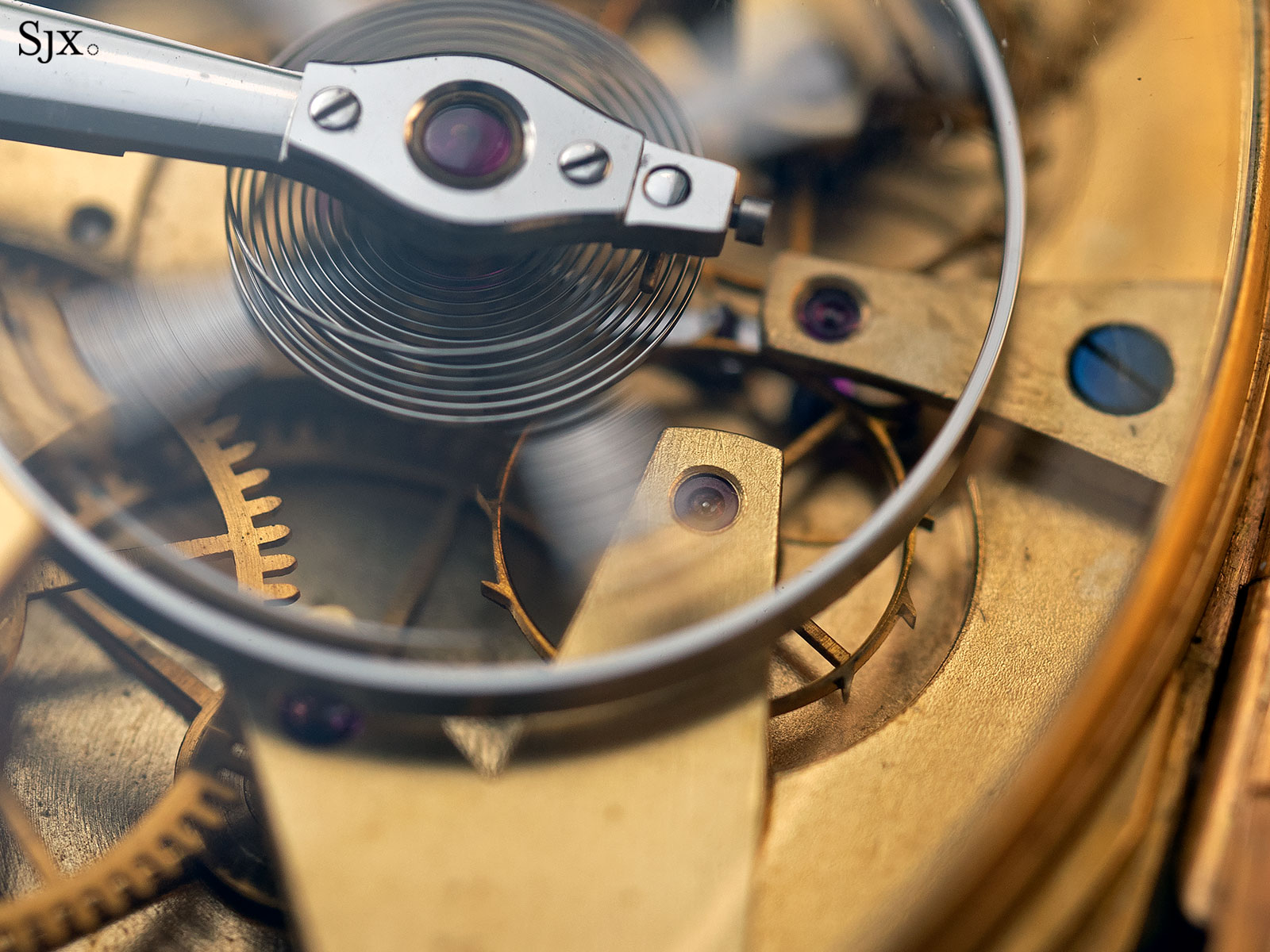
Second, this constant tension ensures the escape wheels cannot accidentally reverse their direction of rotation. This latter justification strongly implies that certain concessions had to be made regarding safe operating geometry in order to achieve the necessary, extreme reduction in size required for a wristwatch application.
Double Wheel Indirect Impulse
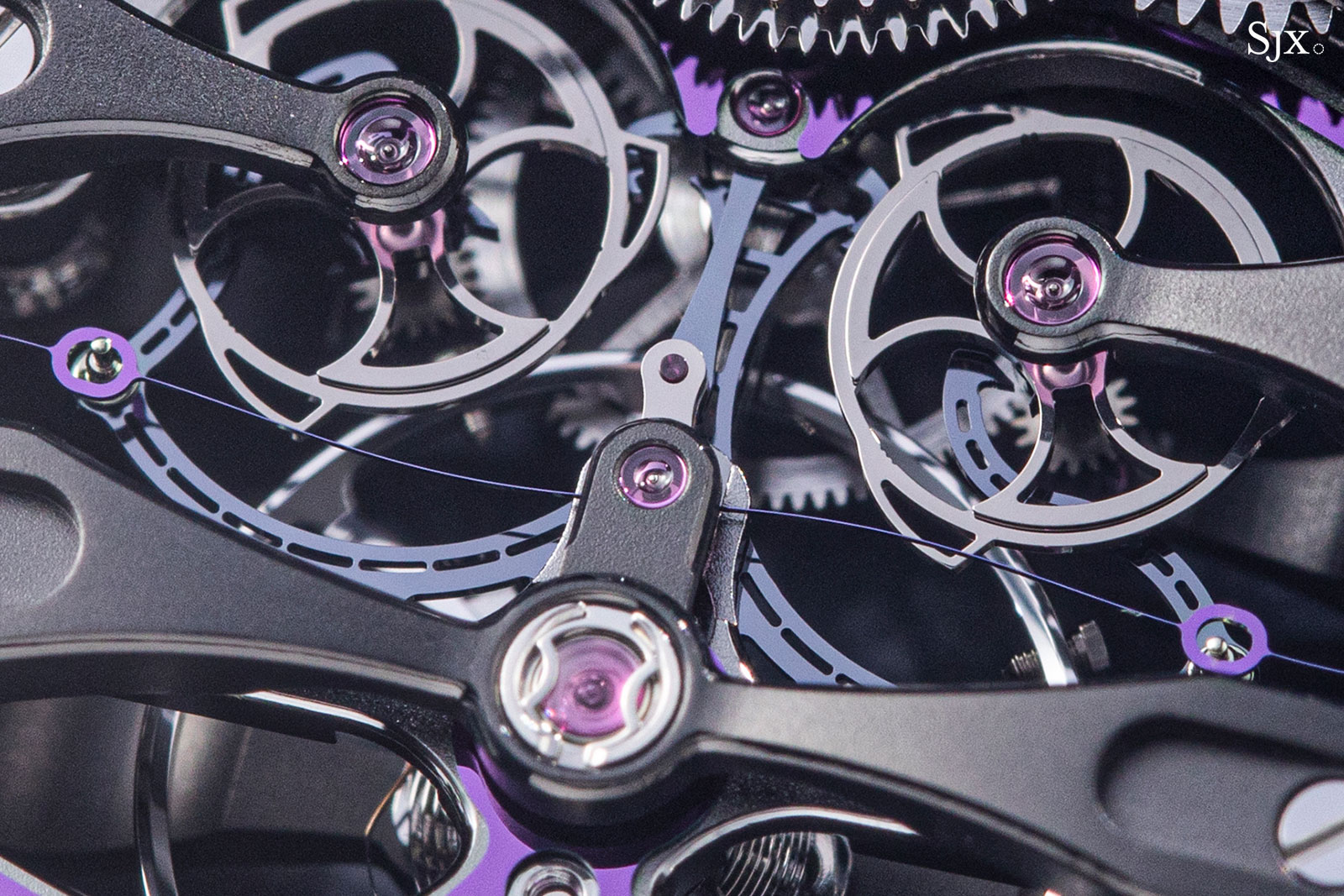
Another distinct breed of novel escapements has similarly stemmed from the foundational concepts of the original natural escapement. The double wheel indirect impulse escapement features two meshed gears alongside a specialized lever that imparts an impulse to the balance wheel while simultaneously acting as the primary locking member.
The first such modern escapement of this type came to market in 2005 inside the groundbreaking Ulysse Nardin Freak, effectively replacing the Dual Direct escapement utilized in the original model. Dubbed the "Dual Ulysse," this escapement took immediate advantage of the then-nascent manufacturing ability to precisely etch complex, lightweight watch components from silicon.

In 2025, Rolex introduced the Dynapulse escapement, widely regarded as one of the most ambitious technical achievements in the storied manufacturing history of the brand. The Dynapulse is a remarkably clever system that utilizes small escape wheels uniquely shaped like puzzle pieces, paired with an unusually large lever to transmit energy smoothly to the balance wheel.
While broadly similar in basic philosophy to the Dual Ulysse, a deeper technical analysis reveals the Dynapulse to be vastly superior in its overall geometry, particularly in the optimized manner in which impulse is imparted to the regulating organ.
In the Rolex design, the specific wheel that is set to provide impulse to the lever is also the precise wheel that is actively locked, meaning it is kept constantly pretensioned. Leaving the driven wheel un-pretensioned—as is notably the case with the earlier Dual Ulysse—can lead to a weaker, less consistent impulse, which may ultimately result in measurable timing errors over extended periods.

A very similar, albeit much more traditionally constructed escapement was launched by independent atelier Cleguer Horology. In fact, apart from the varying physical dimensions of the lever, the mechanical phases operate in a manner virtually identical to the Rolex Dynapulse. Cleguer’s escapement possesses the distinct merit of offering a more comfortable locking geometry when compared against the Dynapulse, which pushes the absolute limits of mechanical stability.
In Cleguer’s proprietary design—dubbed the Innate escapement—the lever’s center of mass appears to rest relatively far away from its primary pivot axis. This physical arrangement potentially makes the delivered impulse slightly less consistent across various vertical watch positions due to the varying influence of gravity.
That said, the inherent constraints of traditional metallic materials lend Cleguer’s construction an aesthetic beauty that is arguably far more compelling than the sheer mathematical precision achieved through Rolex’s formidable industrial manufacturing capabilities.

It remains a fascinating coincidence that both the engineering teams at Rolex and independent watchmaker Mathieu Cleguer arrived at such similar mechanical concepts within comparable timeframes. What is even more intriguing is an obscure technical article published in a 2004 issue of the French publication Horlogerie Ancienne. The piece described a then-new breed of double wheel escapements designed by Jean-Paul Lenoble, who had graduated from the École Nationale d’Horlogerie de Cluses in 1950.
Within the pages of that article, Lenoble presented a number of innovative escapements of his own original design, ranging from double wheel configurations to complicated articulated escapements. Inadvertently, he also appears to have accurately predicted the structural arrival of the Dual Ulysse, and potentially both the Dynapulse and Innate escapements by over two decades.
Lenoble’s first proposed double wheel indirect impulse escapement is practically identical to the later Dual Ulysse, save for minor, obvious differences in the final geometric layout. His historical sketches illustrated the primary lever contact points and detent-like escape wheels clearly enough to convey the underlying mechanical logic.

His second proposition does not immediately remind the observer of either the Dynapulse or the Innate escapement at first glance. Yet, it operates on the exact same fundamental principle of always locking the specific wheel set to provide the next impulse. Keeping the active wheel pretensioned is precisely what makes both the Dynapulse and the Innate escapements such special, high-performance mechanisms. Despite their distinct locking geometries, all three designs share this core principle.
Jean-Paul Lenoble even constructed raw, working demonstrators to prove that his theoretical concepts functioned seamlessly in practice, effectively making him the true inventor of the double wheel indirect escapement concept.
Mixed Impulse Escapements
The two primary mixed impulse escapements commercially available on the market today are the Co-Axial—manufactured primarily by Omega and independently by Roger Smith—and Grand Seiko’s Dual Impulse escapement. The term "mixed impulse" indicates that one impulse is delivered directly to the balance wheel, much like in traditional natural, detent, and Robin escapements, while the secondary impulse is sent indirectly through an intermediate lever. Another important distinction is that this second impulse can be tangential, where components roll smoothly together, or frictional, akin to the standard Swiss lever escapement.
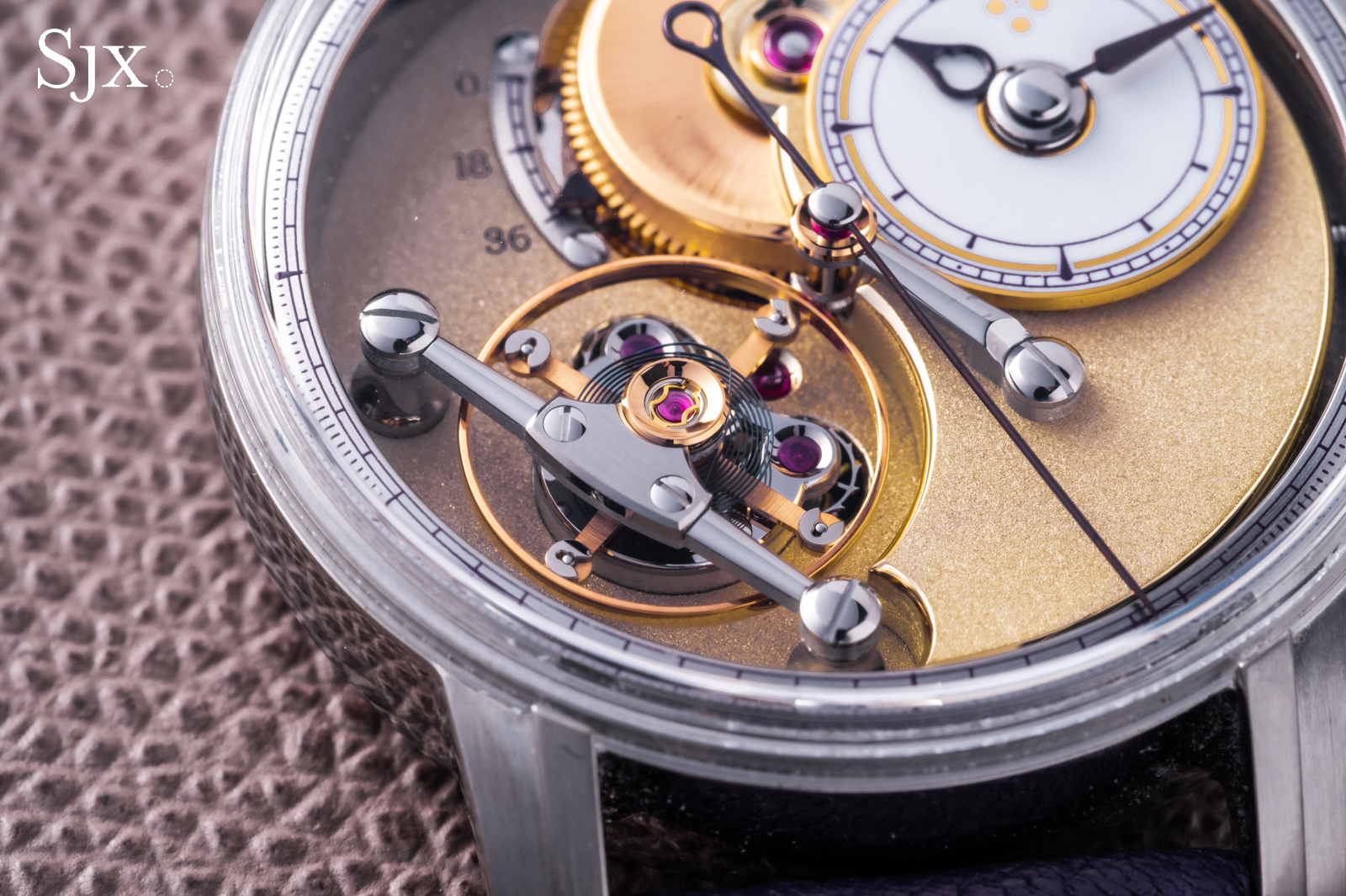
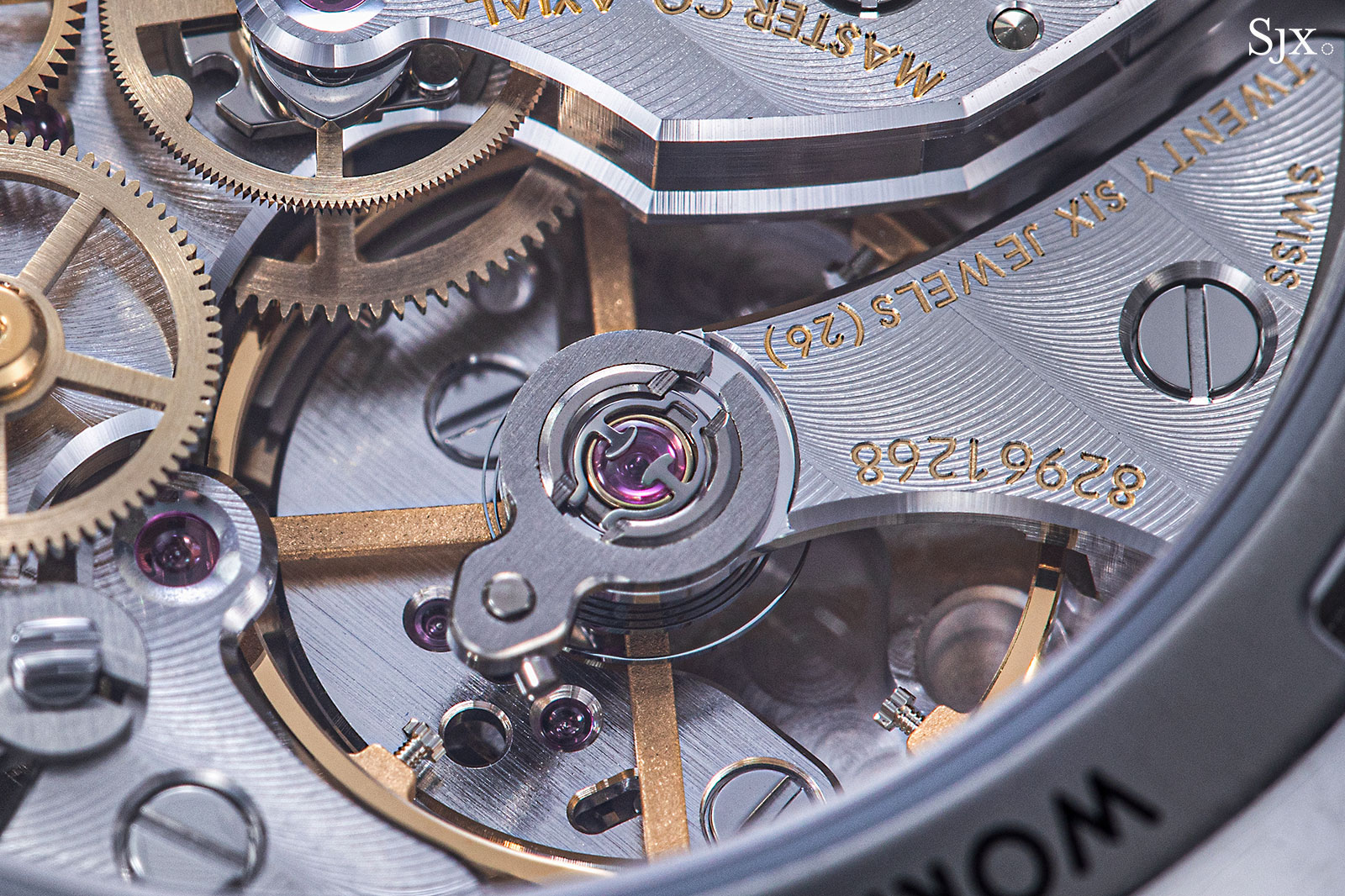
There is relatively little left to be said about the Co-Axial escapement that has not already been thoroughly examined by horological historians. In brief, the Co-Axial can be viewed as a brilliant hybrid combination of the Fasoldt and Robin escapements, cleverly manipulating the geometry of both systems to allow for a clean rolling action between the escape wheels and their respective impulse pallets. A modern, highly refined version of the original Fasoldt chronometer is also actively utilized today by independent watchmaker Paul Gerber.
George Daniels famously boasted that his Co-Axial creation was a truly "dry" escapement requiring no lubrication, and inside his own handcrafted pocket watches, it likely functioned that way. However, the modern version currently produced in industrial quantities by Nivarox for Omega is delivered pre-treated with Epilame, a specialized oleophobic surface treatment designed to prevent microscopic drops of oil from spreading across the sensitive components.
The fact that these escape wheels arrive pre-treated to Omega’s assembly workshops strongly suggests that a controlled amount of specialized lubricant is added to them during casing. One leading explanation is that the lubrication helps cushion the rapid mechanical contact surfaces, though sliding is undoubtedly involved during the locking and unlocking phases, not to mention the secondary impulse function.
Regardless of these lubricating requirements, the underlying geometry of the Co-Axial escapement ensures that it remains significantly less impacted by lubricant degradation and oil thickening over time when compared directly to the classic Swiss lever.
Grand Seiko’s Dual Impulse escapement was initially hailed by the watchmaking community as an entirely revolutionary new escapement, but the reality is that it essentially resurfaced a lesser-known, historical variant of the Robin escapement originally experimented with by Abraham-Louis Breguet. Breguet took Robin’s basic escapement layout and added an angled impulse face directly onto the exit locking stone, thereby introducing a second, indirect impulse—a concept not entirely dissimilar to the proprietary EBHP found in modern F.P. Journe timepieces.
The Grand Seiko Dual Impulse benefits enormously from advanced modern manufacturing technologies, boasting a rigid nickel-phosphorus construction featuring heavily skeletonized, hollowed-out sections specifically engineered to reduce rotational inertia. Although the conceptual foundation is exceptionally promising, the resulting geometry must successfully accommodate both a direct tangential impulse to the balance wheel and a sliding friction impulse to the lever. Satisfying both of these demanding requirements simultaneously inevitably compromises the optimal efficiency of each individual action.

Girard-Perregaux NEO Constant Escapement
The strict definition of constant force escapements has arguably slackened over the decades, but horological literature traditionally reserves the term solely for systems that deliver consistently measured impulses directly to the regulating balance wheel. In other words, the constant-force mechanism itself has to act directly upon the escape wheel, on auxiliary lever components, or directly on the balance roller, as seen in Derek Pratt’s extraordinary designs. Any mechanism that acts further upstream on the going train alone is correctly termed a constant force device, such as the classic remontoir d’égalité utilized by F.P. Journe.
That being said, Girard-Perregaux’s Constant Escapement is a true constant-force escapement and remains one of the most original mechanical designs introduced to the luxury watch market in modern times.
The first major technical aspect concerns how the microscopic silicon structure is actually installed within the movement. For the ultra-thin blade spring to successfully buckle back and forth, it must first be placed under severe physical compression. This essential preload cannot be created through the chemical etching process alone; therefore, the surrounding silicon frame must be physically squeezed during factory assembly to compress the central blade.

The structure incorporates a dedicated pivot piece designed to act as a supportive hinge, allowing rotational movement while completely preventing any linear displacement in the horizontal plane. As tension is induced across the entire integrated structure, the thinnest element—the blade spring—falls into a state of controlled buckling guided by a middle inflection point, taking on a distinct sinusoidal shape.
The critical takeaway is that the entire silicon assembly remains constantly under a significant degree of internal mechanical tension and is not simply secured flat to the mainplate like a traditional escapement bridge. Although rarely discussed in mainstream reviews, this strict requirement for physical pre-loading is a feature that this advanced silicon mechanism shares with several more traditional, historical constant-force devices.
The second major aspect relates to the evolution of the NEO Constant Escapement model, which not only presented an aesthetic that felt less like a raw laboratory prototype and more like a finished luxury timepiece, but also fundamentally revised the underlying escapement geometry. In the original design, the recharge and locking functions were accomplished by twin nickel wheels, both powered by an unconventional fifth wheel.

In the revised NEO design, the locking and recharging functions are cleanly separated, and the visible nickel wheels serve primarily for visual appeal and rotational inertia. While high inertia is traditionally feared in high-frequency escapements, here it appears to be physically critical for the overall mechanical stability of the delicate components.
The previous iteration, while admirably straightforward in theory, involved considerable sliding friction during the recharging phase and utilized lever arms of unequal physical length. As a result, the blade spring buckled differently on alternate vibrations, delivering a noticeably weaker impulse to the balance wheel in one direction than it did in the reverse direction.
The geometry developed specifically for the NEO version introduces a dedicated catch piece for the locking function, which promptly releases the recharging lever as soon as the lifting action to the balance wheel is fully completed. This lever is hooked directly onto small, three-toothed escape wheels hidden securely behind the larger nickel wheels. As soon as it unlocks, a single impulse tooth makes the lever pivot, forcefully pushing the pre-loaded blade spring into its alternate buckled state.
The geometry governing this lever is intentionally asymmetrical, which ultimately allows the silicon blade to be buckled by the exact same force at every single recharge cycle. While this execution is undeniably more mechanically complex and the various operating phases are considerably harder to visualize, the NEO stands out as one of the subtlest and most effective escapement improvements currently available on the market.
Conclusions
Despite the proven, long-term performance and unmatched cost-effectiveness of the ubiquitous Swiss lever escapement, the diverse designs explored throughout this series demonstrate clearly that developing viable alternatives remains a high priority for leading horologists. From the heavy industrial manufacturing triumphs of brands like Rolex and Girard-Perregaux to the painstaking artisanal creations of Mathieu Cleguer and independent watchmakers, the ongoing quest for higher-performing escapements shows no signs of slowing down.
While the modern landscape is far from the frantic gold rush it was when marine chronometers served as vital, life-saving tools for global navigation and imperial conquest, several key players in the Swiss watch industry remain intensely focused on pushing the physical limits of escapement design further than ever before. Simply running a search for the keyword "escapement" in any international patent database will yield hundreds of detailed filings published over recent years, submitted by both major industrial conglomerates and ambitious independent workshops alike.
Although many of these patented innovations eventually find their way into actual commercial products, many more fascinating, highly creative concepts have never left the blueprint stage. Exploring these unrealised, experimental designs may well serve as the subject of future investigative coverage.