





Ten years after former San Francisco 49ers quarterback Colin Kaepernick first took a knee to protest racial injustice and police brutality, he remains steadfast in his mission. Today, he is utilizing the facts of his personal journey to foster community-building and coalition-building aimed at driving meaningful institutional change. Moreover, the activist and athlete has made it clear that he is fully prepared to return to the professional football field.
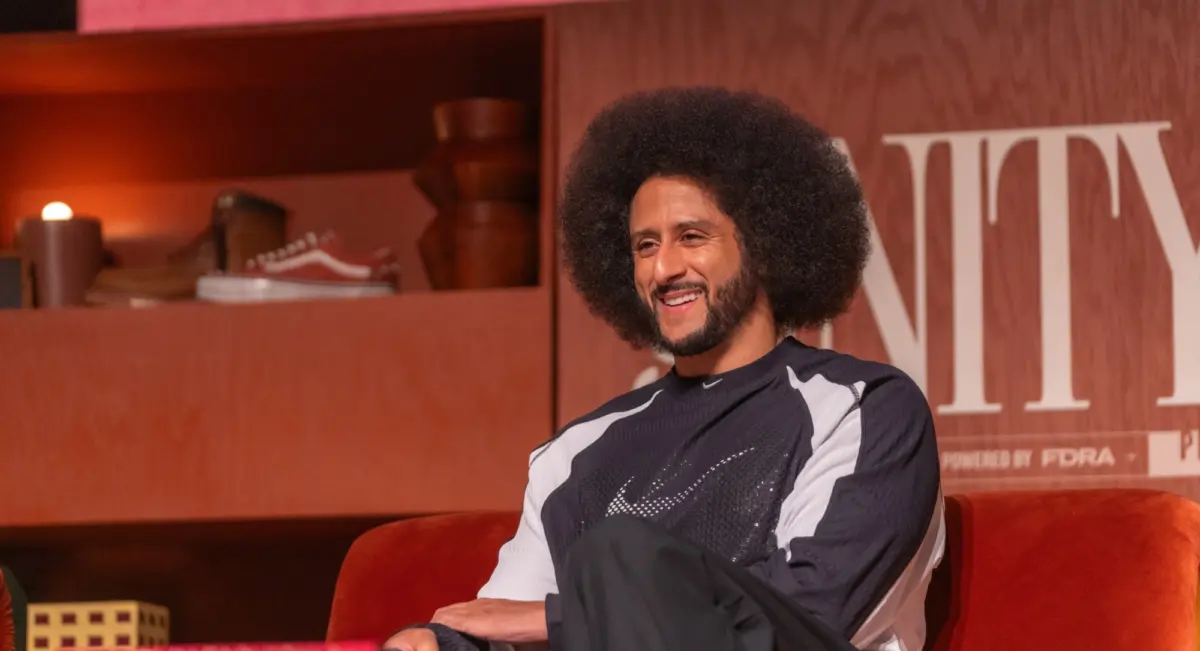
Kaepernick made these revelations while joining sports journalist Jemele Hill at the 2026 Black Footwear Forum in Detroit earlier this month. The appearance marked the inaugural stop on his multi-city book tour for his new release, “The Perilous Fight,” which hit shelves on September 15. The conversation, hosted during a high-profile industry event centered on Black leadership, community empowerment, and economic opportunity within the footwear and fashion sectors, traced a thoughtful arc. The dialogue moved fluidly between Kaepernick’s past career in the NFL, the historic protest that abruptly altered its trajectory, and the collective action he continues to argue is fundamentally necessary to dismantle systemic barriers.
During the panel discussion, Kaepernick addressed two persistent narratives that continue to frustrate him deeply: the assertions that he was a subpar football player and that his activism was merely a calculated financial maneuver. Expressing his frustration with the latter, he told the audience that the narrative attempts to attack the core sincerity of his intentions. He emphasized that people trying to undermine the genuine nature of what he was trying to accomplish simply do not reflect the reality of his motivations.

The historical context of Kaepernick’s exit from professional football remains a defining moment in modern sports and social activism. During the 2016 NFL preseason and regular season, Kaepernick famously sat and later knelt during the playing of the national anthem while serving as the starting quarterback for the San Francisco 49ers. His quiet demonstrations unfolded amid a backdrop of national outrage over the rampant, highly publicized police killings of Black individuals across the United States, including high-profile cases like those of Mario Woods, Alton Sterling, and Philando Castile.
That 2016 season ultimately marked the end of Kaepernick’s time in the league. After becoming a free agent, no NFL franchise offered him a contract, leading Kaepernick to allege that league owners had colluded to blacklist him in retaliation for his political speech. He subsequently filed a grievance against the NFL in 2017, a high-stakes legal battle that eventually concluded with a confidential financial settlement.
Despite his departure from the league, Kaepernick’s corporate and cultural footprint expanded in unexpected ways. Having first signed an endorsement deal with Nike in 2011, the athlete continued his partnership with the sportswear giant long after his NFL career stalled. In 2018, he fronted Nike’s iconic “Dream Crazy” campaign, featuring the memorable tagline: “Believe in something. Even if it means sacrificing everything.” The polarizing commercial debuted just ahead of the NFL season kickoff, sparking boycotts from critics alongside a surge in Nike stock value and an eventual Emmy Award win. Kaepernick later collaborated with Nike on a special Air Force 1 sneaker release in 2019, which sold out online in under two hours. True to form, he wore a prominent Swoosh shirt on stage at the Black Footwear Forum to signal his ongoing alignment with the brand.
Though he has not taken a snap in an NFL game since January 1, 2017, Kaepernick maintains a rigorous daily training regimen, waking up every morning to ensure his body is conditioned and ready to step back onto a football field at a moment’s notice.

Addressing this dedication on stage, Jemele Hill posed a pointed question to the former quarterback. Pointing out the NFL’s documented culture of obedience, institutional racism, and historical hostility toward player dissent, Hill asked why Kaepernick would still want to play in such an environment, and why he continues to fight so persistently for a path back into the league.
Kaepernick’s response was rooted in both principle and a desire to protect the next generation of athletes. First and foremost, he asserted that no player should ever have their career stripped away simply for fighting for the rights and dignity of their community. Secondly, he highlighted the explicit messaging the league attempted to broadcast. By blacklisting him, the NFL sought to send a chilling warning to other athletes: that speaking up for Black lives would cost them their livelihoods.
Kaepernick recounted how this message has successfully trickled down to younger athletes. He shared an anecdote about a young man who approached him at one of their "Know Your Rights" camps in Las Vegas, asking a heartbreaking question: how to choose between pursuing a professional football career and fighting for his community. Kaepernick stressed that forcing young people to make such an impossible choice is a false reality that must be broken down, offering another powerful motivation for his ongoing quest to return to the NFL.
Furthermore, Kaepernick argued that his outspoken critiques of the league should not disqualify him from competing. He noted the immense physical labor, dedication, and hours of training he poured into reaching the pinnacle of the sport, asserting that he deserves the exact same open tryout and merit-based evaluation afforded to any other player. By denying him that opportunity, Kaepernick argued, league leadership exposes its true operational priorities, suggesting that owners are ultimately searching for obedient performers rather than the absolute best talent available.

Kaepernick also opened up about behind-the-scenes maneuvers during the height of the controversy. He revealed that amidst his ongoing collusion grievance, league officials approached both him and former teammate Eric Reid—who knelt alongside him—with a proposal to become the public faces of a newly minted NFL social justice campaign. Despite what he described as a multimillion-dollar financial offer, Kaepernick turned it down, explaining that he refused to lend his name or provide moral cover to an institution whose systemic practices ran directly counter to the well-being of marginalized communities.
This dynamic, he recalled, echoed a tense 2017 meeting between NFL players and powerful team owners. Kaepernick referenced comments made by figures like New England Patriots owner Robert Kraft, who acknowledged the need to address the "elephant in the room," alongside Buffalo Bills owner Terry Pegula, who reportedly suggested the league needed a prominent Black face to help bring an end to the player protests. According to Kaepernick, those discussions ultimately laid the groundwork for the creation of the Players Coalition, leading to a partnership that effectively absorbed the institutional momentum of the movement as financial checks were distributed to participating athletes.
For Kaepernick, the primary objective of the protests was never about securing personal payouts or corporate partnerships, but rather about forcing genuine structural and institutional reform. If agreements failed to deliver systemic transformation, he questioned the value of halting the movement.
This perspective informed his view of subsequent league partnerships, including the NFL’s multiyear entertainment and social justice deal struck with Jay-Z’s Roc Nation in 2019. The music mogul and entrepreneur has faced recurring public scrutiny over the partnership, including a recent freestyle rap performance at Yankee Stadium where Jay-Z referenced Kaepernick and the controversy surrounding athletes taking financial arrangements from the league.

Kaepernick, however, firmly rejected any comparison between his legal grievance and corporate arrangements brokered with the league. He drew a sharp line between utilizing a pre-established legal mechanism to challenge unlawful blackballing and stepping into the fold on the heels of the NFL’s search for a prominent figure to quell player dissent, redirecting public energy away from structural demands and back toward stadium entertainment. He characterized such positioning as a choice made for individual advancement at the direct expense of community solidarity.
The emphasis on collective action over individual gain resonated powerfully within the setting of the Black Footwear Forum, where discussions frequently centered on building systemic economic power for Black professionals within the fashion and footwear industries.
Kaepernick’s journey toward radical political consciousness did not happen overnight. He attributed his awakening to a cumulative lifetime of experiences, accelerated significantly when his now-wife, Nessa Diab, handed him a copy of “The Autobiography of Malcolm X.” That seminal reading list quickly expanded to include works by revolutionary thinkers and theorists such as Frantz Fanon, James Baldwin, Steve Biko, and Marcus Garvey.
Armed with a deeper, systemic understanding of the historical and institutional structures designed to maintain racial oppression, Kaepernick viewed the tragic deaths of Black citizens—such as Mario Woods in San Francisco, Alton Sterling in Baton Rouge, and Philando Castile in Minnesota—through a vastly different lens. He realized he faced a stark personal choice: he could either understand the weight of these systemic injustices and do nothing, or he could live by his convictions and take visible action. When asked to stand for the national anthem during the 2016 preseason, his internal reckoning crystallized around a fundamental question of why he should display blind pride in a nation with a history of oppressing and denigrating his people.

Reflecting on the logistics of the protest, Kaepernick clarified the origins of the physical posture that defined the movement. While he initially sat on the bench during the anthem, it was Eric Reid who suggested transitioning to a knee. The rationale was strategic: kneeling would directly address criticism regarding perceived disrespect toward military personnel and team isolation, while still forcefully drawing national attention to systemic inequality. Kaepernick also disputed alternative narratives claiming that former military green beret Nate Boyer was the architect of the kneeling gesture, affirming that the idea originated entirely between him and Reid.
Looking back at the climate within locker rooms across the league, Kaepernick noted that while the vast majority of players he spoke with privately expressed personal support for his stance, very few were willing to join him publicly. He expressed deep empathy for the hesitation of his peers, noting the immense sacrifice required to reach the NFL and the life-changing generational wealth at stake in a system engineered to maintain absolute administrative control over player careers and earnings.
Yet, as Kaepernick’s ongoing journey demonstrates, the persistent tension between self-preservation and collective liberation remains a defining moral question—one that continues to drive his activism, his writing, and his unrelenting quest to return to the game he loves on his own terms.