




What defines a modern museum: the physical objects it preserves within its walls, the singular histories it chooses to narrate, or the complex social and intellectual relationships it makes possible? Must a cultural institution perpetually remain an authoritative arbiter that rigidly orders knowledge and unilaterally determines whose stories deserve recognition and cultural preservation? Furthermore, how might a completely new approach to exhibition design manage to preserve collective memory without imposing a single, unbroken narrative on visitors?
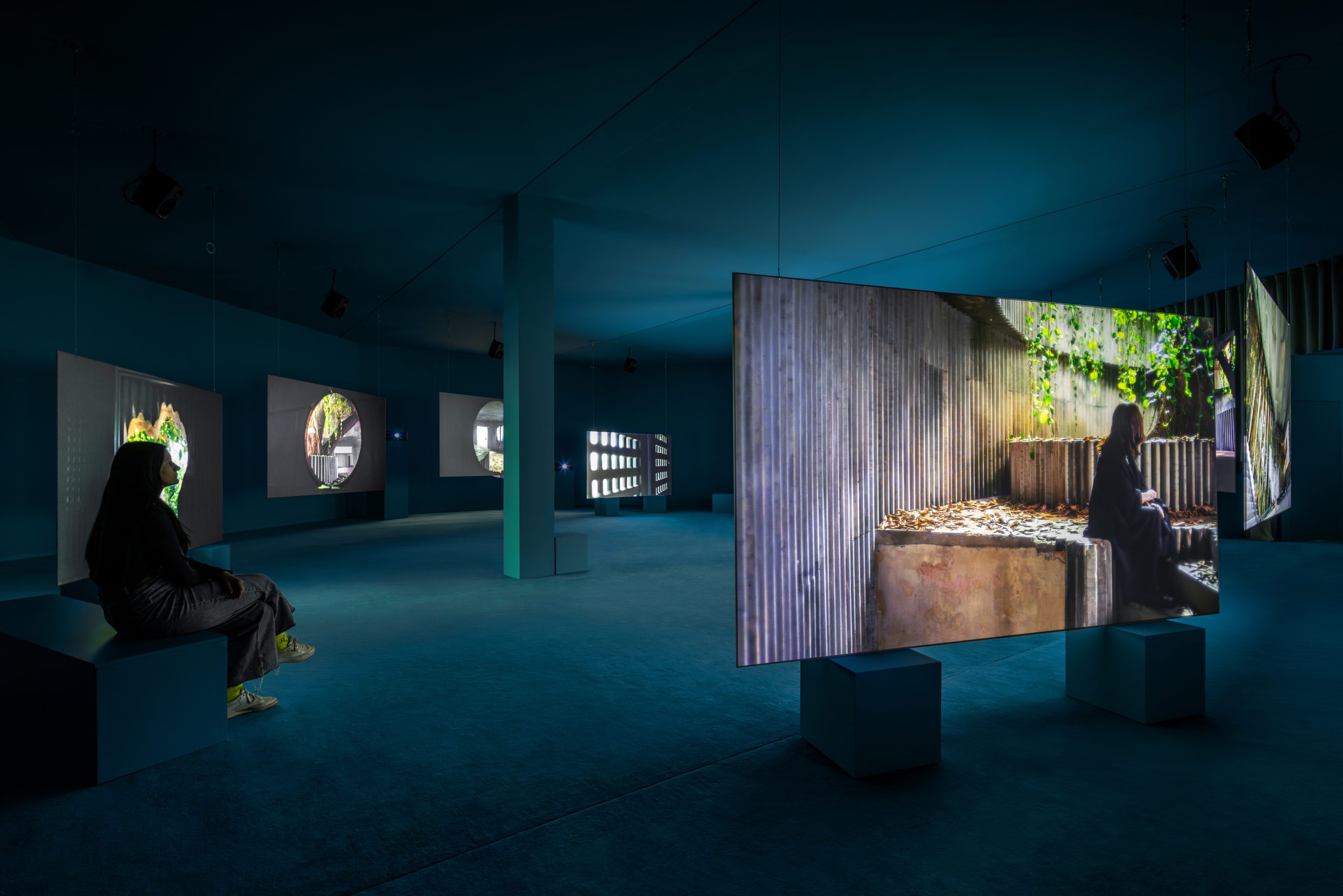
These are the probing questions at the heart of "Museum Dreams," a major new exhibition by acclaimed multi-faceted installation artist Sir Isaac Julien at gres art 671 in Bergamo, Italy. Located just half an hour outside of Milan, the exhibition critically questions institutional authority while fundamentally reconsidering how contemporary audiences encounter, digest, and interact with art. Through unexpected artistic associations, fluid spatial layouts, and non-linear relationships, Julien proposes a museum that transcends the traditional role of merely preserving objects and communicating established historical timelines. Instead, the venue transforms into a dynamic, living environment where visitors are encouraged to form their own active relationships between moving images, ambient sounds, physical objects, and interlocking narratives. The overarching architectural design provides a dual awareness—granting a comprehensive view of the exhibition as a whole while allowing for
deep, individual immersion in specific works, effortlessly alternating between broad comprehension and intimate personal engagement.
Breaking Canonical Boundaries Across Decades
Sir Isaac Julien has spent decades consistently transgressing canonical art narratives and challenging established artistic boundaries. The celebrated British artist and filmmaker has earned international renown for his pioneering multi-screen installations, which seamlessly combine the distinct mediums of cinema, contemporary dance, photography, and music. Through widely acclaimed and historically significant works such as Looking for Langston (1989) and Young Soul Rebels—which captured the prestigious Critics’ Week prize at the Cannes Film Festival in 1991—Julien has continually explored complex themes surrounding Black identity, human desire, migration, and the broader strokes of cultural history.
Reflecting on the magnitude of his current presentation, Julien describes the show as one of the most ambitious and complete exhibitions he has ever produced in his long career. He notes that the project successfully brings together over three decades of his artistic output into a single, highly immersive journey where image, sound, architecture, and choreography converge. The artist has expressed deep excitement at seeing his past works entirely reimagined within a unique architectural framework specifically tailored and created for the industrial spaces of gres art 671.
Curated by Nathan Ladd, "Museum Dreams" marks the first major retrospective in Italy dedicated entirely to Isaac Julien. The comprehensive exhibition brings together five of his large-scale, multi-screen film installations, complemented by a robust selection of photographs, sculptures, and archival materials that trace the trajectory of his creative evolution.
Innovative Architecture and Fluid Spatial Design
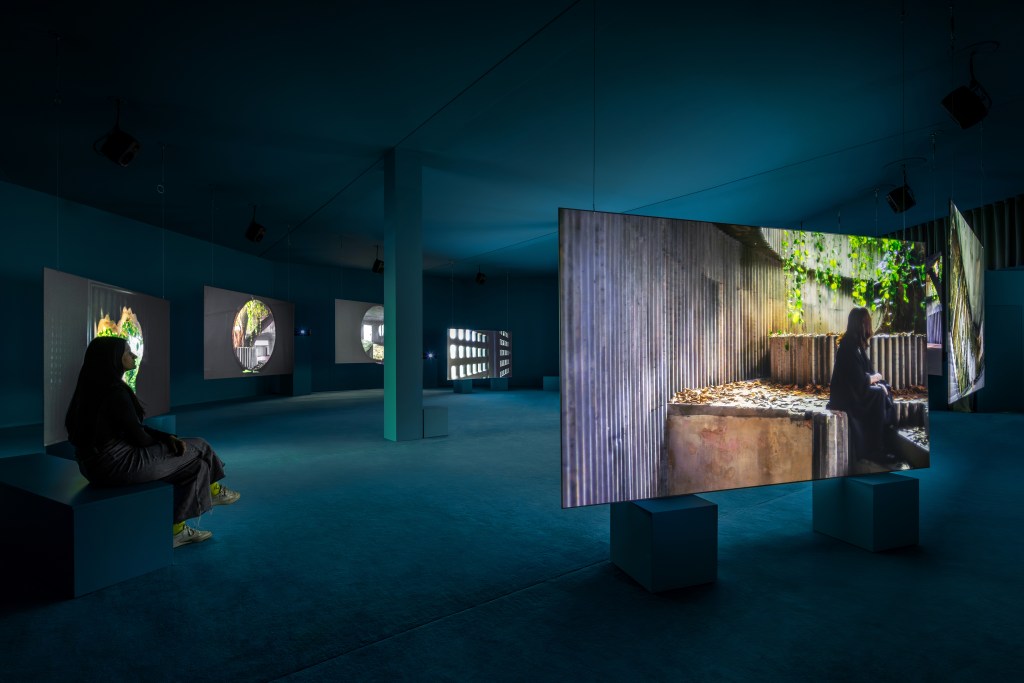
The spatial experience of the exhibition is a collaborative triumph. The exhibition layout was designed by the renowned firm Adjaye Associates and expertly crafted and engineered by Espositiva. Together, they have devised a spatial experience that deliberately alternates immersive, enclosed rooms with open public spaces and fluid passages. This thoughtful architecture allows visitors to navigate freely between vivid colors painted directly on the gallery walls—ranging from deep blues and striking reds to metallic silvers and vibrant turquoises—and layered soundscapes that blend the entire exhibition space into a continuous, flowing auditory experience.
Consequently, deliberate lighting choices and overlapping sonic elements naturally draw visitors onward toward adjacent spaces, effectively challenging the traditional museum expectation of mandatory silence and static observation. The architecture deliberately connects rather than isolates different galleries, enabling visitors to glimpse several video installations simultaneously from a distance. From there, they can make conscious decisions about where to focus their attention while still maintaining a broad, diagonal perspective of the surrounding artistic landscape.
While entirely open concepts dominate much of the journey, enclosed spaces are carefully retained to preserve deep concentration, ensuring that rigid separation never becomes the primary organizing principle of the show. This intentional set design provokes a profound sense of freedom of movement and agency for the visitor, featuring deliberate perceptual compressions and expansions that stand miles away from imposing a traditional, linear exhibition route. Ultimately, the museum emerges not as a static container for historical artifacts, but as a dynamic, breathing space for active participation, critical questioning, and the reimagining of historically overlooked lives and narratives.

Poetic Restitution and Historical Dialogues
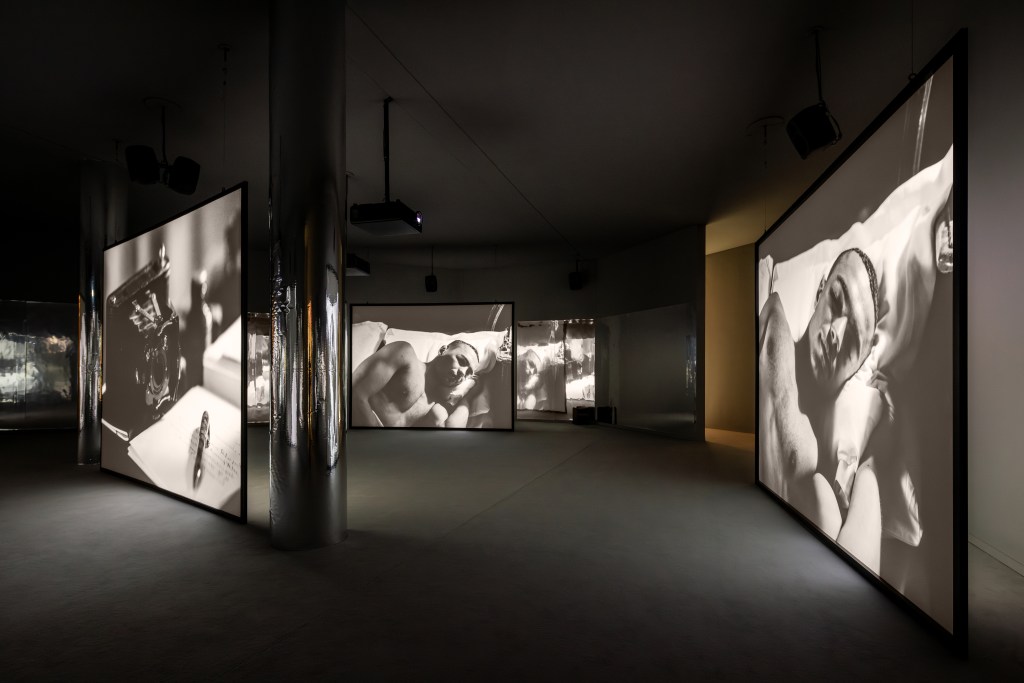
Among the most striking works on display at gres art 671 is Once Again […] Statues Never Die (2022). This multi-screen installation thrives heavily on the intricate interaction of different artistic languages and forms, while also maintaining an active dialogue with the four other distinct sections of the show: The Long Road to Mazatlán (1999), Vagabondia (2000), Baltimore (2003), and Lina Bo Bardi: A Marvellous Entanglement (2019).
In this specific installment centered around a five-screen film, Julien revisits the cultural and intellectual terrain of the Harlem Renaissance, a subject he previously explored in his iconic early films. The work features a fictional conversation constructed from historical texts between the wealthy American art collector and philanthropist Albert C. Barnes—played by Danny Huston, who famously founded Philadelphia’s Barnes Foundation in 1922—and Alain Locke, played by Andre Holland, the influential philosopher and art critic widely recognized as the "Father of the Harlem Renaissance." True to his form, Julien approaches the modern museum as a place of dreams and lyrical inquiry, conceiving the entire installation as a powerful act of what he terms "poetic restitution."
The installation is further enriched by the inclusion of powerful sculptures by Richmond Barthe, alongside authentic African artifacts kindly lent by a local private collector based in Bergamo. Through these juxtapositions, the artwork engages directly with contemporary, urgent debates surrounding cultural restitution, exploring deeply how African material culture has historically been collected, displayed, and understood within Western art museums. Along the way, the artist raises numerous challenging questions: Who ultimately determines what constitutes Black modernism? Who holds the institutional authority to speak for others? How do men navigate systemic power structures or queer desire? Julien’s closing artistic response remains resolutely open and optimistic, suggesting that a culture of infinite possibility is finally ready to receive us.
Urban Regeneration and Cultural Expansion in Bergamo
For gres art 671 itself, hosting an exhibition of this scale continues its ongoing exploration of what a modern cultural institution should truly represent to the public. The model proposed by the center is that of a living, breathing place of human encounter, where direct sensory experiences and raw emotion open accessible pathways to complex historical and political questions, rather than functioning as a neutral, sterile container or an unquestionable institutional authority.
Established in 2023, gres art 671 is a compelling art and culture center born out of an ambitious urban regeneration project in Bergamo promoted by the Italmobiliare Group alongside Fondazione Pesenti. The overarching mission of the initiative has been to revitalize a large, disused industrial site and return it to the local community as a vibrant public asset. Preserving the tangible industrial history of the location, gres art 671 routinely hosts a wide-ranging calendar of exhibitions, public talks, live performances, and participatory workshops. Its diverse programming spans electronic music, interdisciplinary dialogues, and participatory dance events, while a freely accessible café and dedicated coworking area warmly welcome local visitors and remote workers even outside of exhibition viewing hours.
As the cultural project continues to grow and evolve, gres art 671 has officially inaugurated gres+, a brand-new events building that significantly expands the art and culture center’s existing physical footprint. The new space officially opened to the public on November 14, broadening the institution’s comprehensive program across the visual arts, live music, performance art, educational initiatives, and contemporary cultural projects. To mark this exciting expansion and the opening of the new facilities, gres art has announced that Isaac Julien’s critically acclaimed retrospective, "Museum Dreams," will have its run extended, remaining on view to the public through January 10, 2027.