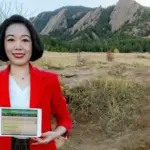




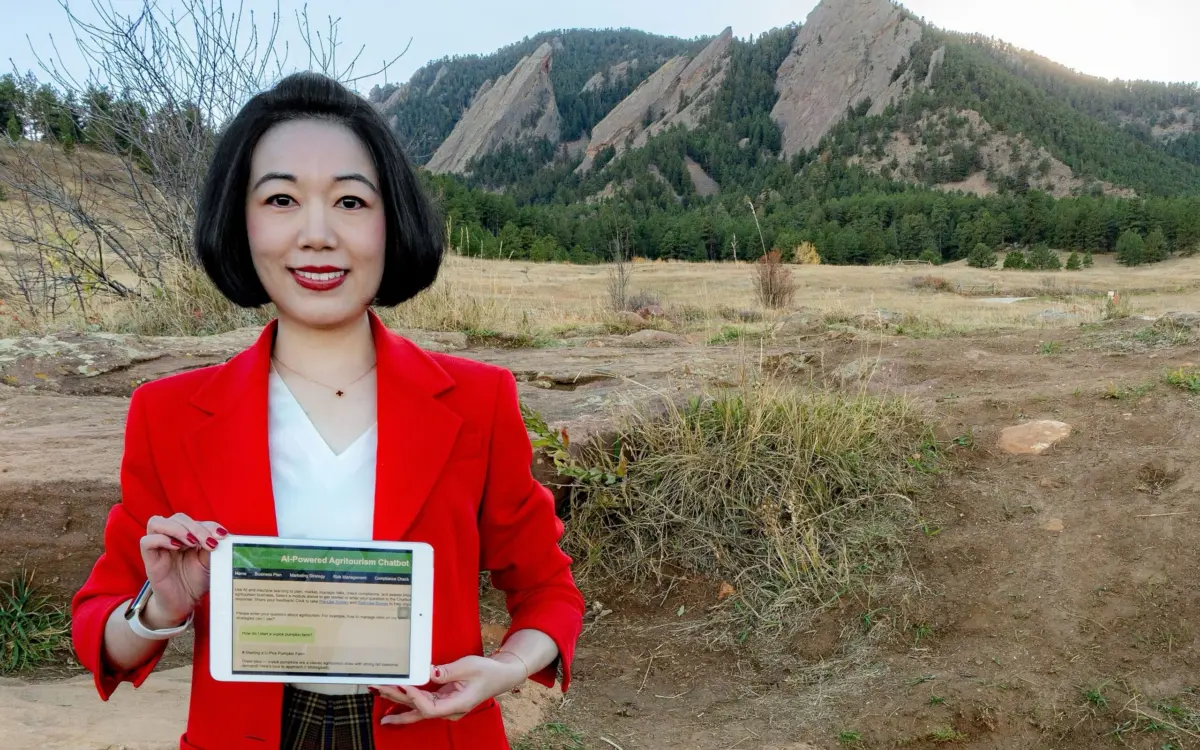
Many farmers and ranchers across the wide-open expanses of eastern Colorado find themselves deeply curious about artificial intelligence, yet they often lack a local, tech-savvy resource to show them how to practically integrate these advanced systems into their daily operations. Stepping into this critical technological gap is Xue “Alice” Dong, an extension regional specialist who has made bridging the digital divide her life’s professional mission.
Working through the Colorado State University Extension, the university’s primary outreach and public engagement arm, Dong serves a sprawling 10-county agricultural region located in the northeast corner of the state. Based out of a small office in Sterling, her daily mandate is as clear as it is challenging: translate complex, cutting-edge university research into tangible, user-friendly tools and resources for the rural residents who live hours away from main academic campuses.
Dong’s impressive academic background spans multiple disciplines and continents. Born in Beijing to two physician parents, she developed an early childhood love for drawing and sketching inventive designs, a habit that eventually blossomed into a passionate career path centered on creating practical solutions for real-world problems. She earned dual bachelor’s degrees in geographical science and education from Inner Mongolia Normal University in Hohhot in 2013, followed by a master’s degree in curriculum and instruction from Beijing Normal University in 2016.
Seeking to expand her expertise in environmental issues, she relocated to the United States to study at the State University of New York College of Environmental Science and Forestry in Syracuse, earning a second master’s degree in environmental biology in 2020. Prior to joining the CSU Extension in 2023, she served as an education and outreach coordinator at Paul Smith’s College in New York, where she managed national watershed protection projects and built educational websites like "Maintain the Chain" to keep invasive species out of the Fulton Chain of Lakes. She later worked as a program manager for Stewards of the Coast and Redwoods in California, collaborating with state parks to protect coastal ecosystems and redwood forests.
Bridging Campus Innovation and Rural Communities
Today, Dong’s role as an extension specialist operates within the historic framework of the nationwide Cooperative Extension System. Overseen federally by the U.S. Department of Agriculture’s National Institute of Food and Agriculture (NIFA), managed statewide through land-grant universities, and delivered locally by county offices across more than 3,000 counties, the system was originally founded to teach farming and practical subjects. While its scope now extends into community development, health initiatives, and the youth-focused 4-H program, Dong’s work heavily emphasizes modern agricultural technology.
Her performance evaluation mirrors that of a traditional academic professor, balancing research, teaching, and community service. However, her primary audience consists of adults—including farmers, ranchers, and local entrepreneurs—rather than traditional university students. Because she lives and works directly within the rural countryside she serves, much of her daily communication happens via email, phone calls, and virtual meetings, supplemented by face-to-face interactions at county fairs, farmers markets, and local agricultural gatherings.
The need for this localized translation of technology is acute. Many farmers and ranchers in the region are older and typically possess little to no formal technical training. Furthermore, their children and grandchildren have frequently moved away to pursue urban careers, leaving older agricultural workers without a familiar hand to guide them through emerging software and digital platforms. Without dedicated outreach, the sweeping benefits of modern artificial intelligence risk passing rural communities by entirely.
To address this, Dong has pursued advanced technical education herself, earning a third master’s degree in artificial intelligence and machine learning from CSU Global in 2025. She has utilized this specialized knowledge to secure seven competitive grants totaling over US $250,000 as principal investigator or co-principal investigator, including funding backed by NIFA and the USDA.
Her pioneering efforts have earned widespread national recognition. She was named a finalist in the 2026 GenAI for Good Challenge for her AgriPivot AI Agent, a project selected from 318 competing teams across 79 countries through an initiative organized by IEEE Humanitarian Technologies and the United Nations International Telecommunication Union. She also received the 2026 Award for Innovation from the National Extension Technology Community, along with both the national and Western regional Educational Technology Awards for 2025 from the National Association of Community Development Extension Professionals.
Developing Specialized AI Tools for Agriculture
Among her most notable technological contributions is the creation of the AI-Powered Agritourism Chatbot, hosted at AgriTourismAI.com. Designed to help farmers and ranchers diversify their income by opening their properties to visitors for educational, recreational, or retail activities—such as pick-your-own fruit orchards, vegetable-growing classes, and farm-store sales—the chatbot streamlines the complex process of launching such ventures.
Built using the Python programming language, the chatbot features a user interface reminiscent of popular consumer AI tools like ChatGPT, but it operates on a fundamentally different architecture. Under the hood, it utilizes retrieval-augmented generation, a specialized technique that forces the artificial intelligence to consult a strictly curated collection of trusted documents before formulating a response. Dong meticulously populated this database using official Extension publications, ensuring that the guidance provided rests on authoritative sources and drastically reducing the likelihood of generated misinformation.
The tool runs directly inside standard web browsers rather than requiring a dedicated mobile application download. This design choice accommodates many local farmers who may not own smartphones but consistently rely on desktop computers, laptops, or tablets to connect to the internet. Users frequently query the bot regarding critical business operations, such as how to attract visitors, write comprehensive business plans, price admission for seasonal attractions like corn mazes, navigate required permits, secure appropriate liability insurance, and manage enterprise risk.
Dong tested and documented the real-world application of her work in a peer-reviewed case study published in CABI Tourism Cases, examining the integration of machine learning at the Prairie Ridge Buffalo Ranch in eastern Colorado. Surveys and interviews conducted with system users indicate that the chatbot is exceptionally accessible, easy to learn from, and effective at helping operators implement practical business advice.
Beyond agritourism, Dong’s technical footprint extends into open-science initiatives. In 2026, she contributed an AI assistant to Project Pythia, an open-science program funded by the National Science Foundation and led by the National Center for Atmospheric Research. Her assistant transforms raw airport weather report data into plain-language guidance tailored for farmers and other non-technical users, explicitly designed to flag missing data rather than hallucinating or guessing.
She also maintains an active teaching schedule, delivering workshops on generative AI tools like ChatGPT, Claude, and Gemini. Having presented her workshop 20 times to more than 200 entrepreneurs and business owners across 32 Colorado counties, her impact is measurable: follow-up surveys indicate that 90 percent of participants subsequently attempted at least one new AI-driven task within their business operations. These sessions are frequently hosted at community centers in Sterling through partnerships with the Logan County Economic Development Corporation, the Rural Community Assistance Corporation, Colorado Startup Week, and Boulder Startup Week, alongside virtual webinars designed to eliminate travel barriers.
Recognizing the broader implications of these deployments, Dong also focuses heavily on responsible technology governance. Alongside Paul Hill of Utah State University Extension, she published a landmark paper titled "From Access to Governance: Generative AI Literacy for Extension Professionals and Small Businesses, and a Governance-Aware Design Framework" in the journal AI. The publication outlines a practical framework to help rural small businesses and extension personnel adopt generative AI safely and ethically.
Engaging with the Global Professional Community
As an active professional, Dong joined the IEEE in 2025 and was swiftly elevated to senior member status, finding her professional home within the IEEE Society on Social Implications of Technology. She also contributes locally as vice treasurer of the IEEE Denver Section’s Young Professionals group.
Her involvement with IEEE directly supports the tripartite mission of her academic career. For her research endeavors, she presented her work titled "Entrepreneur AI Agent: Empowering Small Businesses and Bridging the Digital Divide through Context-Aware Generative AI" at the 2026 IEEE Global Humanitarian Technology Conference. For her teaching outreach, she has offered to conduct her signature AI workshops for Denver Section members and local entrepreneurs, while supporting academic peer review by evaluating submissions for IEEE conferences.
Attending events such as the IEEE World Forum on Public Safety Technology in Boulder has further expanded her perspective on large-scale technological deployments. Yet, despite her growing international profile and numerous accolades, her daily focus remains firmly fixed on the quiet rural roads, farms, and ranches of eastern Colorado.
As Dong continues to guide agricultural producers through the complexities of the digital age, she remains convinced that human intervention is vital to making advanced tools approachable. Through her continuous workshops, accessible software design, and unwavering commitment to rural communities, she serves as an indispensable link connecting academic research directly to the soil.