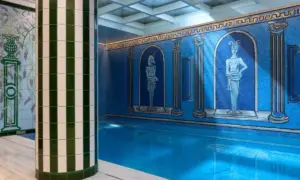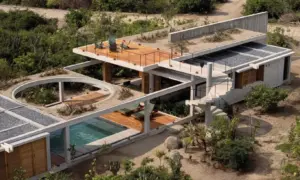





The intersection of cinema and architecture has long yielded profound artistic explorations, but few collaborations rival the depth and patience behind From Inside Out – The Architecture of Peter Zumthor. Directed by acclaimed four-time Academy Award-nominated filmmaker Wim Wenders, the immersive 3D documentary represents a fourteen-year creative endeavor. The project chronicles the life’s work, structural philosophies, and iconic spaces crafted by the Pritzker Prize-winning Swiss architect.
Wenders, celebrated globally for narrative and documentary masterpieces such as Paris, Texas (1984) and Buena Vista Social Club (1999), first trained his lens on Zumthor back in 2012. That initial spark produced a short documentary titled Notes from a Day in the Life of an Architect. Rather than concluding with that brief project, the encounter evolved into an extensive, multi-decade documentation of Zumthor’s architectural portfolio. Spanning early alpine structures to monumental contemporary cultural institutions, From Inside Out offers audiences an intimate, sensory-driven journey across the globe, capturing the tangible weight, light, and materiality that define Zumthor’s built environments.
Projects Explored in From Inside Out – The Architecture of Peter Zumthor
The documentary traces a chronological and thematic path through Zumthor’s career, beginning with his early, austere interventions in the Swiss landscape and culminating in massive, recently completed international institutions. Rather than functioning as a standard academic lecture or a technical retrospective, the film positions itself as a meditative experience.
“This film is not trying to teach you anything,” Wenders explains, reflecting on the cinematic approach. “Instead, it offers you a sensual experience that will allow you to simply take in a few basic things about architecture. Your guide in this adventure of discovery is Peter Zumthor, one of the great living architects of our time.”
Working from his alpine atelier in Haldenstein, Switzerland, Zumthor—born in Basel—has consistently championed a philosophy deeply rooted in context, memory, and tactile craft. As the architect once succinctly remarked, encapsulating his human-centric philosophy, “We’re all coming from houses.” Wenders translates this sentiment onto the screen by exploring the intimate corners of Zumthor’s buildings through the distinct perspectives of the people who inhabit, visit, or craft them.
Zumthor’s Early Works and Alpine Presence in Switzerland
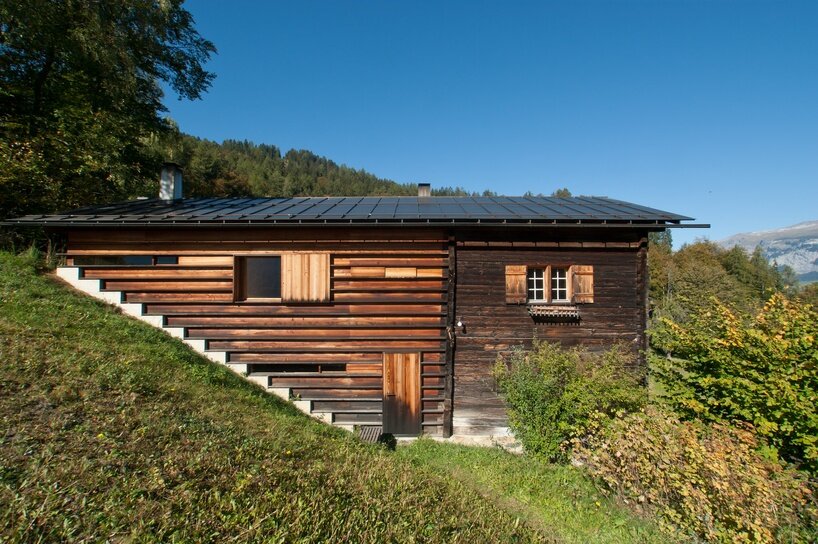
The cinematic journey commences in the serene landscapes of Switzerland, where Zumthor’s early works established his reputation for material rigor and contextual sensitivity. Structures like the Gugalun House in Versam, built between 1990 and 1994, demonstrate an intimate dialogue with regional vernacular building traditions. Here, timber construction and traditional craftsmanship are carefully preserved and reinterpreted, reflecting an architectural ethos that respects history without slipping into mere imitation.
Similarly, early creations like St. Benedict’s Chapel in Sumvitg, constructed from 1985 to 1988, perch quietly upon the green alpine hills. The teardrop-shaped wooden chapel utilizes local timber and precise joinery to create a sacred interior characterized by warmth, acoustic resonance, and a profound connection to the surrounding topography. Throughout these regional Swiss projects, Wenders’ 3D cinematography captures the subtle interplay of shadow and light on raw timber and rugged stone, bringing viewers directly into the physical presence of the spaces.
The Evolution of Sacred Spaces and Chapels
Creating a space of worship has historically served as a defining rite of passage for visionary architects, echoing milestones like Le Corbusier’s Notre-Dame du Haut or Tadao Ando’s Church of the Light. In From Inside Out, Wenders examines Zumthor’s distinct contributions to this sacred typology.
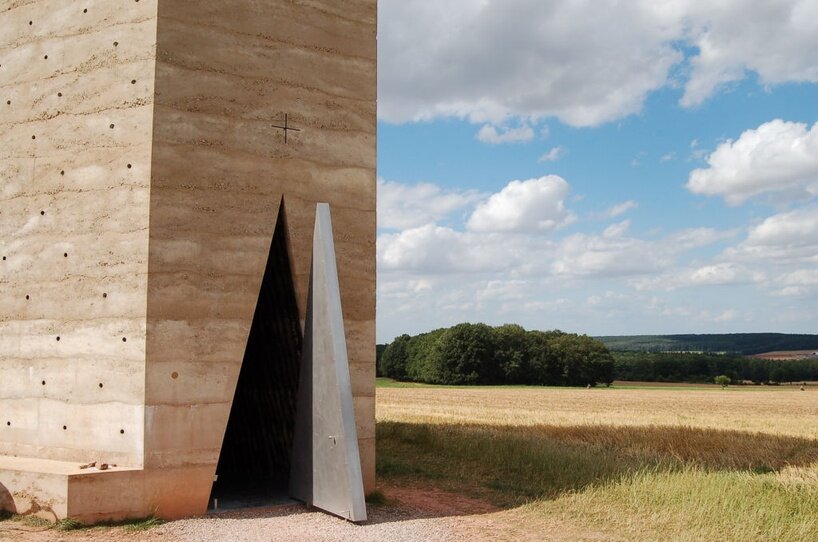
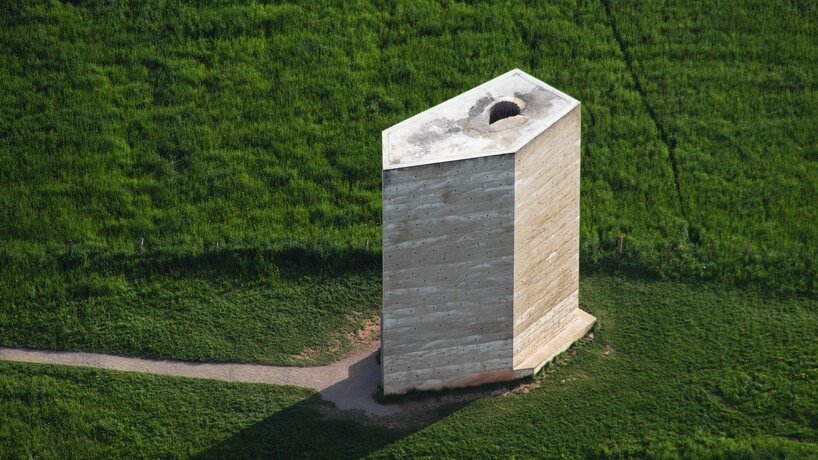
The documentary bridges the gap between humble, intimate sanctuaries like St. Benedict’s Chapel and more dramatic, elemental works like the Bruder Klaus Field Chapel, constructed during the early 2000s in rural Germany. In these projects, Zumthor’s mastery of material transformation comes to the forefront. The Bruder Klaus chapel, formed by a burnt-log interior encased in poured concrete and later cleared by fire, exemplifies the visceral, elemental nature of Zumthor’s architecture—qualities that the film’s 3D medium renders with striking physical immediacy.
Beyond traditional ecclesiastical spaces, the documentary also captures works imbued with solemn memorial significance, such as the Steilneset Memorial in Vardø, Norway. Dedicated to the victims of the 17th-century witch trials, the stark, suspended wooden structure cuts through the harsh Arctic landscape, merging historical tragedy with a haunting, poetic spatial experience.
Monumental Museums and Cultural Institutions Around the World
As Zumthor’s career expanded internationally, his focus extended toward cultural institutions designed to invite the public into shared spaces of reflection and discovery. Museums, in their truest sense, offer an architectural openness where visitors can engage with history and art. Zumthor’s major cultural projects occupy a central space in Wenders’ documentary, showcasing how the architect handles light, civic scale, and urban context.
In Austria, the Bregenz Art Museum stands as a glowing beacon along the shores of Lake Constance. Encased in a facade of diffused glass plates, the building absorbs and reflects the shifting atmospheric conditions of the surrounding landscape. Describing the structure, Zumthor notes, “Seen from the outside, the building resembles a filament. It absorbs the changing light of the sky, the misty light of the lake, emanates light and color and, depending on the angle of view, the time of day, and the weather, permits something of an insight into its own inner life.”
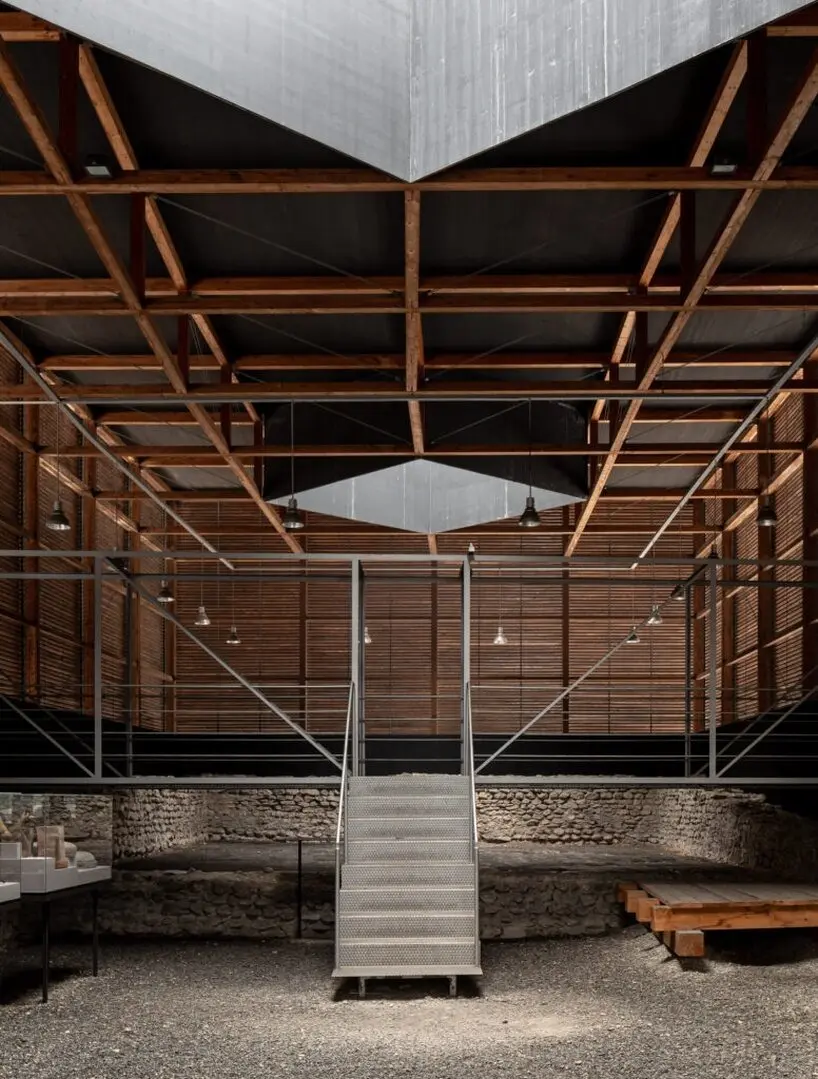
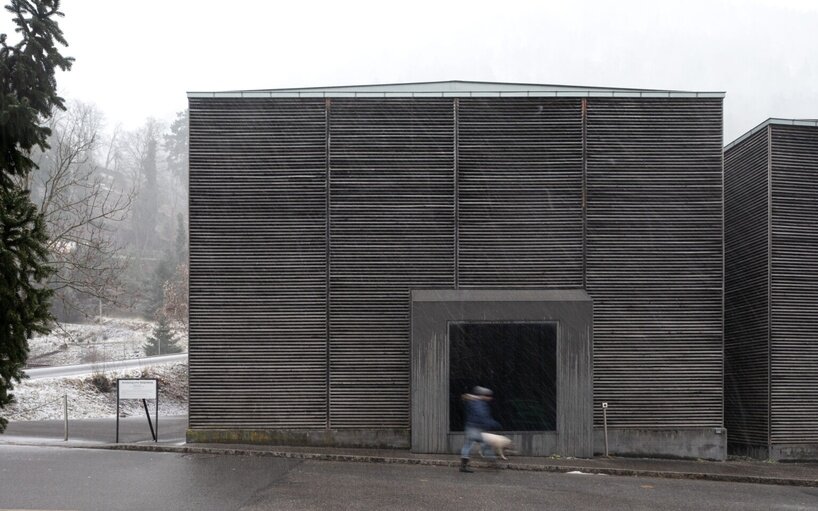
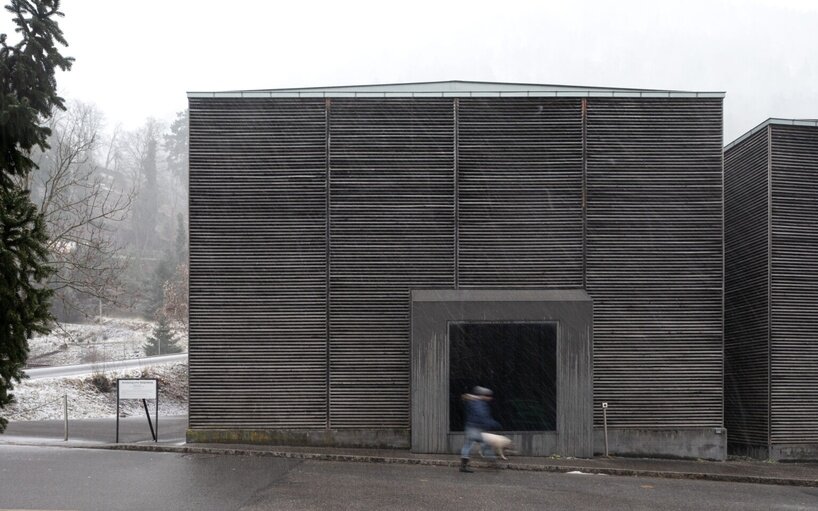
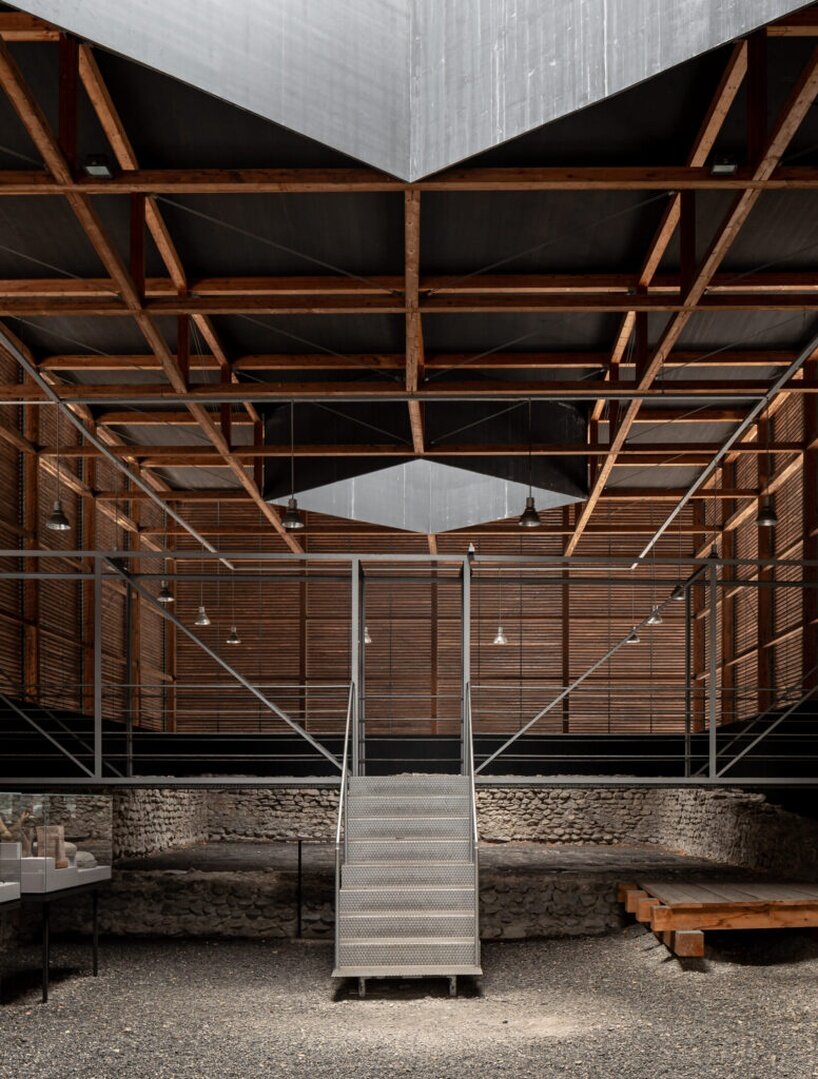
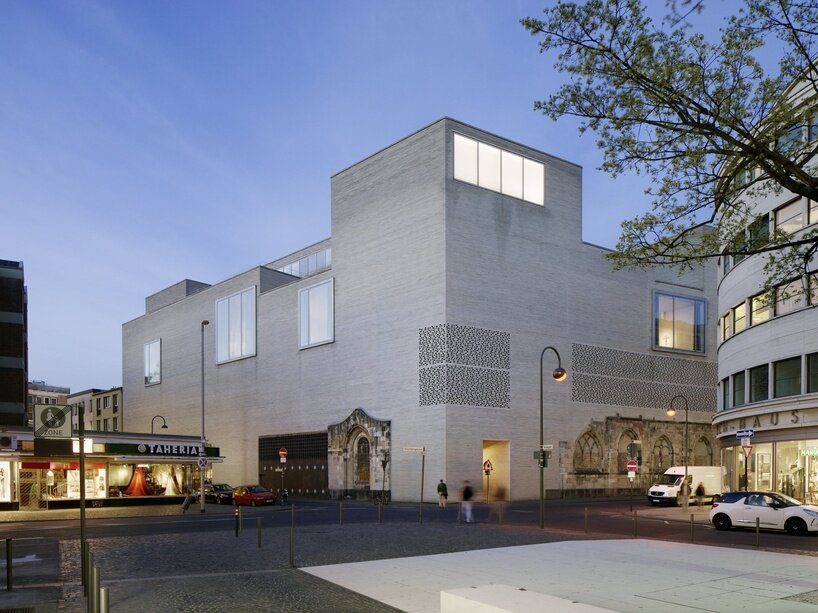
Moving to Germany, the Kolumba Art Museum in Cologne represents a masterclass in layering history. Developed between the late 1980s and 2007, the museum incorporates the preserved Gothic ruins of a bombed-out medieval church into a contemporary brick envelope. The resulting spaces weave ancient stone, archaeological excavations, and contemporary art collections—including works like the brass sculpture Große Liegende by Hans Josephsohn—into a seamless architectural continuum.
The documentary also documents Zumthor’s most ambitious contemporary undertakings, including the sweeping organic curves of the newly opened David Geffen Galleries at the Los Angeles County Museum of Art (LACMA), developed between 2008 and 2026. The elevated, horizontal pavilion rethinks the traditional museum typology, anchoring itself in the sprawling, car-centric landscape of Southern California while offering expansive galleries that reflect the experimental cultural energy of Los Angeles.
In Switzerland, the documentary captures the recently completed expansion of the Fondation Beyeler in Riehen. Working on the museum grounds from 2016 to 2026, Atelier Peter Zumthor designed the Wyss Museum alongside new pavilions and garden spaces, integrating architecture seamlessly into the bucolic parkland alongside historic trees and monumental sculptures by artists like Louise Bourgeois and Alexander Calder.
Through From Inside Out, Wim Wenders and Peter Zumthor offer a timeless testament to the power of architecture as a sensory, physical, and emotional art form. By capturing these structures across fourteen years of patient filmmaking, the documentary invites viewers to step past the blueprints and photographs, experiencing the true spatial poetry of one of the 21st century’s defining master builders.