





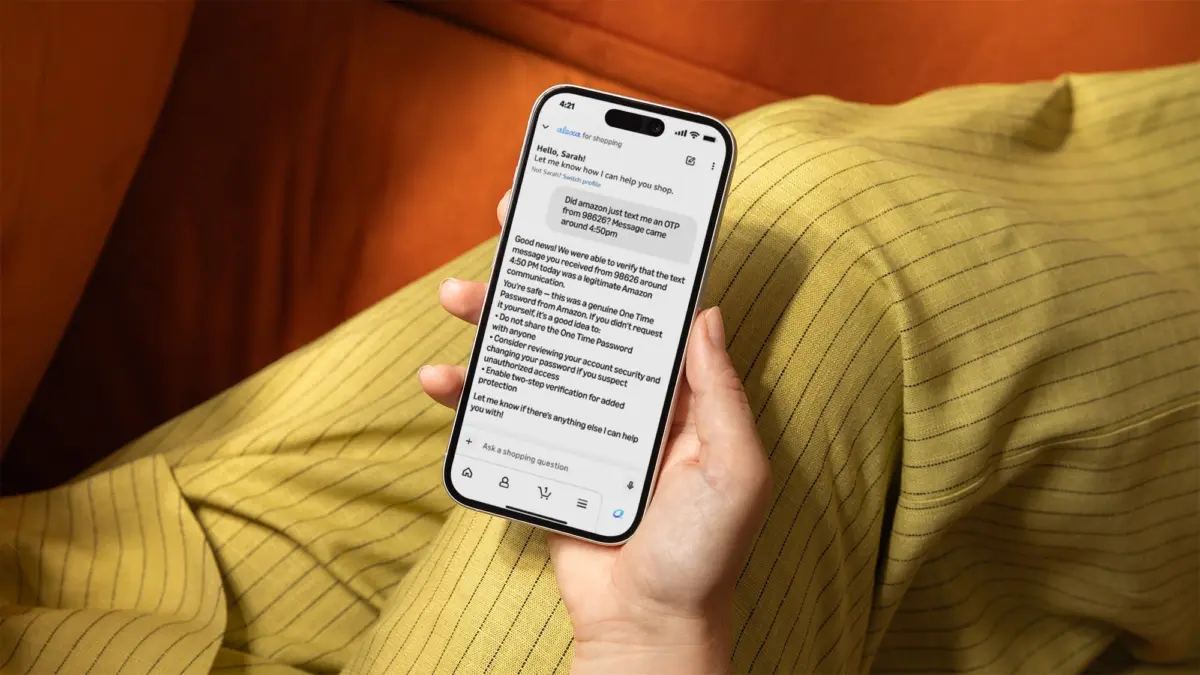
The initiative, announced on Wednesday, addresses a massive volume of consumer confusion that burdens the company’s customer support infrastructure year after year. According to Amazon, approximately 360,000 customers reach out to its customer service department annually simply to find out whether a suspicious message, email, or alert they received claiming to be from the company is authentic or a fraudulent attempt to steal their personal information, account credentials, or financial data.
To alleviate this burden and protect its user base, Amazon is integrating the verification capability directly into its consumer-facing artificial intelligence service, Alexa for Shopping. Rather than waiting in queues or guessing at the legitimacy of a questionable communication, customers will now be able to use the AI assistant to get an immediate, authoritative answer regarding the message in question.
The technology leverages Amazon’s vast operational data to cross-reference incoming messages. The company stated that its AI system can definitively confirm whether a communication originated from its official corporate systems by checking the details against the billions of legitimate messages Amazon sends out globally on a regular basis. In performing this check, the artificial intelligence analyzes multiple layers of data, including sender information, textual content, timing, message metadata, and other defining characteristics, to accurately determine authenticity.
Furthermore, Amazon has designed the system with a continuous learning mechanism. The artificial intelligence will dynamically improve over time as customers report and query more suspicious messages, enabling the underlying algorithms to spot emerging scam patterns and fraudulent tactics much more effectively in the future.
This new AI-powered verification feature arrives as an expansion of Amazon’s ongoing efforts to address a rising tide of digital scams that exploit the company’s brand recognition. Cybercriminals routinely target consumers with a wide variety of deceptive ruses, ranging from fake order confirmations and Prime membership renewal alerts to urgent account suspension warnings, package delivery notifications, and fraudulent job offers designed to entice unsuspecting job seekers.
The integration into Alexa for Shopping represents the latest step in Amazon’s broader strategy to safeguard its customers. Earlier this year, the retail conglomerate established a dedicated verification email address, [email protected], which allows anyone to forward suspicious messages directly to the company and receive a human or system-verified response confirming whether the communication was genuine. The company also rolled out a dedicated online form on its official customer service portal to provide identical assistance for users who prefer web-based interactions.
The introduction of the scam-checking capability also highlights a broader strategic pivot for Amazon regarding its Alexa product ecosystem. Over recent years, the company has increasingly focused its voice and conversational assistant technology on practical retail applications, centering on how the assistant can actively help users navigate their shopping journeys and provide proactive assistance rather than merely answering isolated trivia questions or controlling smart home devices.
Today, the Alexa for Shopping assistant has evolved into a multifaceted tool capable of sourcing personalized deals, generating comprehensive shopping guides, helping customers easily reorder everyday household items, offering AI-generated product overviews, and even transcribing handwritten shopping lists submitted by users.
This steady expansion of retail-focused AI features has unfolded alongside other recent platform updates. Just a day prior to the scam-detection announcement, the retailer introduced another new Alexa capability that enables customers to set proactive alerts when something new or relevant happens that might tempt them to shop. These alerts can notify users when a favorite brand launches an entirely new product, when a favored author releases a new book, or when a preferred musical artist drops a brand-new record.
With these continuous additions, Alexa for Shopping is positioning itself as a central hub for both consumer convenience and security within the Amazon ecosystem. The new anti-scam feature, alongside the broader suite of retail assistant tools, is readily available to users through both the official Amazon website and its mobile application across supported platforms.