





Swiss artist Renée Levi has taken contemporary painting far beyond the polite confines of the traditional white cube, unleashing a riot of color across the austere concrete facade of London’s iconic Hayward Gallery. Titled September, the large-scale public installation marks Levi’s first major outdoor project in the United Kingdom. Co-commissioned by the Hayward Gallery and Audemars Piguet Contemporary, the striking intervention drapes fluorescent greens, electric pinks, vivid blues, and blazing oranges across one of the South Bank’s most celebrated Brutalist landmarks. In doing so, the artist has forced the solemn, weathered grey concrete into a dialogue with some rather loud and luminous company.
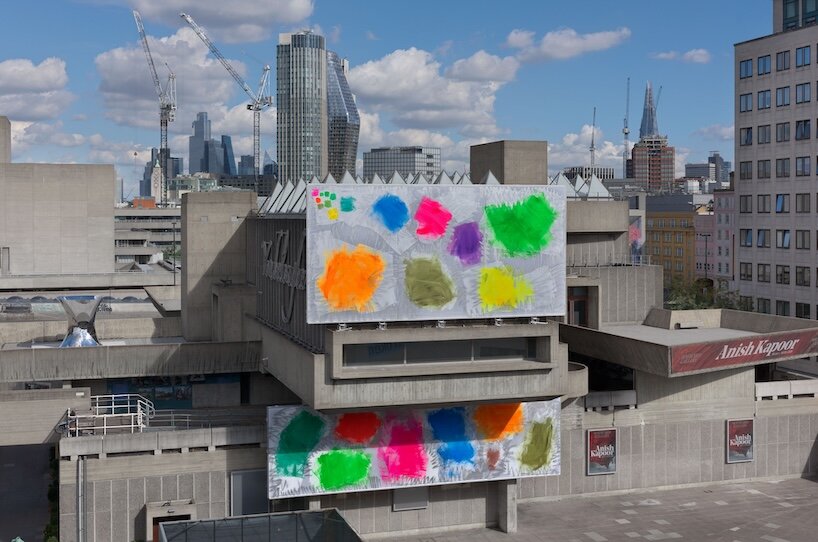
The ambitious project also represents a significant milestone for Audemars Piguet Contemporary. Although the Swiss watchmaker’s dedicated art program has partnered with international artists across a wide spectrum of media since 2012, September stands as its very first painting commission. This distinction feels particularly appropriate given Levi’s penchant for pushing the boundaries of the medium. Rather than hanging a conventional canvas on a wall or inserting a detached object in front of the structure, Levi works directly with the architecture itself. She treats the Hayward Gallery’s prominent rectangular window—affectionately known within the building’s architectural lexicon as its "eye"—as an active component of the overall composition, wrapping her two-panel painting seamlessly above and below the protrusion.
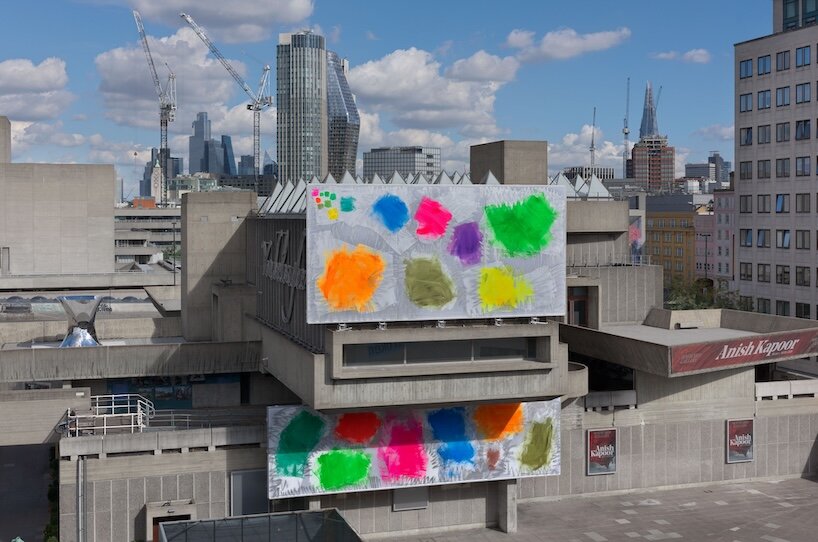
Fluorescent Painting Meets Hayward Gallery’s Brutalist Architecture
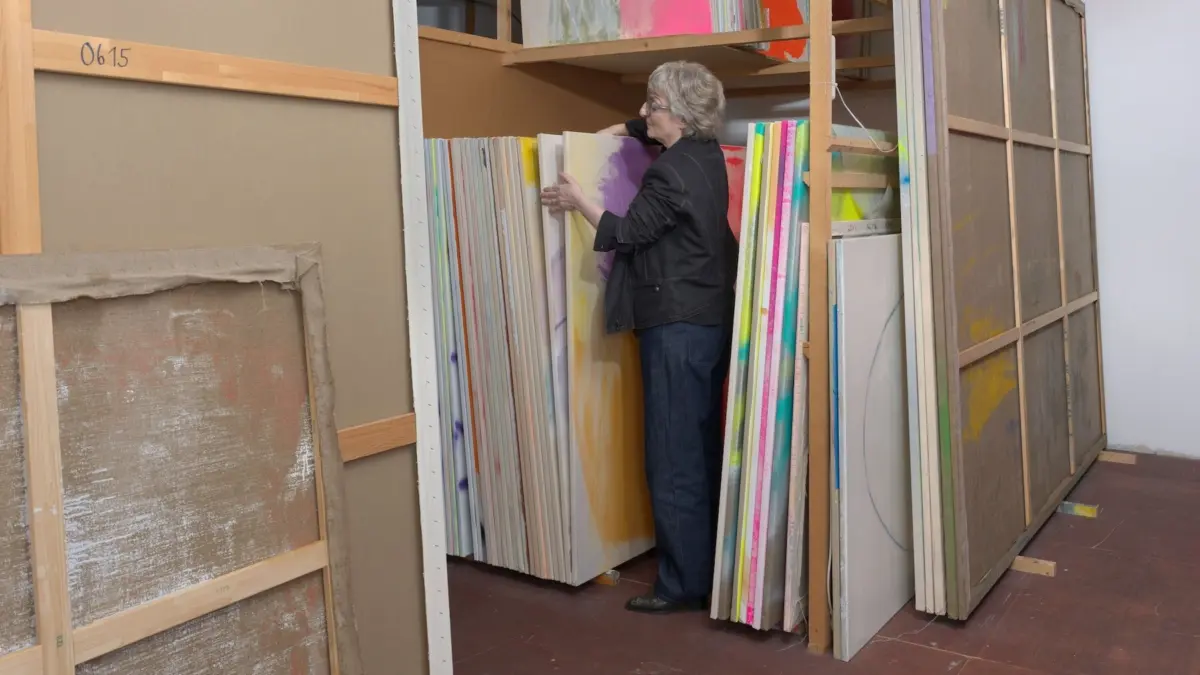
Levi’s intervention on the South Bank is a natural extension of her long-standing artistic philosophy, which treats painting not as the execution of a predetermined image, but as a dynamic action shaped by the human body, raw materials, and the specific characteristics of a site. Her expansive gestures reach outward above and below the window, yet they remain tethered to the physical limitations and reach of the painter’s body. The Hayward Gallery—with its heavily textured exposed concrete, dramatic projections, and assertive geometric language—ceases to function merely as a static backdrop. Instead, the Grade II-listed building becomes an essential material in the artwork itself, possessing a monumental sculptural presence that Levi temporarily cloaks in a brilliant new skin.
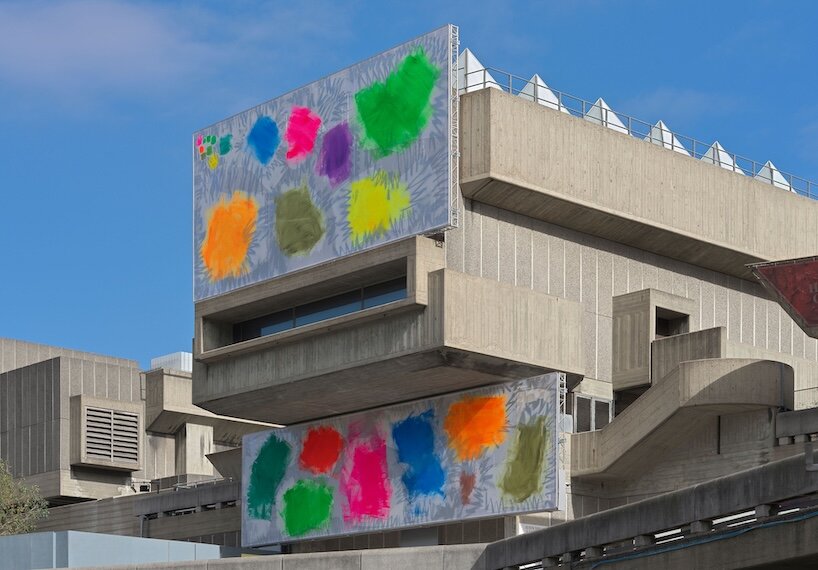
That experimental skin is constructed from industrial mesh, a material that Levi utilizes as a painting surface for the very first time in her career. Typically reserved for large-scale commercial advertising, building wraps, and temporary signage, industrial mesh possesses unique structural properties that allow ambient air and light to pass right through while effortlessly supporting oversized, expressive strokes of fluorescent pigment. This material choice introduces a subtle subversion: a utilitarian surface usually deployed to sell consumer goods is repurposed to become the primary vehicle for high art. This spirit of material experimentation also intersects directly with the core mission of Audemars Piguet Contemporary, which frames its artist collaborations around providing creators with the freedom and resources to explore uncharted territories within their respective practices.
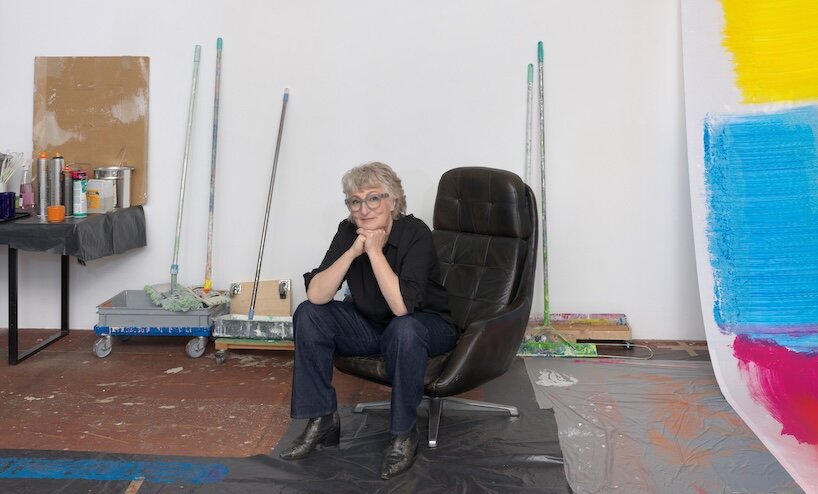
Audemars Piguet Contemporary Presents Renée Levi’s September
Unlike traditional paintings encountered within the controlled environment of an indoor gallery, September deliberately rejects a single, static frontal viewpoint. The installation shifts constantly depending on the observer’s distance, viewing angle, and the changing play of daylight and shadow across the London sky. It weaves itself into the perpetual, restless circulation of pedestrians moving along the bustling South Bank. Levi draws a direct parallel between this visual instability and the title of the work itself, evoking September as a transitional month characterized by shifting light, unpredictable weather patterns, and the relentless rhythms of metropolitan life. For a duration of eight weeks, daily commuters, international tourists, and accidental passersby are conscripted into becoming its repeat audience, encountering contemporary art whether they set out to find it that day or not.
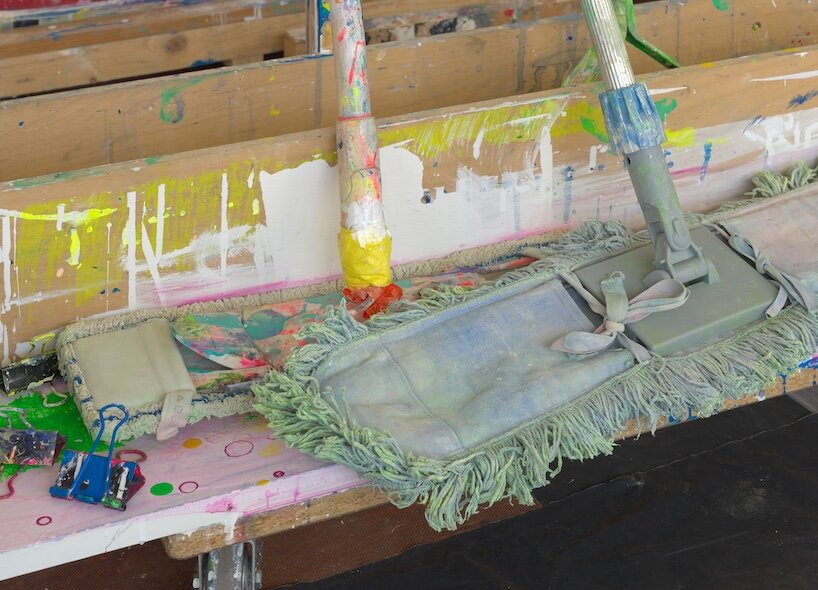
This temporary transformation of the Hayward Gallery continues Audemars Piguet Contemporary’s extensive history of ambitious international collaborations with prominent artists and world-class cultural institutions. Previous iterations of the watchmaker’s art program have yielded remarkable projects with visionary figures such as Cao Fei, Adrián Villar Rojas, Ryoji Ikeda, and Tomás Saraceno, among others. For Levi, the project adds yet another major architectural-scale experiment to an illustrious CV that already includes site-specific interventions at the Palais de Tokyo in Paris, the Kunstmuseum Basel, and the Lyon Biennale. September will remain on view across the Hayward Gallery facade until November 15, 2026, after which the vibrant colors will be stripped away, leaving London’s famous Brutalist landmark to reclaim its familiar, unyielding grey.