




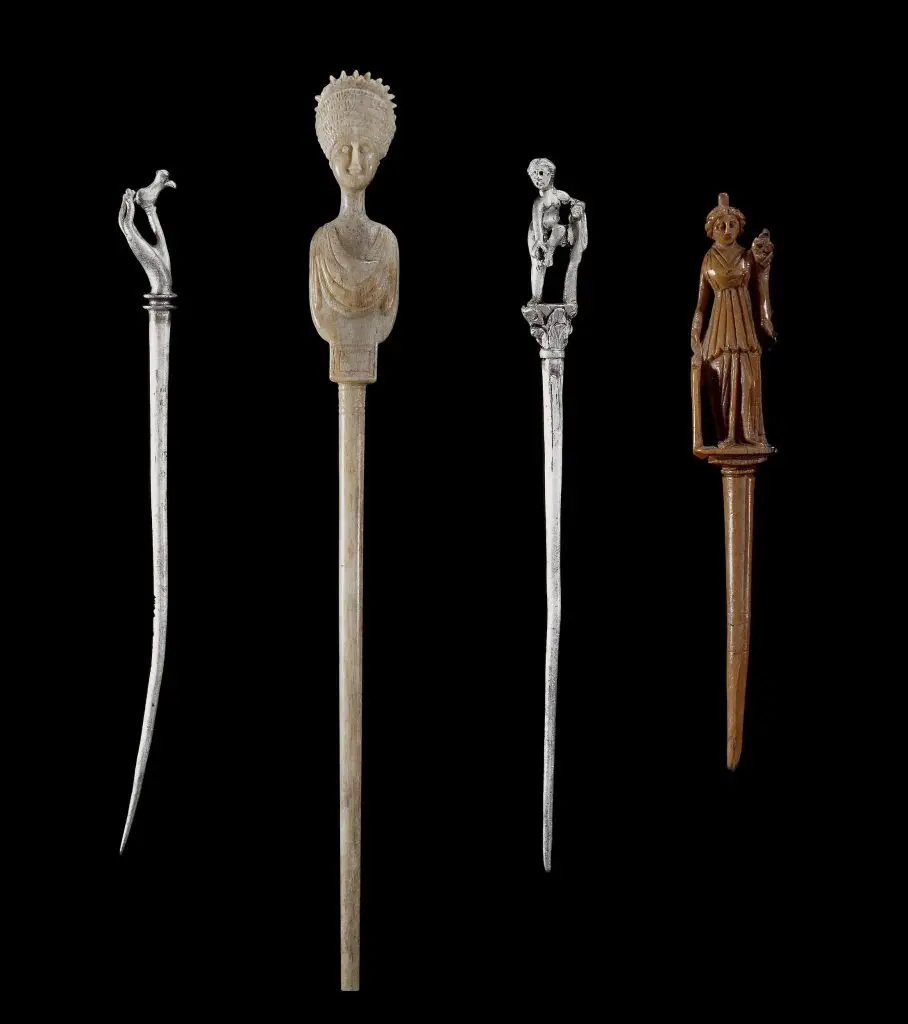
London — Archaeological collections housing artifacts from the Romano-British era continue to offer vivid glimpses into the daily lives, fashion sensibilities, and practical ingenuity of people living centuries ago. Among the most fascinating yet understated items preserved in institutions like the British Museum are collections of ancient pins known as the acus. Originally crafted to secure the elaborate hairstyles of antiquity, these versatile implements—historically referred to as acus crinalis—served far more than a single aesthetic purpose in the ancient world, functioning simultaneously as personal grooming tools and essential garment fastenings.
Measuring between six and nine inches in length, these substantial pins were significantly larger and more robust than modern sewing or bobby pins. Their imposing size was a direct necessity of the times, engineered specifically to pierce through heavy coils of hair, elaborate braids, and the thick, draped layers of classical textiles. Far from being mass-produced novelties, they were crafted from a wide array of materials that reflected the socioeconomic status and personal wealth of their owners. Artisans of the period fashioned them from precious metals like gold and silver, as well as organic and more readily available substances including bone, polished wood, and ivory.
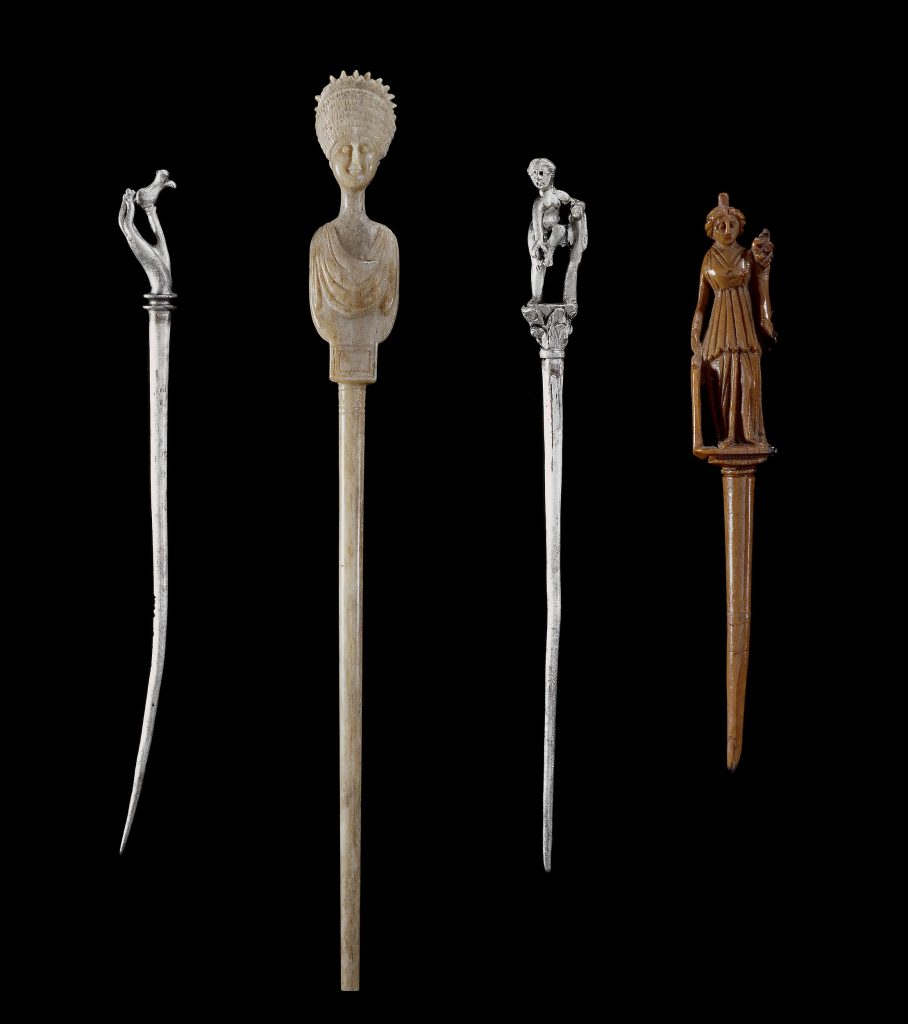
In the context of Roman fashion, hair styling was a matter of significant cultural importance, particularly for women of high standing during the empire. Complex hairstyles involving intricate curls, towering frames, and tightly wound chignons required sturdy structural support to maintain their form throughout the day. The acus crinalis was the indispensable instrument behind these architectural feats, acting as a structural anchor that pinned the hair firmly in place while often remaining visible as a decorative element projecting from the wearer’s head.
However, the utility of the acus extended well beyond the vanity table. Historical and archaeological analyses of Romano-British artifacts reveal that these long, slender pins were remarkably adaptable implements. In a period when tailoring was less about fitted garments and much more about draping, folding, and pinning lengths of fabric, clothing fasteners were in constant demand. The acus could be employed with or without a fibula—the traditional ancient brooch or safety pin—to secure tunics, cloaks, shawls, and robes. Because of its length and strength, a single well-placed pin could anchor heavy woolen or linen garments securely across the shoulder or torso, making it a staple of everyday Roman and Romano-British wardrobe management.
The preservation of these artifacts in modern collections provides researchers with tangible connections to the material culture of the Roman provinces. Bone pins, frequently recovered from archaeological digs, demonstrate the widespread, everyday availability of these tools to lower-status individuals, while silver and gold specimens highlight the luxury and personal adornment valued by the elite. Whether resting in the glass display cases of the British Museum or being studied by contemporary historians and curators, the collection of Romano-British bone and silver hairpins continues to illustrate how a single, elegantly simple object could bridge the worlds of personal grooming and practical textile management in the ancient world.