





From antiquity to the modern era, gemstones have commanded humanity’s fascination. Long before they were ever studied for their physical properties, references to precious stones filled ancient writings, appearing as decoration, barter, symbols of wealth, sources of magic, or objects of outright adoration. In those earliest records, however, gems always played an auxiliary role to the primary narrative, rarely standing as subjects worthy of study in their own right.
That perspective shifted dramatically with the philosophical shifts of ancient Greece. It was not until the writings of Aristotle that the physical world and its constituent parts began to be viewed as worthy topics of systematic study and documentation. Aristotle’s division of philosophy into distinct branches—logic, metaphysics, physics, ethics, politics, and art—paved the way for a structured examination of nature. The natural world itself was categorized into fundamental elements: earth, water, air, fire, and ether. With this framework in place, gems could finally be classified, described, and measured by their properties.
What began as simple observation eventually evolved into the intertwined disciplines of mineralogy and gemology. As human understanding of the natural sciences expanded, so too did the sophistication of the texts dedicated to studying the earth’s most precious treasures.
Origins
The historical record credits Theophrastus, a student of Plato and the successor to Aristotle as head of the Peripatetic school of philosophy, with writing the first known treatise dedicated entirely to gems. Living between approximately 372 and 287 B.C., Theophrastus penned Peri Lithon, or Of Stones. While only a fragment of the original work has survived, this early blend of Aristotelian physics and metaphysics served as the source material for much of the gemstone lore passed down through later centuries. Over time, scholars sought to translate and preserve the text, moving from early English translations by John Hill to modern scholarly interpretations by E.R. Caley, J.F.C. Richards, and D.E. Eichholz.
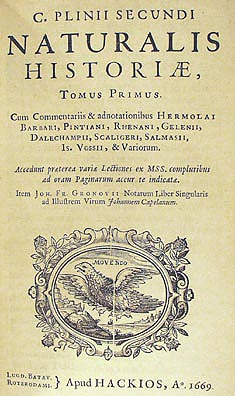
Centuries later, the Roman author and historian Gaius Plinius Secundus—widely known as Pliny the Elder—compiled his monumental thirty-seven-volume Naturalis Historia, or Natural History, published in 77 A.D. Pliny drew from a reported two thousand sources to embrace natural history in its broadest sense, touching upon astronomy, geography, meteorology, fine arts, human inventions, and social relations. Today, it stands as an invaluable reference for historians seeking to understand first-century life.
Much of Pliny’s information on gemstones, however, was not derived from direct personal observation. Instead, his accounts frequently relied on second-hand sources that have since been lost to antiquity. As a result, many stones were grouped together based purely on color, mining location, or folkloric attributes. Pliny’s integration of myth and legend formed the bedrock of medieval lapidary writing. For the first thirteen centuries of European history, his accounts were quoted and repeated without question, with little new scientific data added to the field.
Despite relying heavily on oral traditions and secondhand accounts, Pliny did attempt to systematically classify gems by color and observable external characteristics. This approach occasionally led to broad generalizations, such as grouping all green stones under the Latin term smaragdus. His broad definitions encompassed everything from green sapphires and turquoise to smithsonite, malachite, jasper, and even glass. Yet, he also made surprisingly astute observations, such as recognizing the fundamental connection between beryls and emeralds, noting that beryls share the same nature as emeralds, or are at least very similar. Over the centuries, his classic work has seen more than 250 editions across multiple languages, beginning with a complete printing in Venice in 1469.
Christian Lapidaries
As Christianity reshaped the cultural landscape of Europe and the Near East, scholars began viewing the natural world through a spiritual lens. Saint Epiphanius, Bishop of Constantia in Cyprus, wrote the first treatise dealing specifically with the gemstones mentioned in Biblical texts. Composed around 315 to 420 A.D., his work explored the possible composition and symbolic significance of the twelve stones embedded in the Breastplate of Aaron. This text established a conceptual model for future Christian lapidaries.
Although the Church strictly forbade pagan worship and superstitious practices, devout Christians struggled to completely discard the ancient belief that precious stones possessed supernatural powers. This enduring fascination was legitimized by shifting the focus toward stones mentioned in Scripture, particularly the twelve stones of Aaron’s breastplate and the foundation stones of the New Jerusalem. Epiphanius’s biblical lapidary was eventually published in full in Conrad Gesner’s 1565 compendium De Omne Rerum Fossilium.
The Middle Ages also saw the rise of encyclopedic standard-bearers like Isidore, Bishop of Seville, whose early seventh-century Etymologiarum sive Originum Libri XX served as a massive dictionary of collective knowledge. Isidore’s descriptions and classifications of various gems remained standard references for scholars well into the twelfth century.
Concurrently, the eleventh-century Bishop of Rennes, commonly known as Marbod, penned Libellus de lapidibus, or Lapidaire en Vers. Written in Latin hexameters, this poetic work examined sixty kinds of stones and quickly became the definitive medieval text on the marvelous properties of stones. Marbod’s writings relied heavily on earlier accounts by Roman grammarians like Solinus, attributing much of the stones’ magical properties to the legendary Arabian king Evax.
By the thirteenth century, scholars like Albertus Magnus, Bishop of Ratisbon, began applying rigorous scholastic reason to theology and natural science. In his work De Mineralibus, Magnus attempted to organize the burgeoning science of mineralogy while still acknowledging the mystical and wonder-working powers traditionally attributed to stones. Around the same time, King Alfonso X the Learned of Castile and Leon authored a major work connecting gemstones to astrology, classifying gems by color and linking them to the twelve signs of the zodiac. His Arabic-influenced astronomical tables became the European standard for generations.
Introduction of the Scientific Method
As the Renaissance took hold, scholars began to demand empirical evidence rather than relying entirely on classical tradition. Camillus Leonardus, an Italian physician from Pesaro, published Speculum Lapidum in 1502, applying more rigorous scientific methods to distinguish gems by physical properties such as hardness, specific gravity, compactness, color, form, and geographic origin. However, Leonardus still maintained that the medicinal virtues of certain stones were enhanced or unlocked by engraving them with specific symbols.
The Science of Mineralogy
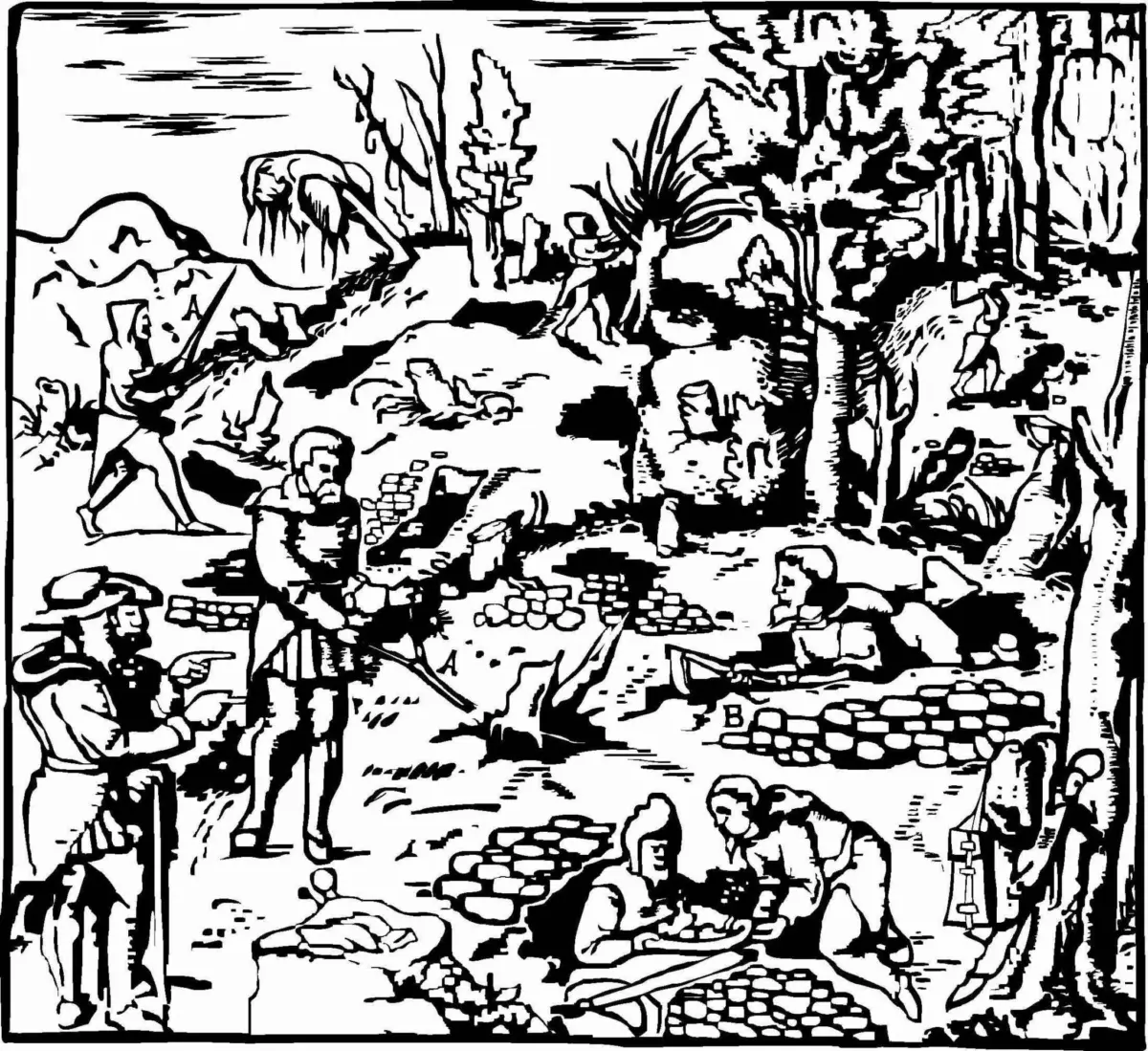
The true turning point for the scientific study of minerals arrived with Georgius Agricola, often hailed as the father of mineralogy. His 1546 treatise De Natura Fossilium provided remarkably accurate descriptions of the nature, properties, and treatments of gemstones. Demonstrating first-hand knowledge, Agricola incorporated scratch tests for hardness and detailed physical characteristics that hold up remarkably well by modern standards.
Shortly thereafter, Conrad Gesner published De Omne Rerum Fossilium, an 1565 collection that included the first mineralogical illustrations executed with woodcuts of crystals, fossils, and cut gems. Unfortunately, Gesner’s work also cemented certain trade misnomers that persist today, such as referring to tourmaline as "Brazilian emerald" or green sapphire as "Oriental emerald."
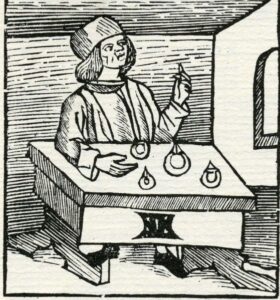
Anselmus Boëtius de Boodt advanced the field further with his 1609 work Gemmarum et Lapidum Historia, which compared New World gems with those of Europe and Asia. As physician to the royal court of Rudolph II in Prague, de Boodt studied numerous gems first-hand, established five distinct degrees of hardness, and expressed open skepticism regarding their mystical and medicinal virtues.
By the mid-seventeenth century, the field of study began to fracture. The publication of Ulyssis Aldrovandi’s posthumous text in 1648 marked the first recorded use of the word "geologia" in its modern context. With this shift, the study of the earth split into two distinct paths: the empirical science of mineralogy and the enduring romance and folklore of gemstones.
English writers soon joined the discourse. Thomas Nicols published A Lapidary in 1652, detailing genuine gems alongside imitations and foil backings. Soon after, the renowned English chemist and physicist Robert Boyle published An Essay About the Origine and Virtues of Gems in 1672. Boyle provided groundbreaking observations on crystal formation and crystallization from solutions, while expressing deep skepticism regarding the internal medicinal use of insoluble minerals. London physician Dr. Robert Pitt further debunked the medicinal value of ingested gems in his 1703 work, noting that stones fed to birds passed through their digestive systems entirely unchanged in color and shape.
Modern Gemology
By the eighteenth century, mineralogy and geology had firmly established themselves as pure sciences, driven by improved record-keeping, specialized tools, and controlled physical experimentation. Gemology, however, remained closely tethered to the retail jewelry industry, where the romance and lore of gemstones continued to drive commerce.
A significant revival of interest in the historical and scientific study of gems emerged in the late nineteenth and early twentieth centuries through the work of Dr. George Frederick Kunz. Serving as a consultant to Tiffany & Co. and as a curator at the American Museum of Natural History, Kunz cataloged North American gems while preserving ancient lore in popular works like The Curious Lore of Precious Stones and The Magic of Jewels and Charms.
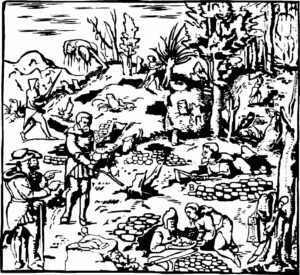
Professionalism finally arrived in the mid-twentieth century with Robert M. Shipley’s founding of the Gemological Institute of America in 1931 and the American Gem Society in 1934. These institutions brought standardized, reliable education to jewelers and consumers alike, supported by ongoing research published in journals like Gems and Gemology.
Today, after more than two millennia of human speculation, scientific inquiry, and cultural evolution, the study of gems and minerals continues to captivate researchers and enthusiasts alike.