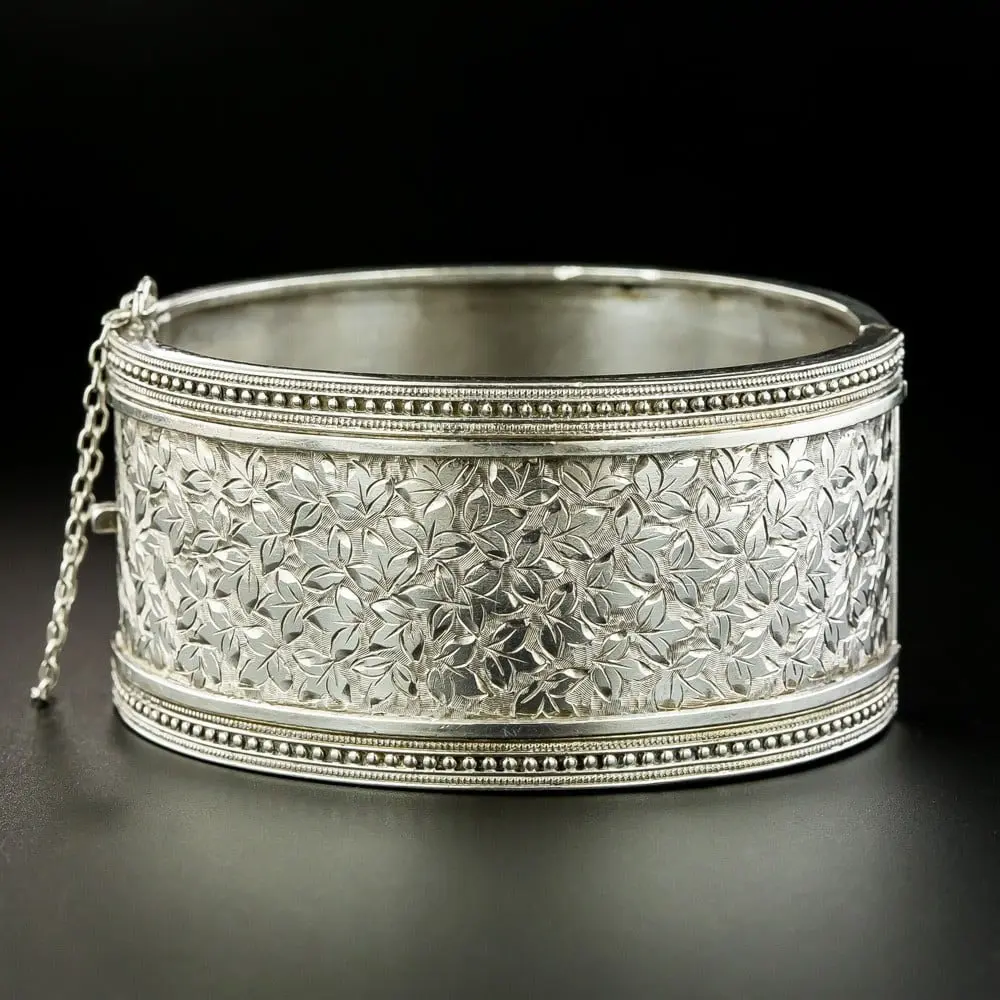
Silver, a brilliant white metallic element designated by the symbol Ag on the Periodic Table, has occupied a central place in human civilization, trade, and artistic expression for millennia. Harder than gold yet softer than copper, silver ranks second only to gold in its exceptional malleability and ductility. It is celebrated as an outstanding conductor of both heat and electricity. Classified among the noble metals due to its robust resistance to oxidation, silver has historically served as a foundational medium for the production of fine jewelry and objets d’art. Because pure silver is inherently soft, artisans have traditionally alloyed it with other metals to provide the structural integrity required to maintain intricate shapes and fine decorative details.
While modern perspectives often view silver as less expensive and consequently less significant than gold or platinum, this assumption overlooks its monumental historical role. Throughout various epochs, silver has occasionally commanded a higher value than gold. When measured by sheer volume, the quantities of silver utilized in jewelry historically outweigh all other precious metals by a wide margin. Furthermore, this versatile white metal has acted as a primary catalyst for technological breakthroughs in mining and metallurgy, often outpacing its precious metallic counterparts. Entire economies have risen and fallen on the availability of silver, and access to rich deposits has frequently shifted the course of wars and reshaped the trajectory of history.
Bronze Age Silver and the Dawn of Metallurgy
The story of silver unfolds near the end of the fourth millennium BCE, when inhabitants of modern-day Turkey discovered a revolutionary metallurgical technique: extracting silver from lead ores through a process known as cupellation. Although surviving artifacts from this remote era are exceptionally rare, those that remain offer a fascinating glimpse into the advanced capabilities of Bronze Age silversmiths.
As written history began to dawn, silver emerged as a standardized currency in Mesopotamia. Rather than circulating as minted coins, silver was exchanged purely by weight or shaped into rings. The workshop of the Mesopotamian silversmith closely mirrored—and was frequently shared with—that of the goldsmith. Although silver is slightly less ductile than gold and demands more frequent annealing during fabrication, it possesses remarkable working properties. Artisans could cast it, hammer it into gossamer-thin sheets, engrave it, emboss it, execute delicate repoussé work, and enhance it with filigree and granulation. Archaeological discoveries of ancient vessels, statuettes, and jewelry confirm that silversmiths employed high-purity silver, yielding objects of notable softness.
In ancient Egypt, the cultural appreciation for the rare and exotic extended deeply to silver. While gold could be sourced locally from the mountains of the Eastern Desert and Nubia, pure silver had to be imported over treacherous trade routes alongside prized Afghan lapis lazuli. Consequently, the Egyptians regarded silver as intensely exclusive and extraordinarily valuable—often pricing it higher than gold and reserving it strictly for society’s most elite figures.
By approximately 1600 BCE, however, the global supply of silver had grown substantially, causing its market value to decline to roughly half that of gold. During this period, it functioned as an abstract currency of relatively stable value. The popularity of silver in Egyptian burial practices fluctuated with the tides of fashion; King Tutankhamun’s tomb contained remarkably few silver objects, whereas King Sheshonq II was interred within a magnificent all-silver sarcophagus.
Concurrently, throughout the Mediterranean, the Minoans and Mycenaeans engaged in extensive maritime trade, integrating silver into their daily economies and artistic traditions. Archaeological sites across the Greek mainland, Crete, and Cyprus have yielded substantial collections of early Greek silver jewelry. Meanwhile, the Phoenicians played a pivotal role in Mediterranean civilization by colonizing distant territories and establishing extensive trade networks. By initiating the large-scale exploitation of Spanish silver deposits, the Phoenicians distributed the metal across the classical world on an unprecedented scale, permanently shifting silver away from its former status as an ultra-exclusive luxury.
Classical Silver: Currencies, Empires, and Roman Luxury
To both ancient Greek and Roman societies, a reliable supply of silver was an absolute necessity, serving as the foundational backing for their newly minted coinage. While surviving archaeological evidence suggests that gold was preferred over silver for high-status jewelry—partially due to the frequent remelting and recycling of metal over the centuries—the surviving silver artifacts demonstrate its widespread use in finger rings, anklets, and armlets.
The Romans developed a particular fondness for niello, a surface decoration technique resembling enameling but executed using silver sulfate rather than glass. Niello yielded a surface much tougher than traditional enamel, characterized by a distinct metallic luster rather than a vitreous finish. As Roman legions occupied Northern Europe, the technique spread across the continent, leaving a lasting stylistic imprint on Anglo-Saxon artifacts in Britain and throughout Eastern Europe.
The Roman author and natural philosopher Pliny the Elder provided an invaluable, if characteristically skeptical, contemporary perspective on Roman society’s obsession with silver in his encyclopedic work, Naturalis Historia. Pliny documented the arduous realities of mining, noting that silver ore was extracted exclusively from deep shafts in the earth, often found in association with lead or galena. He highlighted the vast scale of Roman extraction operations, observing that mines originally opened by Hannibal in Spain—such as the Bãbelo mine—remained active centuries later, producing hundreds of pounds of silver daily through grueling, round-the-clock labor.
Pliny also detailed the rigorous testing methods employed by Roman craftsmen. Jewelers tested silver by placing it upon an iron fire-shovel heated to a white heat; if the metal retained its pure white color, it was deemed superior, whereas a reddish hue indicated lower quality, and blackening rendered it worthless. He frequently lamented the staggering evolution of Roman luxury, contrasting the traditional frugality of early military commanders—who possessed mere handfuls of silver plate—with contemporary elites who maintained massive silver services weighing thousands of pounds, adorned their banqueting couches with precious metals, and even fitted their horses’ harnesses and mules’ shoes with chased silver and gold.
Celtic and Medieval Silver
Among Celtic tribes, silver and bronze were extensively employed to craft distinctive personal adornments, including decorated brooches, heavy torcs, and crescent-shaped lunulae. Before the Roman conquests, the Celts relied on "ring money"—standardized rings of silver, copper, bronze, or gold—as a medium of exchange rather than traditional coinage.
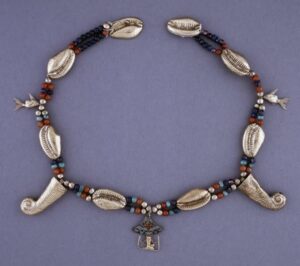
Following the collapse of Roman supply lines, gold temporarily vanished from circulation across much of Europe, catapulting silver to the forefront of jewelry production. Germanic jewelry from this era consisted primarily of functional fasteners such as fibulae, disc brooches, penannular brooches, and belt buckles, frequently fashioned from silver and occasionally gilded or inlaid with precious garnets.
From approximately 800 CE onward, Viking expeditions along the northwest European coasts directed enormous quantities of silver toward Scandinavia, where silversmithing thrived and silver jewelry became a deeply ingrained cultural tradition. This trend was further amplified around the turn of the first millennium by the discovery of major silver deposits in Sweden. The Germanic tribes enthusiastically adopted the Roman technique of niello, utilizing the striking black-and-white color contrast to accentuate intricate engraving patterns.
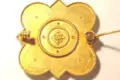
A premier example of this tradition is the ninth-century Anglo-Saxon Fuller Brooch, housed in the British Museum. This circular, convex brooch of hammered sheet metal is extensively inlaid with niello and features an openwork outer zone surrounding a central roundel. The intricate design depicts personifications of the Five Senses, with a central figure representing Sight surrounded by panels illustrating Taste, Smell, Touch, and Hearing, all meticulously set against a contrasting nielloed ground.
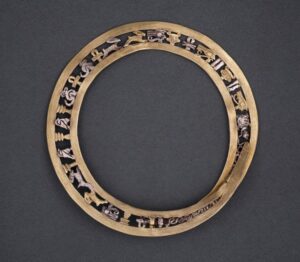
As European society evolved and trade routes to the East were gradually re-established, gold reclaimed its status as the premier metal for elite jewelry. Nevertheless, this expansion of commerce facilitated the rise of an affluent middle class whose members began to adorn themselves in ways previously restricted to wealthy rulers. For those operating on a more modest budget, silver jewelry offered an accessible and attractive alternative. The functional nature of early medieval ornamentation gradually gave way to more decorative and symbolic forms, including finger rings, bangles, and pendants. By the late Middle Ages, the trade in silver jewelry and silverware became strictly regulated through the establishment of formal assaying and hallmarking systems.
Renaissance, Baroque, and Georgian Developments
The Renaissance witnessed a profound cultural and economic revival across Europe, spurred by revived trade with the Levant, the post-plague recovery of the population, and an explosion of wealth centered in Northern Italy and the coastal trading hubs of the Netherlands. Following Christopher Columbus’s voyage and the subsequent age of European exploration, Spanish conquistadors such as Pizarro and Cortés subdued the Incan and Aztec empires, unlocking immense mineral wealth in the New World. The discovery of major silver deposits in modern-day Mexico in 1546 unleashed a massive flood of silver into global markets, ensuring that the white metal remained abundantly available for both currency and affordable jewelry production.
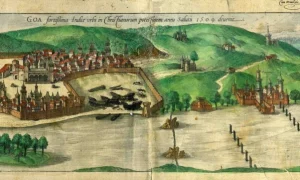
During the Baroque period spanning the seventeenth century, the influx of South American silver continued unabated as English, French, and Dutch maritime powers established permanent footholds in the Americas. Silverworking techniques largely mirrored those of the preceding medieval era, though notable technological and stylistic innovations emerged. Portable timepieces became a fashionable novelty frequently housed in silver cases. Furthermore, silver began to be utilized extensively to set diamonds, as the bright white metal perfectly complemented the colorless sparkle of stones arriving in increasing quantities from newly established trade outposts on the Indian peninsula.
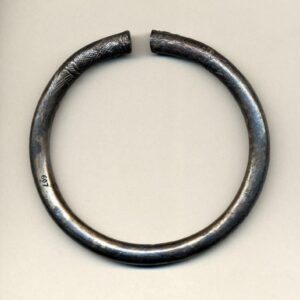
The subsequent Georgian era marked a period of unprecedented commercial expansion and booming production. The practice of setting diamonds in silver—which had taken root during the Baroque period—became standard workshop practice across Europe, supported by massive diamond shipments from India and newly discovered deposits in Brazil after 1727. While fine jewelry continued to be forged from gold with silver-topped fronts, items composed entirely of silver remained widespread, particularly in the characteristic cut-down collet settings designed to maximize the brilliance of the white stones.
A major manufacturing milestone occurred in 1777 with the introduction of die striking. This innovative technique involved stamping and cutting precious metal components using specialized steel dies, presses, and drop hammers, which artisans then assembled by hand. This cost-effective production method enabled the creation of the world’s first mass-produced jewelry lines, significantly reducing retail prices and flooding the market with accessible, die-struck silver items.
The Industrial Era and the Victorian Silver Revival
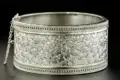
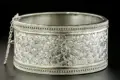
The rapid acceleration of the Industrial Revolution during the Victorian era exerted a transformative impact on jewelry manufacturing. Die striking and mechanical stamping, pioneered in the late Georgian period, were fully perfected, allowing for the efficient production of intricate silver items on an industrial scale.
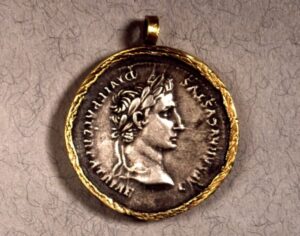
Mid-Victorian tastes were heavily influenced by Queen Victoria and Prince Albert’s acquisition of Balmoral Castle in Scotland in 1848, which sparked an enduring international craze for Scottish agate jewelry. True to Northern European tradition, these colorful pebble and agate brooches and pendants were predominantly set in silver.
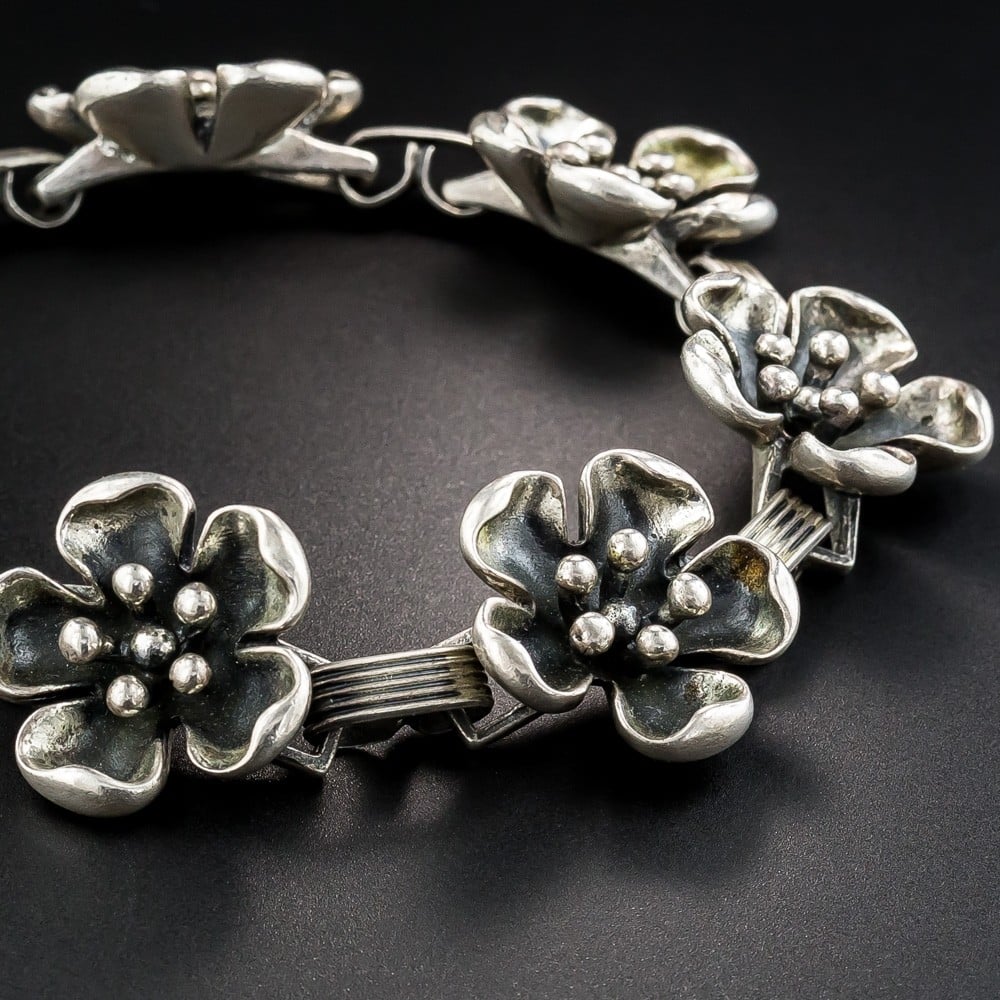
Toward the end of the Victorian period, the Arts and Crafts movement emerged as a deliberate ideological reaction against the mass industrialization of the decorative arts. Practitioners of this movement prioritized artistic design and handcraftsmanship over the intrinsic financial value of raw metals and gemstones. Consequently, Arts and Crafts jewelers favored silver over gold, frequently employing bezel-set cabochon stones rather than highly faceted gems. This philosophy reinforced silver’s enduring legacy as a noble medium for creative expression, completing a continuous historical arc from ancient Bronze Age currency to modern artistic masterwork.