





The history of the diamond is a vast tapestry woven from ancient linguistic misinterpretations, royal favoritism, technological innovation, and shifting global trade routes. Long before modern gemological laboratories quantified the "Four Cs," diamonds occupied a unique and mysterious place in human culture. Their journey from mythical, untamable stones of antiquity to precision-cut centerpieces of modern jewelry reflects thousands of years of human ingenuity, cultural shifts, and industrial revolution.
Pre-Roman Diamonds and Ancient Misunderstandings
For centuries, popular belief held that diamonds were widely known and utilized during biblical times. This assumption largely stemmed from translations of ancient texts, most notably the Book of Exodus, which describes a sacred breastpiece of judgment adorned with four rows of precious stones, including a "diamond" in the second row.
However, historians and gemologists emphasize that these references are the result of erroneous translations of ancient words. In the Hebrew text, the word yahalom—derived from halam, meaning "to beat"—was used to designate an exceptionally hard mineral. Similarly, the ancient Greek term adamas, meaning "indomitable" or "invincible," frequently appeared in classical literature, including the works of Plato. While these terms undoubtedly referred to substances of legendary hardness, there is zero definitive proof that they specifically meant diamonds. In antiquity, adamas was likely used to describe dense metals like gold and non-noble metals, or perhaps durable minerals such as corundum.
Despite the ambiguity surrounding early Western texts, the historical record regarding the geographical origin of diamonds is absolute: they entered human civilization through India. An ancient Indian political and economic treatise titled the Arthasastra, dating back to the fourth century BCE, provides the earliest concrete insight into the diamond trade. By this period, diamonds were actively known, traded, taxed, and classified by specialized experts in India, suggesting a long-standing tradition of use that stretched well beyond Western awareness.

Roman Diamonds and the Taboo of Cutting
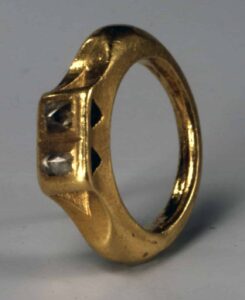
Diamonds eventually made their way to the Roman Empire, where they were highly prized as ring stones. Several surviving Roman rings featuring uncut diamond crystals now reside in the collection of The British Museum. The Roman scholar Pliny the Elder documented these gems in his monumental Naturalis Historia, describing them as the most valuable of all human possessions. He detailed their astonishing hardness, noting that they could resist heavy blows upon an anvil without breaking, while observing that any fragments resulting from a fracture were highly prized by engravers for cutting other hard substances.
Yet, Pliny’s accounts also reveal a degree of confusion, indicating that the Romans likely conflated diamonds with other resilient minerals. Furthermore, gemological historians note that Roman elites rarely had access to perfect diamond crystals, as Indian suppliers reserved the finest specimens for their domestic markets.
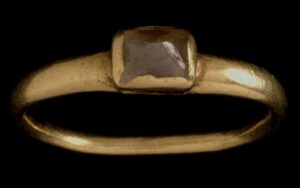
During this era, diamonds were widely believed to possess divine protective powers capable of shielding their owners from various misfortunes. Crucially, ancient tradition dictated that altering a diamond’s natural state would strip the crystal of its mystical properties. Consequently, cutting or shaping diamonds was viewed as both a technical impossibility and a cultural taboo. The earliest forms of manipulation likely involved nothing more than removing minor irregularities from freshly mined crystals, while controlled cleaving remained unrecorded in the archaeological record.
The Introduction of Diamond Cutting and Islamic Scholarship
Following the decline of the Roman Empire, diamonds virtually disappeared from European jewelry. The disruption of trade routes with the East, combined with the spread of Christianity—which condemned the superstitious and pagan attributes long associated with the stones—relegated diamonds to obscurity in the West.
Conversely, diamonds retained their immense popularity throughout the Indian and Islamic worlds, where scholars and lapidaries continued to document their properties. The Ratnapariska, an Indian text attributed to Buddha Bhatta from at least the sixth century CE, advised against using flawed diamonds as personal gems, noting instead that they were useful only for pulverization into diamond powder to polish other stones.
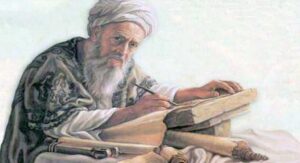
This practice of grinding lower-quality diamonds into abrasive powder is further corroborated by the tenth-century Islamic scholar Al-Biruni, who documented how jewelers pulverized diamonds to facilitate the polishing of other precious gems. Intriguingly, Al-Biruni’s notes suggest that the technique of polishing diamonds with diamond dust had not yet been invented in the tenth century.
It was not until the thirteenth century that physical evidence of early diamond cutting emerged. Notable jewelry historian Jack Ogden reported examining medieval Islamic jewelry dating to the thirteenth century that incorporated simple table-cut diamonds, representing some of the oldest cut stones known to exist. This aligns with contemporary Eastern texts, such as the Indian work Agastimata, which explicitly stated that a diamond could only be polished using other diamonds.
The Rise of European Cutting Centers
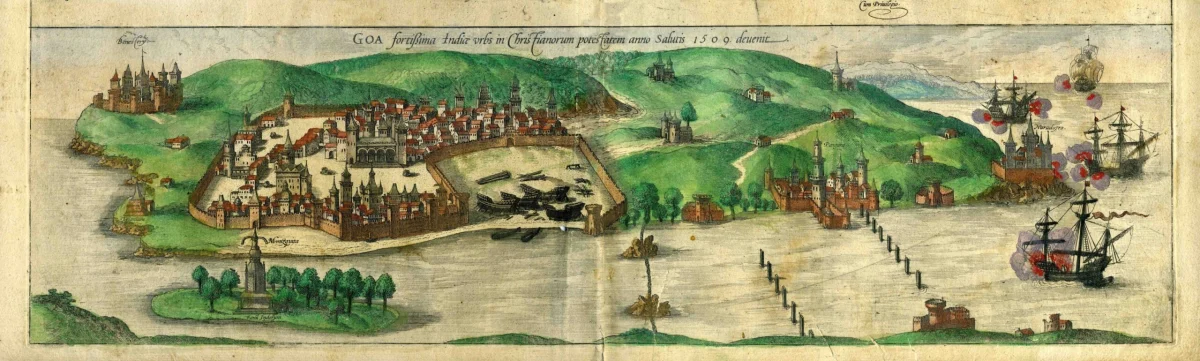
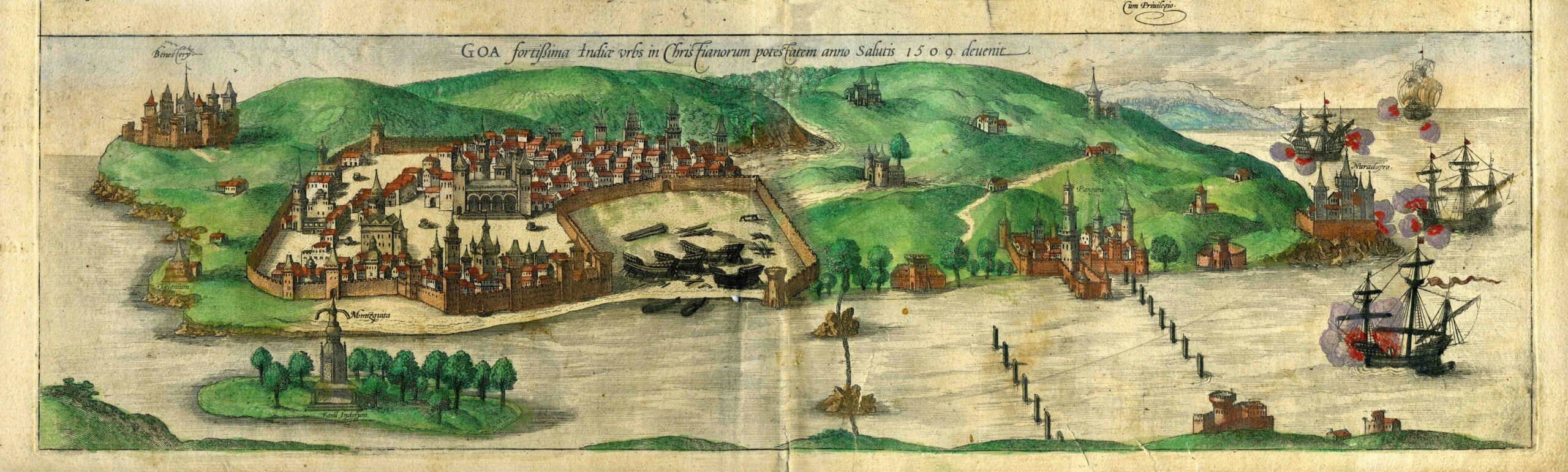
European engagement with diamonds was revitalized in the early fourteenth century, largely driven by Venetian merchants reopening trade routes to the East. Whether cutting techniques traveled westward with these imports remains uncertain, though Islamic merchants already possessed the knowledge of cleaving and powdering diamonds.
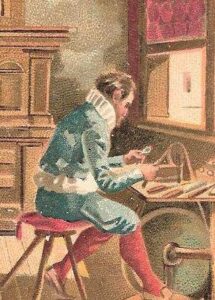
As the economic center of gravity in Europe shifted northward toward the end of the fifteenth century, cities such as Paris, Bruges, and Antwerp emerged as the primary diamond-cutting capitals. Because these nascent cutting communities operated largely outside the rigid guild system, marginalized populations—particularly Jewish families fleeing religious persecution and the Inquisition in Spain, Portugal, and France—found opportunities to participate in the trade. Within these Northern European communities, sophisticated diamond-cutting techniques flourished.
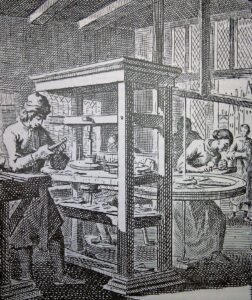
The fifteenth and sixteenth centuries witnessed a profound shift in philosophy: the natural crystal shape was no longer considered sacred. Technological advancements, such as the introduction of continuous rotary motion in craft tools, allowed artisans to grind facets into diamonds with greater precision. Archival documents from this period record substantial weight losses during processing, illustrating a transition from merely polishing natural rough to genuine faceting.
The sixteenth-century goldsmith and sculptor Benvenuto Cellini provided a remarkably detailed account of contemporary diamond working in his 1568 treatises. Cellini described the process of rubbing two diamonds together—a rudimentary form of bruting—to achieve desired shapes like the table, the faceted stone, and the point. He detailed how the resulting diamond powder was mixed with oil and applied to fine-tempered steel wheels, allowing multiple stones to be shaped and polished simultaneously under heavy pressure.
Understanding Physical Properties: Grinding, Cleaving, and Sawing
The mastery of diamond cutting required a deep empirical understanding of the stone’s unique physical properties. Beyond its unmatched hardness—meaning a diamond can only be cut by another diamond—diamonds possess "directional hardness," making them harder in certain crystallographic orientations than others. For instance, octahedral crystal faces lie in planes of immense relative hardness and cannot be easily polished, forcing cutters to apply facets at slight angles to these planes.
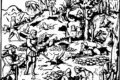
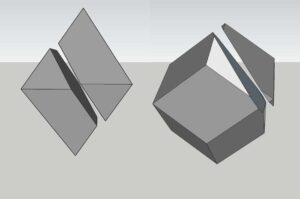
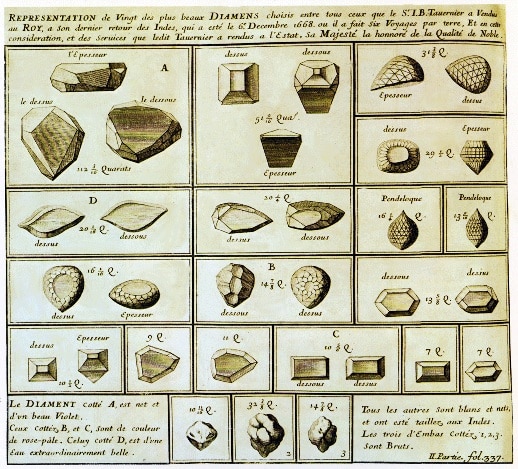
Compounding this challenge is the diamond’s cleavage. While exceptionally high in hardness, diamonds possess perfect cleavage, allowing them to fracture along smooth planes when subjected to targeted force. Although ancient artisans utilized sharp diamond fragments for engraving, and mid-thirteenth-century Islamic texts acknowledged diamond cleavage, the intentional use of cleaving for gemstone shaping is largely considered a post-medieval innovation. By the seventeenth century, observers like Jean-Baptiste Tavernier noted that Indian miners were exceptionally skilled at cleaving flawed rough stones before export.
The final pillar of diamond processing—sawing—was introduced later, utilizing a thin wire dressed with diamond powder and oil. Described in seventeenth-century lapidaries, this labor-intensive method completed the foundational techniques of cleaving, sawing, grinding, and polishing that define modern diamond manufacturing.
Indian Lapidary Arts and the Mughal Cut
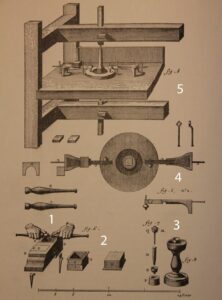
European travelers provided invaluable documentation of traditional Asian techniques. Among the most detailed accounts are those of Jean-Baptiste Tavernier, whose seventeenth-century travel writings offered a close look at Indian diamond cutting. Tavernier described workshops utilizing human-powered mills and assistants who continuously applied oil and diamond powder to the cutting wheel. Stones processed through this traditional Indian methodology are collectively categorized today as exhibiting the "Mughal Cut"—a term describing stones shaped in India during the sixteenth, seventeenth, or eighteenth centuries rather than a specific geometric facet arrangement.
Baroque Roses, Brilliants, and the Brazilian Discovery
During the late sixteenth and seventeenth centuries, the rose-cut diamond gained standardized prominence, featuring a flat base and a domed crown covered in triangular facets. However, the candle-lit social gatherings of the Baroque era demanded enhanced brilliance and fire. This aesthetic shift gave rise to early brilliant-cut stones, which featured pavilion-based designs with intricate facet arrangements across both crown and pavilion. While these early brilliants lacked the strict symmetry of modern cuts, they laid the groundwork for future lapidary standards. Masterpieces of this era, such as the Wittelsbach and the Grand Sancy, showcased the evolving artistry of European and Eastern cutters.
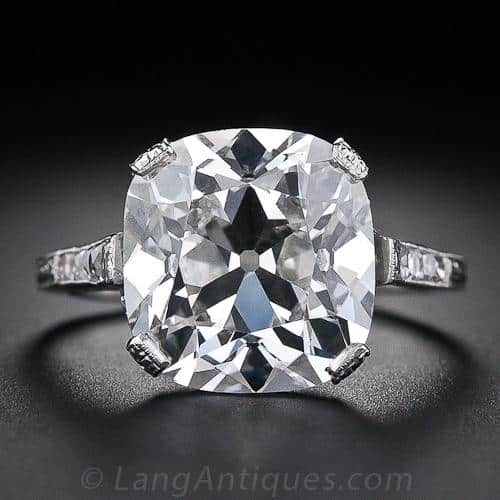
For centuries, India remained the world’s primary source of diamonds. However, as those mines faced exhaustion in the early eighteenth century, a major new supply was discovered in the alluvial deposits of Minas Gerais, Brazil, around 1725. The influx of Brazilian rough dramatically increased global diamond availability, causing raw material prices to drop significantly. Consequently, diamond jewelry transitioned from an exclusive luxury reserved strictly for European nobility to a status symbol accessible to a broader, prosperous middle class. The brilliant cut gradually superseded older styles, paving the way for the popularization of Old Mine Cut stones throughout the eighteenth and nineteenth centuries.
The South African Rush and Modern Industrialization
When Brazilian production began to decline by the mid-nineteenth century, rising demand from a growing middle class in Europe and the United States threatened to stall the industry. That trajectory shifted dramatically with the discovery of the Eureka diamond in South Africa in 1866–1867. This monumental find revitalized European cutting centers in London, Antwerp, and Amsterdam, securing a robust, long-term supply of rough diamonds.
The late nineteenth and early twentieth centuries revolutionized the craft through mechanization. The invention of the steam-driven and later electric bruting machines in the 1870s and 1891 enabled the commercial production of truly symmetric round brilliants. Following the invention of the motorized diamond saw in 1900, cutting houses transitioned from ancient craft workshops into modern industrial operations.
These technological leaps allowed the round brilliant to evolve into the standardized "ideal cut," while specialized alternatives like the Asscher cut, introduced in 1902, and the baguette cut, reintroduced in 1912, catered to shifting aesthetic preferences.

While historical centers like Antwerp and Amsterdam suffered catastrophic disruptions during the Holocaust in World War II, the global diamond industry adapted, establishing new cutting hubs in Israel, India, and beyond. Today, the legacy of ancient lapidaries lives on, augmented by advanced technologies such as virtual 3D modeling and laser sawing, ensuring that the pursuit of precision and brilliance in diamond cutting continues to evolve.