




Silver—a lustrous white metallic element designated by the chemical symbol Ag—has long occupied a paradoxical place in human civilization. Harder than gold yet softer than copper, and trailing only gold in its exceptional malleability and ductility, silver is also celebrated for its thermal and electrical conductivity. Because of its strong resistance to oxidation, it is classified among the noble metals. Yet, while modern markets often contrast its modest price tag against the soaring values of gold and platinum, history tells a vastly different story. Throughout millennia, silver has served as a cornerstone of global currency, a catalyst for monumental technological breakthroughs in mining and metallurgy, and a driving force behind exploration, trade, and even war.
From the dawn of urban civilization in the Bronze Age to the industrial mechanization of the Victorian era, silver has consistently shaped the contours of human society, proving that its historical significance far outweighs its contemporary monetary valuation.
The Origins of Bronze Age Silver
The story of silver extraction begins in the late fourth millennium BC, when innovative artisans in modern-day Turkey discovered that silver could be successfully separated from lead through a pyrometallurgical process known as cupellation. Although remarkably few physical artifacts from this embryonic era have survived the ravages of time, those that remain offer a fascinating glimpse into the advanced capabilities of early Bronze Age silversmiths.
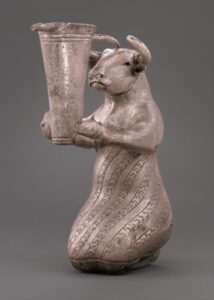
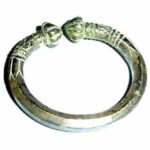
As written history began to emerge in Mesopotamia, silver quickly established itself as a primary medium of exchange. Rather than circulating in the form of standardized coins, the metal was traded by weight or fashioned into simple ring currency. The workshops of Mesopotamian silversmiths frequently overlapped with those of goldsmiths. Although silver is slightly less ductile than gold and demands more frequent annealing during fabrication, ancient artisans mastered its use. They could cast it, hammer it into paper-thin sheets, engrave it, emboss it, execute intricate repoussé work, and embellish it with delicate filigree and granulation. Archaeological excavations have unearthed exquisite vessels, statuettes, and jewelry crafted from high-purity silver, yielding objects of remarkable softness.
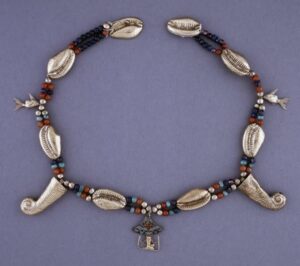
Meanwhile, in ancient Egypt, the cultural appreciation for rare and exotic materials dictated the status of silver. The Egyptians placed immense value on goods that traveled along distant trade routes, such as prized Lapis lazuli from Afghanistan. Silver arrived via these same arduous routes and was regarded as fiercely exclusive. Because domestic gold could be readily sourced nearby from the mountains of the Eastern Desert and Nubia—and perhaps supplemented by natural electrum—pure silver had to be imported. Consequently, it was initially valued more highly than gold, making it a luxury reserved strictly for the highest echelons of society.
By approximately 1600 BC, however, the expanding availability of silver caused its market value to drop to roughly half that of gold, establishing it as a more generalized, abstract currency of stable value. Its popularity waxed and waned according to the shifting tides of royal fashion. For instance, the legendary tomb of King Tutankhamun contained almost no silver items, whereas Pharaoh Sheshonq II was laid to rest in a striking, all-silver sarcophagus.
Further north and west, the Minoans and Mycenaeans engaged heavily in Mediterranean commerce, bringing them into frequent contact with silver. Numerous examples of early Greek silver jewelry have been recovered from archaeological sites across the Greek mainland, Crete, and Cyprus. It was the Phoenicians, however, who truly revolutionized the Mediterranean silver trade. Through their extensive maritime colonization and commercial networks, the Phoenicians initiated the large-scale exploitation of rich Spanish silver deposits, distributing the metal throughout the classical world on a scale never before witnessed and lifting it out of its former status as an exotic rarity.
Classical Silver and Roman Luxury
To both the Greek and Roman civilizations, a steady supply of silver was an absolute necessity, primarily because their economic systems and minted currencies relied upon it. While a smaller volume of silver jewelry has survived from this era compared to gold—partly due to the common historical practice of melting down and recycling precious metals—existing artifacts confirm its widespread use in finger rings, anklets, and armlets.
The Romans also developed a deep fondness for niello, a surface decoration technique strikingly similar to enameling, executed using silver sulfate rather than glass. Offering superior durability and a distinctive metallic luster rather than a vitreous finish, niello spread rapidly across Northern and Eastern Europe during the Roman occupation, leaving a lasting mark on Anglo-Saxon craftsmanship in Britain.
The Roman author Pliny the Elder provided enduring insights into this societal obsession within his monumental work, Naturalis Historia. Pliny chronicled the deep shafts sunk into the earth to extract silver ore, noting its frequent association with lead and galena. He detailed how the mines originally opened by Hannibal in Spain continued to yield immense fortunes centuries later, operating with subterranean drainage systems managed by torches and teams of water-bearers. Pliny also documented various ancient testing methods, such as heating silver on a hot iron shovel to observe color changes, and lamented the extravagant escalation of Roman luxury. He observed how silver plate transformed from a modest household utility into an ubiquitous display of wealth, appearing on dining tables, luxury couches, and even decorating the harnesses and shoes of elite Roman carriages.
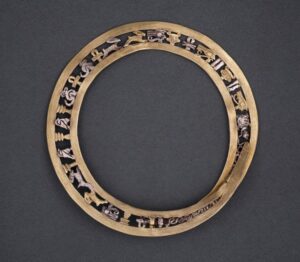
Celtic and Medieval Silver
Among the Celtic tribes of Europe, silver and bronze were the primary metals of choice for personal adornment. Elaborately decorated brooches, torque necklaces, and crescent-shaped lunulae defined their metalwork. Prior to Roman conquest, Celtic societies avoided standard coinage, relying instead on standardized "ring money" fashioned from silver, copper, bronze, or gold purely for economic exchange rather than wear.
The collapse of Roman trade routes drastically reduced the availability of gold across Europe, propelling silver to the forefront of jewelry production during the medieval period. Germanic jewelry of this era favored functional items such as fibulae, disc brooches, penannular brooches, and belt buckles, usually crafted from silver and frequently gilded or inlaid with garnet gemstones.
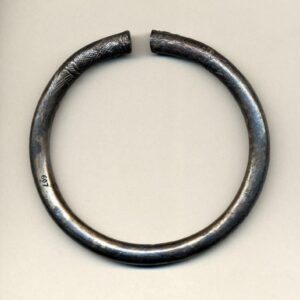
Following the onset of Viking expansion around 800 AD, vast quantities of silver flowed toward Scandinavia along northwest European trade routes, sparking a flourishing tradition of silversmithing. This trend was further amplified around the turn of the first millennium by the discovery of major Swedish silver deposits. The Roman tradition of niello inlay was readily adopted by Germanic tribes, utilizing the striking contrast between black silver sulfate and polished metal to accentuate intricate engraving patterns.
A prime surviving example of this sophisticated aesthetic is the Fuller Brooch, a ninth-century Anglo-Saxon circular silver disc held by the British Museum. Extensively inlaid with niello and featuring intricate openwork, the brooch depicts personifications of the Five Senses surrounded by geometric animal and human motifs symbolizing creation.
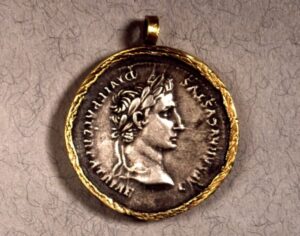
As medieval society evolved and eastern trade routes reopened, gold gradually reclaimed its traditional status as the premier metal for elite finery. Nevertheless, expanding commerce facilitated the rise of an emerging middle class, allowing individuals outside the ruling elite to afford silver jewelry. The repertoire of silver items expanded from purely functional fasteners to decorative and symbolic finger rings, bangles, and pendants. By the close of the Middle Ages, the trade in silver items became formally regulated through the establishment of institutional hallmarking systems.
Renaissance, Baroque, and Georgian Developments
The Renaissance brought profound cultural and economic shifts across Europe. The fall of Constantinople in 1453 drove exiled scholars westward, while European maritime exploration unlocked vast new territories. Following Christopher Columbus’s voyages, Spanish, Portuguese, French, and English explorers raced to claim the Americas. The subsequent conquests of the Incan and Aztec empires by figures like Pizarro and Cortés brought staggering quantities of South American silver into global circulation, particularly after major discoveries in Mexico in 1546. While traditional silversmithing techniques remained largely unchanged, the sheer abundance of the metal ensured that silver remained accessible as both a currency and an affordable medium for jewelry.
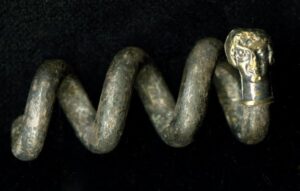
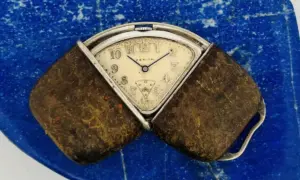
During the Baroque period of the seventeenth century, European powers established permanent footholds in the New World, frequently engaging in naval conflicts over treasure galleons laden with South American silver. While manufacturing methods remained steady, stylistic innovations emerged. Portable timepieces became increasingly popular, frequently housed in silver cases. Furthermore, silver began to be utilized in the setting of diamonds. Intensified maritime trade with India allowed European jewelers to acquire diamonds directly rather than through Arabic intermediaries, and the bright white luster of silver proved ideal for complementing the colorless brilliance of these stones.
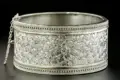
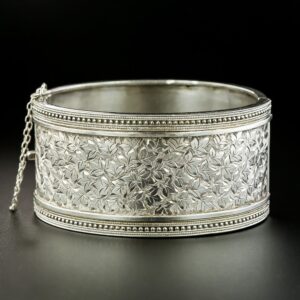
The Georgian era witnessed an unprecedented boom in South American and Brazilian silver production, alongside a massive influx of Indian and Brazilian diamonds. While high-end jewelry often featured gold foundations with silver-topped fronts to securely hold and accentuate diamonds in specialized collet settings, solid silver items remained common. A major technological milestone occurred in 1777 with the introduction of die striking. By utilizing steel dies, presses, and drop hammers to stamp out standardized precious metal components that were subsequently assembled by hand, manufacturers could produce jewelry much faster and more cheaply than traditional handmade methods. This innovation heralded the dawn of mass-produced jewelry, flooding the market with affordable die-struck silver pieces.
The Victorian Era and Industrial Expansion
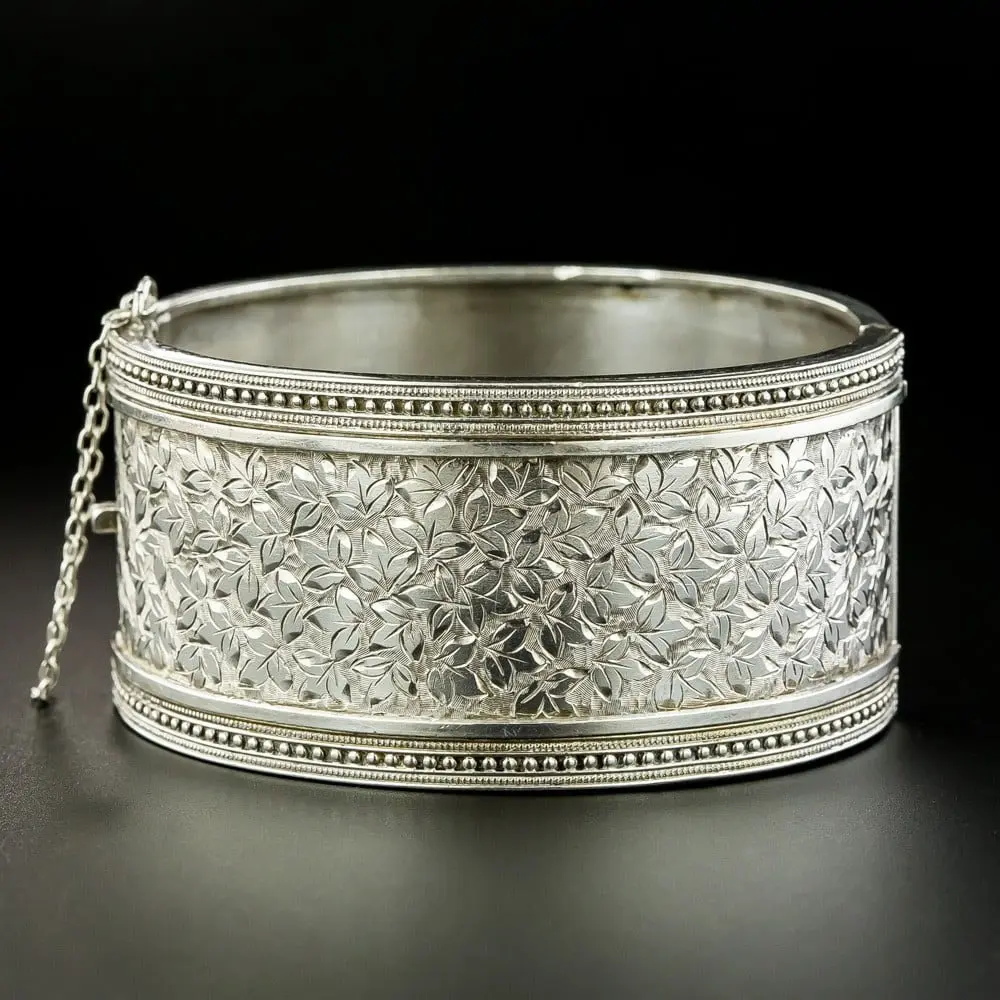
The Industrial Revolution of the nineteenth century transformed jewelry manufacturing. Silver was consumed in massive quantities by mechanized stamping and die-striking operations that had been refined since the late Georgian period. Regional tastes also drove trends; following Queen Victoria and Prince Albert’s acquisition of Balmoral Castle in 1848, Scottish agate jewelry surged in popularity, predominantly executed in silver in accordance with Northern European craft traditions.
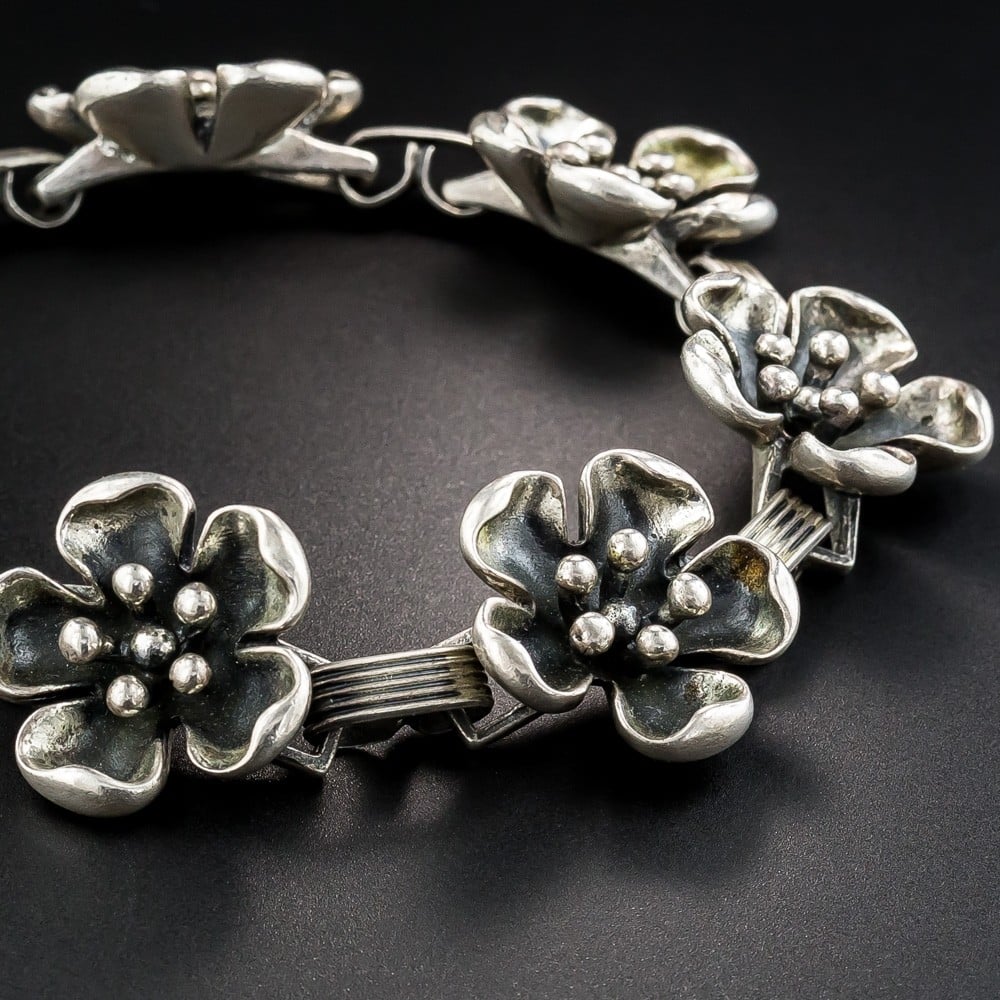
Toward the end of the Victorian period, the Arts and Crafts movement emerged as a direct ideological reaction against industrial mass production. For Arts and Crafts artisans, thoughtful design took absolute precedence over the intrinsic financial value of raw materials. Rejecting heavily faceted stones in favor of bezel-set cabochons, these craftspeople strongly favored silver over gold, cementing the metal’s enduring reputation as a medium of artistic expression.