






Plans for the AI tool have been teased by leadership over recent months, but Thursday’s update marked the first time the company committed to a specific launch window. In earlier interviews, Airbnb CEO Brian Chesky outlined an approach to artificial intelligence that relies on a much richer, more dynamic interface than the text-heavy boxes popularized by conventional generative AI tools. He has frequently argued that standard chatbots are fundamentally unsuited for travel planning because the process of discovering a destination and daydreaming about a vacation is an inherently pleasurable and inspirational experience for consumers.
Chesky reiterated that perspective during the company’s earnings call with analysts, emphasizing that users are unlikely to rely on a single, general-purpose AI agent for every aspect of their digital lives. He pointed out that while existing marketplace tools like Muse and Instinct excel at straightforward, routine duties—such as booking a routine restaurant table or scheduling a quick appointment—planning a trip requires an entirely different psychological and operational approach.
Travel, Chesky noted to analysts, is deeply aspirational. Discovering where to go, exploring neighborhoods, and evaluating places to stay represent vital components of the consumer journey itself. Pointing to internal consumer data, he highlighted that roughly 80% of travelers actively report enjoying the time they spend researching upcoming trips. People want to inspect photography, evaluate structural layouts, compare unique homes, and collaborate dynamically with friends, family members, or travel companions. Because general-purpose conversational models are not built to facilitate that kind of collaborative, visual exploration, Airbnb decided to design its own specialized travel agent from the ground up.
According to the company, its upcoming agent will feature a personalized interface engineered specifically for travel. Instead of simply generating standard blocks of text in response to a query, the platform is designed to dynamically construct an interactive interface tailored precisely to the user’s immediate question or inspiration.
Describing the system during the earnings call, Chesky explained that the platform will rely on a comprehensive library of hundreds of travel-specific interface components—including interactive maps, high-resolution photo galleries, side-by-side comparisons, responsive calendars, and customizable itineraries. The agent will then compose these components in real time to match what the guest is looking for, creating an experience that feels akin to generative UI, where the system provides the right interface at the right time based on evolving travel needs.
Airbnb emphasized in its shareholder letter that the development of the agent is heavily informed by the company’s nearly two decades of operational experience bridging the gap between hosts and guests. By drawing on deep institutional insights regarding how people book, host, and navigate properties on the platform, the agent is expected to assist travelers well beyond the initial booking phase.
The company detailed that its proprietary agent will be equipped to support guests throughout the entirety of their journey. This includes handling complex post-booking scenarios that independent, third-party AI agents cannot easily manage on their own, such as modifying reservations, resolving payment disputes, facilitating refunds, arranging rebookings, or connecting travelers with round-the-clock safety support.
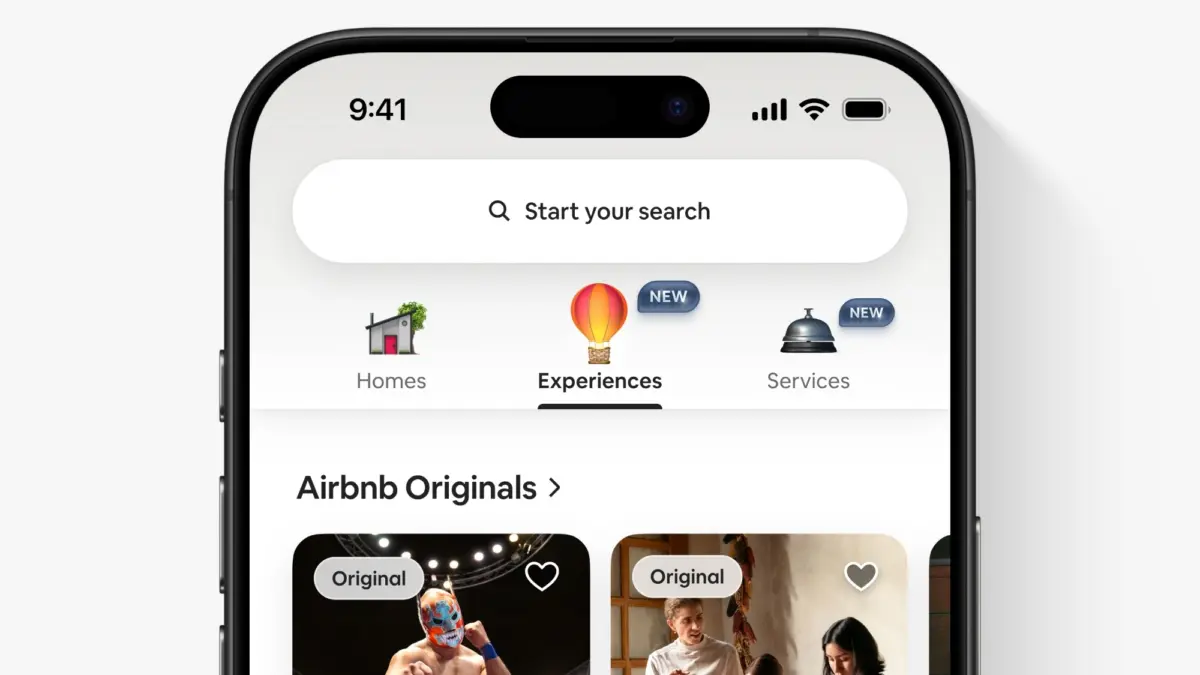
Over time, Airbnb anticipates that the capabilities of the agent will expand further to assist travelers with adjacent elements of their trips, stretching beyond unique homes and boutique hotels to incorporate local services and curated experiences. Services and experiences have steadily grown into a major strategic focus for the lodging marketplace following a comprehensive platform redesign rolled out by the company.
The announcement of the 2027 rollout timeline coincided with a robust financial report for the third quarter, demonstrating strong operational momentum across the marketplace. Airbnb reported a 19% increase in revenue, reaching $4.87 billion and comfortably surpassing consensus Wall Street estimates. Buoyed by the strong quarterly performance, the company also raised its full-year revenue growth forecast for 2026, telling investors it now anticipates growth in the high teens rather than the mid-teens range.
Addressing analysts on Thursday, Chesky declared that Airbnb has firmly returned to an accelerated growth phase. He noted that it is historically rare for a marketplace of Airbnb’s massive global scale to successfully reaccelerate its growth trajectory, pointing out that the third quarter marked the company’s fastest pace of revenue growth in more than three years.