





In a time when artistic expression serves as both solace and a vital support mechanism for the creative community, Art Jewelry Forum (AJF) has released the first part of its October 2026 "On Offer" series. Designed to connect collectors with extraordinary contemporary pieces, the bi-monthly showcase highlights meticulously curated works from an extensive international network of gallery supporters. By bridging the gap between creators and patrons, the ongoing series offers an inviting platform to acquire museum-quality art jewelry while directly supporting the galleries and artists who shape the discipline.
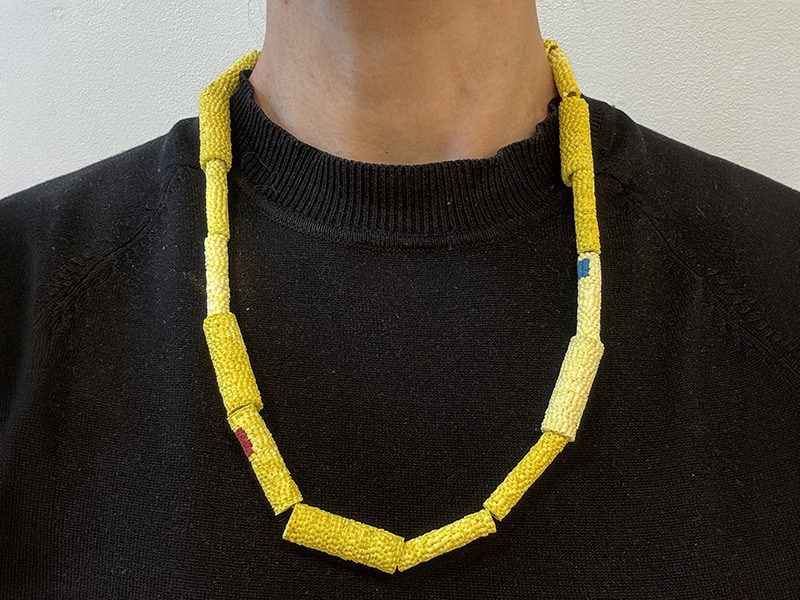
The latest curation spans a diverse array of materials, geographical locations, and conceptual approaches, featuring pieces selected personally by international gallerists to tempt and inspire enthusiasts.
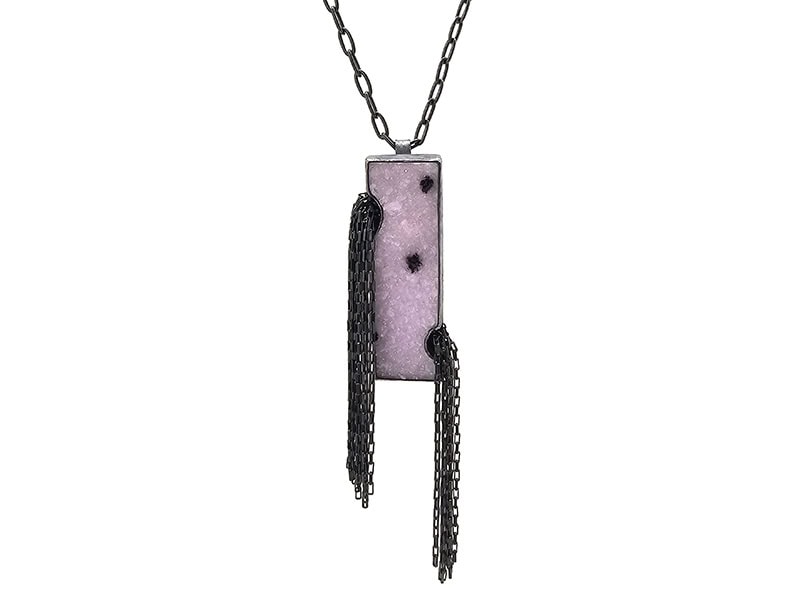
Kicking off the October showcase is Pistachios Contemporary Art Jewelry in Chicago, Illinois, which presents a striking convertible piece by artist Heather Guidero. Priced at US$1,695, the brooch and necklace combination features a vibrant lilac-colored druzy stone renowned for its exceptional sparkle. The design incorporates handmade oxidized sterling silver tassels that introduce a high degree of movement to the piece. Equipped with an integrated bail, the versatile work transitions seamlessly from a prominent brooch to an elegant necklace spanning approximately 18 inches, with the pendant itself measuring roughly 3.75 by 0.75 inches.
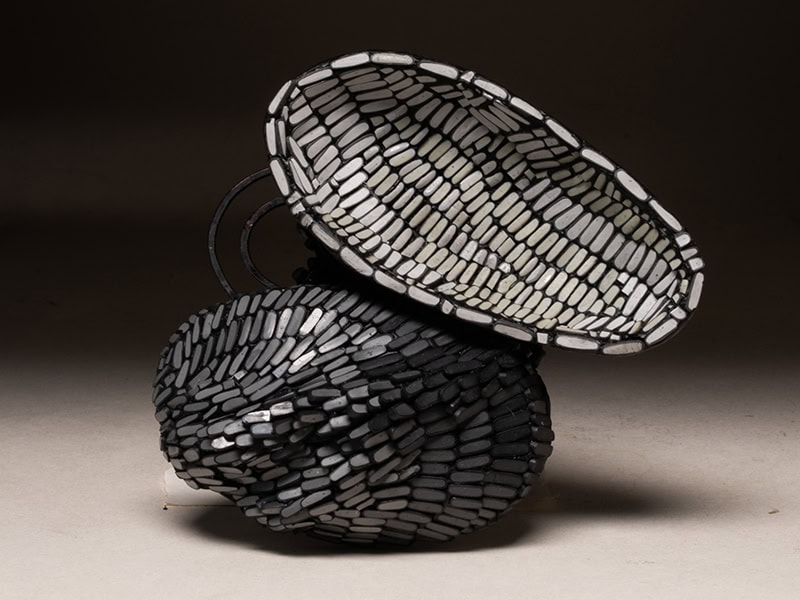
Exploring the intersection of sculpture and adornment, the Wearable Art Museum highlights the work of artist duo 2Roses with their 2026 piece titled Perch. Available for US$750, the brooch is constructed from polymer clay and stainless steel, measuring 4 by 4 by 1.5 inches. The creators describe their practice as crafting small, one-of-a-kind sculptures built to be worn anywhere on the human body. Perch pairs two hollow forms covered in meticulously cut and finished polymer clay tesserae, creating a shimmering surface that reacts to the wearer’s motion. The composition features a dark, closed form paired with a pale, open counterpart, held in permanent tension and balance. The wearer actively completes the artwork by determining its placement and angle, effectively recomposing the sculpture with every wear.
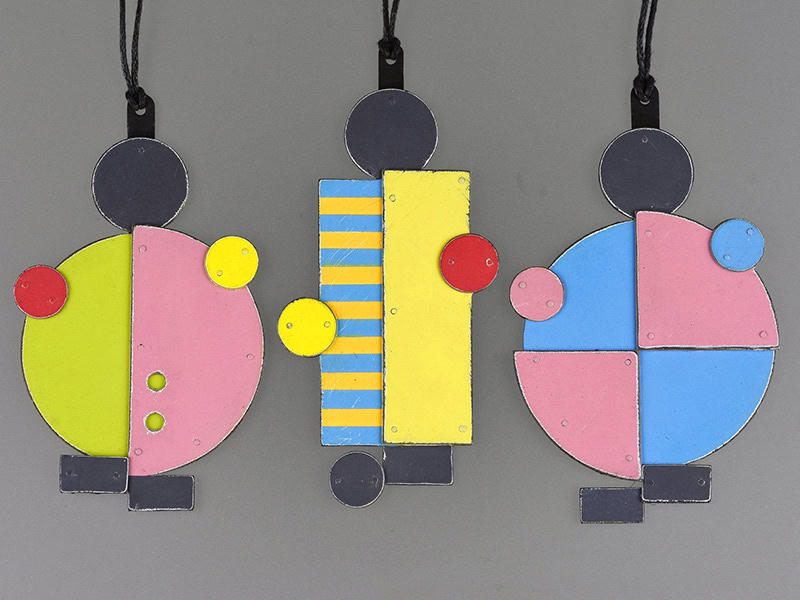
From Auckland, New Zealand, Fingers Gallery brings forth a series of pendants by Becky Bliss titled Play Time. Created in 2024 and priced at NZ$750 each, the works are fashioned from mild steel, sterling silver, paint, and cord, with individual dimensions ranging around 90 to 100 millimeters. Bliss, who initially trained as a graphic designer before transitioning to contemporary jewelry, has achieved international recognition, including selections for the prestigious Schmuck special exhibition in Munich in 2015 and 2020. Her Play Time series investigates color, form, and gender politics, subverting traditional expectations through interchangeable combinations that reflect the fluidity of youth and uninhibited expression. Drawing inspiration from the foundational child development building blocks formalized by kindergarten system founder Friedrich Froebel in the early 19th century—specifically his developmental "gifts"—Bliss anthropomorphizes geometric shapes such as circles, squares, and triangles.
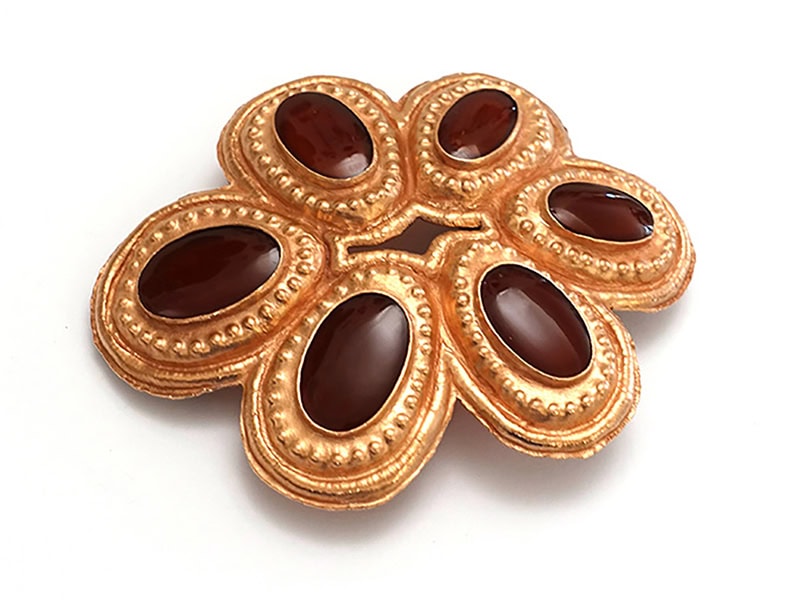
Galerie Door in Nijmegen, Netherlands, presents an untitled 2026 brooch by Daniel Kruger, crafted from copper and cornelian with a retail price of 2,000 euros. Kruger’s practice frequently investigates the shared traits of disparate objects, merging shells, gemstones, plastics, relics, and fetishes into unified wearable sculptures. Known for an exuberant and mischievous approach, Kruger blends traditional metalwork with textile techniques and everyday items, allowing the sublime to meet the mundane and the classical to interface with kitsch. His jewelry is designed to command attention, drawing the gaze toward the neck, chest, hands, or ears while serving variously as ornaments, talismans, political statements, or sources of personal joy.
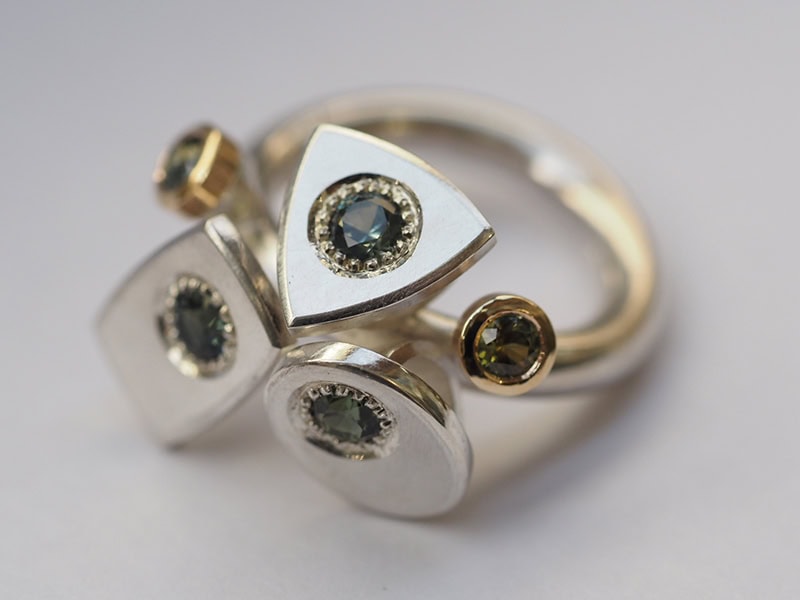
Representing Adelaide, Australia, Zu design features a ring by Angela Giuliani titled Parti Sapphire, priced at AUS$8,615. Fabricated from 9-karat gold, sterling silver, and parti sapphires, the ring is part of the gallery’s stateMEANT exhibition, an initiative inviting artists to articulate the conceptual underpinnings of their practice. Giuliani’s work investigates structure, form, and geometry through precious metals and gemstones, favoring clean lines and balanced, deliberate design. Emphasizing that the fabrication process is as significant as the final object, Giuliani works primarily in silver and gold to create thoughtful, timeless jewelry intended to foster long-term connections with the wearer.
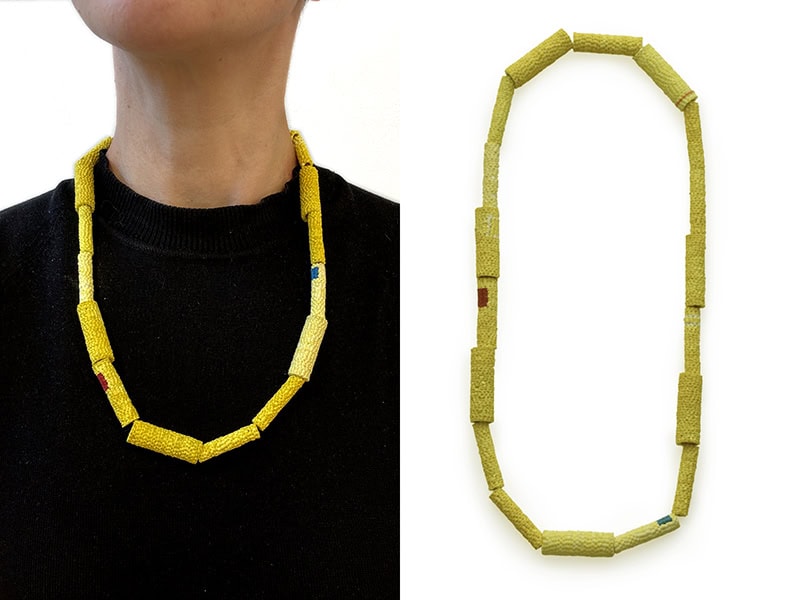
Four Gallery in Umeå, Sweden, showcases Necklace 539, a 2026 piece by Karin Seufert crafted from PVC and thread, valued at 1,700 euros excluding VAT. Seufert’s recent body of work addresses the complex, immaterial nature of time by utilizing celestial motifs for spatial and temporal orientation. The pieces translate the sun into a flickering yellow circle, capture the moon through its shifting phases, and render stars in multifaceted geometric configurations.
In the United States, Gravers Lane Gallery in Philadelphia, Pennsylvania, highlights an 18-karat yellow gold and sterling silver necklace by Naomi Kurita, priced at US$4,752. Kurita, whose career spans three decades anchored by the principles of natural, simple, and wearable design, brings a refined restraint shaped by her training in Japan, Colorado, and the Rhode Island School of Design. The 15-inch necklace sets warm yellow gold against the contrasting tone of silver, sitting close to the base of the neck in a design that reflects her extensive exhibition history across American and Japanese museums and galleries.
The Baltimore Jewelry Center in Baltimore, Maryland, presents Liz Clark’s Petite Wreath Studs, a 2023 sterling silver earring design priced at US$175. Clark, who earned her BFA in crafts and material studies from Virginia Commonwealth University, maintains a part-time metal studio in Providence, Rhode Island, and regularly exhibits her work nationally.
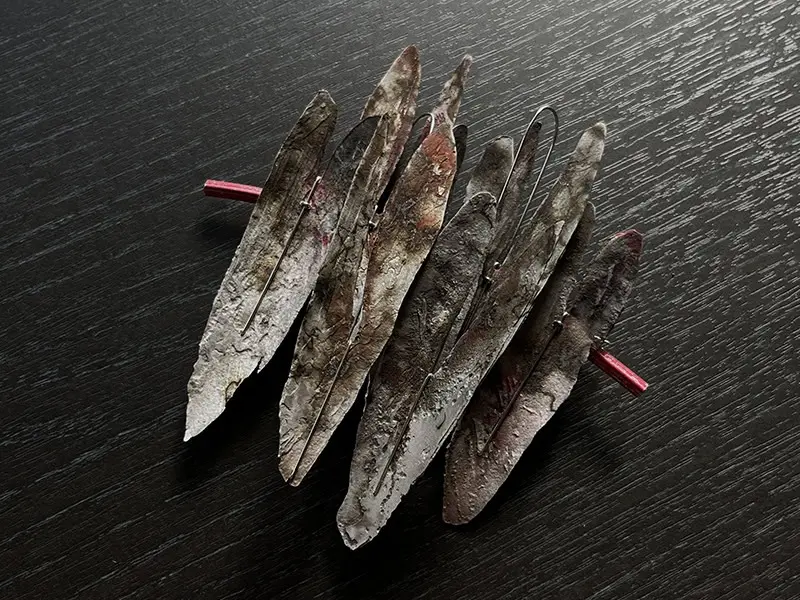
London’s Objects Beautiful gallery features Mei Fang Chiang’s 2022 brooch The Other Shore #2, priced at £760 before tax. Based in Tainan, Taiwan, Chiang specializes in anodized aluminum, utilizing proprietary studio techniques to achieve distinctive coloration. Her work explores narratives surrounding the coexistence of nature and industrial civilization, resulting in remarkably lightweight and comfortable pieces that have earned her representation in public institutions such as the Gold Museum in Taiwan.
At Brooklyn Metal Works in New York, In the Gallery presents Kerianne Quick’s Well, It’s Not Up to Us, a 2026 brooch constructed from vegetable-tanned leather, Plexiglas, and a nickel alloy pin, available for US$650. Quick’s academic and studio research focuses on material specificity as a vehicle for cultural expression and storytelling. The piece belongs to the Nevermind series of black-shrouded mirrors made from leather and Plexiglas. Referencing historical mourning traditions of covering household mirrors after a death, Quick subverts the custom—instead of protecting the spirit of the deceased, the obscured surfaces reflect the viewer, materializing themes of culpability, despair, and shared responsibility.
Galeria Tereza Seabra in Lisbon, Portugal, presents Catarina Silva’s Sugar Rush, a 2026 necklace made of painted tin, leather, glass seed beads, glass flowers, embroidery, zinc, silver, and pearls, priced at 1,500 euros plus shipping. Created for the solo exhibition Jardin d’agrément as part of the third Lisbon Jewellery Biennial, the work contributes to a broader conceptual exploration of a utopian garden inspired by cross-cultural mythologies. The exhibition envisions an egalitarian ecology where humans, animals, and plants coexist without hierarchy, utilizing symbols such as apples, flowers, and guardian serpents to evoke themes of wisdom, regeneration, and cyclical renewal.
Heidi Lowe Gallery in Lewes, Delaware, showcases Emily Cobb’s Floppy Flower, a 2026 assemblage created for the ReJewelry exhibition hosted by Radical Jewelry Makeover. Priced at US$1,480, the expansive piece is fabricated from gold-plated brass ear nuts, surgical steel ear nuts, assorted deadstock stud earrings, brass jump rings, and a silver-filled jump ring.
Concluding the current offerings, Galeria Reverso in Lisbon, Portugal, presents an untitled 2026 necklace by Manuel Vilhena, priced at 2,220 euros. Fabricated from juniper, ebony, fine silver, cotton, coral, and steel, the piece addresses the precarious duality of life and death. Vilhena reflects on this existential theme through the symbolic lens of maritime outlaws, noting the conceptual parallel between the daily hazards navigated by historical figures and the inherent vulnerability explored through contemporary art jewelry.