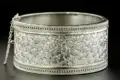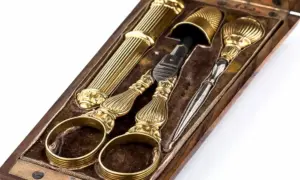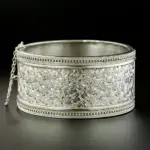






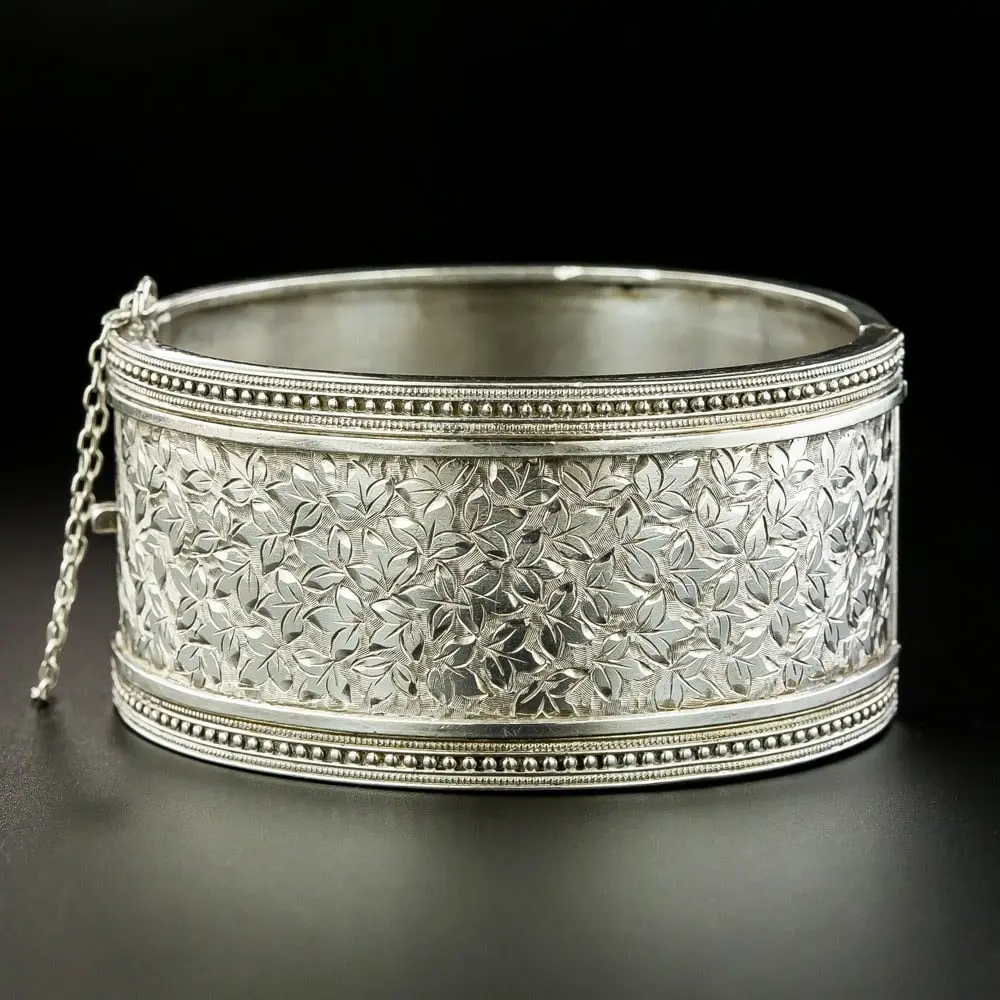
Silver is a brilliant white metallic element, harder than gold, softer than copper, and second only to gold in its exceptional malleability and ductility. Represented on the Periodic Table of the Elements by the chemical symbol Ag, silver is renowned as an outstanding conductor of both heat and electricity. Because of its remarkable resistance to oxidation, it is classified among the noble metals. Historically, silver has played a fundamental role in the production of fine jewelry and objets d’art, typically alloyed with other metals to provide the structural hardness required to maintain its shape and intricate details.
While silver is relatively inexpensive today when compared to precious metals like gold or platinum, dismissing its historical importance would be a grave mistake. At various points throughout human history, silver was valued far more highly than gold. When examining the sheer quantities of silver utilized in jewelry and decorative arts across the centuries, its usage vastly outweighs that of all other precious metals. Furthermore, this versatile white metal catalyzed far more technological advancements in mining and metallurgy than its metallic cousins. Entire economies have depended on the constant availability of silver, and access to rich silver deposits has frequently shifted the tides of war and altered the course of human history.
Bronze Age Silver Origins
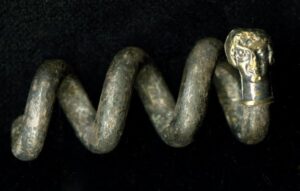
The story of silver extraction begins near the end of the fourth millennium BCE, when innovative inhabitants of modern-day Turkey discovered that silver could be successfully extracted from lead through the process of cupellation. Although very few surviving artifacts remain from this distant era, the pieces that have endured provide extraordinary insight into the advanced capabilities of Bronze Age silversmiths.
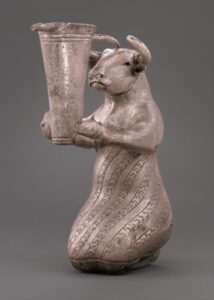
At the dawn of written history, silver served as a standard currency in Mesopotamia. Rather than circulating in the form of standardized coins, it was measured strictly by weight or shaped into portable rings. The workshop of the Mesopotamian silversmith would have closely resembled that of the goldsmith—and frequently, they were one and the same establishment. Although silver is slightly less ductile than gold and demands more frequent annealing during the manufacturing process, it can be cast, hammered into exceptionally thin sheets, engraved, embossed, worked in repoussé, and elaborately decorated with delicate filigree and granulation. Archaeological excavations have recovered vessels, statuettes, and jewelry crafted from high-purity silver, yielding remarkably soft objects.
In ancient Egypt, craftsmen and royalty alike cherished the rare and exotic. If a material originated from distant lands, it commanded immense value. Egyptians went to extraordinary lengths to secure Afghan lapis lazuli, arguably their most prized gemstone. Along this same ancient trade route, silver filtered into Egypt and was similarly esteemed as an exceedingly exclusive commodity. While gold could be sourced relatively close to home from the mountains of the Eastern Desert and Nubia—and perhaps some natural electrum alongside it—pure silver had to be imported from afar. This scarcity rendered silver more valuable than gold, making it fit only for the highest echelons of society.
By approximately 1600 BCE, the market value of silver had declined to roughly half that of gold, reflecting a substantial increase in global supply. By this time, it functioned as an abstract currency with a relatively stable value. However, the popularity of silver remained closely tied to the shifting tides of fashion. King Tutankhamun’s grave, for instance, contained remarkably few silver artifacts, whereas Pharaoh Sheshonq II was entombed within a magnificent all-silver sarcophagus.
The Minoans, and subsequently the Mycenaeans, operated primarily as maritime traders and consequently handled vast quantities of silver. Archaeological sites across the Greek mainland, Crete, and Cyprus have yielded significant collections of early Greek silver jewelry. Meanwhile, the Phoenicians played a pivotal role in the development of Mediterranean civilizations through extensive colonization and trade networks. It was the Phoenicians who initiated the large-scale exploitation of Spanish silver deposits, distributing the metal throughout the classical world and pulling silver from its previous status as an exclusive, exotic rarity into unprecedented levels of abundance.
Classical Silver and Roman Luxury
To both ancient Greek and Roman societies, the steady availability of silver was paramount, as their monetary systems—specifically minted silver coinage—depended entirely upon it. While silver appears to have been used in jewelry less frequently than gold during this era, the disparity in surviving artifacts may be largely attributed to the relentless recycling and remelting of metal. The surviving pieces demonstrate that silver was fashioned into every conceivable type of personal adornment, including finger rings, anklets, and armlets.
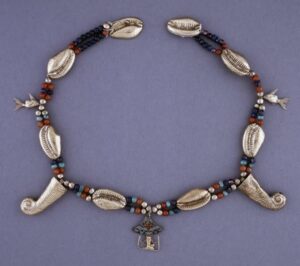
The Romans held a deep fascination for niello, a surface decoration technique closely related to enameling but executed using silver sulfate rather than glass. Niello proved significantly tougher than enamel, offering a distinctive metallic luster rather than a vitreous finish. During the Roman occupation of Northern Europe, niello spread across the continent, leaving clear evidence in Anglo-Saxon archaeological finds in Britain and throughout Eastern Europe.
The Roman author Pliny the Elder provided enduring insights into Roman society through his skepticism and detailed documentation in Naturalis Historia. Writing on the extraction of silver, Pliny observed that silver ore was exclusively found deep within shafts sunk into the earth, unaccompanied by the shining surface sparkles characteristic of gold. He detailed the grueling conditions of Roman mines, noting that Hannibal’s ancient mines in Spain still operated centuries later, with teams of water-bearers laboring day and night by torchlight to drain flooded tunnels.
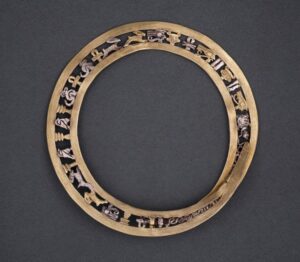
Pliny also documented the extravagant consumption of silver plate among Roman elites. While early Roman generals maintained notable frugality—such as the younger Scipio Africanus, whose total household silver was remarkably modest compared to the spoils of war—later generations descended into staggering excess. Wealthy Romans decorated entire banquet couches with silver plating, commissioned drinking vessels crafted by legendary artists like Mentor at exorbitant prices, and even adorned their travel carriages with chased silver. Pliny remarked on the paradox of human caprice, noting that the artistic mastery of silver embossing had brought immortal fame to craftsmen whose works were ultimately consumed by boundless aristocratic luxury.
Celtic and Medieval Silver Traditions
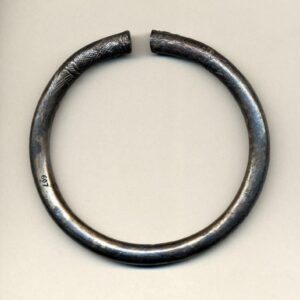
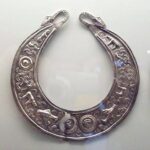
Among Celtic tribes, silver and bronze were utilized extensively for personal adornment. Elaborate brooches, heavy torcs, and crescent-shaped lunulae stood out as the most common forms of jewelry. Prior to the Roman invasion, the Celts did not utilize formal coinage, relying instead on "ring money." These standardized rings were cast from silver, copper, bronze, or gold and served strictly as currency rather than wearable items.
Following the collapse of Roman supply lines, gold became an extreme rarity across Europe, elevating silver to the foremost metal for jewelry production. Germanic jewelry consisted predominantly of functional items such as fibulae, disc brooches, penannular brooches, and belt buckles, frequently fashioned from silver, occasionally gilded, and inlaid with precious stones, with red garnets remaining the favored choice by far.
Beginning around 800 CE, Viking military campaigns along the northwestern European coast redirected enormous quantities of silver toward Scandinavia. There, local silversmiths flourished, establishing a rich cultural tradition of silver ornamentation. The discovery of rich Swedish silver deposits around the turn of the first millennium further fueled this widespread passion for silver wear. The Roman preference for niello was readily adopted by Germanic tribes, who utilized the stark black-and-white contrast to accentuate intricate engraving patterns.
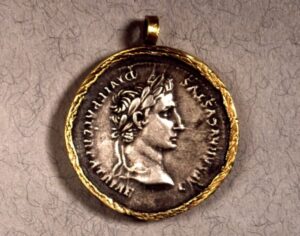
As medieval society evolved and trade routes to the East reopened, gold reclaimed its historical position as the premier metal for fine jewelry. Nevertheless, expanding commerce enabled a prosperous middle class to emerge, allowing individuals outside the ruling elite to adorn themselves. Those with moderate budgets turned to silver jewelry as an accessible alternative. The functional nature of early medieval items gave way to purely decorative and symbolic designs, with finger rings, bangles, and pendants dominating the market. By the end of the Middle Ages, the trade in silver jewelry and silverware became strictly regulated by official hallmarking systems.
Renaissance, Baroque, and Georgian Developments
The Renaissance brought renewed economic vigor, spurred by population recovery following the plague and the expansion of northern trade centers. Following Christopher Columbus’s voyage to the Americas, a monumental age of exploration unfolded. Spanish conquistadors like Pizarro and Cortés subdued the Incas and Aztecs, unlocking vast South American mineral wealth. Beginning in 1546, major silver discoveries in modern-day Mexico provided a continuous stream of silver for global trade, with portions flowing directly across the Pacific to China to acquire Asian luxury goods.
During the Baroque period spanning the seventeenth century, South American silver flooded European markets. Nations such as England, France, and the Netherlands established permanent colonies in the New World. While silversmithing techniques remained largely unchanged, the era introduced significant novelties, including the creation of silver timepieces. Crucially, this period marked the beginning of using silver settings specifically for diamonds. Intensified direct trade with India following the establishment of European merchant outposts brought unprecedented numbers of colorless diamonds to Europe, and white silver provided the ideal complementary background to showcase them.
The Georgian era witnessed booming silver production driven by ongoing discoveries in South America and, from 1727 onward, rich new diamond and mineral deposits in Brazil. While fine jewelry frequently combined gold bases with silver-topped fronts, entirely silver pieces remained common. The characteristic cut-down collet settings of Georgian jewelry were almost universally crafted from silver to accentuate the icy brilliance of the enclosed diamonds.
Furthermore, the introduction of die-striking technology in 1777 revolutionized manufacturing. This method allowed craftsmen to stamp and cut precious metal components using heavy presses and drop hammers, which were then manually assembled into finished pieces. This cost-effective production technique heralded the dawn of mass-produced jewelry, enabling large quantities of affordable silver items to flood commercial markets.
The Victorian Era and Industrial Expansion
The Industrial Revolution brought profound transformations to jewelry manufacturing throughout the Victorian era. Silver was utilized extensively in mechanized stamping and die-striking processes that had been perfected since the late Georgian period. Following Queen Victoria and Prince Albert’s acquisition of Balmoral Castle in 1848, Scottish agate jewelry became a major fashion trend, predominantly executed in silver in accordance with Northern European traditions.
Toward the close of the Victorian period, the Arts and Crafts movement emerged as a direct aesthetic reaction against industrial mass production. For Arts and Crafts artisans, artistic design and craftsmanship were paramount, while the intrinsic financial value of the underlying materials took secondary importance. These craftsmen heavily favored silver over gold and preferred smooth cabochon-cut gemstones in simple bezel settings over faceted stones. Through every era of human history, silver has continually reinvented itself—transitioning from ancient Mesopotamian currency and Roman luxury plate to medieval craftsmanship and industrial ornamentation—securing its enduring legacy as one of humanity’s most vital metals.