





References to gemstones appear in many ancient writings, preserved across centuries as objects of decoration, means of barter, symbols of wealth, sources of power and magic, or focal points of deep adoration. In these earliest historical records, however, the gem was merely auxiliary to a primary narrative rather than an independent subject of study. It was not until the classical philosophical writings of Aristotle that the physical world and its constituent parts became deemed worthy of systematic study and documentation.
Aristotle’s division of philosophy into separate branches—logic, metaphysics, physics, ethics, politics, and art—paved the way for a structured approach to nature. The natural world was similarly divided into fundamental elements: earth, water, air, fire, and ether. Within this burgeoning framework, gems could finally be classified, described, and systematically cataloged by their observable properties. The nascent study of gems and minerals began with meticulous observation, the documentation of geographical sources, and the recording of prevailing legends and folklore. Early written works represented ambitious attempts to compile all known human knowledge of the era, frequently blending rigorous science with unverified pseudo-science. As the broader understanding of natural sciences advanced over time, the specialized disciplines of mineralogy and gemology slowly emerged from this ancient foundation.
Origins
Theophrastus, a student of Plato and the successor to Aristotle as head of the Peripatetic school of philosophy, is credited with writing the first known treatise dedicated exclusively to gems. Of his seminal work, Peri Lithon (Of Stones), only a fragment of the original text has survived to the modern day. This characteristic Aristotelian blend of physics and metaphysics served as the source material for much of the gemstone lore passed down through subsequent generations. While the early English translation of Peri Lithon by John Hill established an initial bridge to modern scholarship, it has since been superseded by two definitive modern translations: the first by E. R. Caley and J. F. C. Richards, and the second by D. E. Eichholz.
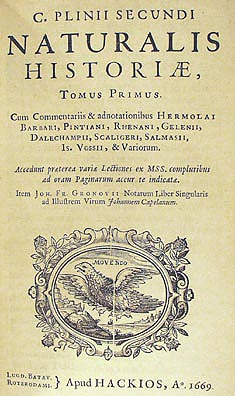
Centuries later, the Roman author and historian Gaius Plinius Secundus—widely known as Pliny the Elder—compiled his monumental Naturalis Historia (Natural History) from a reported two thousand distinct historical sources. Published in 77 A.D., this thirty-seven-volume compendium embraced the domain of natural history in the broadest possible sense, incorporating astronomy, geography, and meteorology. Beyond what modern standards define as natural history, Pliny’s masterwork also documented fine arts, technological inventions, and human relations, establishing itself as an invaluable primary source for modern historians seeking to understand life in the first century.
Much of Pliny’s extensive documentation on gemstones, however, did not stem from direct personal observation. His studies frequently relied on second-hand accounts, many of which have since been lost to antiquity. As a result, numerous distinct stones were lumped together simply by color, mining location, or folkloric attributes. His recounting of myths, alongside the assumptions drawn from them, became the bedrock for much of the literature that appeared throughout the Middle Ages. Pliny emerged as the most frequently quoted writer on the subject, with his information repeated without question across generation after generation of texts. For the first thirteen centuries of European history, very little hard scientific data was added to the limited knowledge initially gathered from Pliny’s accounts, though subsequent authors frequently embellished his descriptions with personal speculations and unwarranted conclusions.
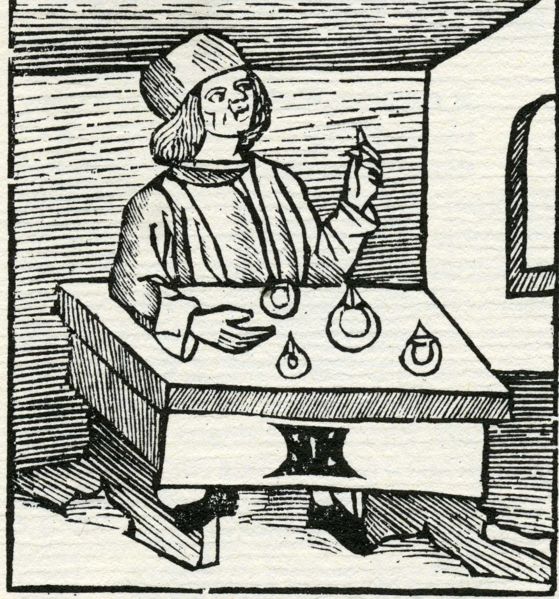
Despite these limitations, Pliny made significant early attempts to classify gems according to color and observable external characteristics. This approach unfortunately led to the practice of assigning the unique attributes of one stone to all others sharing a similar hue or appearance. The green stones collectively designated as smaragdus in Latin offer a prime example, with Pliny classifying most green stones as varieties of emerald. In total, twelve distinct varieties were listed under this umbrella, encompassing green sapphire, turquoise, smithsonite, malachite, jasper, and even manufactured glass. Conversely, Pliny is also credited with remarkably astute observations, notably recognizing for the first time the biological and chemical connection between beryls and emeralds, noting that beryls share the same fundamental nature as emeralds, or are at the very least remarkably similar.
Since the original Latin publication, more than two hundred and fifty editions of Pliny’s classic work have been issued in numerous languages. The first complete edition of Natural History was printed in Venice in 1469, followed by a critical edition offered by Hardouin in 1685. Today, the most detailed modern study of Pliny’s gemstone accounts remains the specialized work of S. H. Ball.
Christian Lapidaries
Saint Epiphanius, Bishop of Constantia in Cyprus, authored the first major treatise addressing the gemstones mentioned in Biblical texts. This work established a foundational model for the treatment of Biblical gems in subsequent lapidaries and offered the earliest formal references regarding the possible composition and symbolic significance of the twelve stones embedded within the Breastplate of Aaron. Epiphanius traveled extensively throughout the Eastern Mediterranean, undertaking dedicated studies in Egypt and Palestine. Noted historian Lynn Thorndike observed that these early ecclesiastical opinions concerning Aaron’s Breastplate helped legitimize and shape the fashion for medieval Christian lapidaries.
As scholar Dorothy Wyckoff noted in her extensive studies of historical lapidaries, even though the Christian Church formally banned pagan worship and superstitious practices, devout believers could not entirely shake the ancient belief that precious stones possessed supernatural powers or intrinsic significance. This lingering fascination was largely legitimized by focusing scholarly and spiritual attention on the stones explicitly mentioned in the Bible, specifically the twelve stones of the high priest’s breastplate and the foundational stones of the New Jerusalem.
The complete text of Epiphanius’s Biblical Lapidary was first published as part of De Omne Rerum Fossilium by Conrad Gesner of Zurich in 1565. Noted for the fiery passion of his theological writings, Epiphanius had nevertheless been widely cited and referenced by numerous authors for centuries prior to this first complete printing.
Around the same era, Isidore, Bishop of Seville, emerged as the leading clergyman of his day, exerting profound influence over the intellectual landscape and literature of the early Middle Ages. His monumental Etymologiarum sive Originum Libri XX (Etymologies) was an encyclopedic undertaking comprising more than one thousand manuscripts that synthesized the collected knowledge of the ancient and early medieval world. Intended primarily to serve as a comprehensive dictionary rather than an instructional manual, Isidore’s careful descriptions, classifications, and attributes assigned to various gems made his writings the standard reference for scholars well into the twelfth century and beyond.
The eleventh-century Bishop of Rennes—known historically by various iterations of his name, including Marbod, Marbodei, or Marbodus—composed Libellus de lapidibus, also known as Lapidaire en Vers. Widely considered the most important and influential poetic work of its kind, this text was described by historian Lynn Thorndike as the definitive classical source concerning the marvelous properties attributed to stones. So popular were these poetic treatises that more than one hundred and sixty individual manuscripts were prepared in Latin, accompanied by multiple vernacular translations.
Consisting of seven hundred and thirty-four hexameters detailing sixty distinct types of stones, Marbod’s work was prefaced by lines attributing its core information to Damigeron or Evax, an ancient king of the Arabs. Mineralogist F. D. Adams identified it as the earliest medieval lapidary and the most widely quoted of its era. Structurally, the text can be divided into five distinct categories: mythical stones whose identities remain obscure; stones of animal or organic origin; recognizable mineral species; fourteen varieties of quartz; and a final grouping of fifteen recognizable minerals rich in legend and folklore rather than physical data.
Building upon these foundations, Albertus Magnus, Bishop of Ratisbon, teacher, and prominent lecturer, became renowned for applying rigorous reasoning and the foundations of the scientific method to theology. Serving as a teacher at the University of Paris—where he counted Thomas Aquinas among his students—Magnus helped establish the school of Scholasticism and popularized Aristotelian thought among Latin scholars. His treatise De Mineralibus was hailed by Dorothy Wyckoff as an impressive attempt to systematically organize the science of mineralogy, though modern critics note it still incorporated considerable superstition and speculation.
During the thirteenth century, King Alfonso X the Learned of Castile and Leon composed the first major scholarly work connecting astrology and gemstones. His primary objective was to demonstrate the direct relationships between minerals and celestial bodies. Utilizing astrological tables calculated for the Toledo Meridian based on Arabic translations, Alfonso established a standard reference utilized across Europe for centuries. By classifying gems by color and aligning each with one of the twelve signs of the zodiac, his richly illuminated manuscripts cemented the perceived links between gemstones and astrological influences that persist in popular culture to the present day.
Introduction of the Scientific Method
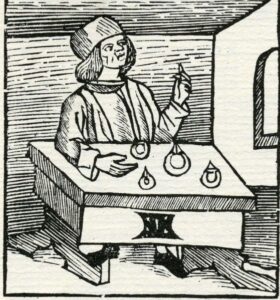
A significant turning point arrived when Camillus Leonardus, a physician from Pesaro, Italy, gathered information from previously published literature but applied systematic scientific methods to distinguish and analyze gems. Published under the title Speculum Lapidum in 1502 and later in England as Mirror of Stones in 1750, Leonardus evaluated physical properties—such as hardness, specific gravity, compactness, color, form, and geographic origin—far more thoroughly than any of his predecessors. However, reflecting the transitional nature of the era, he maintained that the medicinal uses and active properties of certain gems were enhanced or activated only by having their surfaces engraved with specific symbols and signs.
The Science of Mineralogy
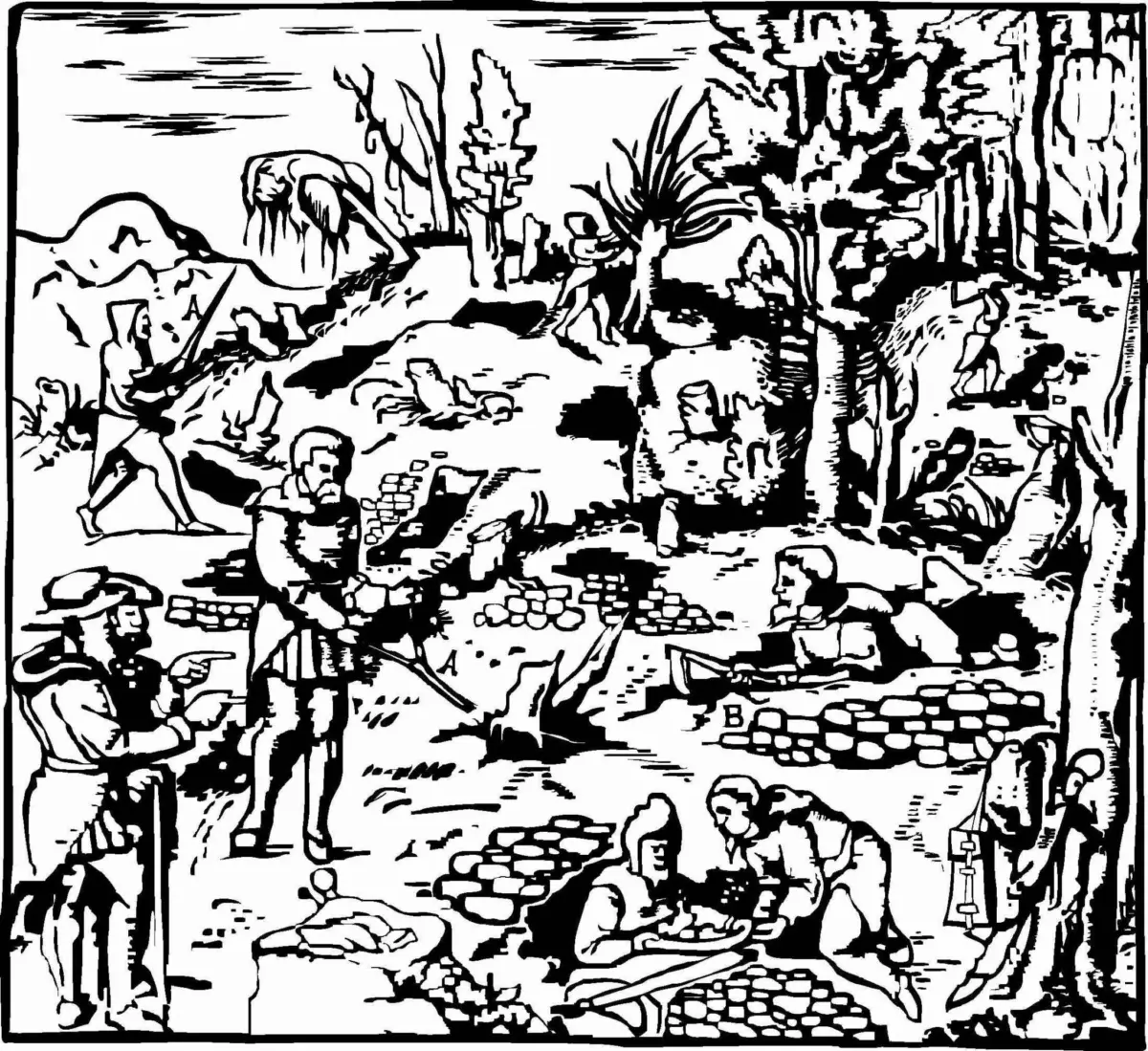
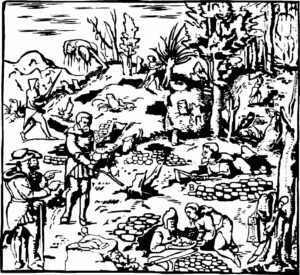
Georgius Agricola, widely celebrated as the father of mineralogy, published De Natura Fossilium in 1546, establishing one of the most important mineralogical and gemological texts in history. Unlike his predecessors, Agricola provided remarkably accurate commentary on the nature, physical properties, and treatment of gemstones, demonstrating a firsthand familiarity with many of the minerals he cataloged while continuing to rely on Pliny for stones he could not personally observe. Asserting that certain rocks and minerals originated from petrified juices, Agricola incorporated early scratch tests for hardness and provided precise physical descriptions that hold up remarkably well by modern scientific standards.
Conrad Gesner’s 1565 compilation, De Omne Rerum Fossilium, gathered eight foundational works on gemstones, including Epiphanius’s Biblical treatise and Franciscus Rueus’s De Gemmis Aliquot, alongside his own original contribution, Lapidum et Gemmarum. Gesner’s work marked a major milestone by becoming the first purely mineralogical publication illustrated with woodcuts depicting minerals, crystals, fossils, and cut gems. Regrettably, the text also perpetuated the confusing tradition of naming and classifying stones by color and geographical modifiers—such as designating true emeralds as "Occidental emeralds," tourmalines as "Brazilian emeralds," green sapphires as "Oriental emeralds," and yellow or orange sapphires as "Oriental topaz"—misnomers that unfortunately persist within the modern jewelry trade.
Anselmus Boëtius de Boodt’s Gemmarum et Lapidum Historia, published in 1609, emerged as a landmark lapidary comparing newly discovered gems from the New World with those historically known in Europe and Asia. De Boodt categorized stones into five degrees of hardness and speculated on the existence of distinct atomic structures within minerals. Drawing upon his royal position as physician to Rudolf II in Prague, he studied numerous specimens firsthand while expressing pronounced skepticism regarding traditional mystical and medicinal virtues, marking a substantial leap forward in the scientific rigor of gemology.
The posthumous publication of Ulyssis Aldrovandi’s Musaeum Metallicum in Libros IV Distributum in 1648 introduced the term geologia in its modern context. Reviewing this transition, historian F. D. Adams noted that medieval mineralogy ultimately crumbled because it lacked a foundation in reality, paving the way for a true science of mineralogy built upon diligent observation and the systematic study of the Earth’s crust.
The first major English-language work on the subject, Thomas Nicols’s A Lapidary: or, the History of Pretious Stones (1652), detailed genuine gems alongside imitations, glass replicas, and foil backings. Shortly thereafter, English philosopher and chemist Robert Boyle published An Essay About the Origine and Virtues of Gems in 1672, offering unprecedented scientific observations on crystal formation from solutions and addressing the chemical insolubility of gems, which rendered traditional internal medicinal applications ineffective. Boyle also advocated for utilizing hydrostatic weighing to determine specific gravity and measuring refractive properties to aid in gemstone identification. London physician Dr. Robert Pitt further debunked the therapeutic consumption of gemstones in his 1703 publication, The Craft and Frauds of Physick Expos’d, noting that stones ingested by birds passed through their systems entirely unchanged in color or shape.
Modern Gemology
As the eighteenth century progressed, mineralogy and geology were fully adopted as rigorous, independent sciences supported by improved record-keeping and specialized instrumentation. Gemology, however, remained closely tied to the retail jewelry industry, where the romance, legend, and lore of gemstones were actively promoted as commercially advantageous. Consequently, published literature focused primarily on maintaining these historical traditions rather than advancing empirical research.
This dynamic shifted with the late-nineteenth and early-twentieth-century research of Dr. George Frederick Kunz. Serving as a gemological expert and consultant for Tiffany & Co. and as the founder and curator of mineral collections at the American Museum of Natural History, Kunz cataloged North American gems and produced enduring popular compilations of historical pseudoscience, including The Curious Lore of Precious Stones (1913) and The Magic of Jewels and Charms (1915).
The professionalization of modern gemology accelerated significantly with Robert M. Shipley’s founding of the Gemological Institute of America in 1931 and the American Gem Society in 1934. These organizations established standardized, reliable educational frameworks for jewelers and consumers alike, supported by ongoing peer-reviewed research published in the quarterly journal Gems and Gemology.
Spanning over two millennia of observation, speculation, and scientific advancement, the study of gemstones has continuously evolved alongside physics, chemistry, biology, and medicine. Even as modern metaphysics and holistic practices continue to spark renewed interest in the supposed powers and healing properties of minerals, the foundational historical literature compiled by centuries of scholars underscores how deeply human fascination with gemstones remains intertwined with the rigorous pursuit of scientific understanding.