




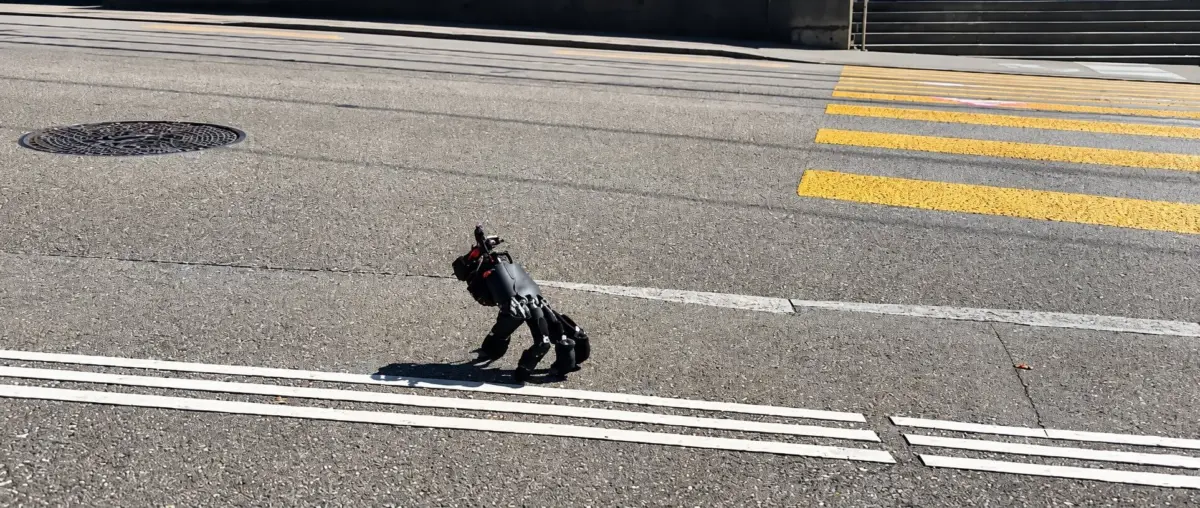
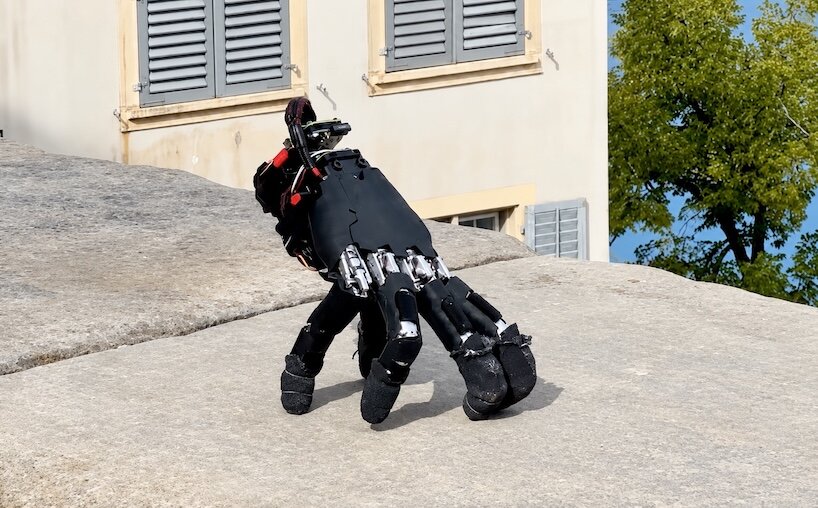
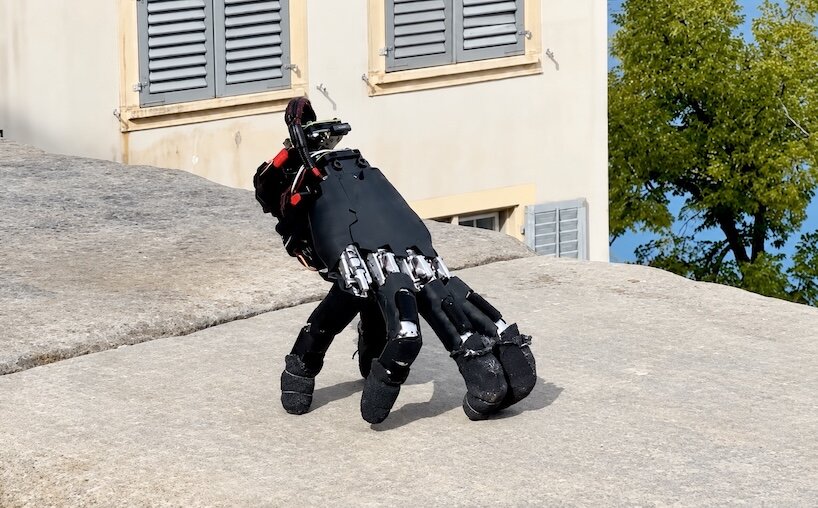
In a development that blurs the line between science fiction and advanced robotics, researchers at ETH Zurich’s Soft Robotics Lab have created an autonomous five-fingered robotic hand capable of walking across a diverse array of surfaces, steering itself, recovering from falls, and manipulating objects—all using the exact same digits normally reserved for grasping. Rather than relying on traditional wheels, tracks, or dedicated legs to achieve mobility, the multidisciplinary team reimagined the hand itself as an independent mobile robot. By allowing its fingers to seamlessly alternate between supporting its weight, driving locomotion, and interacting with the physical environment, the prototype introduces a compelling new paradigm for mobile manipulation.
The research initiative, spearheaded by scientists Amirhossein Kazemipour, Hehui Zheng, and Robert K. Katzschmann, builds upon a commercially available anthropomorphic hand architecture. This foundational hardware features five individual fingers powered by a total of 20 actuated joints, translating to four distinct joints per finger. To transform this stationary end-effector into a fully untethered, self-contained robotic system, the team integrated a compact onboard framework containing a power source, sensory equipment, and high-performance computing hardware. The resulting machine tips the scales at a mere 818 grams. Requiring no external robotic arm to carry or position it, the prototype evokes playful comparisons to classic pop-culture imagery, yet it serves a deeply serious purpose as a practical engineering experiment in untethered mobile manipulation.
Reinforcement Learning Puts Five Fingers to Work
Teaching a robotic hand to walk presents a vastly different set of challenges compared to programming a standard quadruped or bipedal robot. Unlike traditional legs, the five digits of an anthropomorphic hand possess wildly asymmetric geometries, varying lengths, and drastically different ranges of motion. Furthermore, the palm of a hand naturally rests at an awkward angle relative to the ground. When a single finger lifts off a surface to take a step or reach out to interact with an object, the remaining fingers must instantaneously compensate to balance the entire weight of the robot.
To overcome these intricate mechanical asymmetries, the ETH Zurich researchers turned to advanced reinforcement learning techniques. Because trial and error on physical hardware can be slow and potentially damaging to delicate components, the team trained the core locomotion policies entirely within virtual simulations. Once the algorithms successfully mastered the complex dynamics of finger-based walking in the digital environment, the policies were transferred directly to the physical hand.
The real-world results quickly pushed the prototype far beyond the confines of a controlled laboratory tabletop. During testing, the untethered hand successfully navigated across 14 distinct indoor and outdoor terrains. These surfaces ranged from smooth indoor flooring like carpets and tiles to rougher, more challenging textures, including metal gratings, asphalt, grass, gravel, and weathered stone.
Resilience was another critical benchmark for the team. When the researchers deliberately tipped the robotic hand onto its side during trials, the machine managed to successfully push itself back into an upright, functional position in 21 out of 25 attempts. Demonstrating its dual-purpose capability, the hand proved it could instantly switch from locomotion mode to fine manipulation. In one controlled demonstration, the robot leveraged some of its fingers to support its own body weight while using its remaining digits to press specific keyboard arrow keys, successfully striking 29 out of 32 targeted keys. Capitalizing on these newly acquired typing skills, the hand went on to successfully execute moves within the spatial puzzle game Sokoban.
Autonomous Robotic Hand Becomes Its Own Mobile Manipulator
In subsequent experiments, the researchers tasked the hand with approaching and actively pushing a small object toward a designated target, highlighting how locomotion and manipulation can operate synchronously within a single, unified system. This dual functionality forms the core philosophy driving the entire research project.
Conventional robotic hands are typically designed to function exclusively as end-effectors, meaning they must arrive at a workspace attached to a robotic arm. In many cases, that arm must itself be mounted onto a larger mobile base, such as a wheeled rover or a humanoid chassis, just to traverse a room. By granting the hand its own built-in means of locomotion, engineers can eliminate layers of heavy, complex hardware. This approach could ultimately allow a larger parent robot to deploy the hand near a tight, cluttered, or otherwise inaccessible space, leaving the compact device to crawl independently toward a control panel or object, perform the required task, and return to be collected.
While future development cycles will require improvements in onboard perception systems and an expansion of the hand’s repertoire of movements, the current experiment fundamentally reframes how roboticists view a familiar piece of anatomy. Instead of designing elaborate auxiliary mechanisms simply to carry a hand to where it needs to go, the team at ETH Zurich simply taught the fingers to take it there themselves.