



Reflecting on the motivations behind establishing a hospitality destination in northern Michigan, Caudill points to the area’s rich environmental and cultural landscape. Having owned property in the northern part of the state for approximately a decade, he views the region as an ideal convergence of natural splendor and creative vitality. While Detroit has rightfully earned a stellar reputation as an established national hub for craft, manufacturing, and design, Caudill notes that an equally impressive pool of talent exists quietly upstate, waiting to be engaged and celebrated on a commercial scale.

This realization shaped the foundational design ethos of the Dexter Hotel. Every single design decision, material selection, and procurement choice was evaluated through a strict localized lens, constantly asking whether an item could be sourced or manufactured directly within the community. Drawing upon relationships cultivated over a decade of living and working in Michigan, Caudill leaned on a trusted network of artisans, fabricators, and creators. This deliberate approach meant investing extra time into sourcing even the smallest details—such as a custom soap dish—ultimately yielding a cohesive interior design landscape rooted deeply in authentic regional identity.

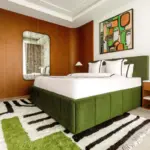
Upon stepping through the doors of the Dexter Hotel, visitors are immediately greeted by a warm, tactile environment that celebrates the natural beauty of its Michigan setting. The guest rooms continue this immersive experience through an impressive collection of custom white oak furniture. Building directly upon Michigan’s historical legacy as a premier national hub for mid-century modern furniture production, the property’s couches, chairs, beds, and nightstands were meticulously designed by Caudill and manufactured locally by Grand Rapids-based Wolf Studio.

Elaborating on this partnership, Caudill highlights the enduring traditions of American furniture manufacturing in the state and praises Wolf Studio for maintaining classic, robust production methods. He notes that the furniture relies entirely on solid wood with substantial builds rather than superficial veneers. The collaborative design process involved extensive fine-tuning of scale, ergonomics, and silhouette, focusing carefully on details such as the precise bend of an armrest or the comfortable slope of a chair back. To enhance the tactile warmth of the guest rooms, this solid wood foundation was paired with an array of rich textural fabrics, including plush velvets, supple leathers, and heavy-duty cottons and canvases designed to maximize comfort and invite physical engagement.

To further enrich the property’s distinct atmosphere and tie it to the local heritage, the Dexter Hotel incorporates a carefully curated selection of vintage furnishings and decor sourced from Pernette’s, an esteemed antiques dealer operating out of nearby Northport, Michigan. These vintage elements, including chairs that evoke familiar, comforting memories of domestic spaces, infuse the hotel with a relaxed, welcoming hangout vibe. The overarching goal was to create a shared environment where every visitor feels entirely at ease, prompting the ultimate compliment from guests who frequently express a desire to move in or replicate the aesthetic in their own homes.

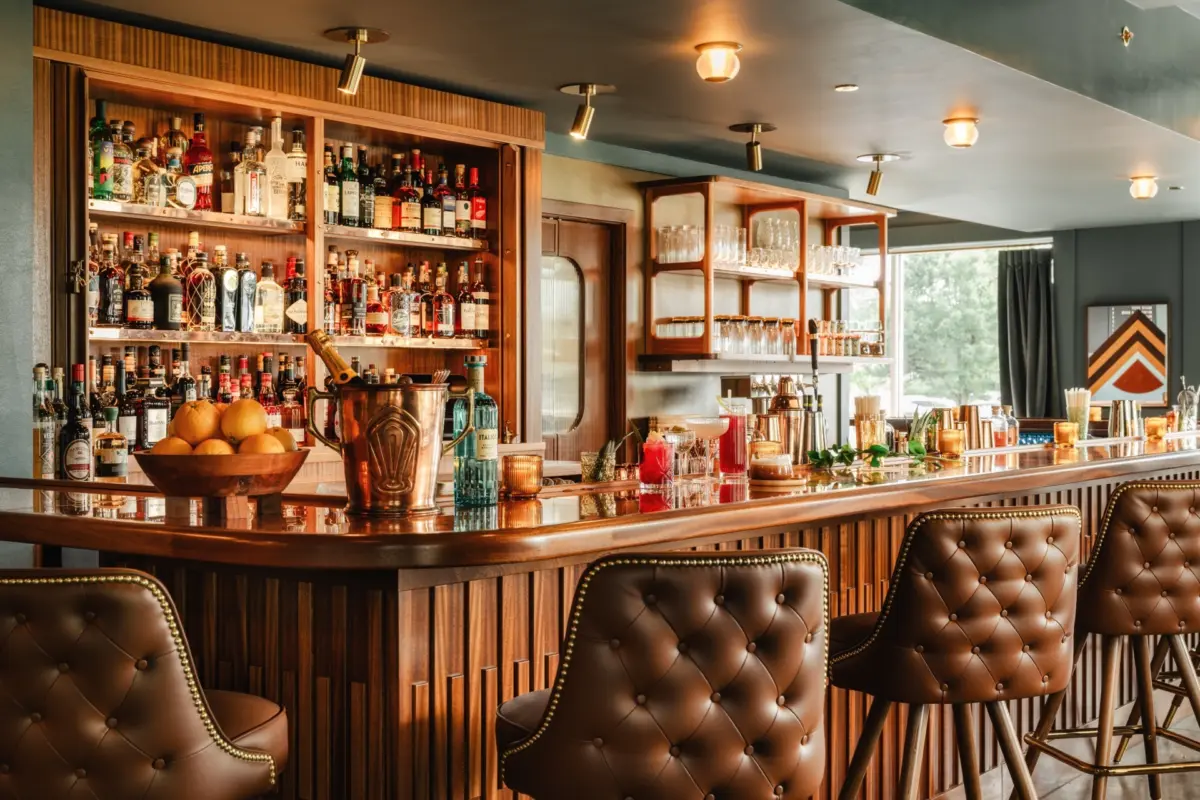
The commitment to regional craftsmanship extends seamlessly into the hotel’s public areas. In the lobby, the linear patterning of the handcrafted front reception desk—once again fabricated by Wolf Studio—stands as a striking showcase of advanced American woodworking. Wolf Studio also designed the custom bar housed within the on-site Noble Lounge. This dining and gathering destination extends the hotel’s hyper-local philosophy directly to its culinary offerings, featuring an artisanal menu highlighted by cheeses sourced from nearby northern Michigan towns such as Suttons Bay and Northport.

Michigan pride is further manifested in custom architectural details throughout the property, including bespoke flush-mount ceiling lights designed by Caudill and manufactured by Traverse City-based Britten Inc. Additionally, the hotel’s collection of ceramic trays, vases, and decorative accessories was custom-fabricated by ClaySpace, another creative business based in Traverse City. Caudill describes the close-knit collaboration process with these local makers as a rare luxury in modern commercial design. Being able to physically visit a studio to inspect a glaze firsthand, or to iteratively refine a product until the exact desired color temperature and lighting tone were achieved, allowed for a level of creative synergy that resulted in finished pieces both sides could take immense pride in.

Even the property’s visual communication and branding bear distinct local fingerprints. Traverse City-based Bear Sign Company was enlisted to produce the hotel’s interior wayfinding system and main exterior signage, while Detroit’s Motown Hand Painting contributed additional handcrafted signage throughout the building. The hotel’s fine art collection is equally rooted in the state’s cultural fabric, featuring works curated by Detroit’s Library Street Collective, expressive canvases by Michigan artists Pier Wright and Jesse Hickman, and even an anonymous landscape painting discovered by Caudill during a routine visit to a local thrift store.

Acknowledging that visitors might not consciously process every single nuanced backstory embedded within the hotel’s design, Caudill notes that plans are underway to publish a dedicated zine detailing the origins of these bespoke elements. However, he remains confident that even without knowing the explicit narrative history, guests will intuitively recognize that the custom lighting, distinctive pottery, and unique lamps deviate sharply from standard corporate hospitality templates, lending the space a singular character.

Reflecting the high level of guest engagement with the property’s distinct details, Caudill is currently preparing to open an on-site gift shop that will make select guest room items available for purchase. Among the most popular items are the custom soap dishes, which Caudill notes have frequently disappeared following guest stays—a humorous testament to the strong desire visitors feel to take a tangible piece of northern Michigan craftsmanship home with them.