




For years, the crewneck enjoyed an undisputed reign over casual and sensible style. It was simple, reliable, and possessed an innate design safety that made it virtually impossible to get wrong. The V-neck, meanwhile, spent years relegated to the dustbins of conventional school uniforms, stereotypical dad dressing, and the somewhat questionable going-out tops of decades past. It was an afterthought in modern wardrobe building, viewed as either too formal in a corporate sense or too casual in a lazy Sunday way. Lately, however, a noticeable shift in the runway landscape has forced a widespread reconsideration of this dismissed neckline.
The resurgence has been building momentum across multiple seasons. Prada has long been making a steady design case for the V-neck, experimenting with its placement, scale, and integration into everyday wear. By the Fall/Winter 2026 collections, the rest of the high-fashion ecosystem had officially caught up. At Chanel, creative director Matthieu Blazy reinterpreted the shape by cutting a soft grey sweater vest into a deep, geometric V, styling it with a striking low-slung black skirt anchored by a glossy red belt. Elsewhere within the same Chanel collection, the sharp neckline appeared artfully layered beneath an oversized blazer, proving that even the most familiar and traditional V-neck can feel entirely novel through a deliberate shift in proportion and modern styling techniques.
Naturally, in the cyclical and boundary-pushing world of fashion, the trend could not stop at knitwear. While sweaters and sweater vests successfully marked the initial return of the V-neck, that was merely the opening chapter. As the neckline began to migrate beyond wools and cashmeres into structured dresses and fluid eveningwear, it also started moving considerably further south down the torso.
By the arrival of the Spring 2027 collections, the V-neck had infiltrated an entirely different category of wardrobe staples. At Gabriela Hearst, a fluid and luminous blue dress was designed with a striking V-cut that extended almost all the way to the waistline. On the red carpet, celebrity style icon Zendaya offered an even more convincing and high-profile endorsement of the shape during an appearance at the Emmys. Dressed in Prada, she wore a crystal-covered gown defined by a sheer V-shape that plunged boldly through the front of the garment, instantly signaling to the wider style zeitgeist that the neckline was ready for prime-time celebrity endorsement.
Perhaps this renewed fascination stems from spending countless seasons cocooned in the safe confines of high-collared crewnecks. There is an undeniable aesthetic appeal in the expanse of empty space created by a plunging neckline, particularly when translated onto a sweeping dress. It occupies a sophisticated middle ground in contemporary fashion discourse—it is not quite a traditional geometric cutout, nor does it strictly fall into the category of explicit naked dressing. Instead, it relies on clean lines and negative space rather than overly complicated construction to transform an otherwise simple silhouette into something much less expected and far more arresting. Yet, even among the brands embracing the trend, no design house seems more entirely committed to exploring its absolute lower limit than Valentino.
How Low Can Valentino Go?
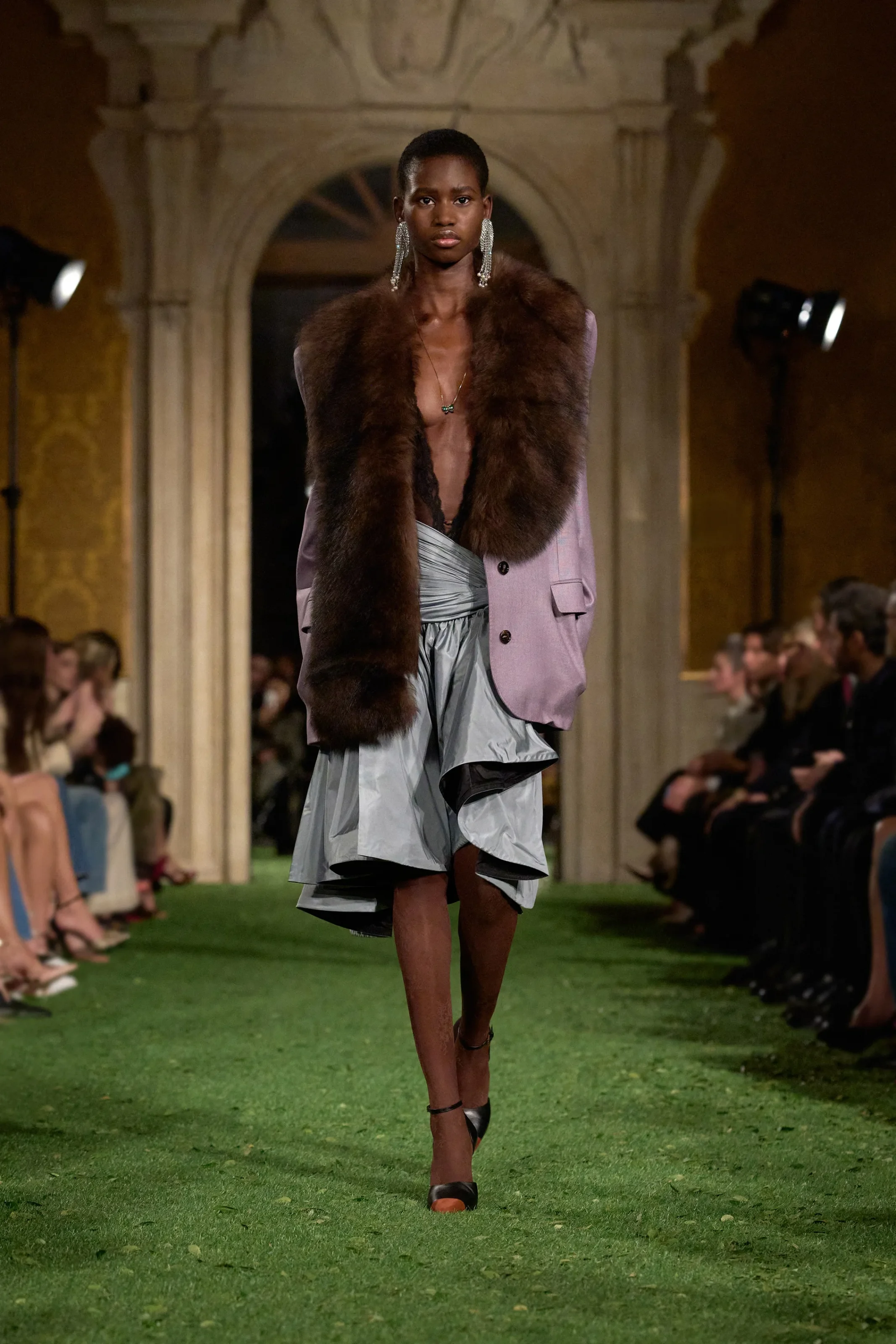
For the Fall 2026 ready-to-wear collections, designer Alessandro Michele appeared far less interested in simply reviving a classic neckline and much more fascinated by testing how far he could physically push the boundaries of exposure. In one standout look from the runway, a sheer black lace bodysuit plunged dramatically almost to the waistline, while a lilac jacket was left deliberately open beneath an enormous, voluminous brown fur collar, compounding the visual impact and making the V-neck feel even deeper and more dramatic.
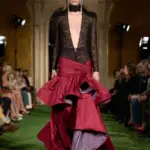
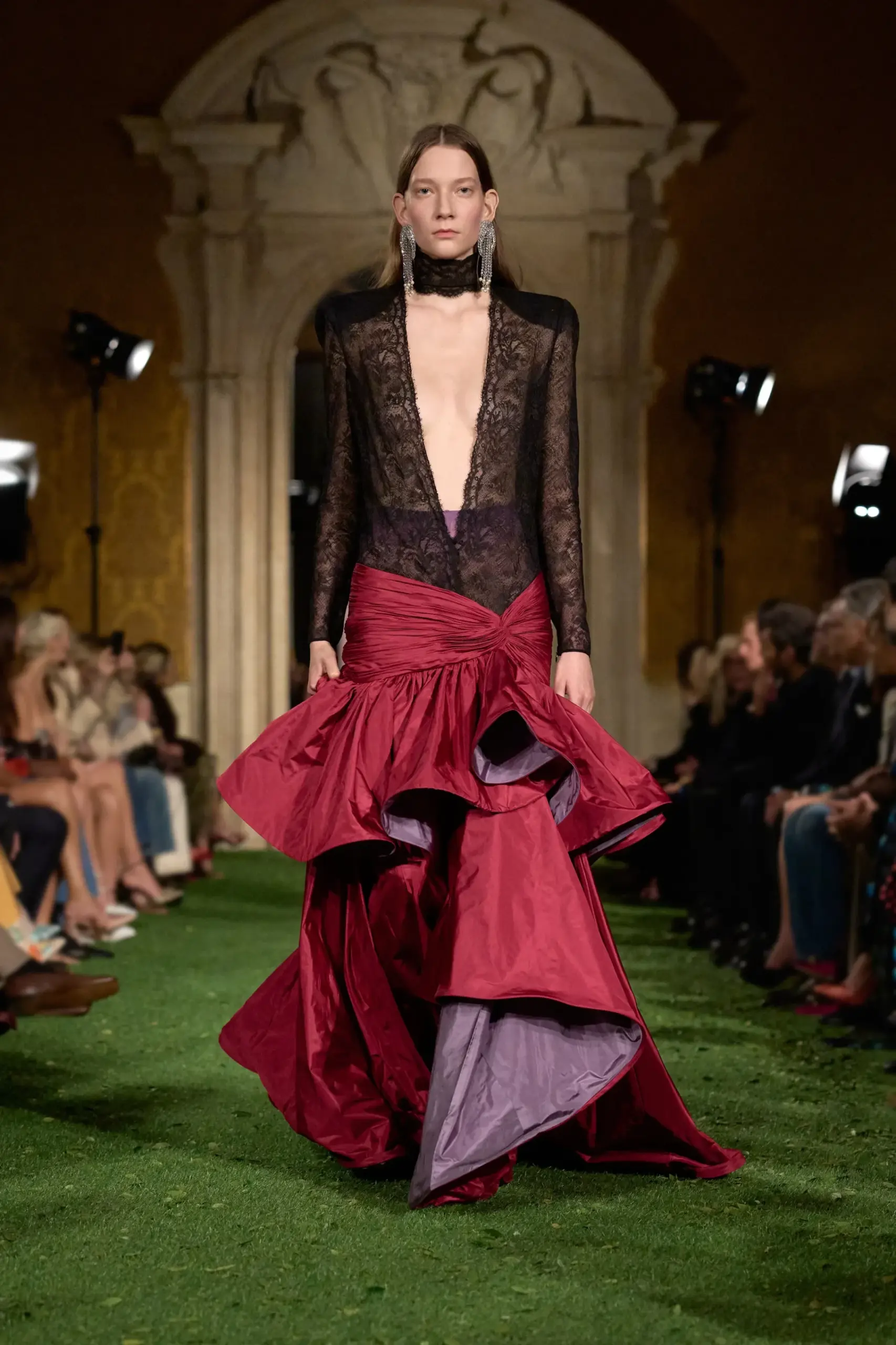
Another look took the concept to its absolute extreme. A black lace bodysuit opened from the traditional neck point all the way down the entire length of the torso, finally meeting the waistband of a voluminous, sweeping red skirt. At that level of exposure, describing the feature as a mere neckline begins to feel remarkably generous, transforming the garment into a study of structural architecture and daring tailoring.
The V-neck has clearly not returned to contemporary fashion in the exact state it was left behind. First, it reappeared quietly on the sort of sensible knitwear your father might wear on a weekend errand. Then, designers widened the stance. Then, they lowered the apex. And finally, they pushed it considerably further south. To borrow a famous observation from Miranda Priestly, the V-neck itself is hardly a groundbreaking invention in the history of garments. What modern designers are actually doing with those plunging proportions, however, is an entirely different story.
If the trajectory of the past few runway seasons serves as any reliable indicator, the fashion industry has officially moved past the initial phase of debate. The question is no longer whether the V-neck has successfully made its comeback. The only real question left for designers to answer is precisely how low the neckline can possibly go.
The Plunging Tailored Vest
Beyond the sweeping evening gowns and avant-garde lace bodysuits seen on the major international runways, the plunging aesthetic has also trickled down into the realm of tailored separates and street style. The tailored vest, long associated with menswear-inspired layering and corporate suiting, has been given a radical overhaul. Street style photographers outside the recent shows in Copenhagen and other fashion capitals have captured a growing street-level preference for waistcoats and vests worn bare against the skin, buttoned minimally or cut with extraordinarily deep V-fronts.
This street-level adoption underscores a broader consumer shift. What begins as an eccentric runway experiment by visionary creative directors eventually finds its footing in daily wardrobes through adaptable, sharp tailoring. Whether rendered in heavy wool for winter or lightweight silks for warmer months, the plunging V-neck has cemented its status as the defining silhouette transition of the current fashion cycle, proving that even the most traditional elements of a closet can find new life when pushed to their absolute limits.