






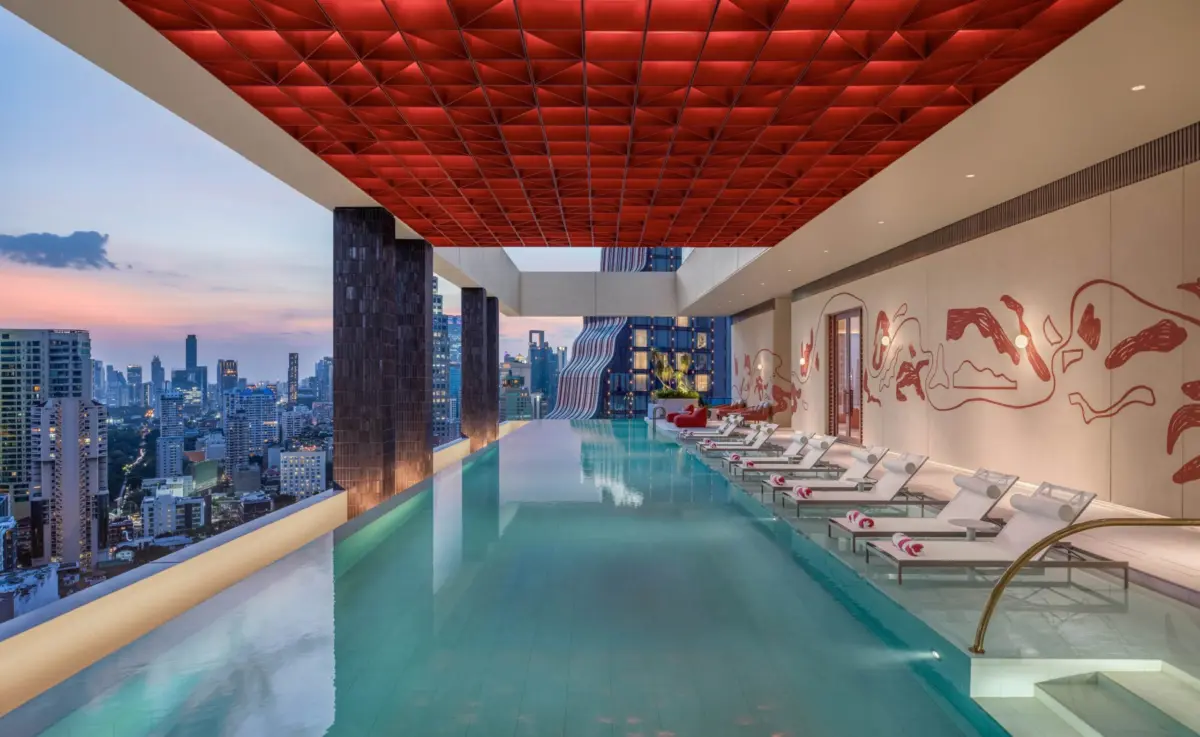
After 14 years living and working in Bangkok, watching the city evolve into one of the most electric destinations in Southeast Asia has been nothing short of extraordinary. It is a metropolis defined by a striking duality—constantly on the move with cutting-edge hotel openings, world-class restaurants, and a rapidly transforming retail and fashion scene, yet anchored firmly by deep-seated traditions.
For the traveler, Bangkok offers something for every age and budget. The culinary landscape alone spans centuries of tradition and modern innovation. One can easily spend an afternoon enjoying a lunch meticulously prepared by an 80-year-old culinary matriarch who has been serving the exact same streetside crab omelet for decades, and then transition to dining at Thailand’s only three-Michelin-star restaurant by nightfall. This juxtaposition extends to the cityscape itself, where ancient, glittering golden temples stand shoulder-to-shoulder with sleek, modern shopping centers. Meanwhile, historic shophouses are routinely revived and reimagined by a younger generation of creatives determined to preserve the city’s architectural and cultural heritage.
This duality is equally apparent in the hospitality sector. Guests visiting the Thai capital can choose between historic boutique properties steeped in colonial-era charm or glamorous, avant-garde new builds featuring cutting-edge architecture. Every conceivable amenity, design philosophy, and global cuisine can be found under the sun within this sprawling urban landscape.
Equally captivating is the warmth and genuine hospitality of the Thai people, a quality that many long-term residents and visitors find to be entirely unique. Thailand has long held the affectionate moniker of the “Land of Smiles,” and through years of personal immersion, that reputation consistently proves well-deserved. The city reveals its soul through a blend of small, thoughtful moments and grand, sensory experiences, all set to an energetic pace that cements its status as a premier global destination.
Navigating the Neighborhoods: Where to Stay and Explore
Understanding Bangkok requires looking closely at its distinct neighborhoods, each offering a completely different lens through which to view the city. The riverside neighborhoods of Rattanakosin and adjacent Banglamphu serve as a natural starting point for history enthusiasts. These areas harbor the nation’s most famous architectural treasures, including the sprawling temple complex of Wat Po and the majestic Grand Palace, alongside historic military forts, sunny riverfront parks, and the bustling backpacker haven of Khao San Road.
For those drawn to sophisticated nightlife, sharp tailoring, and a cosmopolitan atmosphere, Thonglor offers a striking contrast. Often compared to Brooklyn, this neighborhood has seen a heavy influx of Japanese expatriates, resulting in an exceptional concentration of high-end omakase dining rooms, curated vintage clothing boutiques, and master tailors. Thonglor also functions as the city’s primary epicenter for innovative cocktail bars and upscale evening venues.
Further east into Chinatown, narrow thoroughfares like Soi Nana have earned global acclaim for housing a collection of craft beverage and microbrew bars. These establishments marry cutting-edge mixology with a delightfully ramshackle, historic aesthetic. Exploring Chinatown thoroughly can easily consume a week, as the district is densely packed with 300-year-old Taoist temples, independent coffee houses, authentic dim sum eateries, bustling textile markets, and an intricate maze of old-world food stalls. Meanwhile, travelers whose itineraries prioritize contemporary art and retail therapy naturally gravitate toward Siam, home to the city’s largest art museum and a vast cluster of interconnected shopping complexes.
Getting Around: Navigating Traffic and Transit
While Bangkok’s traffic is globally infamous, proper planning renders congestion a minor inconvenience rather than a major obstacle. Within the compact riverside neighborhoods and Chinatown, walking is often the most efficient method of travel, as the streets are generally flat and major points of interest sit in close proximity to one another.
Along Sukhumvit Road—the primary urban artery connecting mid-city districts such as Thonglor, Siam, Phrom Phong, and Sathorn—the BTS SkyTrain provides a reliable alternative to road transport. The elevated rail system features clear English signage and maps posted throughout stations, paired with straightforward ticket-purchasing procedures. Operating daily from six in the morning until midnight across three distinct lines, the SkyTrain integrates vast portions of the city efficiently. For a more traditional and exhilarating local experience, visitors frequently turn to tuk-tuks, the iconic motorized rickshaws that weave dynamically through the city streets.
Timing and Duration for the Ideal Visit
Travel experts generally recommend a minimum stay of three days in Bangkok to scratch the surface of what the capital has to offer. This timeframe provides adequate opportunity to explore prominent temples, sample diverse street food in Chinatown, experience a traditional Thai foot massage, and spend an afternoon gallery-hopping at cultural institutions like the Dib Bangkok art museum or browsing the city’s extensive retail malls.
The optimal time to visit spans from November through February. During this period, the annual monsoon season concludes, giving way to the city’s cooler season—a welcome window when temperatures drop slightly, offering more comfortable conditions for outdoor exploration.