






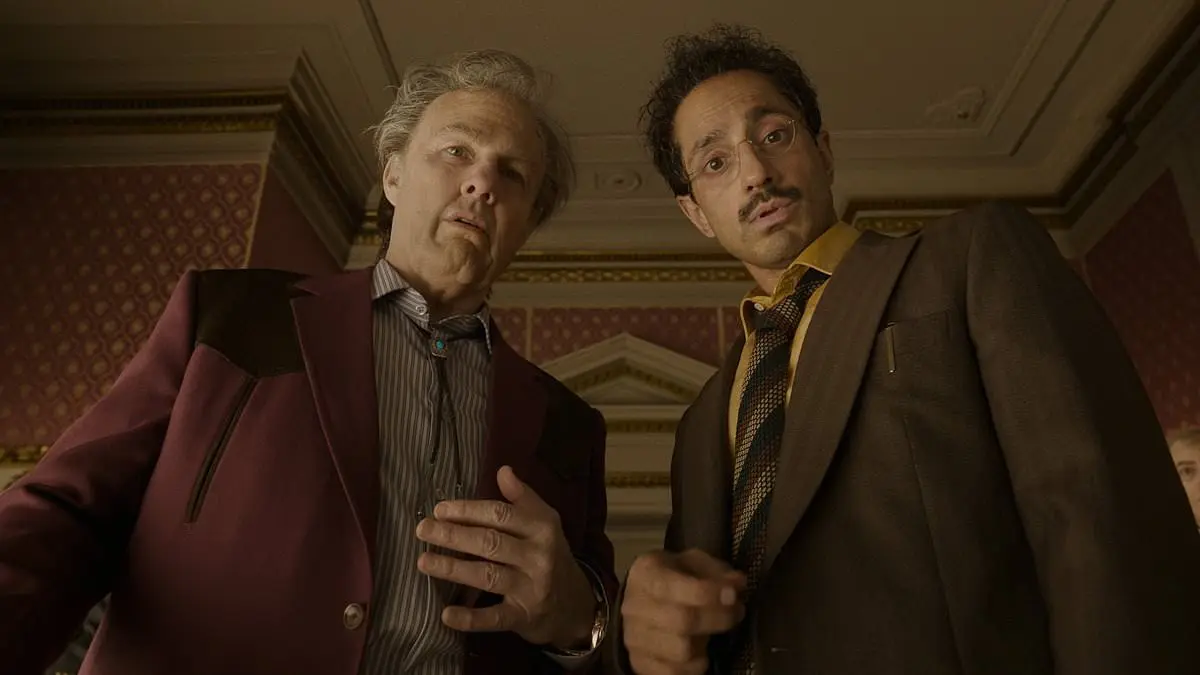
Tom Cruise and director Alejandro G. Iñárritu’s ambitious satirical black comedy Digger is now on course to become the biggest box office flop of all time, following a catastrophic second-weekend ticket sales drop of 60 per cent.
During its opening weekend, the critically polarized film grossed just $8 million in US cinemas alongside international sales of $12 million from 74 countries. The steep 60 per cent decline in its sophomore frame has brought its domestic tally to a sluggish $14.4 million, with a global cumulative total sitting at $35.3 million.
Industry insiders now project that the movie is tracking to lose a staggering $245 million during its theatrical run, with its final global box office gross estimated to scrape by at just $50 million. According to reports from Variety, the movie requires a worldwide gross of at least $350 million simply to break even, largely because theater owners retain roughly half of all ticket sales.
The financial bleed stems from a heavily escalated budget and aggressive marketing expenditure. Warner Bros. originally greenlit the high-profile project for $125 million, but production delays and overages pushed the final production budget to an estimated $180 million. The studio then poured an additional $100 million into a massive marketing push, which featured leading man Tom Cruise driving a relentless months-long promotional campaign across television teasers and social media platforms.
If these projections hold true and Digger incurs a $245 million loss, it will comfortably eclipse historical box office disasters to claim the title of the biggest financial bomb in cinematic history. Currently, the Guinness World Record is held by Disney’s 2012 sci-fi flop John Carter, which lost $161 million. Disney suffered a similarly painful blow just a year later with The Lone Ranger, which racked up $160 million in losses.
Looking further back into film history, Renny Harlin’s 1995 swashbuckling failure Cutthroat Island earned a notorious place in the record books after grossing just $16 million against an estimated $100 million budget. Adjusted for inflation, that represents a $105 million loss and famously drove its production studio, Carolco Pictures, into bankruptcy.
For Tom Cruise, Digger joins a select group of rare career misfires. His 2007 political thriller Lions for Lambs underperformed significantly, though it was produced on a much smaller $35 million budget. A decade later, Cruise’s attempt to revitalize Universal’s classic monster slate with The Mummy resulted in a $95 million loss.
Beyond its production and marketing costs, Digger also carried a hefty awards-season financial footprint. Studio insiders estimate that Warner Bros. allocated roughly $15 million for an aggressive Oscar campaign designed to land Cruise his first competitive Academy Award. The project marked a rare departure for Cruise, who has spent nearly three decades steering away from awards-focused dramas in favor of blockbuster action franchises, partnering instead with four-time Oscar-winning director Alejandro G. Iñárritu, celebrated for his work on Birdman and The Revenant.
In the film, Cruise stars as a wealthy, hubristic oil tycoon who triggers a massive environmental disaster and subsequently attempts to position himself as the world’s sole savior. Alongside Cruise, the satirical feature boasts an ensemble cast featuring John Goodman, Riz Ahmed, Sandra Hüller, and Jesse Plemons.
Despite the bleak box office outlook, some Hollywood observers maintain that Cruise could still find himself in the Oscar race. The actor received an honorary Academy Award last year celebrating his four decades in the industry, and early projections from awards experts at Gold Derby place Cruise fourth in current Best Actor predictions with 63 per cent odds. However, analysts caution that the 2027 category is shaping up to be an intensely competitive race, with strong contenders like Andrew Scott in Elsinore, John Malkovich in Wild Horse Nine, and Matt Damon in The Odyssey widely considered frontrunners for nominations.
As the discouraging box office figures emerged, Warner Bros. pivoted toward an unconventional marketing approach, leaning directly into the movie’s polarizing reception. Official social media accounts began reposting positive fan reviews alongside aggressive, in-character replies from Cruise’s oil tycoon persona, such as "HIT ‘EM WITH THE HARD TRUTH."
However, one particular promotional strategy proved too controversial and was ultimately pulled by the studio. Last month, as scathing reviews began rolling in, an online advertisement on X featured Cruise’s character, Digger Rockwell, stating, "America has stood beside the world in its darkest of hours," to which Riz Ahmed’s character responds, "Not any more." The ad then flashed a sequence of conflicting critical quotes paired with national flags, contrasting a positive review from a Mexican YouTuber describing the film as "Epic, Extraordinary and Biting" with a scathing assessment from the US outlet Playlist calling it "Grotesque, Deliberately Tacky." It also juxtaposed a French critic’s praise of the film as "a Gem of Intelligence" with The New York Post labeling it "An Unintentionally Bad Movie," concluding with Cruise declaring, "You decide which!"
By Monday, the promotional ad had been removed from X, though fan reactions and commentary remained active on the platform, with social media users expressing amusement and bemusement at the studio’s willingness to lean into the critical divide.
Digger: What the critics think
Critical reception to Digger has been deeply fractured, reflecting the bold and eccentric choices made by Iñárritu and Cruise.
Writing for The Daily Mail, Brian Viner awarded the film four stars, noting, "I’ve already seen Digger twice, and enjoyed it much more the second time, knowing the twists from the start… Nonetheless, this is bold and often brilliant film-making, with deserved whispers of Oscar nominations for Inarritu, Cruise and Goodman."
Nicholas Barber of the BBC also awarded the film four stars, writing, "Personally, I loved it. Some of its excesses are, well, a bit too excessive, and most viewers will wish it was shorter… But when Cruise is clambering all over the set, delivering thunderous lectures on the oil industry, I couldn’t help grinning at the gargantuan scale of his performance."
The Telegraph critic Robbie Collin praised the director-star collaboration, stating, "Digger itself exists in that perpetually uncertain state… But what a thrill to watch Iñárritu and Cruise hash it out with so much beauty, daring and extravagance."
Similarly, Amy Nicholson of The Los Angeles Times highlighted the actor’s creative pivot, observing, "Tom Cruise has dangled from cliffs, skyscrapers and planes, but oil magnate Digger Rockwell is his riskiest role in eons."
However, not all critics were won over by the film’s sprawling ambition. Peter Bradshaw of The Guardian awarded the movie two stars, drawing parallels to Adam McKay’s Don’t Look Up and writing, "There is something glib and overblown here. This film finds itself in a postmodern hole. And what do you do when you’re in a hole?"
Kevin Maher of The Times gave the film a single star, arguing that Cruise served as both the sole selling point and the fatal flaw of the production. "There surely exists an alternate movie universe where Digger is played the part by an actual ‘older’ actor," Maher wrote.
Writing for Variety, Owen Gleiberman questioned the film’s commercial viability: "I’m not sure that Digger is going to connect, because it’s so full of itself — so top-heavy with importance. The movie cost north of $125 million to make, and that figure is not only too big to probably justify itself; it’s a testament to the arrogance of the filmmakers."
The Hollywood Reporter critic David Rooney echoed those sentiments, comparing the feature to previous high-budget misfires: "I was reminded of colossal misfires like Damien Chazelle’s Babylon and David O. Russell’s Amsterdam, bloated movies by directors so drunk on their exalted reputations they forgot there was an audience to consider."