






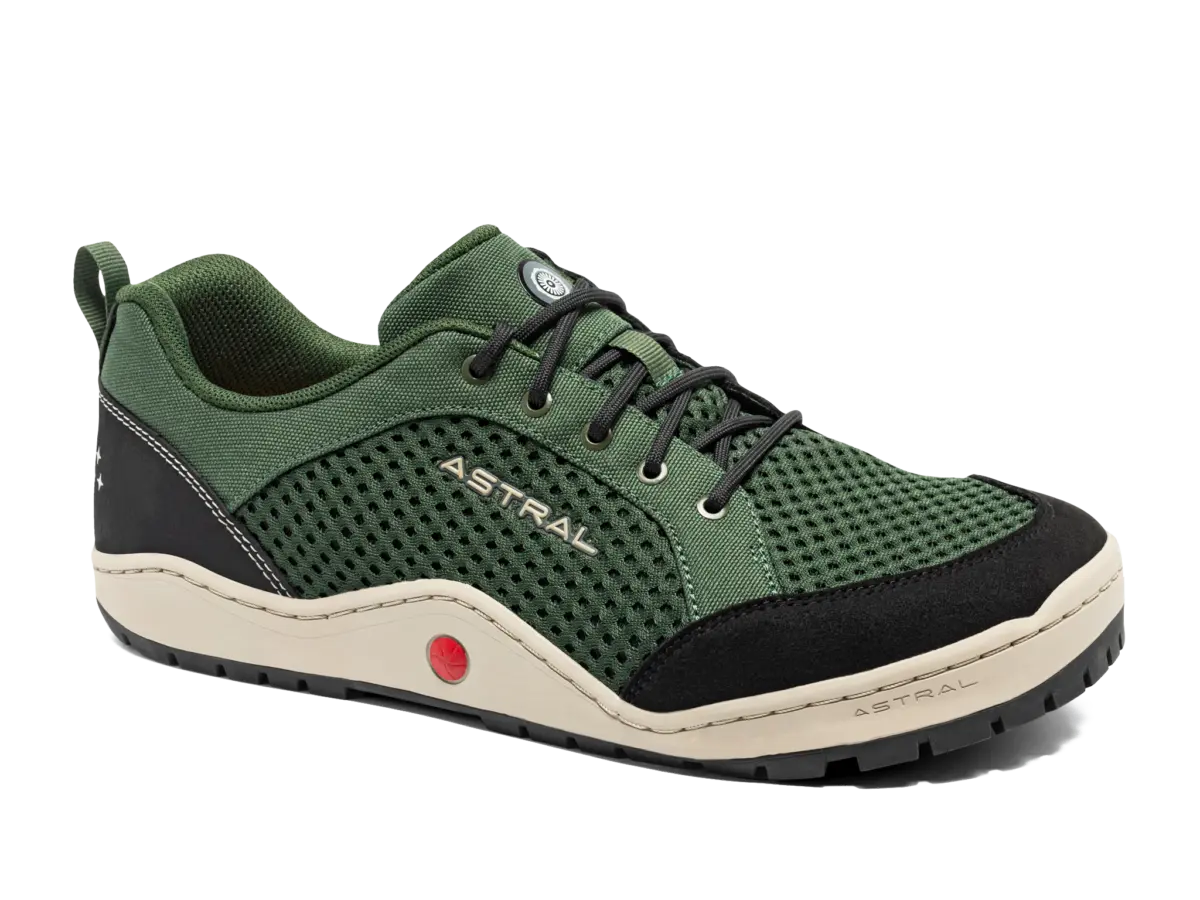
Unless your weekends are spent navigating roaring river rapids or deep backcountry riverbeds, you might not yet be familiar with Astral Designs. While the brand has spent more than two decades carving out a respected niche among paddlers, it has recently begun expanding its footprint into technical trail shoes and a broader array of outdoor clothing. The company’s journey began more than 20 years ago with a fairly radical proposition for the outdoor industry: to produce a high-performance life jacket that was entirely free of PVC and harmful phthalates.
That foundational commitment to environmental stewardship did not stop at flotation devices. By 2008, Astral had completely eliminated the use of neoprene from its manufacturing lines. More than a decade later, by 2021, the company integrated the rigorous bluesign system across its entire supply chain. This move was designed to systematically reduce climate impacts with every step of the brand’s operations, proving that technical outdoor gear could be manufactured with deep respect for the natural world.
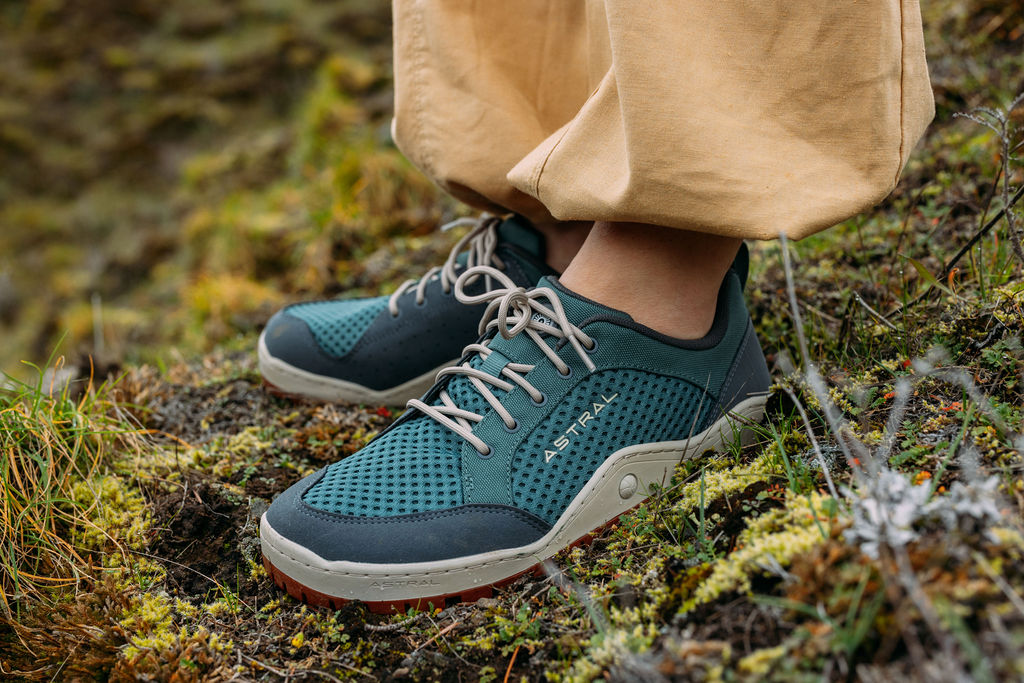
Astral’s eventual expansion into footwear was driven by a glaring contradiction observed by its founders. Traditional water shoes—and eventually, conventional trail running and hiking shoes—were fundamentally antithetical to the ethos of enjoying the outdoors. Adventurers would head into pristine natural environments while wearing footwear constructed heavily from petrochemicals and materials known to be harmful to the very ecosystems they were exploring.
This realization inspired the creation of high-traction paddle shoes. In the mind of Astral founder Philip Curry, designing these shoes required the exact same materials rethink that he had previously brought to life jackets. That philosophical shift eventually led to the development of the Nosobo, noted as the outdoor market’s first outdoor-specific performance shoe featuring a replaceable midsole. The midsole is typically the structural component of a shoe that deteriorates and packs out long before the durable rubber outsole gives way. While the concept of a replaceable midsole was not entirely unprecedented in the broader footwear industry—notably appearing in the Nike Kobe 8 back in 2012—Astral’s Nosobo marked a pioneering milestone by introducing this sustainability-driven innovation specifically to the outdoor market.

Building on that legacy of thoughtful engineering, today’s Astral Techyak continues the trajectory. The shoe features a specialized knit upper constructed entirely from 100 percent recycled PET. Furthermore, the Techyak is manufactured without the use of traditional glues. Curry points out that standard bonding agents are not only environmentally problematic during production, but they also fail under real-world conditions. Water, he explains, is exceptionally brutal on conventional adhesives, making glue lines a primary point of failure for outdoor footwear.
To execute this ambitious vision, Curry partnered with legendary footwear designer Tuan Le. A Vietnamese refugee whose remarkable career breakthrough came with the creation of the Reebok Stomper—the iconic aerobics shoe famously worn by actress Sigourney Weaver in the science fiction classic Aliens—Le is a towering figure in industrial design. Beyond his early work with Reebok, Le invented the Mizuno Wave Rider running shoe, designed footwear for NBA stars Stephon Marbury and Vince Carter during the era of the short-lived brand And1, and has lent his expertise since the early 2000s to a diverse array of global brands ranging from UGG and Bogs to Jack & Jones.
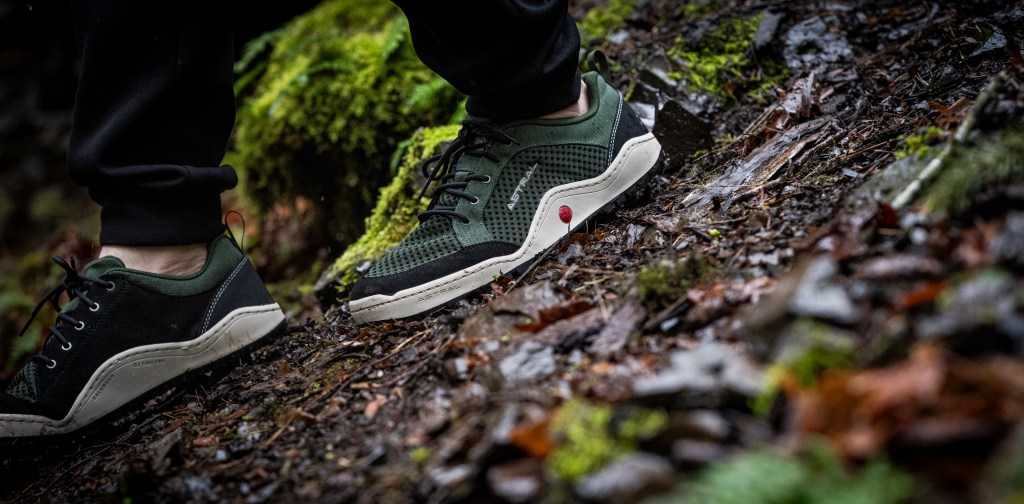
For the development of the Techyak, Le recalls that he initially riffed on a classic skate shoe silhouette. However, the project pushed him into entirely new creative and technical territory as Astral leaned heavily into zero-drop shoe designs. Zero-drop geometry places the foot in a flatter, more neutral, and inherently more athletic position compared to traditional elevated heels. The shoes feature toe boxes that are opened up and more rounded, a deliberate choice born from the observation that too many modern athletic shoes cramp the foot, making it difficult to achieve natural, anatomical movement during long excursions on uneven terrain.
As an avid runner himself, Le brings a runner’s critical eye to footwear construction. He notes that a typical running shoe built with a standard ethylene-vinyl acetate midsole begins breaking down structurally from the very first day of use, despite being asked to serve as the structural backbone of the entire shoe. Le and Curry wanted the Techyak to possess a much stronger internal spine, delivering reliable support without feeling heavy, stiff, or clunky. The final product had to remain thin enough to keep the Techyak svelte, agile, and lightweight on the trail.
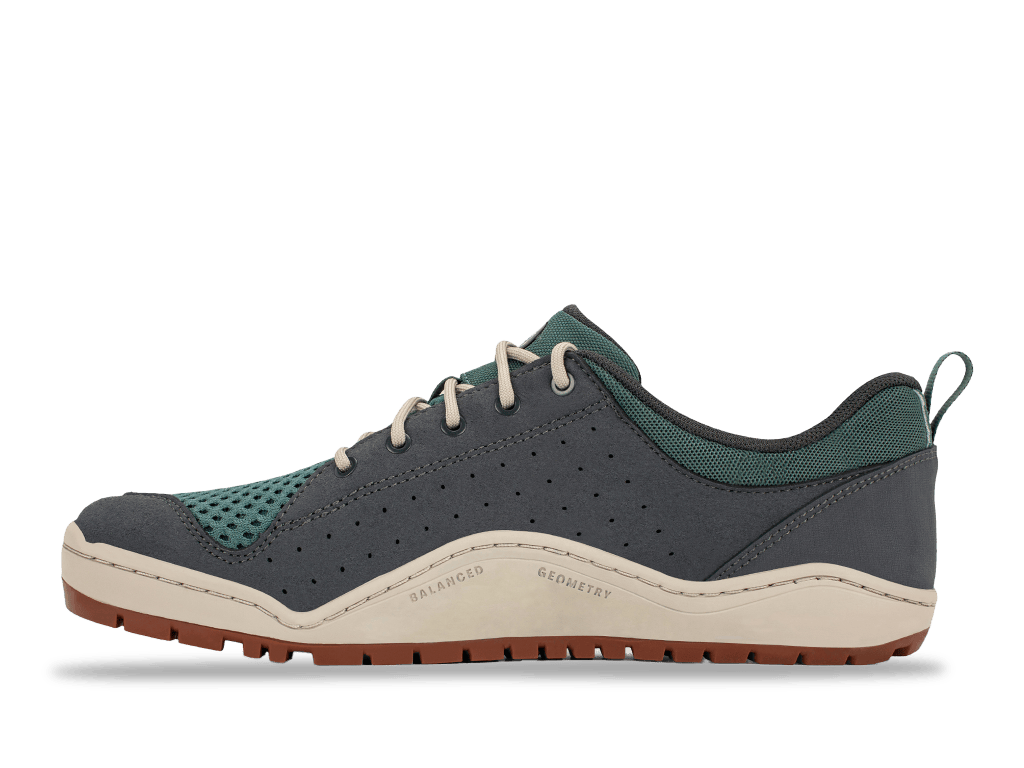
Designing any athletic shoe intended for high-performance outdoor movement requires a precise command of anatomical language. Le explains that a properly engineered shoe must incorporate a distinct visual and functional flex point right where the wearer’s toes naturally hinge, whether or not the user consciously notices it during stride transition. From that critical pivot point, the shoe requires structural elements that communicate precisely where arch support is localized, ensuring the foot is stabilized exactly where it needs to be.
Reflecting on a decades-long career that has spanned continents and cultures, Le compares the universal challenges of industrial design to musical composition. Having translated his design concepts into languages ranging from Danish to Japanese for various global clients, he views the fundamentals of footwear engineering as a familiar tune. The core vocabulary—traction, cushioning, and flexibility—remains constant because the biomechanical needs of the human body are universal. The creative challenge, Le suggests, is simply the specific tune he chooses to play with those elements.
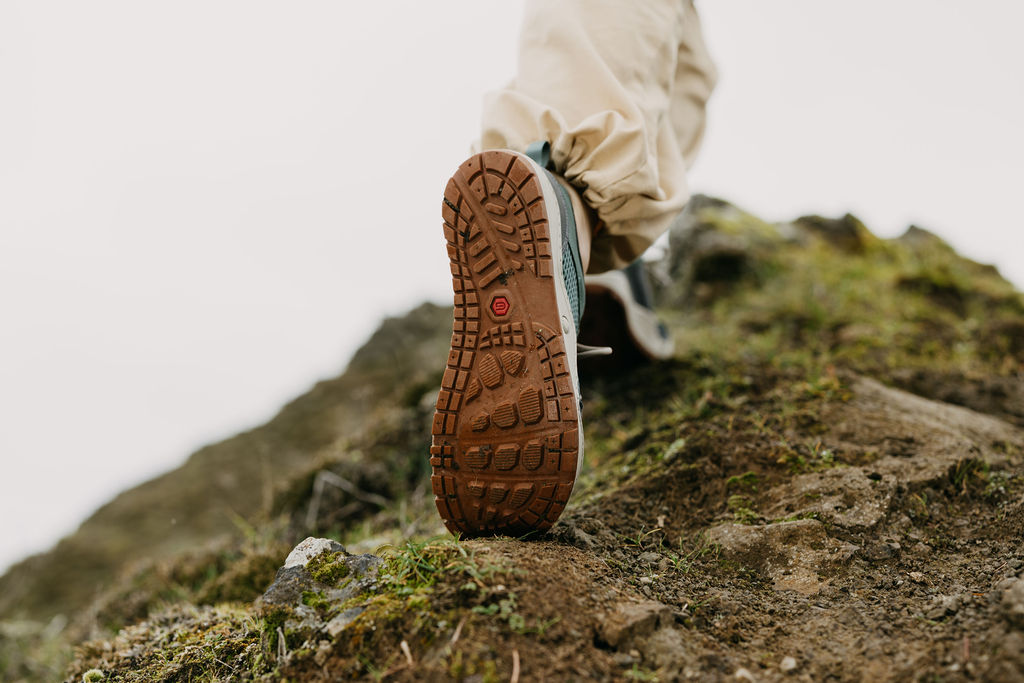
Curry, meanwhile, dissects another essential visual component of the footwear line: color theory. The development process always begins with the perspective of a person immersed in the natural world, specifically around water. Consequently, there is always a water-inspired colorway integrated into Astral’s seasonal line. From that aquatic starting point, the design philosophy expands outward into soil and surrounding plant life. The colors chosen for the footwear are deliberately organic, drawing specific inspiration from the diverse flora encountered in the wild.
In early iterations, the shoes featured a distinctive red dot on the sole, a design element originally inspired by Astral iconography and the visual relationship connecting a rock, the sea, and the moon. However, as the brand expanded into new global markets, that stark red accent proved somewhat too unusual for certain retail buyers, prompting Le to revisit the visual branding. The tiny icon is evolving into a lotus flower, a shift that Le embraces with his characteristic philosophical outlook. He considers himself fortunate to sketch concepts on paper and watch manufacturing partners bring them into physical reality, simply having fun along the way and evaluating whether a design calls for subtle refinement.