





For millennia, precious gemstones have captivated human imagination, appearing in ancient writings as symbols of ultimate wealth, objects of profound adoration, instruments of barter, or mystical sources of hidden power. In the earliest historical records, however, gemstones were rarely studied for their own intrinsic value. Instead, they served as secondary elements in broader narratives, functioning largely as decorative enhancements or mystical talismans.
The systematic study and documentation of the physical world did not truly begin until the philosophical contributions of Aristotle between 384 and 322 B.C. By dividing philosophy into distinct branches—logic, metaphysics, physics, ethics, politics, and art—Aristotle laid the groundwork for an organized approach to nature. He further conceptualized the physical universe as being composed of fundamental elements: earth, water, air, fire, and ether.
This philosophical framework allowed natural philosophers to begin classifying and describing gems based on these elements, systematically recording their properties. Early efforts to understand minerals and gemstones relied heavily on meticulous observation, the documentation of sources, and the collection of prevailing folklore. Over centuries, as humanity’s understanding of the natural sciences expanded, the specialized disciplines of mineralogy and gemology slowly emerged from this rich historical foundation.
Origins
The foundational journey of gem literature begins with Theophrastus, who lived from approximately 372 to 287 B.C. A distinguished student of Plato and the direct successor to Aristotle as the head of the Peripatetic school of philosophy, Theophrastus is credited with authoring the earliest known treatise entirely dedicated to gemstones. Titled Peri Lithon, or Of Stones, only a fragment of the original manuscript survives today. This pioneering work combined Aristotelian physics with metaphysical thought, inadvertently serving as the primary source for much of the gemstone lore that populated subsequent historical texts. Modern scholars have made the work accessible through contemporary translations, replacing older English versions like the one by John Hill with modern scholarly editions by E.R. Caley, J.F.C. Richards, and D.E. Eichholz.
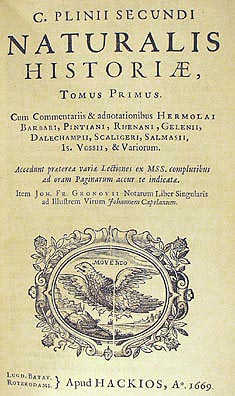
Several centuries later, the prolific Roman author and historian Gaius Plinius Secundus—commonly known as Pliny the Elder, who lived from 23 to 79 A.D.—compiled his monumental thirty-seven-volume Naturalis Historia, or Natural History, published in 77 A.D. Drawing from an estimated two thousand distinct historical sources, Pliny’s work embraced the concept of natural history in its broadest possible sense, encompassing astronomy, geography, meteorology, fine arts, human inventions, and social relations. Today, it stands as an invaluable reference for historians seeking detailed insights into life during the first century.
Much of Pliny’s documentation regarding gemstones was not derived from direct, firsthand scientific observation. Instead, his accounts frequently retold secondhand information from earlier sources that have since been lost to antiquity. He routinely grouped diverse stones together based solely on color, geographic mining locations, or folklore attributes. These inherited myths and assumptions formed the bedrock of medieval lapidary writing. For the first thirteen centuries of European history, Pliny remained the most frequently quoted authority on the subject, and his accounts were accepted and repeated without question. While later authors frequently embellished his descriptions with their own unwarranted speculations, Pliny did make notable attempts to classify gems by color and external appearance.
This early method of classification led to the widespread practice of assigning the characteristics of one specific stone to all minerals sharing a similar hue. Green stones collectively designated as smaragdus in Latin offer a prime example, with Pliny classifying twelve distinct varieties under the broader umbrella of emeralds. Under his descriptions, modern mineralogists can identify green sapphire, turquoise, smithsonite, malachite, jasper, and even manufactured glass. Despite these conflations, Pliny is also credited with astute observations, such as being the first to recognize the chemical or structural connection uniting beryls and emeralds, noting that beryls share the same fundamental nature as emeralds or are at least remarkably similar.
Since its original Latin publication, Natural History has seen more than two hundred and fifty editions printed across numerous languages. The first complete edition was published in Venice in 1469, followed by a critical edition offered by Hardouin in 1685 and detailed modern studies by scholars such as S.H. Ball.
Christian Lapidaries
As Christianity spread across the Roman Empire and Europe, scholars began reinterpreting the mineral kingdom through a religious lens. Saint Epiphanius, who lived from approximately 315 to 420 A.D. and served as the Bishop of Constantia in Cyprus, authored the first treatise dedicated specifically to the gemstones mentioned in Biblical texts. This work established a definitive model for how future Christian writers would approach Biblical gems, offering some of the earliest recorded thoughts on the composition and symbolic significance of the twelve stones embedded within the Breastplate of Aaron.
While the Church formally banned pagan worship and superstitious practices, even devout Christians struggled to completely discard ancient beliefs regarding the supernatural powers of precious stones. This tension was largely reconciled by focusing scholarly and spiritual attention on stones mentioned prominently in scripture, particularly the twelve stones of Aaron’s breastplate and the foundation stones of the New Jerusalem. Epiphanius’s complete Biblical lapidary was eventually published in print as part of Conrad Gesner’s De Omne Rerum Fossilium in Zurich in 1565, though his arguments had been widely cited for centuries prior.
Another towering figure of the era was Isidore, Bishop of Seville, who lived from approximately 560 to 636 A.D. As the leading clergyman of his day, Isidore exerted profound influence over medieval thought through his encyclopedic work, Etymologiarum sive Originum Libri XX, commonly known as the Etymologies. Comprising over one thousand manuscripts, the work was designed as a comprehensive reference dictionary rather than a standard instructional manual. His classifications, descriptions, and assigned attributes for numerous gemstones served as the standard academic reference for scholars well into the twelfth century and beyond.
During the eleventh century, the medieval scholar known widely as Marbod—also referred to as Marbodei or Marbodus, hailing from Rennes and living from about 1035 to 1123—composed his celebrated Libellus de lapidibus, or Lapidaire en Vers. Considered the most influential poetic work of its kind, the text consisted of seven hundred and thirty-four hexameters detailing sixty distinct stones. Prefaced by lines attributing its core knowledge to the legendary Arabic king Damigeron or Evax, Marbod’s work became the quintessential medieval reference for the marvelous properties of stones, surviving in more than one hundred and sixty Latin manuscripts and various vernacular translations before its first publication in Vienna in 1511.
The medieval scholastic tradition reached new heights with Albertus Magnus, the Bishop of Ratisbon who lived from 1193 to 1280. A celebrated teacher at the University of Paris who instructed figures like Thomas Aquinas, Magnus championed the application of reason as a vital supplement to faith, successfully integrating Aristotelian philosophy into Latin scholarship. His extensive work, De Mineralibus, represented a major attempt to systematically organize mineralogy, exploring the physical formation of minerals, the underlying causes of their color, and other material properties, even as it continued to embrace traditional mysticism.
Concurrently, King Alfonso X the Learned of Castile and Leon, who lived from 1221 to 1284 A.D., pioneered the intersection of astrology and gemology. His comprehensive work sought to demonstrate direct connections between gemstones and celestial bodies, utilizing Arabic astronomical tables calculated for the Toledo Meridian. Alfonso classified gems by color, aligning each stone with one of the twelve signs of the zodiac while detailing their medicinal virtues and how planetary influences enhanced their powers.
Introduction of the Scientific Method
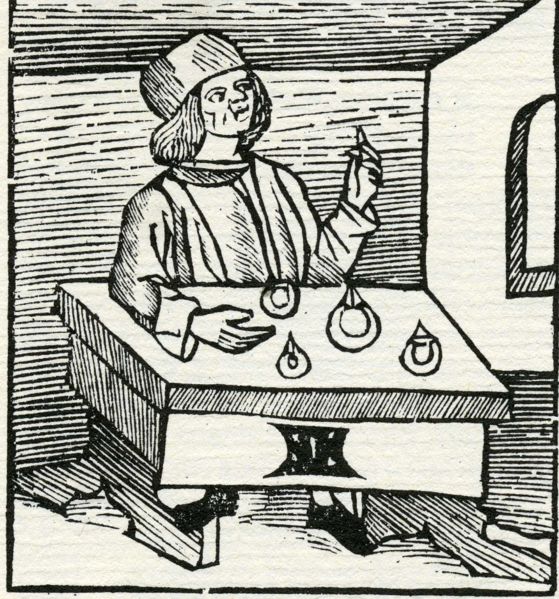
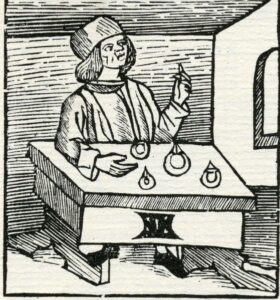
The dawn of the sixteenth century marked a critical turning point in the study of gemstones as physicians and natural philosophers began applying rigorous scientific methods to differentiate minerals. In 1502, Italian physician Camillus Leonardus published Speculum Lapidum, later translated and republished in England as Mirror of Stones in 1750. Leonardus examined physical properties with unprecedented thoroughness, analyzing hardness, specific gravity, compactness, color, internal form, and geographic origins, while maintaining the traditional belief that engraving specific symbols onto gemstone surfaces could activate or enhance their medicinal properties.
The Science of Mineralogy
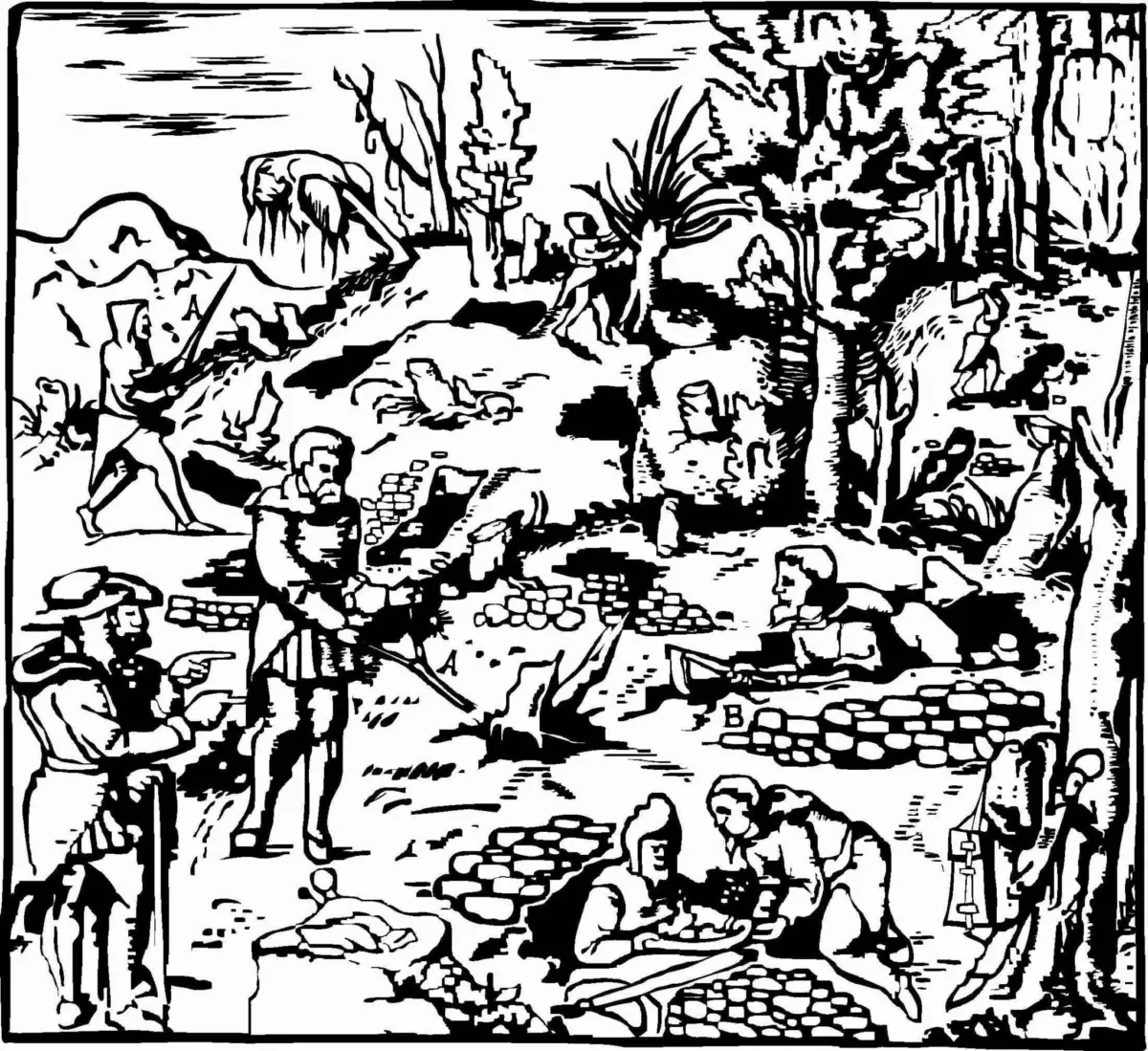
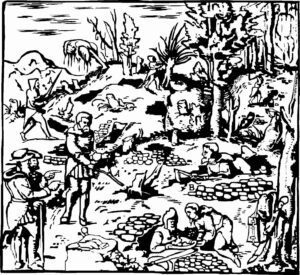
Georgius Agricola, who lived from 1494 to 1555 and is widely recognized as the father of mineralogy, published De Natura Fossilium in 1546. This landmark text offered remarkably accurate observations on the nature, properties, and practical treatment of gemstones, demonstrating a clear firsthand familiarity with many minerals alongside traditional references to Pliny. Agricola introduced practical scratch tests for hardness, detailed precise physical characteristics, and recorded characteristic flaws that remain remarkably accurate by modern scientific standards.
Following Agricola, Conrad Gesner compiled De Omne Rerum Fossilium in 1565, which included historical treatises alongside his own Lapidum et Gemmarum. Gesner’s work was historic for being the first purely mineralogical publication illustrated with detailed woodcuts depicting minerals, crystals, fossils, and cut gems. However, it also cemented certain misnomers that persist in the modern jewelry trade, such as using geographic prefixes to describe unrelated stones—calling true emerald the "Occidental emerald," tourmaline the "Brazilian emerald," green sapphire the "Oriental emerald," and yellow or orange sapphires the "Oriental topaz."
The seventeenth century brought further refinement with Anselmus Boëtius de Boodt, physician to the royal court of Rudolph II in Prague, who published Gemmarum et Lapidum Historia in 1609. De Boodt established five distinct degrees of hardness, speculated on atomic structures within minerals, and expressed healthy skepticism regarding many traditional mystical and medicinal virtues. Shortly after, in 1648, Ulyssis Aldrovandi’s posthumous work introduced the modern usage of the term geologia, marking the formal split of gemology into two distinct paths: empirical mineralogy and romantic folklore.
Scientific inquiry deepened in England with Thomas Nicols publishing A Lapidary in 1652, followed by Robert Boyle’s influential 1672 treatise, An Essay About the Origine and Virtues of Gems. Boyle’s work applied advanced chemical and physical principles to crystal formation, analyzed the insolubility of gems to debunk various internal medical remedies, and highlighted the utility of hydrostatic weighing to determine specific gravity and refractive properties for accurate gem identification. Medical skepticism regarding the therapeutic ingestion of gems was further reinforced by Dr. Robert Pitt in his 1703 publication, which demonstrated through practical observation that ingested stones passed through animals without alteration.
Modern Gemology
By the eighteenth century, mineralogy and geology were firmly established as pure sciences, driven by improved record-keeping, specialized instrumentation, and rigorous experimentation. However, mainstream gemology remained closely tied to the retail jewelry industry, where the romance, legend, and lore of gemstones continued to be valued as commercially advantageous. Consequently, published literature during this period did little to expand upon foundational scientific understanding.
This dynamic shifted in the late nineteenth and early twentieth centuries through the extensive research and writing of Dr. George Frederick Kunz. Serving as a gemological expert for Tiffany & Company and establishing the mineral collections at the American Museum of Natural History, Kunz elevated the field while popularizing ancient pseudoscience through enduring works like The Curious Lore of Precious Stones in 1913 and The Magic of Jewels and Charms in 1915.
Professionalism was further cemented in the twentieth century when Robert M. Shipley founded the Gemological Institute of America in 1931 and the American Gem Society in 1934. These organizations introduced standardized education and reliable trade information, supported by the ongoing publication of cutting-edge research in the quarterly journal Gems and Gemology.
Over two millennia of human inquiry have transformed gemology and mineralogy from infancy into sophisticated sciences. Yet, even as modern physics, chemistry, and medicine continue to evolve, contemporary society retains a deep fascination with the metaphysical properties and healing virtues of gemstones. As scholars and enthusiasts explore the accumulated wisdom of past centuries, the enduring allure of precious stones ensures that the journey of discovery remains ongoing.