






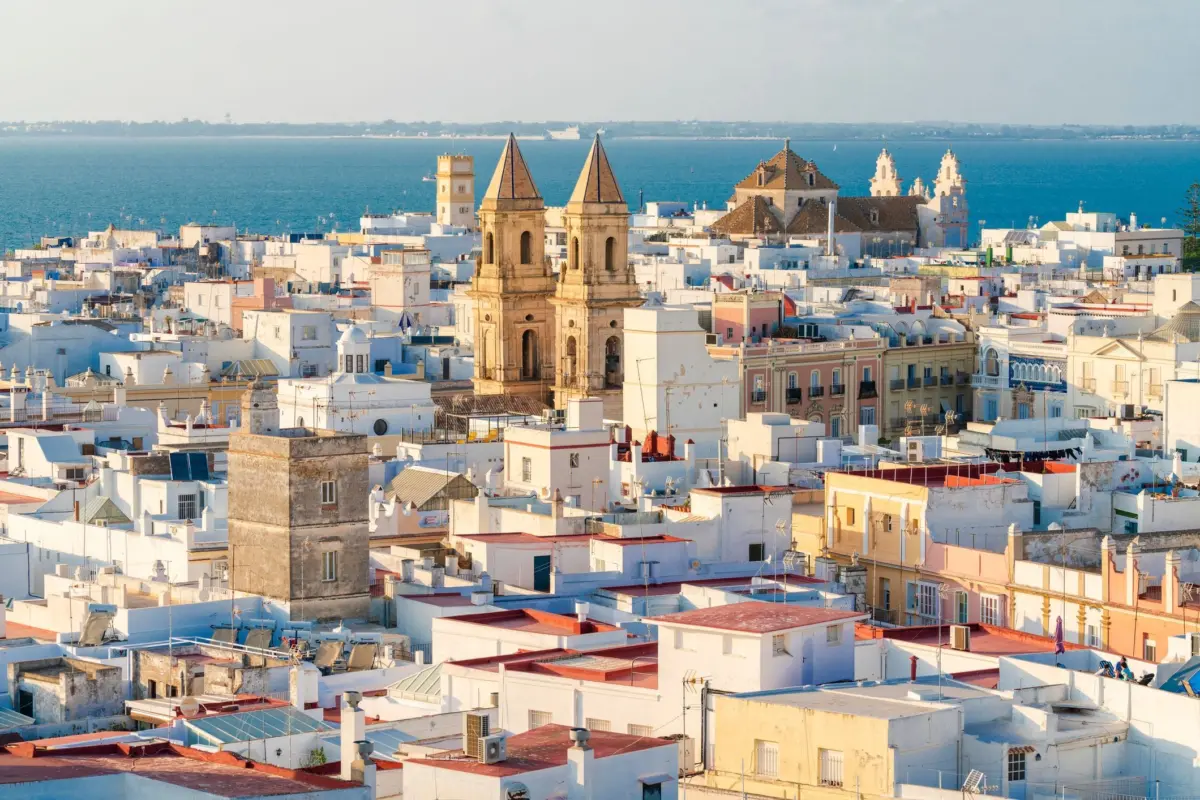
While San Sebastián in Spain’s Basque Country long ago captured global headlines as the nation’s premier culinary capital—boasting a staggering density of Michelin stars per capita—another historic region across the country has quietly emerged as an extraordinary gastronomic powerhouse. Far from the well-trodden northern food trails, the province of Cádiz in southwestern Andalusia has historically flown under the international radar, often unfairly overshadowed by bustling neighboring cities like Seville and Granada.
Yet, for those in the know, Cádiz offers a food culture that is deeply rooted in history, maritime tradition, and agricultural excellence. Recognized as western Europe’s oldest continually inhabited city, Cádiz and its surrounding province are celebrated for world-class treasures including sought-after bluefin tuna, razor-sharp vinegars, and legendary sherries. While experimental culinary pioneers like chef Ángel León—widely celebrated as the "chef of the sea"—put the province firmly on the global map when his pioneering restaurant, Aponiente, in nearby Puerto de Santa María, earned Andalusia its first three Michelin stars, the everyday culinary landscape of the wider region is just as vibrant, accessible, and deeply appetizing.
The broader province functions as a cohesive culinary ecosystem defined by distinct geographic zones. Inland, Jerez de la Frontera, celebrated for its historic bodegas, lively tabancos, and robust tapas culture, was recently voted Spain’s Capital of Gastronomy. A short drive away on the banks of the Guadalquivir River, Sanlúcar de Barrameda forms part of the renowned sherry triangle alongside Jerez and El Puerto de Santa María. This coastal town showcases bone-dry manzanilla sherry paired with an array of well-priced establishments serving everything from hearty Andalusian stews, known locally as guisos, to prized local langoustines. Further south, the coastal town of Barbate produces some of the freshest bluefin tuna on the planet. Utilizing complex almadraba fishing net techniques that date back to the Phoenicians, local fishers harvest tuna of such exceptional quality that approximately 70 percent of the catch is exported directly to Japan.
Yet, it is the city of Cádiz itself—founded by the Phoenicians as Gadir around 1200 B.C.—that remains the beating heart of this provincial culinary renaissance. The historic old town sits uniquely on an island-like inlet connected to mainland Spain by a long, narrow sandy peninsula. Its pastel-colored buildings, weathered and romantically decayed by persistent salty Atlantic breezes, have earned the coastal enclave the affectionate local moniker of "Spain’s little Havana." Beyond an expanding constellation of exceptional restaurants, the walkable, picturesque historic center is a labyrinth of narrow cobbled streets, ancient Roman ruins, and a golden, horseshoe-shaped inner-city beach named La Caleta.
Naturally, a city constantly lashed by the wild Atlantic Ocean excels above all in the culinary discipline of fresh seafood. Central to daily life in the old town is the Mercado de Abastos, one of Spain’s oldest fresh food markets, which dates back to 1838. Within its bustling, weathered walls, veteran gaditanos—the local residents renowned for their warmth and quick wit—haggle passionately for shellfish. Fishmongers peddle everything from glistening fresh sardines to massive cuts of prized tuna, while oversized seagulls circle overhead searching for stray offcuts.
Food lovers exploring the wider market area often prefer propping up a high table at Gadisushi, an unassuming sushi stall where the toro sashimi, prawn gyoza, and scallops with miso butter are executed with surprising precision. While the central market is not exclusively seafood-focused, visitors can find stalls offering regional olive oils, artisanal cheeses from the Sierra de Cádiz, empanadas, and local pastries. Culinary traditionalists visiting the market frequently practice a beloved local ritual: selecting a fresh catch from Marisco Camilo and carrying it across to the nearby Bar Carrusel, where the kitchen will expertly fry the fish for the price of a modest cover charge, provided diners order a couple of cold cañas of beer and a bowl of olives to keep the tavern keepers happy.
The primary epicenter for neighborhood dining is La Viña, a palm-tree-lined barrio brimming with active restaurants and traditional taverns. At the heart of this district sits Casa Manteca, arguably the most famous tavern in the city. After being featured by chef Rick Stein on his television series Long Weekends, the corner bar has secured mentions in nearly every major travel publication, and deservedly so. Stepping inside offers a genuine window into old Spain, complete with dusty, antique sherry bottles, walls crammed with yellowing bullfighting photographs, and a concise menu of classic local tapas. Diners can easily pair a sheet of savory chicharrones with a glass of dry fino sherry, or sample local Payoyo goat cheese alongside a robust glass of palo cortado.

Another quintessential Cádiz food experience can be found in its historic freidurías, traditional neighborhood chippies that offer cut-price fried fish wrapped simply in paper to locals and visitors alike. The battered cuttlefish, known locally as chocos, at Freiduría Las Flores remains a perennial favorite. Beyond these humble spots, the city features an evolving mix of unpretentious sherry bars, laid-back Michelin-starred fine-dining rooms, and old-world seafood institutions.
The Best Restaurants in Cádiz
El Faro
Located on the edge of the vibrant La Viña barrio, El Faro has evolved from a traditional neighborhood tavern into a legendary seafood institution. Punters routinely gather at the marbled bar for quick-fire tapas or settle in for more extravagant meals surrounded by rustic azulejos tiles and white tablecloths in the main dining room. A visit is incomplete without sampling the tortilla de camarones, a famously crispy, deep-fried prawn fritter that serves as a regional delicacy.
Código De Barra
Dutch chef León Griffioen made culinary history by securing the first Michelin star for the city of Cádiz in 2023. Operating Código de Barra alongside his wife and maître d’, Paqui Márquez, the duo runs a small, laid-back fine dining establishment in the heart of the old town. Their carefully curated tasting menus take diners on a culinary journey through the distinct flavors of the province, highlighting prime local ingredients such as retinto beef and almadraba tuna with meticulous presentation.
Taberna La Manzanilla
True to its name, sherry is the absolute focus at this time-worn tavern founded in 1932, where the wine list is virtually restricted to fortified varieties. The cavernous, oak-scented bar is stacked high with century-old wooden casks, surrounded by patrons clinking glasses of amontillado and manzanilla while exchanging conversation over simple plates of olives and jamón. Having remained in the same family for generations, bartenders continue the tradition of chalking customer tabs directly onto the wooden bar top.
Our Spain Editor’s Favorite Places to Eat in Cádiz
Taberna Casa Manteca
An undisputed icon of the city, Taberna Casa Manteca remains one of the most emblematic culinary corners in Cádiz, anchored firmly within the traditional Barrio de la Viña. Established in 1953, this historic tavern is celebrated for its lively bullfighting and flamenco atmosphere, serving outstanding local tapas on brown butcher paper amidst vintage memorabilia and colorful tiles. Among the essential specialties are chicharrones—slow-roasted, seasoned pork belly served cold or at room temperature with a fresh squeeze of lemon juice—and tortillitas de camarón, the delicate, lace-like fritters made from a light chickpea and wheat flour batter loaded with tiny local brine shrimp.
Casa Rafael
Renowned as one of the most authentic traditional taverns in Cádiz, Casa Rafael is celebrated for offering exceptional fresh fish and seafood sourced directly from the bay, generous homemade portions, and a carefully curated selection of local wines at competitive price points. Situated right in the heart of the historic center, the venue maintains an exceptionally lively atmosphere that makes it an essential destination for traditional tapeo.
Heladería La Cremeria Gelato Italiano
Venice-born master gelato maker Carlo Guerriero leads La Cremeria Gelato Italiano, situated just steps from Victoria Beach. Guerriero, whose background in industrial chemical engineering informs his scientific approach to recipe formulation, was named number one in the world in the prestigious Gelato Festival World Ranking, alongside securing a second-place finish worldwide in the grand final of the international Gelato Festival World Masters competition. He combines hyper-local ingredients, such as fresh milk from Conil and payoyo cheese, with global gourmet elements including South American cocoa and stone-ground Bronte pistachios. The signature flavor, "Sherrymisú," offers a distinct reinterpretation of the classic Italian dessert infused with Jerez wine, complemented by a selection of vegan, gluten-free, and lactose-free alternatives.