





“Made in Afghanistan!” Designer Gabriela Hearst declared proudly after her lovely spring show, leading editors through a lineup of models to point out the hand-painted miniatures, floral embroideries, and ikat patchworks that added additional layers of meaning, empathy, beauty, and rarity to the designer’s luxurious, eco-conscious fashion universe. The presentation, staged in the tranquil courtyard garden of the Petit Palais, successfully married high-end sustainable tailoring with deeply moving global advocacy, highlighting a marginalized community of traditional craftspeople working under extraordinarily difficult circumstances.
Hearst was wearing a handsome, lustrous olive-colored shirt and jacket made of raw silk woven in Afghanistan, and clutching a thick notebook containing her dreamy watercolor sketches and various clippings. In an incredible case of serendipity, one folded salmon-colored page dated Sept. 4, 2026, featured a Gabriela Hearst ad on one side, and on the other a “Lunch With the FT” article featuring former Afghan president Hamid Karzai. This personal artifact underscored how deeply the project had permeated her creative and daily life during the months of preparation leading up to the seasonal runway presentation.
The designer said she’s had Afghanistan on her mind ever since the Taliban seized control of Kabul in 2021, sending women and girls hurtling back to another dark age marked by the severe restriction of their basic human rights, freedom of movement, and access to education and employment. While eager to shed light on the women keeping textile, embroidery, and jewelry traditions alive there, Hearst’s production and documentation teams faced immense security constraints and were only able to film women’s hands for fear of severe reprisals against the artisans and their families. This quiet, careful documentation ultimately added a poignant layer of discretion and resilience to the collaborative effort.
At the show, Hearst introduced journalists to professor Thomas Wide, who connected her to Turquoise Mountain, a prominent nonprofit organization that actively supports artisan communities in Afghanistan and helps preserve heritage crafts. Through this vital cultural bridge, Wide connected her to marginalized makers who possess generational expertise in textile arts.
“I told them, ‘I want to work with you guys, but I need to make sure that whatever we make are things we can produce,’” she related during a preview earlier in the week at her showroom. There, in lieu of a mood board of traditional inspiration images filled with color swatches or aesthetic references, she charted 100 years of Afghan history, which boasts only rare periods of reform and enlightenment. That comprehensive historical timeline was meticulously reproduced as a booklet placed on each seat at the show, ensuring that every guest understood the sociopolitical context behind the garments they were witnessing.
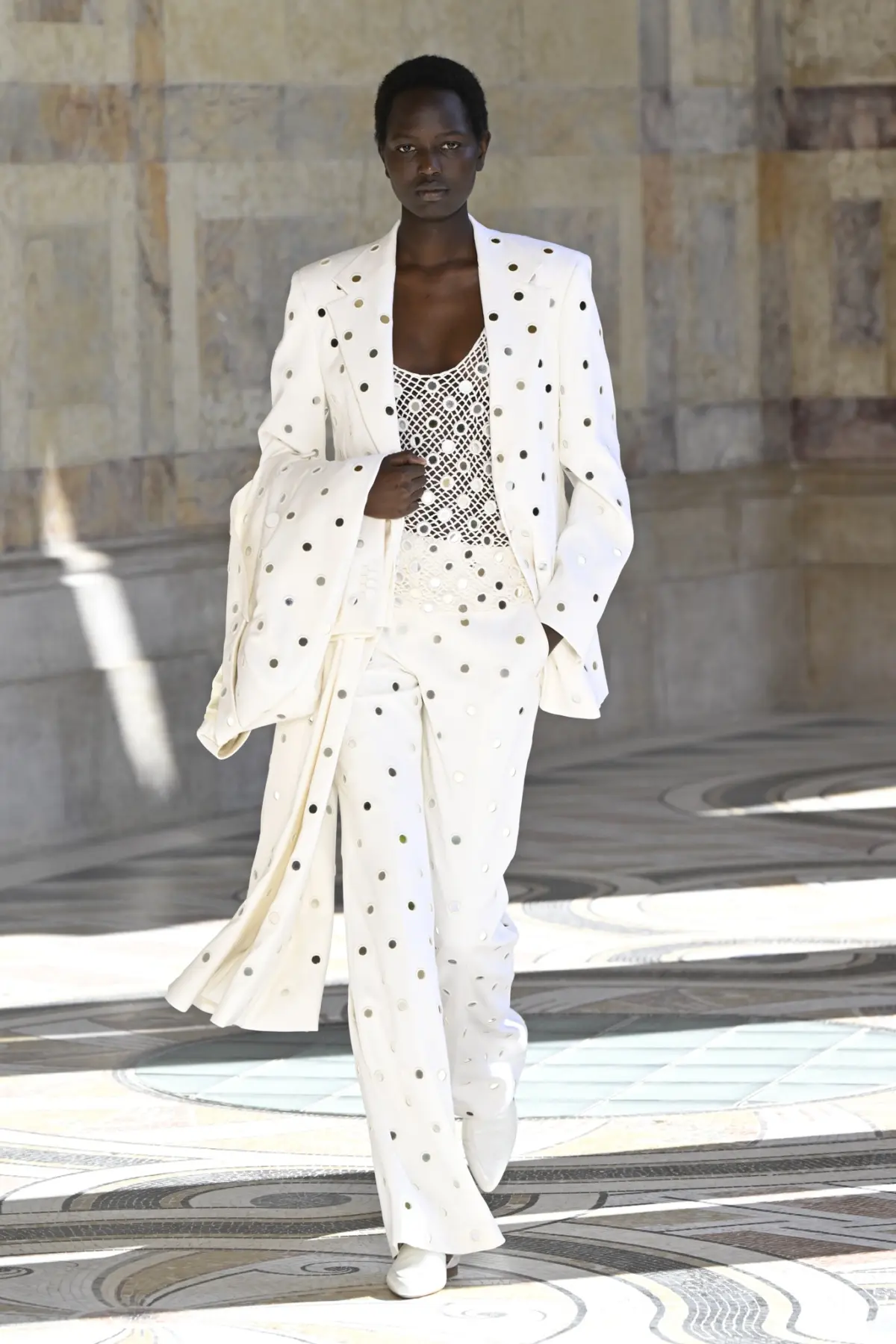
It was incredible to see how seamlessly the Afghanistan narrative was woven through the collection without ever feeling exploitative or purely performative. Hearst’s flawless pantsuits and knitted lace dresses came embedded with mirrors in the tradition of shisha, historically used to deflect negative energy, while floral Suzani embroideries on quilted leather blousons and knitted little black dresses added a nice bohemian touch that bridged traditional Central Asian handcrafts with modern, metropolitan luxury wardrobes.
Hearst still keeps upping her luxury credentials, this season introducing water-resistant trench coats made of 100 percent silk waxed with resin, proving that high-end ecological innovation does not have to come at the expense of practicality or weather-resistant durability. At the same time, she folded in a poignant tribute to her 22 million muses this season: the women of Afghanistan, whose enduring spirit and artistic heritage continue to thrive against overwhelming odds.