




Picture this: it is 2001. Tom Cruise and Nicole Kidman have just finalized their high-profile divorce, Paris Hilton is rapidly being crowned the defining pop-culture it-girl of her era, and Nicolas Ghesquière is experiencing a monumental creative high at Balenciaga with the debut of a slouchy, weathered leather accessory that would permanently alter the trajectory of luxury fashion. As a direct and rebellious reaction to the hyper-polished logomania and rigid, highly structured bag silhouettes that were saturating the luxury market at the turn of the millennium, Ghesquière introduced the motorcycle bag for the Fall/Winter 2001 season. What started as an unconventional design experiment quickly evolved into an enduring icon, achieving cross-generational status and proving its resilience across decades of shifting trends.
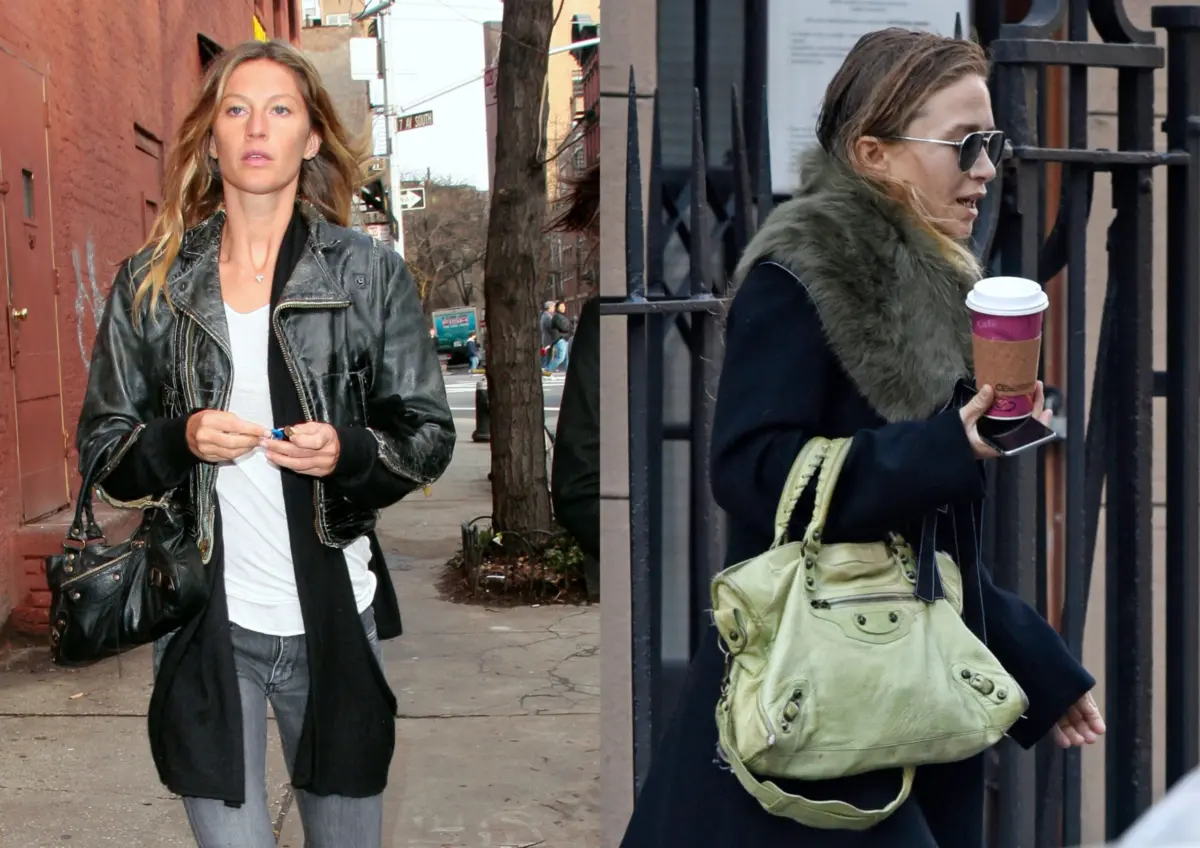
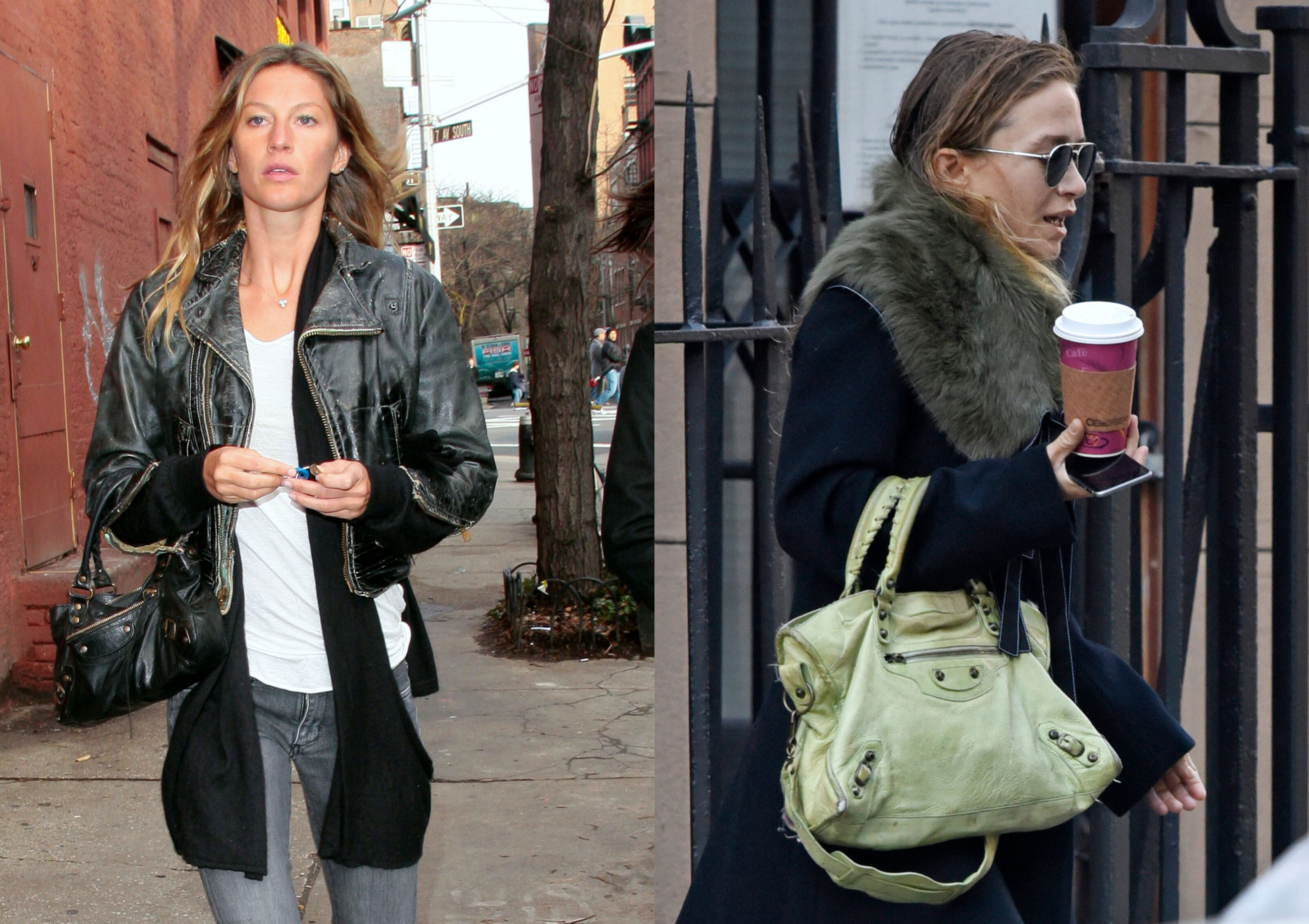
Originally dubbed the "anti-it bag" by fashion journalists—standing in stark contrast to the dominant, structured luxury mainstays of the moment like the Fendi Baguette and the Dior Saddle Bag—celebrities swiftly gravitated toward the now-legendary shape. They were drawn precisely to its "anti" attributes: while other sought-after accessories of the era prided themselves on clean lines and rigid architecture, the Le City was delightfully slouchy, worn-in, and remarkably devoid of traditional branding. Notably, there was virtually no formal advertising campaign connected to the initial launch of the silhouette. Instead, the bag was organically canonized by the defining Y2K it-girls of the decade, including Kate Moss, Paris Hilton, Mary-Kate and Ashley Olsen, Sarah Jessica Parker, Nicole Richie, Lucy Liu, and Carine Roitfeld. These cultural figures were endlessly photographed with the bag tucked casually into the crook of their arms on red carpets, outside exclusive after-parties, and during everyday street-style moments, embedding the accessory deep into the visual memory of modern fashion history.
In its earliest days, the design was simply known as the Motorcycle bag before later being officially christened the City bag. But what truly set the Le City apart from the celebrated accessories of competing heritage maisons, beyond its unconventional shape, was the unique nature of its wearer and the grassroots manner in which it rose to mass popularity. While other legacy luxury houses historically cemented their iconic status accessories through royalty and high society—such as Dior’s Lady Dior, which was forever popularized by Princess Diana, or the Gucci Jackie, made famous by Jackie Onassis—the Le City bag carved out an entirely different identity. Worn primarily by off-duty models and downtown fashion industry insiders rather than first ladies and princesses, the Le City always functioned as the effortlessly cool younger sibling of traditional luxury it-bags.
The accessory sparked such an immediate and overwhelming retail frenzy during its initial years on the market that the French maison barely had to invest in traditional marketing efforts. In fact, the bag was photographed so frequently in the daily lives of celebrities and models that the only official advertising campaign it appeared in throughout the entire aughts was a 2006 project lensed by David Sims, who captured many of Ghesquière’s defining Balenciaga campaigns of that decade.
As the calendar turned to the 2010s, the broader fashion trend cycle shifted its preference toward more restrained, architectural silhouettes. The market favored designs like the Proenza Schouler PS1, Givenchy’s Antigona, and the Celine Luggage Tote, leaning back into structured forms and moving away from the relaxed, heavily distressed aesthetic. This evolution temporarily relegated the original City Bag largely to secondhand and resale platforms. However, five years into Demna’s tenure as creative director at Balenciaga, the Georgian designer recognized the enduring cultural equity of the original silhouette and initiated its revival. The first modern iteration relaunched in 2020 under the name The Neo City, presenting a sleeker, more structured interpretation of the original relaxed shape. This was soon followed by a full embrace of Y2K nostalgia via the viral Le Cagole, a half-moon-shaped shoulder bag featuring maximalist hardware and studded details that paid explicit homage to the original Le City. As contemporary consumers and runway trends became increasingly obsessed with early-2000s silhouettes, vintage City bags began commanding astronomical attention on the resale market—often retaining values close to that of a brand-new retail bag—paving the way for the official, triumphant relaunch of the classic Le City in 2024.
Now, a quarter-century into its existence, the Le City bag remains the ultimate status symbol for the fashion enthusiast who values insider curation over loud, obvious branding. During its quieter years in the 2010s, the individuals keeping the silhouette alive on the streets were niche fashion devotees—real people less concerned with mainstream trend cycles and corporate marketing pushes, driven instead by a deep appreciation for recent fashion archives. As the Le City experienced its grand comeback, the torch was seamlessly passed to a new generation of cultural icons, with the Le Cagole and updated classics ushered in by figures like Dua Lipa, Kim Kardashian, and Bella Hadid. A permanent fixture across modern Balenciaga runways, the bag continues to be worn by contemporary it-girls such as Rosie Huntington-Whiteley and Tate McRae, as well as downtown trendsetters browsing luxury resale platforms. Available in an array of colorways, the bag possesses a chameleon-like quality, functioning as a neutral centerpiece regardless of the shade. Furthermore, whether a specific piece shows decades of authentic wear and tear or emerges fresh out of a modern dust bag, every iteration holds its ground as either a treasured vintage artifact or a highly coveted contemporary purchase.
There is an inherent looseness and relaxed ease that defines the person carrying a City bag, mirroring the spirit of the women who originally championed the silhouette in its earliest era—Kate Moss, the Olsen twins, Gisele Bündchen, and Nicole Richie. These women exuded a casual, effortless cool that ultimately served as an accidental yet profoundly effective advertising campaign for Balenciaga, successfully democratizing the Le City bag for generations of fashion-obsessed individuals. While industry skeptics have occasionally predicted that the Le City might fade away once the broader Y2K revival cycle concludes, the strength of its 2020s comeback has decisively proven that the silhouette is far more than a fleeting trend. Instead, it stands firmly as a modern house icon destined to be continuously reinterpreted and reworked by successive creative directors, with Martine Rose positioned next to leave her mark on its storied legacy.