






With less than a week remaining before the application window closes, contemporary jewelry artists worldwide are rushing to submit their proposals for the prestigious 2027 Solo Exhibition Award. Offering a remarkable $20,000 prize to support the creation and mounting of a dedicated solo exhibition, the international grant is open to jewelry artists of any age and nationality. Funded through the generosity of Linda Peshkin and her enduring passion for the art jewelry field, this marks the second cycle of the award presented by the Art Jewelry Forum (AJF). As the November 15, 2026 deadline fast approaches, prospective applicants have a final opportunity to secure vital funding for a project broadly defined around the medium of jewelry.
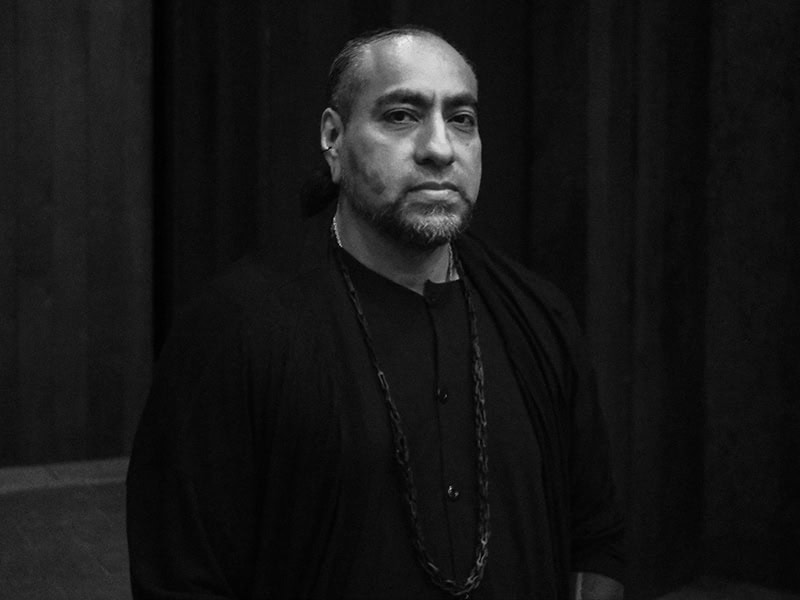
To shed light on what the evaluation panel is looking for and to explore the broader landscape of contemporary craft and design, the Art Jewelry Forum spoke with Jorge Manilla, one of the three distinguished jurors for the 2027 grant cycle. Manilla serves alongside fellow jurors Geraldine Fenn and Bella Neyman, bringing a wealth of global perspective and academic rigor to the selection process.
Bridging Craft, Body, and Critical Discourse
Manilla’s own introduction to contemporary jewelry was not a conventional one, but rather a natural outgrowth of his broader fascinations with art, raw materials, the human body, and the capacity of inanimate objects to communicate far beyond their conventional utilitarian functions. Hailing from Mexico—a cultural landscape where traditional craftsmanship, deeply rooted rituals, and historical traditions are inextricably linked—Manilla developed an early and lasting curiosity about how physical objects and materials can carry both personal and collective memories.
For Manilla, contemporary jewelry ultimately emerged as a vital, liberating space to question established definitions and push against the rigid boundaries separating jewelry, sculpture, bodily adornment, and broader artistic expression. Today, he maintains a dynamic and multifaceted artistic practice running parallel to a profound commitment to international education and research. He serves as the Head Professor of Metal and Art Jewellery at the Oslo National Academy of the Arts, where he spends his days teaching, mentoring the next generation of emerging artists, and supervising advanced artistic research, including doctoral-level projects.
In addition to his academic post in Norway, Manilla continuously develops exhibitions, public lectures, curatorial projects, and educational initiatives spanning across Europe and Latin America. Among these ventures is Múltiple, an independent study program he co-developed alongside Batek Escuela de Joyería in Mexico. For Manilla, the roles of artist and educator are fundamentally inseparable; the daily challenges of teaching constantly test and refine his own artistic thinking, while his active studio practice deeply informs how he guides others. Reflecting on his decades in the field, he believes that an artist’s true contribution cannot be measured solely by the objects they fabricate, but rather by the knowledge they impart, the developing artists they support, and the professional opportunities they help create for the community.
The Significance and Impact of a Solo Exhibition
As the art community prepares for the second iteration of the Solo Exhibition Award, Manilla offers profound insights into what elevates a solo show from a mere display of objects into a transformative cultural moment. According to Manilla, a successful solo exhibition is vastly more than just presenting a polished collection of finished works. Instead, it represents a critical opportunity for an artist to articulate a distinct conceptual position, construct a compelling narrative, and reveal the rigorous thinking and experimentation happening behind the scenes of their studio practice.
A strong exhibition, he notes, must forge meaningful, intentional relationships between underlying concepts, physical materials, making processes, and the final objects. He emphasizes that true artistic coherence does not require sterile aesthetic uniformity; rather, it demands that every creative decision carries clear purpose. Manilla admits he is particularly drawn to exhibitions that take calculated risks, challenge viewer expectations, and open up fresh, provocative questions within the discipline.
For contemporary jewelry artists in particular, a solo exhibition carries immense career significance. It creates a physical and intellectual platform to break free from conventional definitions of what jewelry is or should be, allowing makers to engage directly with broader, interdisciplinary artistic discussions. Discussing the broader career impact, Manilla points out that a dedicated solo show can completely transform an artist’s trajectory by generating vital visibility, forging professional connections, and earning critical recognition.
However, he is quick to acknowledge systemic inequities within the art world, noting that access to these kinds of career-defining opportunities is far from equal. Grants and awards like the Solo Exhibition Award play a crucial role because they provide the financial resources and creative independence necessary for artists who might otherwise lack institutional backing or private financial support. Ultimately, Manilla believes the greatest value of a solo show lies not just in the prestige it brings to a resume, but in what it unlocks for the future—serving not as a terminal endpoint, but as the fiery catalyst for the next wave of artistic investigation.
Navigating Artistic Responsibility and Contemporary Conventions
When turning the conversation toward the most pressing dialogues happening within the global art community today, Manilla points squarely to the urgent need for artistic responsibility. He challenges his peers to deeply examine what they are producing, the underlying motivations for that production, and the true cultural relevance of their work in the modern era. In a contemporary landscape where artistic visibility is increasingly tied to the breakneck speed of digital consumption and the relentless corporate pressure to maintain a neatly packaged, instantly recognizable personal brand, Manilla argues that a course correction is overdue.
Artists must constantly interrogate whether they are genuinely conducting original artistic investigations or simply recycling and reproducing safe, widely accepted languages and established aesthetics. He notes that contemporary jewelry has spent decades courageously challenging traditional bourgeois ideas of material value, preciousness, and fine craftsmanship. Yet, he harbors lingering doubts about whether the field has simply manufactured a new set of orthodox conventions that are just as restrictive as the ones it originally set out to dismantle.
Furthermore, Manilla warns against common pitfalls in the discipline, cautioning that artists must never confuse the use of unconventional materials with genuine conceptual depth, nor should they mistake technical complexity for true artistic relevance, or international social media recognition for actual artistic quality. Having spent his career working fluidly between the distinct cultural spheres of Europe and Latin America, Manilla is acutely aware of how vastly different regional approaches to artistic support and recognition can be. If contemporary jewelry truly aspires to remain an open, critical discipline, he asserts that the community must continuously question who holds the power to define its values and whose unique voices are actively represented in galleries and museums.
The fundamental question, according to Manilla, is never simply whether a physical object neatly qualifies under the technical umbrella of contemporary jewelry, but rather what that object actively contributes to the wider cultural conversation. Art must not settle for merely confirming what audiences already comfortably know; its true purpose is to disrupt and challenge the way we think about the world around us.
Beyond Financial Support: The Role of Education and Mentency
Expanding on the theme of artist support, Manilla emphasizes that nurturing creative talent must extend far beyond handing out financial grants. True empowerment requires comprehensive education, robust critical dialogue, open access to specialized knowledge, and sustained, long-term opportunities for artistic evolution. Throughout his career, he has remained dedicated to teaching, mentoring, and building independent platforms that support makers at varying stages of their careers, bridging institutional frameworks and grassroots initiatives across continents.
Education, in his view, should never be reduced to the mere transmission of technical skills or dogmatic historical knowledge. Instead, its primary ethical responsibility is to spark independent thinking, encourage fearless experimentation, and guide artists in cultivating their own distinct visual languages. Educators should not strive to clone themselves or produce artists who think identically to their mentors; rather, they must help individuals uncover their own unique questions and stances.
International cultural exchanges, artist residencies, peer-led study groups, and long-term mentorship programs are essential pillars of a healthy creative ecosystem. Artists need safe spaces where they can experiment wildly, fail productively, rethink their fundamental assumptions, and develop their practices free from the suffocating pressure of immediately producing successful, highly marketable commodities. Established figures, veteran educators, and major cultural institutions share a collective responsibility to actively open doors and dismantle the structural barriers that restrict access to opportunity.
By contributing to contemporary jewelry through both his physical studio work and his dedication to teaching, Manilla hopes to help forge the necessary conditions where upcoming generations of artists can thrive, shatter existing conventions, and ultimately reshape the very boundaries of the field.
Applicants interested in vying for the 2027 Solo Exhibition Award and its $20,000 prize have until November 15, 2026, to submit their proposals. Additional information and application guidelines can be found through the Art Jewelry Forum website.