




Las Vegas has never rewarded subtlety, making it tempting for a debuting racing outfit to simply dip its chassis in blinding neon for the final American round of its inaugural season and call it a night. Fortunately, that is not the operational philosophy of the Cadillac Formula 1 Team. Anyone who observed the meticulous, design-forward approach the organization brought to the Miami Grand Prix earlier in the year understands that superficial flash is always secondary to deeper conceptual storytelling.
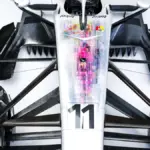
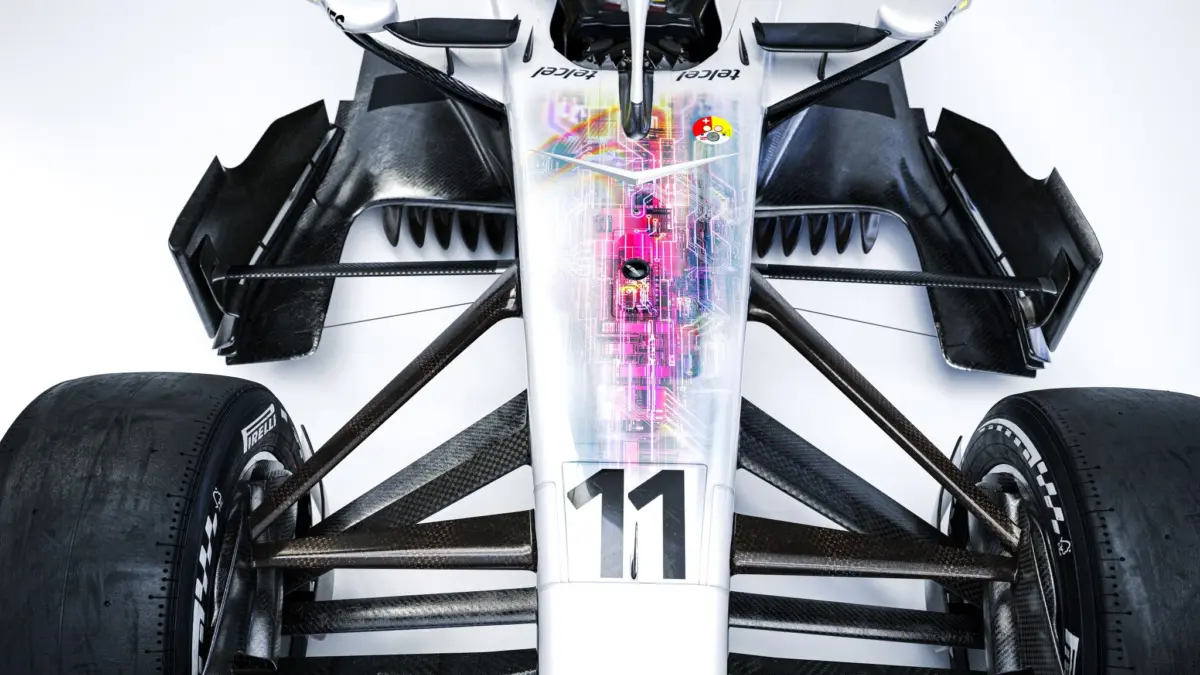
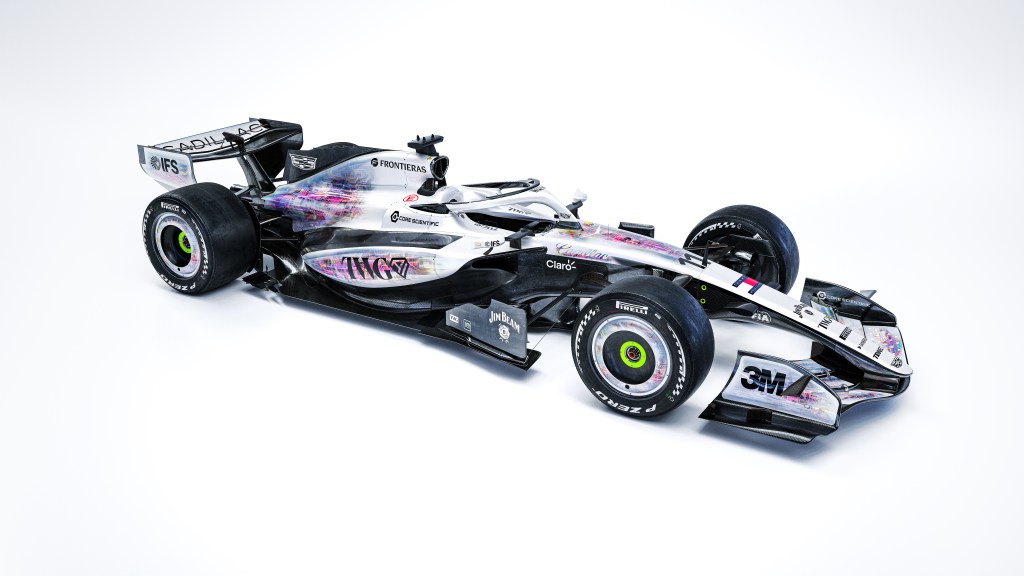
For its fourth and final special livery of the 2026 season, the team has introduced a design that demands a closer, more deliberate look. Rather than relying on a straightforward, bold color wash across the bodywork, the car features an iridescent finish that shimmers in softened, almost rainbow tones. Running through this dynamic iridescent base is a dense, intricate web of fine lines that mimics the layout of a complex circuit board. The overall optical illusion suggests that the car is translucent, as though layers of traditional paint have been meticulously scrubbed away to expose the delicate wiring and technological architecture beating beneath the surface. It is a hard-won visual trick—and one that carries profound metaphorical weight for the entire Cadillac Formula 1 organization.
A Dual-Hatted Design Telling the Story of an Inception
"It’s a very dual-hatted livery," explains Cassidy Towriss, the team’s chief brand advisor. On one primary level, the design delivers precisely what a high-stakes night race directly down the Las Vegas Strip demands: it is technical, brilliantly bright, and engineered to pop under the unforgiving glare of nighttime trackside illumination. On another level, however, it serves as a literal portrait of the organization itself.
When the Cadillac F1 Team was first conceptualized, it started from what Towriss describes as a blank piece of paper. Every single department within the sprawling enterprise had to be conceived, funded, staffed, and built simultaneously to successfully field two competitive cars on the global grid.
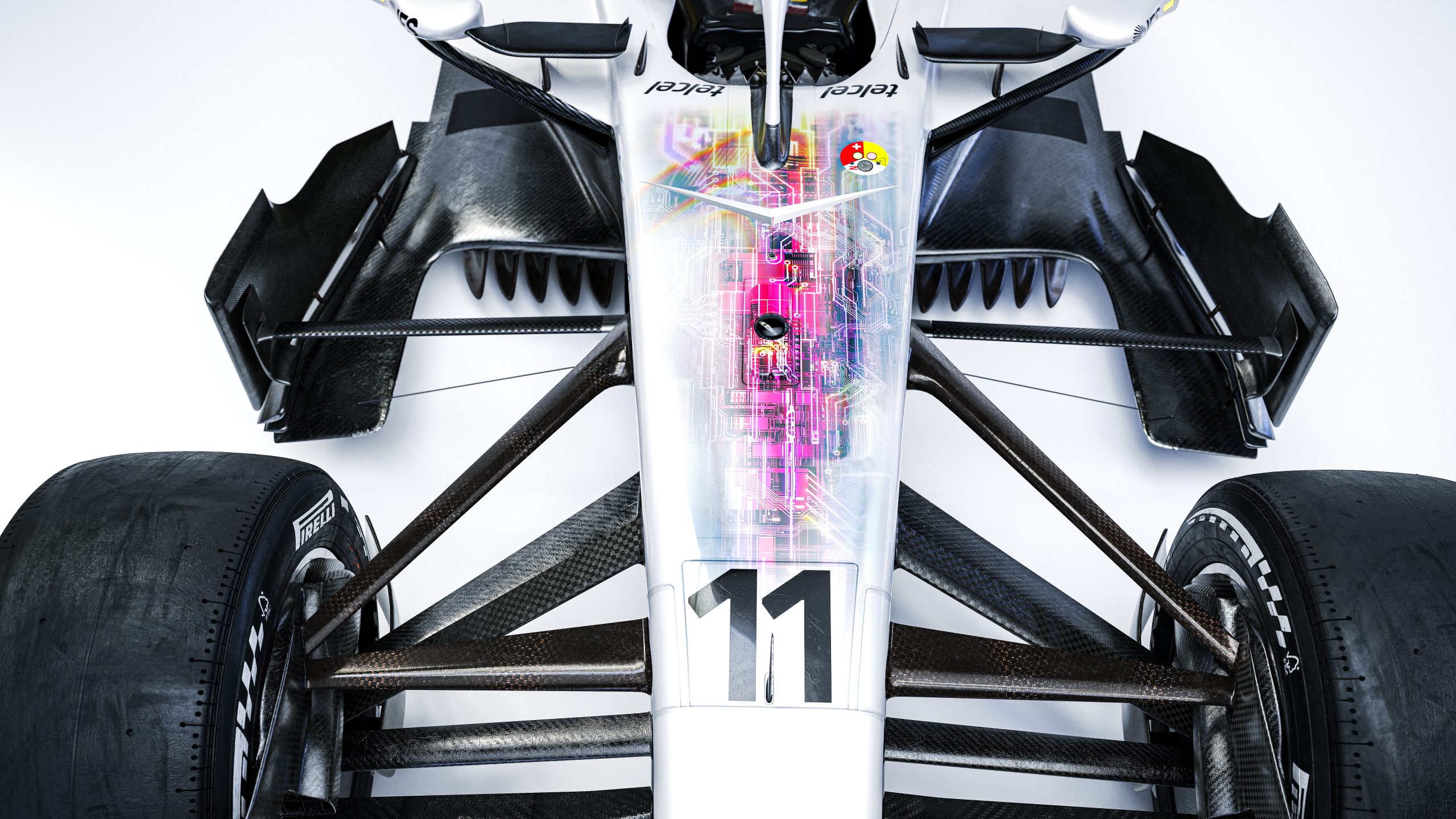
"Each one of those circuitries represents a work stream that had to be created in parallel, from HR to technical, creative, to commercial, to engineering," Towriss elaborates, connecting the visual motif of the circuit board directly to the immense human and logistical effort required to build a modern Formula 1 team from scratch.
This striking aesthetic serves as the final chapter in a cohesive narrative thread that the team has spun across the entire 2026 racing calendar. Cadillac initially unveiled its standard black, white, and chrome race colors during the Super Bowl earlier in the year. From there, the team seized the opportunity to give each high-profile, American-flavored stop on the global championship calendar its own distinct thematic identity.
"In Miami, we had American symbols. In Silverstone, we had American colors. In Austin, we had American character. And for Vegas, we have this American ingenuity," Towriss notes, summarizing the seasonal progression.
A Journey Across Four Special Liveries
The visual evolution of Cadillac’s debut season has been one of the paddock’s most talked-about design narratives. For the Miami Grand Prix, which marked the team’s maiden competitive outing on United States soil, the chassis wore a sophisticated monochromatic interpretation of the stars and stripes.
Later in the season, when the Formula 1 circus traveled across the Atlantic, the British Grand Prix at Silverstone conveniently fell on the Fourth of July weekend. For that event, an American racing team competing in the heart of England proudly deployed a classic red, white, and blue color scheme.
By the time the championship returned to North America for the United States Grand Prix in Austin, the team embraced a distinctly Western aesthetic. That iteration featured intricate stitch-like graphics and ornate scrollwork that had been developed in close collaboration with General Motors’ dedicated design team—a piece of work that Towriss proudly counts among the operation’s finest achievements to date.
The entire roadmap for these sequential liveries was mapped out well in advance. "That roadmap drew itself," Towriss says, pointing out a subtle yet unifying detail that ties all four special designs together: a signature arrangement of 50 stars neatly integrated onto the front wing of the car. Committing to four separate special liveries during a grueling debut season is an extraordinary undertaking, but the rationale was simple: a team only gets one first year in Formula 1, so the mandate was to go big from day one.
Channeling Late-90s Nostalgia and Complex Color Engineering
When the creative team began brainstorming concepts for the Las Vegas Grand Prix, one of their primary visual references did not come from automotive history at all. Instead, they looked to the translucent hardware trend that dominated consumer electronics in the mid-to-late 1990s and early 2000s.
Design cues were drawn directly from iconic cultural touchstones like Apple’s translucent-backed iMac G3, Sony’s clear PlayStation 1 controllers, and Nintendo’s see-through Game Boy Pocket consoles. With cultural nostalgia for that specific era currently running white-hot—highlighted by Sony opening pre-orders for re-released clear controllers within the PS5 Prism collection—the livery arrives perfectly aligned with contemporary design trends.
Translating the visual effect of translucent molded plastics onto a modern Formula 1 car, a machine nearly as mechanically complex as a military fighter jet, was an immense engineering feat. Towriss credits the team’s paint partner, SPT, with helping them arrive at a specialized finish that successfully tricks the eye into perceiving transparency on a solid, opaque surface.
Color selection formed the other half of the design equation. Because Cadillac F1’s standard corporate palette relies strictly on black, white, and chrome, Las Vegas marks only the second time all season that the team has ventured outside those safe parameters, following the red, white, and blue scheme deployed at Silverstone.
A glittering night race under the neon lights of the Strip demanded a departure from monochrome once again, but Towriss wanted to avoid a simplistic application of basic color. The hues underwent round after round of rigorous revisions, carefully dialed down from fully saturated brights to a nuanced tone that defies easy categorization.
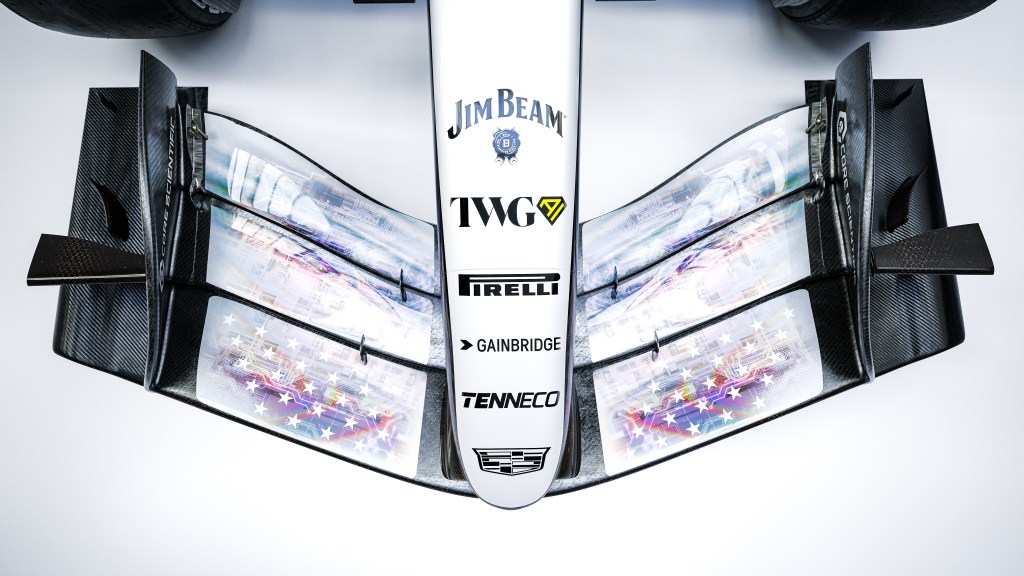
"I don’t know that pastel neon is a correct term," Towriss admits, acknowledging the inherent paradox. "It’s kind of contradictory in a way."
Despite the semantic challenge, the visual softness performs critical work. Faded, iridescent color naturally reads as something the viewer looks through rather than merely looks at, ensuring the chassis still registers instantly as Cadillac’s definitive entry on the grid—a vital consideration for a new team still actively introducing itself to a massive global audience.
Balancing Static Detail with Speed and Secrecy
Much of the painstaking detail built into the Vegas livery will inevitably vanish from view the moment the car accelerates out of the pit lane and onto the circuit. Towriss is entirely comfortable with that reality. The design team deliberately crafts these special liveries for the intimate environments of the pit lane walk and the starting grid, where passionate fans and photographers can get close enough to pull out a smartphone and study the minutiae.
"There’s always going to be details that won’t be seen at speed that you’ll appreciate when it’s static," Towriss notes.
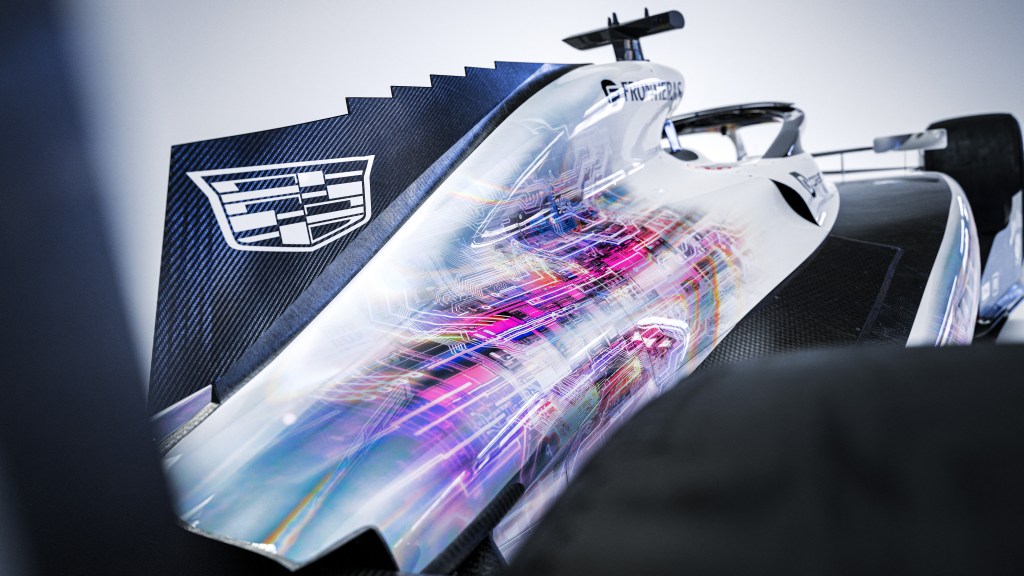
Executing the reveal required a high level of operational secrecy. Every individual aerodynamic element was liveried separately and carefully covered during assembly—a cautious habit the team originally developed while fiercely guarding the surprise of its 2026 Super Bowl commercial debut.
Impressive as the translucent circuit design is, its lifespan on the car will be remarkably brief. As soon as the checkered flag falls in Nevada, Las Vegas will kick off a demanding season-ending tripleheader, meaning the car must be stripped and restored to its standard corporate colors ahead of the Qatar Grand Prix.
"A lot goes into one thing for one weekend," Towriss reflects. Ultimately, that sentiment serves as an apt summary of the livery’s underlying philosophy: it honors the unseen people working tirelessly behind the scenes to present something extraordinary for the world to see. In a city built on surface-level spectacle, the Cadillac F1 Team spends this weekend peeling back the layers to show everyone what is truly inside.