






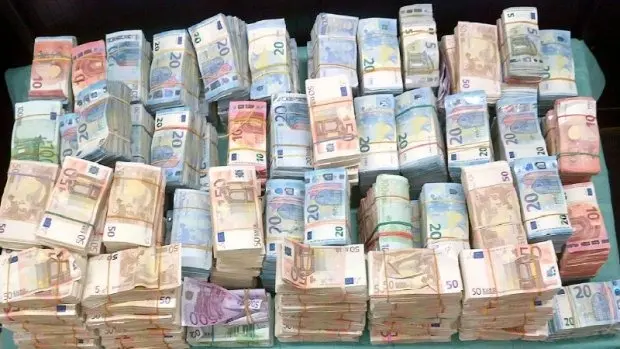
The Dutch government is currently facing a massive financial backlog, with an outstanding total of €1.2 billion in unclaimed proceeds of crime and unpaid court-ordered compensation payments. According to the latest figures released by the Central Fine Collection Agency (CJIB)—the department within the Ministry of Justice and Security responsible for recovering these funds—authorities are finding it increasingly difficult to force convicted criminals to hand over the financial gains they accumulated through illegal enterprises.
The staggering sum highlights a systemic challenge within the Dutch justice system: while courts regularly issue confiscation orders and financial penalties meant to strip criminals of their ill-gotten wealth, translating those rulings into actual cash recovered for the state treasury remains an uphill battle. The CJIB has acknowledged that it is locked in a difficult race against well-funded criminal networks that use sophisticated methods to conceal their assets both at home and abroad.
A breakdown of the €1.2 billion debt reveals that illegal proceeds account for roughly two-thirds of the total outstanding amount. Within this category, the concentration of debt is remarkably steep, with a tiny fraction of offenders holding the vast majority of the liability. Specifically, just 2% of the criminals responsible for these unpaid debts account for 50% of the total sum owed to the state.
Among these high-profile debtors is the notorious Dutch drug baron Jos Leijdekkers, widely known as "Bolle Jos." Believed by investigators to be hiding out in Sierra Leone, Leijdekkers is the subject of an intense international manhunt, with Dutch prosecutors currently offering a €2 million reward for information leading directly to his arrest. Beyond his drug trafficking and money laundering charges, Leijdekkers has been formally ordered by a Dutch court to pay a staggering €96 million to the state—a sum that represents only a fraction of the vast fortune authorities believe he amassed through international cocaine smuggling syndicates.
Johan Bac, the managing director of the CJIB, shed light on the immense difficulties his agency faces when dealing with offenders of this caliber during an interview with the investigative news program Nieuwsuur. Bac emphasized that the core issue is not merely bureaucratic inefficiency, but deliberate evasion on the part of hardened criminals.
"In general, these are people who don’t want to pay," Bac told Nieuwsuur. He explained that recovering these funds requires cutting through complex layers of financial obfuscation. "Their fortune is often concealed by all kinds of international constructions. Tracking it down is very labour-intensive."
Because these criminal fortunes are frequently funneled through offshore shell companies, foreign real estate holdings, cryptocurrency accounts, and complex nominee networks across multiple jurisdictions, tracing and seizing the money demands specialized international cooperation, extensive financial auditing, and months or even years of painstaking investigative work.
The resource-intensive nature of asset recovery is clearly reflected in the agency’s annual yield. Last year, despite the billions outstanding on paper, the CJIB managed to successfully seize only €50 million in actual criminal assets. Agency officials have warned that this vast discrepancy between what is owed and what is actually recovered will only widen in the coming years unless significant institutional changes are implemented. According to the CJIB, turning the tide will require a substantial injection of funding, an increase in specialized staffing with deep expertise in forensic accounting and international financial law, and legal reforms that would allow authorities to get their hands on criminal assets much earlier in the investigative and judicial process, before suspects have the opportunity to move or liquidate their holdings.
While the majority of the €1.2 billion pile consists of confiscated criminal proceeds, a substantial portion—roughly €500 million—is earmarked for victims of various crimes. This segment of the debt represents court-mandated compensation payments that offenders are legally required to pay to those they have harmed. Out of that €500 million victim compensation total, approximately €150 million has already been advanced and paid out directly to victims by the CJIB itself, leaving the government in the position of having to recoup those funds from the perpetrators after the fact.
Furthermore, the agency anticipates that this particular financial burden will grow significantly in the near future. Under upcoming government plans, the scope of offenses for which the state steps in to cover compensation payments is set to be considerably widened. The expanded policy will include severe crimes such as arson and causing traffic deaths through reckless driving. While this expansion is designed to ensure that victims of violent and devastating crimes receive timely financial support regardless of whether the perpetrator has immediate funds, it will inevitably increase the financial exposure of the CJIB, putting even more pressure on an agency already struggling to collect debts from unwilling offenders.
As the backlog continues to mount, the debate surrounding how the Netherlands handles the financial enforcement of criminal sentences is intensifying. With billions sitting uncollected and high-profile fugitives maintaining hidden fortunes abroad, policymakers and justice officials alike are under mounting pressure to find innovative ways to pierce the corporate veils protecting criminal wealth and restore integrity to the enforcement of Dutch court orders.