


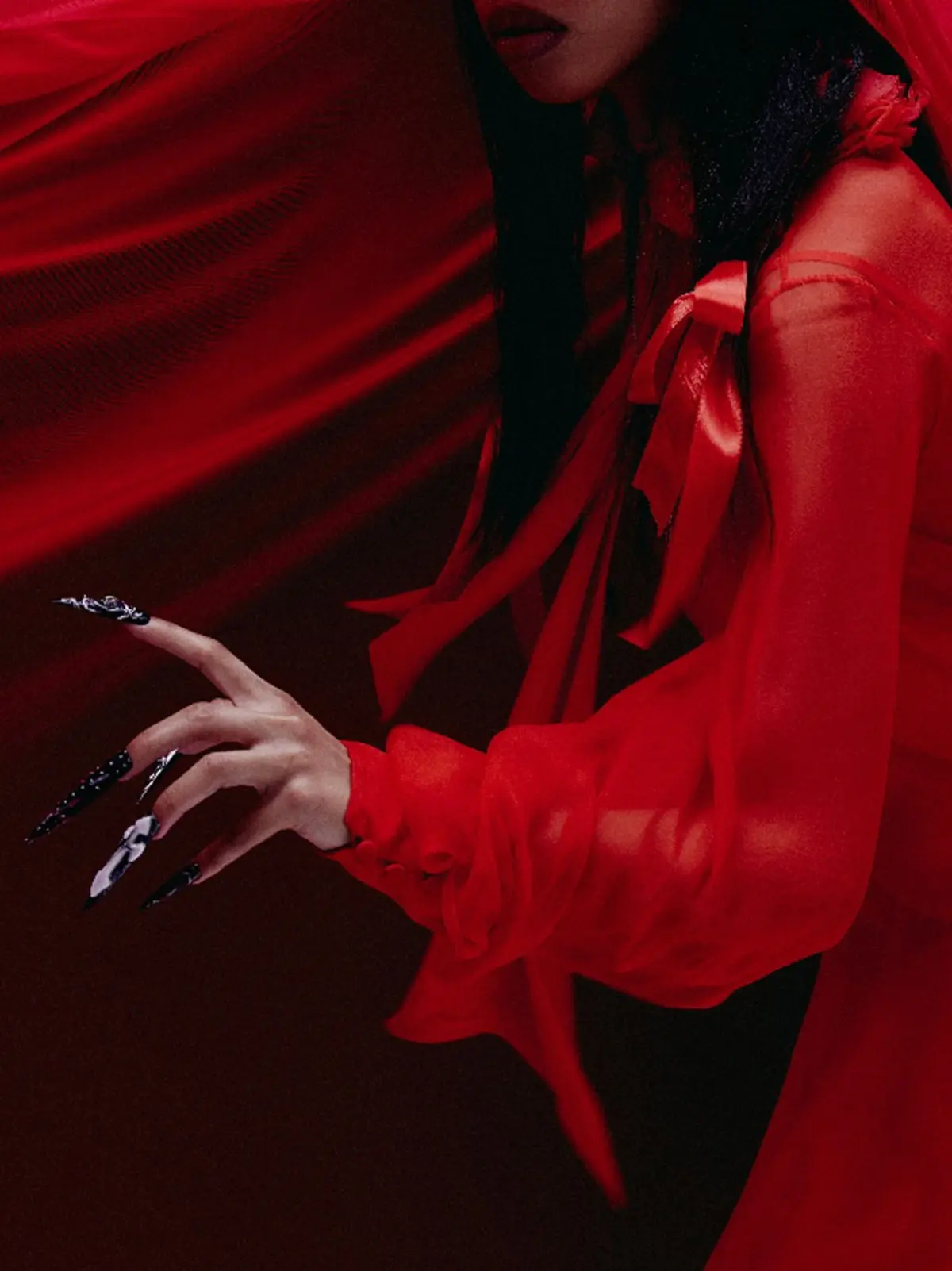
If a modern mystic offered to cast a spell to make you breathtakingly beautiful, would you accept? For the past few years, witchcraft and the esoteric arts have held a firm, spellbinding grip on the countercultural corners of the internet. Social media feeds across platforms like TikTok and YouTube have been flooded with content dedicated to "Glamour Magick"—a specialized branch of esoteric practice featuring everything from mirror work and protective warding to sigils and subliminal audio engineering. Yet beneath the aesthetic allure of digital spellcasting lies a persistent question: Can you truly use the occult to alter your physical appearance?
Scribbling measurements like "445 cc, moderate profile, half under the muscle" onto a piece of paper in hopes of waking up with an idealized physical transformation might seem like the ultimate manifestation shortcut. However, practitioners of glamoury emphasize that glamour magick is concerned with something far deeper and more psychological than surface-level alterations. Even the deliberate use of the letter "k" in the word "magick" connects modern practitioners to archaic roots. Today, occultists and serious spiritual students use the spelling to distinguish their craft from stage magic or parlor tricks, signaling an authentic and rigorous spiritual discipline.
In an era where modern beauty standards increasingly feel like an artificial, AI-generated formula engineered strictly to feed social media algorithms, the definition of attraction is undergoing a cultural shift. After a decade working professionally as a model, observers of the industry note that the most magnetic individuals are rarely those cursed or blessed with mathematically symmetrical faces. Instead, true attraction often emanates from an indefinable "X factor"—and within occult circles, many are beginning to wonder if that mysterious variable might actually be magick itself.
To understand how contemporary witches actually approach and practice glamoury, one must look to the voices shaping the modern occult landscape. Semra Haksever, widely known as Mama Moon, is a London-based eclectic witch, author, and oracle card reader whose lifelong practice is deeply rooted in her family lineage and her Turkish grandmother’s traditional coffee cup readings. Alongside her is Mat Auryn, a professional psychic, witch, occult teacher, and bestselling author who has spent nearly three decades practicing the craft after discovering it through the cult-classic 1990s film The Craft. Rounding out these perspectives is Isimeme, known online as TheGoddessCoven, a practicing witch and occult content creator who seamlessly blends her spiritual traditions with contemporary life in New York City, sharing detailed glamour magick guides and educational witchcraft resources with growing digital audiences.
When examining the foundational purpose of glamour magick, practitioners are quick to clarify that it has very little to do with simply reshaping the physical body. As Haksever explains, the practice is not about trying to become an entirely different person or hiding one’s authentic self; rather, it is about connecting to an internal power and invoking a presence that is already inherent within the individual.
The linguistic roots of the word itself offer vital context. "Glamour" originates from the Scottish term glamer, which historically referred to an occult spell or an illusionary charm. Its etymological lineage stretches back to the Middle Ages, an era when scholarly pursuits and esoteric knowledge were frequently associated with deception, culminating in the tragic persecution of women during the Great Witch Hunts.
Isimeme provides a historical overview of how the definition and application of glamoury have shifted across the centuries. During medieval times, she notes, it was entirely common for young women of marrying age to seek the counsel and assistance of local witches to secure beauty, favor, and the attention of prospective suitors. However, as women gradually gained greater social agency and autonomy over time, glamour magick evolved away from a narrow focus on physical beauty, transforming instead into a tool for wielding power, influence, and personal sovereignty.
Furthermore, glamoury has historically served vital protective functions. Isimeme highlights that during the era of chattel slavery, glamour techniques were frequently utilized by Hoodoo practitioners to evade detection while fleeing plantations, and in certain instances, to shield their children from the gaze of those who meant them harm. In the modern era, Isimeme views glamour magick primarily as a potent instrument for feminine empowerment, noting that practitioners can leverage it to cultivate confidence, achieve professional success, and gently guide how others perceive and interact with them.
This perspective is echoed by Mat Auryn, who defines glamour magick as the sophisticated art of influencing how one is perceived by others through the intentional projection of focused personal energy. Auryn explains that glamoury operates largely through what occult philosophy terms the "Lower Self"—the instinctual, emotional, and animalistic dimensions of human consciousness. Pointing out the common cultural adage that confidence is inherently attractive, Auryn suggests this dynamic perfectly illustrates the foundational principle behind glamoury. Because human attraction possesses an almost animalistic quality that extends far beyond mere physical appearance, glamour magick works directly with that same instinctual perceptual dimension, allowing practitioners to intentionally amplify and project specific qualities that shape external responses.
As cultural interest in these practices peaks around seasonal milestones like Halloween—a time when folklore suggests the veil between the physical and spiritual worlds grows thin—many practitioners utilize the period for alchemy and transformation. Rather than treating the holiday as a purely secular celebration, occultists often approach festive costuming and seasonal rituals as active exercises in psychological and energetic shifts. By selecting a costume that embodies a desired archetype and mentally enchanting the garments, makeup, and accessories beforehand, practitioners can temporarily step into a desired energy field and experience the psychological reality of embodying those traits.
This seasonal energy is frequently paired with introspective practices, such as discarding old makeup products to symbolize the shedding of an outdated personal identity, or engaging in tarot readings and other forms of divination to determine what patterns need to be released and what new energies should be cultivated. While some practitioners embrace the potent atmosphere of late October for these transitions, others advise caution, suggesting that complex energetic work might be better reserved for upcoming lunar phases, such as the New Moon, to effectively mark the beginning of a fresh personal chapter focused on confidence, success, and prosperity.