




For as long as I can remember, I told myself that if I were a white girl with naturally wavy hair, I would wear a fringy, shaggy haircut complete with effortless bangs. It always started as a pleasant, fleeting thought, but whenever it lingered too long, a quiet sadness would settle in, much like dreaming of something permanently out of reach. Growing up, I firmly believed that certain hairstyles—along with the creative freedom to experiment with texture, length, and shape without a second thought—simply weren’t options available to me.
My relationship with my hair has been complicated, forever fluctuating, and undeniably unstable. Growing up, I had very little control over how it was styled. My mother relaxed my hair when I was young enough that I no longer have a memory of it, setting the tone for the rest of my youth and adolescence. I spent those formative years thinking that chemical treatments, heat damage, tamed curls, and restrictive ponytails were my permanent present and my inevitable future. Occasionally, I would turn to consistent, protective braids to give both my hair and myself a break, largely because I had always been told that Black hair was inherently too fragile and too weak to withstand much manipulation.
My mother would often share stories about growing up in Ghana and learning how to intricately weave cornrows at a young age, and photographs of her with wild, untamed coily hair live rent-free in my mind to this day. Yet, as a white-passing woman navigating life in America, I can hardly blame her for wanting to blend in, or for straightening her hair as a means of survival and assimilation.
Those complex feelings were magnified by outside encounters, including one particular interaction with a boy I spent a significant amount of time with throughout my senior year of college—a dynamic I would now classify as a situationship, though I lacked the modern terminology for it back then. He reached out and touched my large, voluminous bun of cornrows, and with an ignorant confidence that I have only ever experienced from straight white men, he remarked, "You Black people and your fake hair," followed by a casual laugh. It felt like one of my deepest nightmares as a Black woman manifested in real time.
This is all to say that my history with my hair has been fraught with hesitation and external judgment. Through chemical straighteners like keratin, a drastic big chop, a mini afro, the tedious process of growing my strands back out, and perpetually resorting to a slicked-back bun simply to avoid the daily battle with my natural coils, I eventually grew profoundly bored. I could no longer accept that feeling restricted by my own identity was my permanent reality. Deciding to finally put my lingering fears of how white men might react to my "fake hair" aside, I resolved to get a sew-in weave.
The catalyst for this decision came after I attended the annual Black Hair Reimagined showcase, where I found myself entirely in awe of the artistry on display. Inspired, I reached out to True Indian Hair, a luxury hair brand renowned for providing luscious, unprocessed raw human hair. They connected me with Stacy Gray, a master hairstylist boasting nearly 30 years of extensive experience working across television, film, and high-profile advertising campaigns.
I arrived at True Indian Hair’s Midtown South store with freshly washed hair tucked underneath a camouflage baseball cap, hoping to walk out with waving, collarbone-length hair featuring face-framing layers. The truth was, I walked in with virtually no idea what a closure or a leave-out actually was. I initially felt a sharp sense of shame regarding my lack of industry knowledge—feelings compounded by the fact that, as a Black woman, I had zero prior personal experience with getting a weave. It mirrored the familiar embarrassment I often feel when I fail to pick up on specific Black American cultural references or when I have to admit to never having seen certain classic Black American movies, simply because I did not grow up in a Black American household.
That sense of shame, however, quickly dissipated the moment Gray sat down with me to talk through what I wanted out of the experience, marking my very first rendezvous with extensions.
"Earlier in my career, the goal for many of my clients was for their hair to look as natural as possible. Wearing a weave was not always something most openly discussed," Gray reflects. "Women wanted to enjoy the look without anyone knowing how it was achieved. Over the years, I’ve seen more women become comfortable talking about extensions and having fun with their options, but that judgment hasn’t disappeared."
Gray noted that the social stigma remains so potent that she has even had clients return to her salon the very next day to have their newly installed weaves removed—not because they disliked how they looked, but because their husbands or partners did not approve of them wearing "fake hair."
For Gray, her ultimate professional and personal goal is to educate people about their hair and how to maintain its long-term health. Sitting in her chair, I felt profoundly taken care of, realizing I had found someone I could turn to with future hair questions—a textbook example of the historic way Black women tend to nurture and look out for one another. Though she didn’t use these exact words, she essentially committed to becoming my personal Black hair whisperer.
"As a stylist, I understand that someone sitting in my chair is trusting me with more than just their physical appearance. I’m listening to how they want to feel and caring for the hair they’ve entrusted to me. I remember how my first weave made me feel, and I carry that understanding into my work," Gray explains. "For many Black women, hair is deeply connected to our identity, our culture, and how we express ourselves. It carries history, family traditions, and memories of who cared for us."
This cultural weight exists alongside the persistent, historical pressures Black women face regarding what our hair is "supposed" to look like. When left in its natural state, Black hair is frequently subjected to public scrutiny and criticized for not appearing neat, beautiful, put-together, or professional enough for polite society.
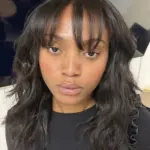
I entered my appointment with only a vague, hazy idea of the look I wanted to achieve. But through an afternoon filled with music, singing, watching my reflection transform right before my eyes, and collaborating on decisions, we realized that taking a major creative swing was entirely worth it. I ended up with a look that I had previously convinced myself I wasn’t allowed to have.
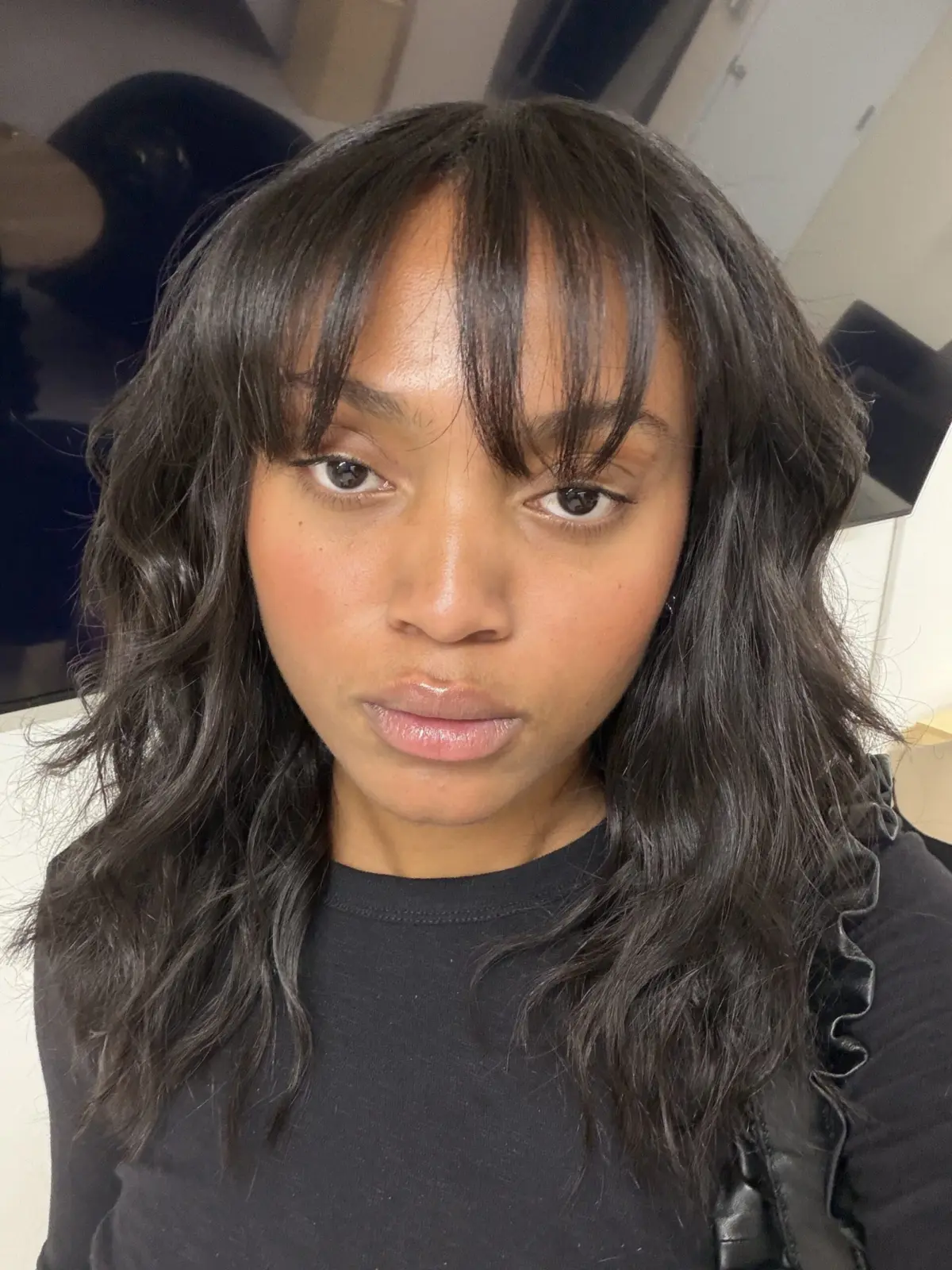
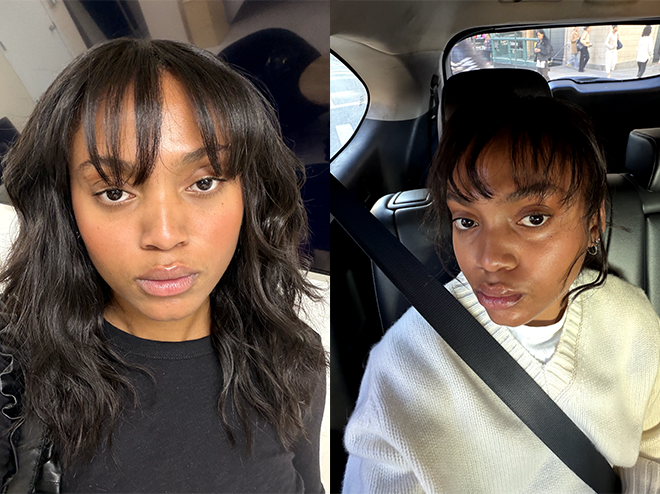
We moved forward with a full braided sew-in utilizing a 5-by-5-inch closure, which Gray explained is a small, specialized piece of lace placed at the crown of the head to flawlessly mimic the appearance of a natural scalp. For the final aesthetic, we chose wispy bangs, soft waves, face-framing layers, and a fringy, shaggy finish packed with body—essentially bringing the hairstyle of my most hypothetical, formerly forbidden white girl dreams to life.
Sew-in weaves are a foundational staple of Black culture. They offer Black women, who are so often unfairly criticized for having hair that is deemed messy, fragile, or difficult to manage, a vital pathway for personal self-expression and an opportunity to safely experiment with our appearance.
"Extensions give us options. We can change our length, volume, texture, or color without making a permanent change to our natural hair," Gray says. "Wearing a weave doesn’t automatically mean a woman dislikes her own hair. It can simply mean she enjoys variety or wants a particular look."
I have felt the profound significance of that choice every single day since walking out of the salon with my new sew-in. Sometimes, when I catch my reflection in the mirror or receive a compliment from a stranger, a fleeting sense of guilt washes over me for not having grown these specific strands out of my own scalp. I have even caught myself wondering if I should proactively explain to people that this isn’t what I look like naturally.
At the very same time, however, I feel as though I am finally finding a deep, resonant power in my Black womanhood and fully embracing all the complex traditions that come along with it. Most surprisingly of all, I now cannot even imagine navigating my life without bangs.