





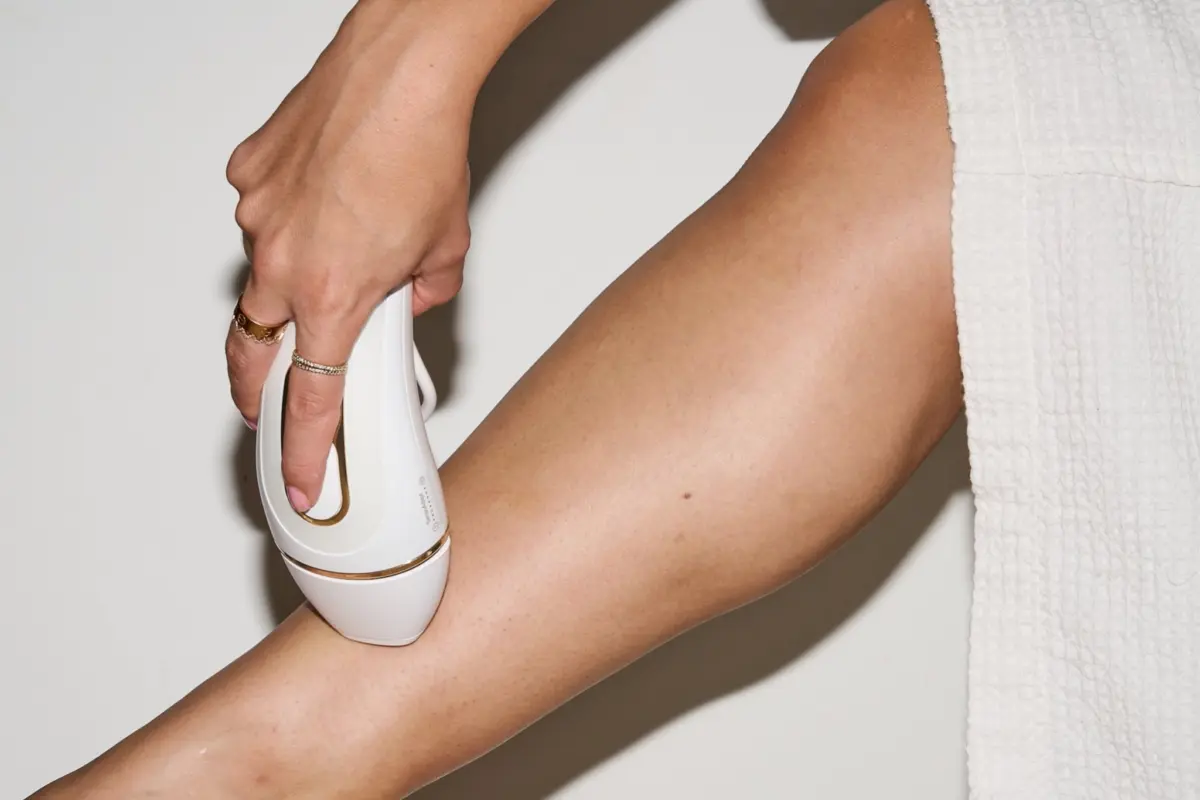
Navigating the landscape of modern beauty technology can often feel like an exercise in patience and deciphering complex instruction manuals. With their flashing lights, technical specifications, and daunting safety warnings, at-home hair-removal devices are naturally intimidating to many consumers. However, after an extensive evaluation process involving expert consultations, hands-on patch testing, and a rigorous three-month trial with a diverse panel of users, reviewers have found a standout device that combines intuitive design with proven efficacy: the Braun Silk-expert Pro 5.
The device, which utilizes intense pulsed light (IPL) technology to target hair at the root and minimize regrowth over time, emerged as the top pick due to its straightforward operation and relative comfort during treatment. Unlike traditional waxing or professional in-office laser procedures that many consumers find painful or traumatic, the Silk-expert Pro 5 delivers light flashes that testers described not as painful, but rather as a brief "heated flick" against the skin.
Operating the device is designed to be as straightforward as possible. Users simply plug in the unit using the included power brick and 10-foot cord, turn it on, place the treatment window flat against cleanly shaved skin, and press the activation button to release a flash of light. The physical design features just two main buttons, three distinct treatment modes, and a glide function that accommodates both standard and sensitive skin applications. In standard and sensitive modes, which feature reduced light intensity, the user lifts the device after each flash, repositions it on the next adjacent spot of skin, and presses the button again. When utilizing the glide function, the device automatically triggers light flashes in a continuous stream as it is smoothly moved along the surface of the skin.
According to manufacturer guidelines, optimal results are achieved by treating desired areas once a week for a consecutive 12-week period, followed by monthly maintenance treatments or touch-ups as needed. During the recent comparative testing period, the majority of participants reported noticing a visible and significant reduction in hair growth after just three weeks of consistent use. One panelist noted that after a month and a half of regular sessions, their routine shifted from shaving legs every other day to needing to shave only twice a week. Furthermore, four separate testers observed that hair growth in certain treated areas stopped entirely by the end of the three-month evaluation window. In contrast, alternative devices evaluated during the same period, such as the Nood Flasher Pro, produced barely noticeable differences in hair growth for three of the individuals who tested them.
A critical factor for apprehensive users—particularly those wary of skin irritation or burns—is the incorporation of built-in safety mechanisms. The Silk-expert Pro 5 features an integrated skin tone sensor that continuously reads the complexion of the treatment area and automatically adjusts light intensity for optimal efficacy, while strictly preventing the device from firing on skin tones that could be adversely affected by the light.
While calculating the exact lifespan of consumer electronics can be challenging, Braun estimates that the Silk-expert Pro 5 is capable of emitting approximately 400,000 flashes before wearing out. Although the device does not feature an active digital counter to track individual usage, long-term feedback indicates robust durability; one staff reviewer who has owned the hardware for nearly three years reports that her unit remains fully operational.
Versatility is further enhanced by the inclusion of two distinct attachment heads. The precision head is engineered specifically for smaller, hard-to-reach areas such as the upper lip, toes, and groin, while the wider head is tailored for larger expanses of the body including the legs, arms, and back. By comparison, several competing products tested, such as the Ulike Air 10, featured only a single fixed head that testers found too bulky to maintain proper skin contact on concave or convex contours. An included carrying case rounds out the package, allowing users to keep the components organized.
How IPL Devices Work
To understand why these systems are effective, it helps to examine the underlying technology. At-home intense pulsed light devices are frequently marketed as "laser" hair-removal tools, but they do not actually use laser beams. Instead, they emit broad-spectrum flashes of light. When this light encounters concentrated areas of melanin, such as deeply pigmented hair roots, the pigment absorbs the light energy and rapidly converts it into heat. This thermal reaction injures the hair bulb, causing the existing hair to shed and impairing the follicle to stunt future growth cycles.
Because the system relies on targeting pigment beneath the surface, users are strictly required to shave the treatment area beforehand. Shaving ensures that the light focuses directly on the root rather than being absorbed by long surface hair, which would otherwise trigger an unpleasant burning sensation and release the distinct odor of singed hair.
A fundamental biological catch governs the efficacy of all IPL treatments: they are only effective when hair is actively growing. During this phase, known as anagen, the roots remain deeply pigmented and securely attached to the hair bulbs. On any given day, only 10% to 30% of human body hair is actively in this growth phase. Consequently, achieving successful, long-lasting reduction requires strict adherence to the manufacturer’s schedule over an extended timeframe. Over weeks of consistent application, surviving hair typically regrows noticeably weaker and finer, with some follicles ceasing activity altogether for prolonged periods.
Who This Is For
Intense pulsed light devices are primarily intended for individuals seeking a long-term solution to reduce body and facial hair while minimizing common shaving side effects such as razor burn and ingrown hairs.
Dermatologists consulted during product research note that these systems are safest and most effective for individuals with light to medium skin tones, specifically Fitzpatrick skin types I through III, combined with dark blond, brown, or black hair. Because IPL technology depends on melanin absorption, it requires a high contrast between skin pigmentation and hair color to safely distinguish between the two.
Consequently, these devices are not safe for individuals with olive to dark brown or black skin tones, classified as Fitzpatrick types IV and higher. These skin types possess a naturally higher concentration of melanin throughout the epidermis, which would absorb the broad-spectrum light indiscriminately and carry a significantly elevated risk of burns, hyperpigmentation, or persistent irritation. Similarly, IPL treatments are ineffective on gray, white, red, or very light blond hair, as these shades lack the necessary pigment concentration to absorb the light energy effectively.
Furthermore, medical professionals caution that IPL devices should never be applied over tattoos, moles, or birthmarks, nor should they be used on dense, dark facial beard hair in men due to the high pigment density and associated burn risks. Sensitive areas such as the labia minora, scrotum, and perineum are also strictly off-limits. Consumers who are uncertain about their skin type or suitability for light-based treatments are consistently advised to consult a board-certified dermatologist before making a purchase. For those who are not candidates for IPL, alternative maintenance options include manual face and body razors, electric shavers, dedicated pubic hair trimmers, and chemical hair-removal creams.
How We Picked and Tested
The evaluation process began with in-depth consultations with multiple dermatologists to establish the foundational science of how IPL technology functions, who can safely use it, and what physiological risks are involved. Researchers then conducted an exhaustive market survey of bestselling and highly rated at-home light devices, verifying that every candidate held formal FDA clearance with an active 510(k) file on record.
From an initial pool of 12 contenders, researchers narrowed the selection down to five finalists based on key performance metrics, including retail price, energy output, total flash capacity, safety sensor sophistication, and manufacturer warranty terms. These finalists underwent preliminary patch testing on the arms and legs before being distributed to a diverse panel of 11 testers who evaluated the equipment over a rigorous three-month trial period. Testers followed operational instructions meticulously, assessing the hardware based on real-world comfort, ease of handling, maintenance requirements, and measurable hair reduction.
Why You Should Trust Us
Testing and reporting on personal care technology requires both personal experience and professional rigor. Beauty journalists and product evaluators often bring firsthand perspective to these categories, having spent years managing unwanted hair through traditional methods like shaving, waxing, and plucking while searching for lower-maintenance alternatives.
By combining insights gathered from extensive interviews with board-certified dermatologists regarding skin safety and technical efficacy, editorial teams apply the same rigorous skepticism to viral beauty trends that they apply to any consumer electronics category. Operating under strict editorial independence standards, product recommendations are insulated from commercial partnerships, ensuring that reviews remain objective and consumer-focused.
The Competition
During the comparative evaluation, several competing models exhibited notable drawbacks. Multiple panelists reported that the Nood Flasher Pro IPL Device caused a degree of skin irritation and sharp discomfort, with one tester noting that treating freckle-dense areas on the legs proved too painful to continue, while another abandoned the regimen after 12 sessions due to persistent redness.
Meanwhile, RoseSkinCo. discontinued its Lumi 1 Device shortly after testing commenced, though initial evaluations indicated it failed to match the rapid results delivered by the top pick. Another contender, the Silk’n Motion Premium IPL Device, produced a noticeable reduction in chin hair for a single tester over a three-month period, but yielded minimal overall improvement across the rest of the panel.
The Ulike Air 10 IPL Device proved generally user-friendly, benefiting from a convenient glide mode and a built-in skin-cooling function that noticeably reduced treatment discomfort. However, while select testers observed significant hair-growth reduction with the Ulike model, others experienced minimal to negligible changes. Numerous other market options from brands such as Foreo, Philips, and SmoothSkin were excluded from the final panel testing phase due to insufficient user feedback, unfavorable professional reviews, restrictive warranty terms, or overall value concerns.