





The Dutch cabinet’s latest efforts to secure a broad political consensus on its controversial tax plans suffered another major setback on Friday, as both left-wing and right-wing opposition parties rejected the government’s compromise proposals.
Prime Minister Rob Jetten and senior members of his administration sat down with key opposition leaders in The Hague to find a viable path forward. The high-stakes meetings came just a day after three prominent right-wing opposition parties—the far-right JA21, the orthodox Protestant SGP, and the farmer-citizen movement BBB—decided to formally band together. By forming a unified right-wing bloc, these parties sought to amplify their collective leverage, presenting the minority government with a series of joint demands spanning stringent new asylum measures, controversial adjustments to abortion regulations, and the complete scrapping of a planned tax increase earmarked for national defense spending.
This coordinated move by the right represented the latest in a series of strategic maneuvers by opposition factions intent on forcing the governing coalition to choose a definitive political direction. For weeks, political analysts and opposition leaders alike have warned that the cabinet’s path is fundamentally unsustainable. Because the administration attempts to bridge vast ideological chasms, critics have repeatedly argued that the government will never secure a broad, harmonious agreement because the demands emanating from the left and right sides of the political aisle remain entirely incompatible.
Despite these warnings, the cabinet pressed forward on Friday with a newly packaged financial compromise, outlining specific measures designed to fund adjustments to Box 3—the Dutch tax system governing capital income from savings and investments—without resorting to heavier tax burdens on general wealth. According to reports from the Dutch daily De Telegraaf, the government’s revised offer proposed tapping into residual funds originally set aside to compensate citizens who were disproportionately overtaxed under the contentious Box 3 regime in previous years.
Furthermore, the cabinet’s proposal included targeted tax cuts aimed at business owners who distribute profits from their own private companies. To sweeten the deal for moderate and left-leaning parties, the administration also offered to preserve an existing tax deduction for medical and healthcare-related expenses that had previously been scheduled for complete elimination by the year 2028.
Yet, despite these concessions, the political stalemate stubbornly persisted. Following the conclusion of Friday’s negotiations, Jesse Klaver, the leader of the centre-left PRO party, expressed deep frustration with the administration’s stance. Klaver publicly stated that he observed "no movement at all" from the government regarding his party’s core demands, which center heavily on implementing higher tax rates for wealthy individuals while simultaneously lowering the tax burden on everyday workers and laborers.
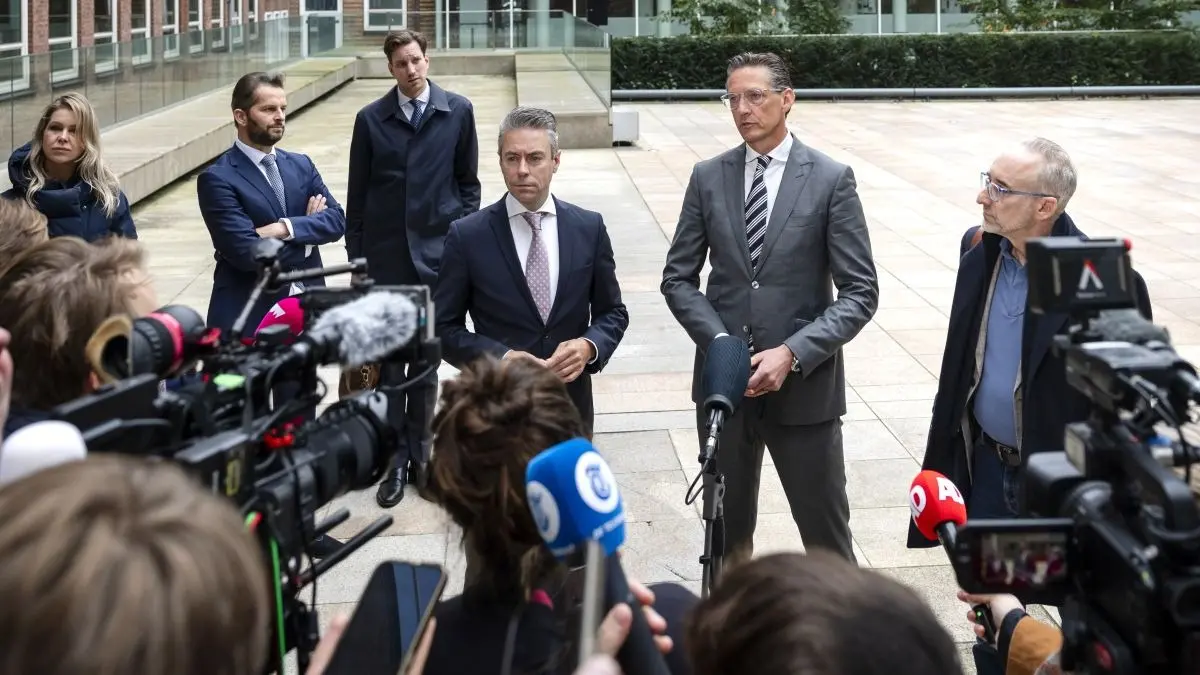
On the opposite side of the political spectrum, JA21 leader Joost Eerdmans offered a sober assessment of the discussions, describing the session as a "tough, complicated conversation." Nevertheless, Eerdmans confirmed that despite the government’s inability to meet their expansive wish list, the newly forged right-wing alliance between his party, the SGP, and the BBB remains entirely intact and unified in its approach.
The ongoing friction highlights the precarious parliamentary arithmetic facing the current administration. The governing coalition—comprising D66, the VVD, and the CDA—falls short of holding a working majority in the Dutch parliament. Consequently, the cabinet is heavily reliant on securing votes from outside its own ranks to shepherd its legislative agenda and critical tax plans through the legislature. With opposition parties pulling firmly in opposite directions and refusing to compromise on their fundamental tenets, the government faces an increasingly narrow window to salvage its financial roadmap for the coming fiscal year.