




For fifty years, the world of luxury has acted as an advance scout, showing society what comes next long before trends hit the mainstream. From the roar of supersonic flight and revolutionary silhouettes to ground-breaking oceanic exploration and seismic shifts in fine dining and haute horlogerie, high-end culture has consistently altered how the world lives, travels, and consumes. Spanning five decades, an extraordinary array of objects, visionaries, destinations, and experiences have defined generations, transforming taste and setting new benchmarks for human ambition.

The Foundations of Modern Luxury: 1965–1982
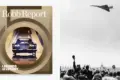
Following the Second World War, the painstaking craft of bespoke coachbuilding was largely sidelined as automakers rushed to meet rising consumer demand with more efficient manufacturing techniques. Rather than relying on traditional rolling chassis dressed in labor-intensive custom bodywork, the industry embraced monocoque construction, integrating the body and chassis into a single unified structure. Rolls-Royce broke nearly six decades of tradition when it followed suit with the introduction of the Silver Shadow in 1965. Designed by John Blatchley and powered by a 6.2-liter V-8, the model featured a shorter wheelbase than its predecessor, the Silver Cloud, yet delivered greater cabin space, superior sound dampening, and a famously cosseting ride. Its enduring cultural relevance was underscored when it graced the inaugural cover of Robb Report in 1976.

The late 1970s and early 1980s dismantled long-held conventions across multiple industries. In men’s fashion, Giorgio Armani quietly dismantled a century of tailoring norms by stripping the shoulder pads and lining out of his jackets. Worn with billowing trousers, his softly constructed designs made tailoring feel relaxed without sacrificing elegance. The look reached global consciousness in 1980, when Armani draped Richard Gere in his louche suits for Paul Schrader’s American Gigolo.

In aviation, the year 1976 brought the introduction of the Concorde, the world’s first supersonic airliner to enter commercial passenger service. Cruising at Mach 2.04—about 1,354 mph—the Anglo-French marvel cut flight times between London and Washington, D.C., by more than half. Cruising at 60,000 feet, passengers enjoyed a view shared by few others: the visible curvature of the Earth. Despite facing economic headwinds from the 1970s oil crisis and high operating costs, the Concorde offered an unprecedented promise for executives and celebrities alike: buying back time.

On May 24, 1976, the wine world experienced a permanent realignment during the Judgement of Paris. British wine merchant Steven Spurrier organized a blind tasting at the InterContinental Paris, pitting top California wines from Napa against French benchmark bottles from Bordeaux and Burgundy. To the shock of the French critics and vintners in attendance, a 1973 Chardonnay from Chateau Montelena and a 1973 Cabernet Sauvignon from Stag’s Leap Wine Cellars took first place in their respective categories. Documented by Time correspondent George M. Taber, the upset shattered the notion that fine wine belonged exclusively to Europe and put Napa Valley firmly on the global map.

Horology underwent a similar shockwave in 1976 with the release of the Patek Philippe Nautilus Ref. 3700/1A. Conceived by designer Gérald Genta, the serially produced all-steel mechanical watch was a bold answer to the quartz crisis and changing social attitudes that favored casual luxury over formal attire. Priced at roughly $3,100, the watch was a gamble that ultimately laid the groundwork for today’s secondary-market titan.

The decade’s nocturnal landscape was equally defined by Studio 54. Opened in April 1977 at 254 West 54th Street by Steve Rubell and Ian Schrager, the nightclub became the defining stage of the disco era. Fusing celebrity, theatrical spectacle, and a famously brutal door policy, its greatest luxury was simple access: getting inside meant joining the most glamorous party in New York City.

The Era of Ambition: 1980s
The 1980s ushered in a distinct era of ambition, corporate velocity, and bold lifestyle innovations. Hoteliers Bill Kimpton, alongside Ian Schrager and Steve Rubell, disrupted the hospitality industry by introducing the boutique hotel concept with properties like San Francisco’s Bedford Hotel and New York’s Morgans. Proving that compact rooms could command a premium when paired with sharp design and buzzy public spaces, they redefined luxury hospitality.

In the art world, 1982 marked the global breakout of 21-year-old Jean-Michel Basquiat, who became the youngest artist to exhibit at Documenta in Kassel, Germany. His rapid ascent, alongside the launch of Mark Kostabi’s Factory-inspired "Kostabi World" studio in Manhattan later in the decade, cemented a period that openly embraced art as a major commodity.

Communication and mobility also underwent radical transformations. When Motorola released the DynaTAC 8000X in 1984, the first commercial handheld cell phone weighed nearly two pounds, cost $3,995, and offered 30 minutes of talk time. Its bulk and conspicuousness became an emblem of executive clout, famously wielded by Michael Douglas as Gordon Gekko in the 1987 film Wall Street.

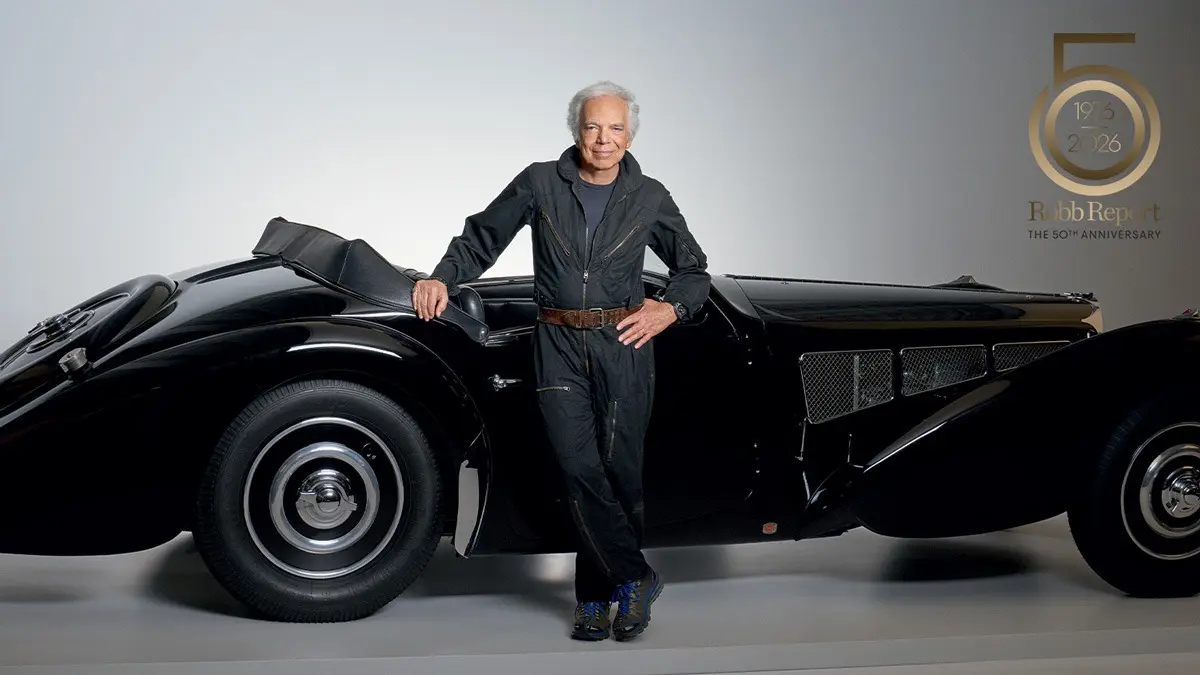
In the automotive and marine sectors, Italian design and high performance captured the cultural zeitgeist. The Pininfarina-styled Ferrari Testarossa, debuted in 1984, became a poster car of the decade, immortalized on television in Miami Vice alongside offshore powerboats like the Cigarette Top Gun. Meanwhile, the luxury goods market welcomed enduring icons, including the Hermès Birkin bag, born from an in-flight conversation between Jane Birkin and Hermès executive chairman Jean-Louis Dumas in 1984, and Ralph Lauren’s opening of the Rhinelander Mansion in Manhattan in 1986, which redefined flagship retail through total brand immersion.

Culinary and travel standards evolved rapidly during this period. In 1986, Austrian glassmaker Riedel introduced Vinum, the world’s first varietal-specific, machine-made crystal wine glasses, transforming restaurant wine service globally. That same year, Executive Aviation pioneered fractional aircraft ownership with NetJets, placing business jet access within reach of a broader group of entrepreneurs and executives. In 1987, a 24-year-old Marco Pierre White opened Harveys in London, earning three Michelin stars and establishing a gritty, punk-rock template for the modern celebrity chef. Adrian Zecha introduced Amanpuri in Phuket, Thailand, in 1988, creating the ultra-private, low-density resort concept that spawned a devoted following of "Amanjunkies." Horologically, Rolex turned to rival Zenith in 1988 to source its automatic chronograph movement, modifying the El Primero caliber to create the movement that powered the iconic Rolex Daytona.

Redefining Scale and Craft: 1990s
The 1990s pushed physical scale and engineering to unprecedented heights. In 1990, the 344-foot superyacht Lady Moura, built by Blohm+Voss for Saudi businessman Nasser Al-Rashid, revolutionized yacht design by incorporating a beach club with a hydraulic swim platform, a dedicated owner’s deck, and onboard leisure facilities that recast the vessel as a floating family home.

The art world experienced a seismic shift in 1991 when Damien Hirst exhibited The Physical Impossibility of Death in the Mind of Someone Living at London’s Saatchi Gallery, placing a tiger shark suspended in formaldehyde in the global spotlight and shifting contemporary art’s center of gravity toward London.

Automotive engineering reached a similar watershed in 1992 with the launch of the McLaren F1. Gordon Murray’s masterwork paired a three-seat central cockpit with a naturally aspirated V-12 capable of propelling the road car to a then-record 240 mph. Concurrently, the hospitality industry embraced the infinity pool, popularized at the Hotel du Cap-Eden-Roc in the early 1990s, where the edge of the water appeared to dissolve seamlessly into the Mediterranean.

Watchmaking and tailoring also saw historic milestones. Panerai crossed over from military supplier to civilian icon in 1993 with the Luminor Ref. 5218/201A, propelled to global fame when Sylvester Stallone wore it in the film Daylight. On Savile Row, Richard James and Sean Dixon broke centuries of tradition in 1992 by introducing slim silhouettes, bright colors, and unconventional fabrics, waking up London’s bespoke tailoring scene.

Ralph Lauren expanded his luxury offerings in 1994 with the launch of Purple Label, providing an American-infused alternative to traditional Savile Row tailoring. That same year, Thomas Keller acquired the French Laundry in Yountville, California, expanding tasting menus and elevating American fine dining to global prominence. In fashion, Tom Ford’s sensual Spring/Summer 1995 Gucci collection injected an uninhibited, 1970s-inspired glamour into the historic brand, cementing his status as a global design force.

As the decade drew to a close, architectural and horological boundaries expanded further. Frank Gehry’s Guggenheim Bilbao opened in 1997, giving rise to "the Bilbao effect" by proving that a single cultural landmark could revitalize a city’s economic and cultural fortunes. In Las Vegas, casino mogul Steve Wynn opened the Bellagio in 1998, betting $1.6 billion on an unapologetically five-star Italianate fantasy that permanently elevated the Strip’s hospitality standards. In private aviation, Boeing introduced its first business jet in late 1998, offering airline-scale cabin volume based on the 737 platform.

Horology witnessed the birth of independent modern watchmaking legends with the establishment of Collection Privée Cartier Paris in 1998 to revive historic shaped watches, and F.P. Journe’s formal launch of his namesake brand in 1999, highlighted by the debut of the Tourbillon Souverain à Remontoir d’Égalité.

The New Millennium and Beyond: 2000s–Present
The turn of the millennium brought new definitions of exclusivity, culinary philosophy, and digital-era luxury. In 1999, bartender Sasha Petraske opened Milk & Honey on New York’s Lower East Side, sparking the modern cocktail renaissance and speakeasy craze through classic precision and strict behavioral rules. In fashion, Hedi Slimane’s razor-slim suits at Dior Homme reshaped menswear silhouettes for a new decade.

Culinary arts experienced a profound ideological shift. While El Bulli and the molecular gastronomy movement utilized scientific innovation to challenge diner perceptions, René Redzepi’s Noma, opened in Copenhagen in 2003, turned toward the natural world through foraging, locavorism, and New Nordic cuisine, topping the World’s 50 Best Restaurants list five times while reshaping global culinary aesthetics.

In private aviation and yachting, ambition scaled new heights. Paul Allen’s 414-foot Lürssen expedition yacht Octopus, delivered in 2003, redefined superyacht utility with research capabilities, submarines, and a 14,000-mile range. Concurrently, the Rolls-Royce Phantom VII, launched in 2003, inaugurated a new golden age for the marque under BMW stewardship. The hypercar segment was similarly upended in 2005 with the arrival of the Bugatti Veyron 16.4, whose 8.0-liter quad-turbocharged W16 engine delivered 987 hp and a top speed of 253 mph.

The latter half of the 2000s and 2010s accelerated the cross-pollination of streetwear and high fashion, epitomized by Supreme and Louis Vuitton’s landmark 2017 collaboration led by Kim Jones. Virgil Abloh’s appointment as men’s artistic director at Louis Vuitton in 2018 further democratized the luxury conversation, permanently altering who participated in high fashion.

Horological milestones continued to shatter records. In 2014, Patek Philippe introduced the Grandmaster Chime Ref. 5175, featuring 20 complications across 1,366 components. In 2017, Paul Newman’s personal Rolex Daytona sold at Phillips in New York for $17.75 million, redefining the value of provenance. This was followed in 2019 by a one-of-a-kind steel Patek Philippe Grandmaster Chime Ref. 6300A fetching 31 million Swiss francs at Only Watch, making it the most expensive wristwatch ever sold.

In the contemporary landscape, private racetrack clubs like Monticello Motor Club and the Thermal Club have transformed motorsports into country-club lifestyle destinations. The superyacht industry continues to evolve through visionary projects like Benetti’s B.Loft 65M, which translates contemporary urban loft architecture onto the water, and REV Ocean, a 640-foot expedition vessel dedicated to scientific research alongside luxury cruising. Meanwhile, icons like Van Cleef & Arpels’ Alhambra motif and Patek Philippe and Tiffany & Co.’s collaborative Nautilus have achieved unprecedented cultural ubiquity.

From the quiet craftsmanship of mid-century coachbuilders to the borderless digital luxury of the modern era, the past fifty years have demonstrated that true luxury is never static. It is a continuous reinvention of how humanity travels, creates, and experiences the world.