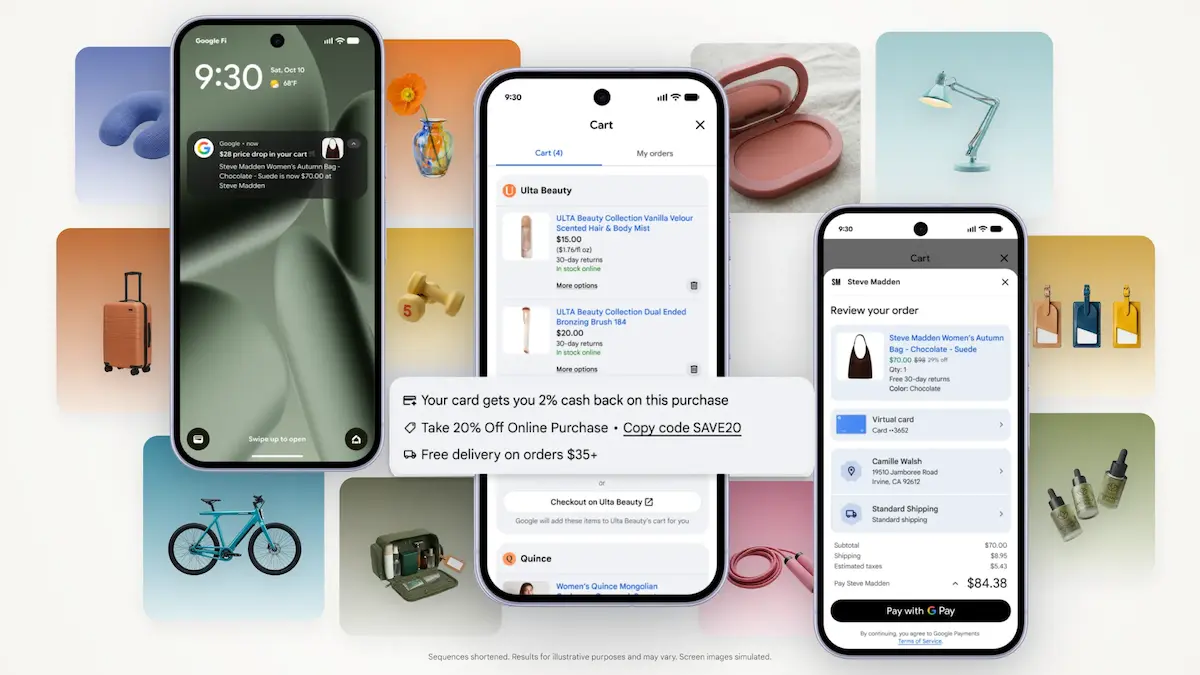
Google announced on Thursday that "Universal Cart," a centralized tool designed to let users collect, monitor, and manage products found across Google Search and within the Gemini app, is now officially available to users in the United States. The tech giant first previewed the innovative shopping feature earlier this year at its annual Google I/O developer conference in May, generating significant interest regarding the future of online retail and cross-platform browsing.
The core concept behind Universal Cart is to alleviate the common friction points associated with modern online shopping. Consumers frequently jump between multiple websites, search engines, and applications while researching products, often losing track of items or having to restart their search processes entirely when returning to make a purchase. Universal Cart addresses this by allowing shoppers to find a product they like, save it directly to their cart, and move on. When they return at a later date, their items and shopping progress remain intact, eliminating the need to hunt down the same products across the internet.
Furthermore, the tool is capable of aggregating items from a wide variety of different retailers into a single location. This effectively transforms the cart into a comprehensive central hub for browsing, monitoring, and keeping track of potential purchases over time. By consolidating disparate shopping sessions into a unified interface, Google aims to provide a more cohesive experience for consumers navigating the fragmented e-commerce landscape.
Beyond simply storing items, Google stated that Universal Cart is equipped to help shoppers stay actively informed about relevant deals and product availability. The system is designed to send automated notifications when a saved product experiences a price drop, or when an item that was previously out of stock becomes available for purchase once again. These proactive alerts are intended to ensure that users never miss out on purchasing decisions they have been contemplating.
The tool also incorporates advanced customization designed to offer tailored assistance throughout the entire purchasing process. According to Google, Universal Cart can take a user’s specific credit card perks and rewards into account when helping them choose the most advantageous payment method at checkout. Additionally, the system can automatically surface relevant promotional codes, helping consumers maximize savings without having to manually search the web for active coupons.
The backend infrastructure powering the checkout experience is tied directly to Google’s Universal Commerce Protocol, commonly referred to as UCP. Introduced by the company earlier this year as an open standard, UCP is specifically engineered to help artificial intelligence agents and online retailers work together seamlessly across various stages of the shopping journey, including the final checkout phase. This open architecture seeks to establish a standardized framework for agentic commerce, bridging the gap between automated digital assistants and e-commerce platforms.
Universal Cart represents the latest strategic push by Google to integrate artificial intelligence deeper into the e-commerce ecosystem, with the overarching goal of making digital retail significantly more convenient. The new feature joins a growing suite of AI-driven shopping capabilities currently offered by the company. These include conversational product discovery features integrated into Search’s AI Mode, as well as Google’s "Let Google Call" tool. The latter feature utilizes an autonomous AI agent to contact nearby brick-and-mortar stores directly on behalf of the user, verifying whether a specific item is physically in stock before the customer makes a trip.
Google is far from alone in its pursuit of transforming digital retail through artificial intelligence. Across the technology sector, major competitors are actively racing to introduce similar capabilities as companies look for innovative ways to make conversational chatbots and digital assistants useful for practical, real-world tasks beyond merely answering informational queries. Industry giants such as Amazon and OpenAI have recently introduced their own agentic commerce features and specialized AI shopping agents designed to navigate third-party stores on behalf of consumers. As competition in the AI-powered commerce space intensifies, tools like Universal Cart highlight the ongoing evolution of how consumers discover, evaluate, and purchase goods online.