






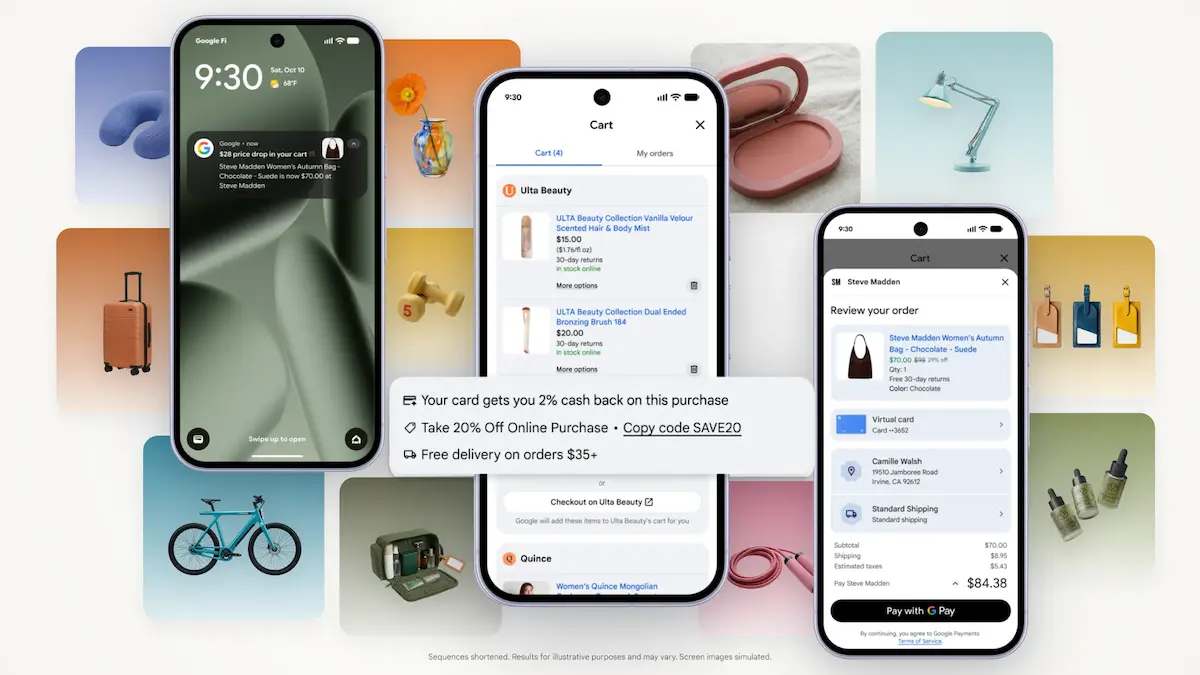
The tool, which was first previewed to developers and tech enthusiasts at the Google I/O conference in May, aims to alleviate one of the most persistent friction points in modern online shopping: scattered product discovery. Modern internet users frequently browse multiple retailers, comparison sites, and social platforms before making a purchase, often losing track of items across disparate tabs, apps, and browser windows. Universal Cart seeks to solve this fragmented user journey by acting as a persistent, cross-platform hub.
The underlying concept behind Universal Cart is straightforward usability. When a user finds a product they like while browsing the web through Google Search or interacting with the Gemini app, they can instantly save it to their universal cart and continue with their day. When they return to their shopping journey later, their saved items and ongoing progress remain intact, eliminating the need to hunt down previously viewed products, re-run searches, or start the research process over from scratch. Because the tool is capable of aggregating items from a wide variety of multiple retailers, it effectively transforms Google’s ecosystem into a unified central command center for browsing, comparing, and organizing potential purchases over time.
Beyond simply storing items, Google has engineered the cart to function as an active shopping assistant that helps consumers stay on top of shifting market conditions, pricing dynamics, and product availability. According to the company, the tool is capable of dispatching proactive notifications to users when a saved product undergoes a price drop, ensuring they never miss out on a potential bargain. Additionally, the system can alert shoppers when an out-of-stock item has been restocked and is once again available for purchase, removing the need for manual check-ins.
The utility of Universal Cart extends further into the transaction phase by offering tailored, intelligent assistance during the checkout process. Google notes that the tool can take a user’s specific credit card perks and rewards programs into account when helping them choose the most financially advantageous payment method. Furthermore, the system is designed to automatically surface relevant promotional codes and digital coupons, helping shoppers maximize savings right at the point of purchase.
The underlying architecture powering this seamless checkout experience is tied directly to Google’s Universal Commerce Protocol, or UCP. Introduced earlier this year, UCP is an open standard designed to facilitate interoperability between AI agents and diverse retail systems. By establishing a common framework, UCP allows artificial intelligence tools and merchants to work together smoothly across every phase of the shopping journey, culminating in a frictionless checkout experience regardless of which platform or retailer is selling the merchandise.
Universal Cart arrives as the latest expansion in Google’s deep and ongoing investment in artificial intelligence-powered commerce. The feature joins a growing suite of tools intended to make online shopping more intuitive and convenient, including conversational product discovery features built into Search’s AI Mode. It also complements Google’s innovative "Let Google Call" tool, which utilizes an autonomous AI agent to contact brick-and-mortar stores directly on behalf of the user, inquiring whether specific items are currently sitting on local shelves.
Google is far from alone in its pursuit of agentic e-commerce. The race to capture the future of digital retail has intensified significantly across the technology sector, with major rivals introducing their own advanced AI shopping systems. Companies like Amazon and OpenAI, alongside several other competitors, have rolled out competing agentic commerce features in recent months. This industry-wide push reflects a broader strategic shift as tech giants look for innovative ways to make artificial intelligence chatbots and assistants practically useful for everyday consumers, moving well beyond traditional text-based question-and-answering capabilities into active task execution.
As Universal Cart becomes available to users across the United States, it marks another major milestone in the evolution of digital retail, signaling a future where artificial intelligence actively manages the complexities of finding, tracking, and buying products across the entire internet.