





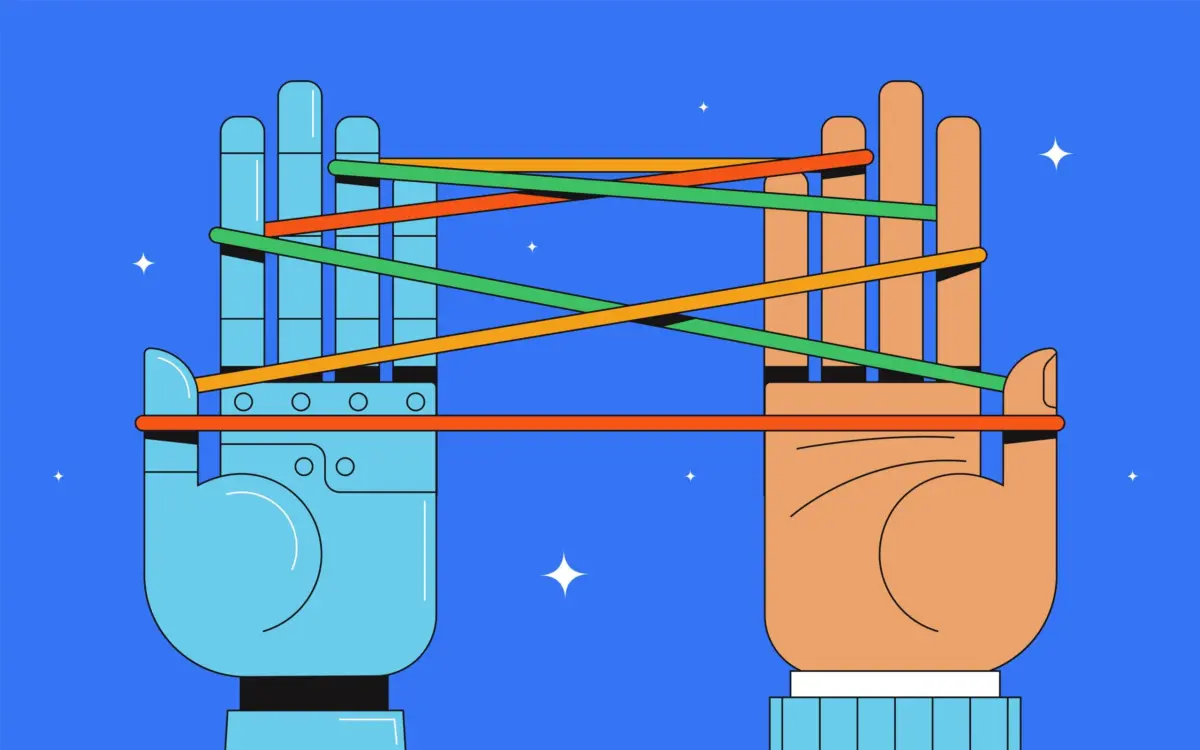
Modern engineering projects are undergoing a profound structural shift, increasingly combining human judgment with machine capability in ways that redefine daily workflows. In the contemporary workspace, an engineer can define a core problem, then task an artificial intelligence tool with searching relevant research, scanning technical standards, generating multiple design options, testing those options in simulation, and comparing the resulting data. Once the machine completes this initial heavy lifting, the engineer brings the synthesized results to specialists who understand the critical dimensions AI cannot judge on its own. These human experts evaluate whether a design can be built safely, whether it makes practical sense in a particular operating environment, or how it might ultimately affect its users. Despite the advanced capabilities of modern automation, the final decision about whether and how to move forward remains a firmly human responsibility.
This dynamic means that artificial intelligence can assist engineers in executing early project phases that once required teams of several people possessing different technical skills. Consequently, the engineer’s role is expanding rapidly. Professionals are shifting away from performing every single technical step manually and moving toward deciding how people, machines, and specialists’ knowledge should work together harmoniously on a project.
The Problem, Not the Title
Engineering has historically been strictly divided into disciplines, and for entirely practical reasons. Electrical, mechanical, civil, software, and other traditional engineering fields require deep, specialized knowledge that typically takes years of rigorous study and practice to develop. Artificial intelligence does not replace that foundational need. Instead, it simply changes how easily engineers can explore the parts of a problem that sit safely outside their own primary specialty.
Consider, for example, a software engineer working on a complex medical device. In this scenario, artificial intelligence can help the engineer review relevant biomedical research, understand unfamiliar clinical terms, analyze complex datasets, and build an early functional model.
Crucially, utilizing these tools does not magically make the software engineer a physician or a biomedical expert. Rather, it allows the engineer to ask much sharper, more informed questions before they begin working collaboratively with the actual medical experts.
The exact same principle holds true across energy, transportation, manufacturing, and a multitude of other technical fields. A problem might begin as a software issue and then quickly spiral to involve physical hardware, rigorous safety measures, economic constraints, human behavioral patterns, and complex regulatory frameworks.
Ultimately, modern engineers do not need to master every single field individually. Instead, they need to cultivate the situational awareness to recognize which specific expertise the problem requires and bring the right people and tools together to address it.
The Importance of Systems Thinking
Because projects now span multiple domains effortlessly, systems thinking becomes especially vital. This mindset requires looking at the problem as an integrated whole: understanding how its disparate parts affect one another, identifying hidden constraints and potential failure points, and making deliberate, calculated trade-offs.
Artificial intelligence adds an entirely new element to this already intricate process. Engineers must now decide not only how the technical parts fit together logically, but also what specific work to delegate to an AI model, what a human must manually check, when a human specialist should step in to make a definitive decision, and when the problem itself needs to be fundamentally redefined.
An engineer’s true value in the modern workplace is not found in knowing everything about every subject. Instead, it lies in knowing how to frame the problem accurately, how to ask the right questions of both humans and machines, how to rigorously test the answers provided, and when another expert must take the lead on the project.
This holistic aspect is crucial because technical challenges in engineering are seldom static. As new insights emerge during development, core objectives might shift, unseen limitations can suddenly surface, and the initial premise might ultimately prove flawed. Rather than rigidly following the starting specifications drafted months prior, an effective engineer adapts and refines the project scope as a deeper understanding of the overall system develops.
Thus, engineering extends far beyond simply mastering a set of static technical concepts; it is an adaptable, highly structured approach to navigating evolving real-world challenges. New evidence can entirely change the primary goal, reveal a hidden regulatory constraint, or demonstrate that the original hypothesis was fundamentally wrong. Effective engineers go beyond merely acting on the initial problem statement. They continuously update it as the system becomes better understood through testing and real-world feedback.
In that fundamental sense, engineering is not only a body of technical knowledge, but also a disciplined way of thinking about how to execute a project from inception to completion.
Human Judgment Remains Essential
Artificial intelligence is notorious for producing convincing, authoritative answers even when its underlying assumptions are remarkably weak. It can easily generate code that works seamlessly in one isolated test environment but fails catastrophically in another. It can summarize extensive research documents without understanding which pieces of evidence are scientifically strongest, or it can optimize a design for the wrong goal entirely. Such inherent technological limits make human expertise more important, not less.
Machines remain uniquely useful where raw speed, massive scale, rapid search capabilities, pattern recognition, and heavy data generation matter most. Conversely, people remain utterly essential where context, core values, moral responsibility, and nuanced judgment matter. The ongoing operational challenge is deciding precisely where each belongs in the workflow.
For instance, an AI system might generate several distinct designs for a medical sensor and accurately predict how each version will perform under laboratory conditions. An engineer can then test those machine-generated predictions and discard designs that violate strict technical requirements. Next, a clinical specialist can determine whether the sensor can be realistically and safely used in a hospital setting. Finally, patients and practitioners might reveal practical usability problems that neither the engineer nor the AI developer ever considered. The ultimate, successful solution emerges exclusively from combining these diverse perspectives.
Through this collaborative lens, the engineer remains a builder and a technical specialist, but they are increasingly acting as a coordinator of knowledge as well.
An engineer’s professional value is not measured by knowing every answer. It is measured by knowing how to frame the problem, how to ask the right questions, how to test the resulting answers, and when another expert must take the helm.
IEEE’s Vital Role in the AI Era
This broader, more interconnected form of engineering creates an important and natural role for organizations like IEEE. Its various societies already bring together deep expertise in a multitude of technologies, engineering education, technical standards, and other critical fields. That established infrastructure makes IEEE uniquely well-placed to help engineers work across traditional specialties without weakening the inherent value of deep specialization.
IEEE could create more specialized communities organized specifically around complex problems that require expertise from several fields simultaneously. Prominent examples of this multidisciplinary approach include trustworthy clinical AI, resilient civil infrastructure, energy grid reliability, accelerated scientific discovery, and safe autonomous systems. In this framework, an engineer could begin rooted in a home discipline and then collaborate fluidly with specialists from other IEEE communities as the specific needs of a project dictate.
Furthermore, IEEE can help establish practical, widely accepted standards for human-machine collaboration. Engineers will increasingly need clear guidance on when AI-generated work must be independently verified, how operational uncertainty should be systematically documented, when a human specialist must make a binding decision, and who bears legal and ethical responsibility when a system relies on both human judgment and machine output.
These pressing questions are rapidly becoming a standard part of everyday engineering operations. They should not be left to individual companies or isolated project managers to answer independently in a vacuum. A professional organization can provide common expectations and guardrails that follow engineers as they move seamlessly between jobs, industries, and technical fields.
A Larger Definition of the Engineer
Artificial intelligence does not make traditional engineering disciplines any less important; rather, it makes the connections between those disciplines much easier to navigate and utilize. Deep technical expertise gives engineers the foundational ability to judge what is fundamentally sound. Systems thinking helps them understand how different parts of a complex problem fit together logically. AI can dramatically extend engineers’ ability to explore, test, and communicate across disparate fields. Meanwhile, human judgment provides the entire endeavor with clear direction, ethical boundaries, and accountability.
An engineer is not defined solely by a job title or a fixed, unchanging set of routine tasks. An engineer is someone trained to understand complex systems, define and redefine problems, bring together the necessary knowledge and tools to solve them, test whether those solutions actually work, and take ultimate responsibility for the outcome.
That comprehensive outlook captures what it truly means to be an unbound engineer.
While the boundaries between technical specialties are becoming easier to cross, and machines may increasingly take on more of the routine technical work, the core essence of engineering remains unmistakably human. It is about deciding what problem is genuinely worth solving, what evidence is good enough to proceed, how the various pieces fit together, and what to do when the final answer remains uncertain.